Tarpaulin sheets are indispensable in multiple industries, such as agriculture, construction, transportation, and even household use. However, if you’re planning to buy one, understanding the factors that determine the tarpaulin sheet price is essential.
By knowing what drives costs, you can make smarter decisions that balance quality and affordability. As a leading packaging supplier in Vietnam, EPP Vietnam provides an insider look into the technical parameters, raw material dynamics, and manufacturing variables that determine global tarpaulin pricing.
Polymer Raw Material Grade & Resin Market Fluctuations
The foundation of any woven tarpaulin is the polymer resin used during the extrusion process. Raw material inputs constitute the single largest cost component in manufacturing, making the choice of resin grade the primary driver of the base tarpaulin sheet price.
Virgin vs. Recycled Polymer Resins: Virgin Polyethylene (PE) or Polypropylene (PP) resins yield high tensile strength, superior elongation memory, and long-term structural integrity. In contrast, incorporating recycled or regrind plastic lowers initial material costs but introduces microscopic impurities that reduce tear resistance and accelerate weathering.
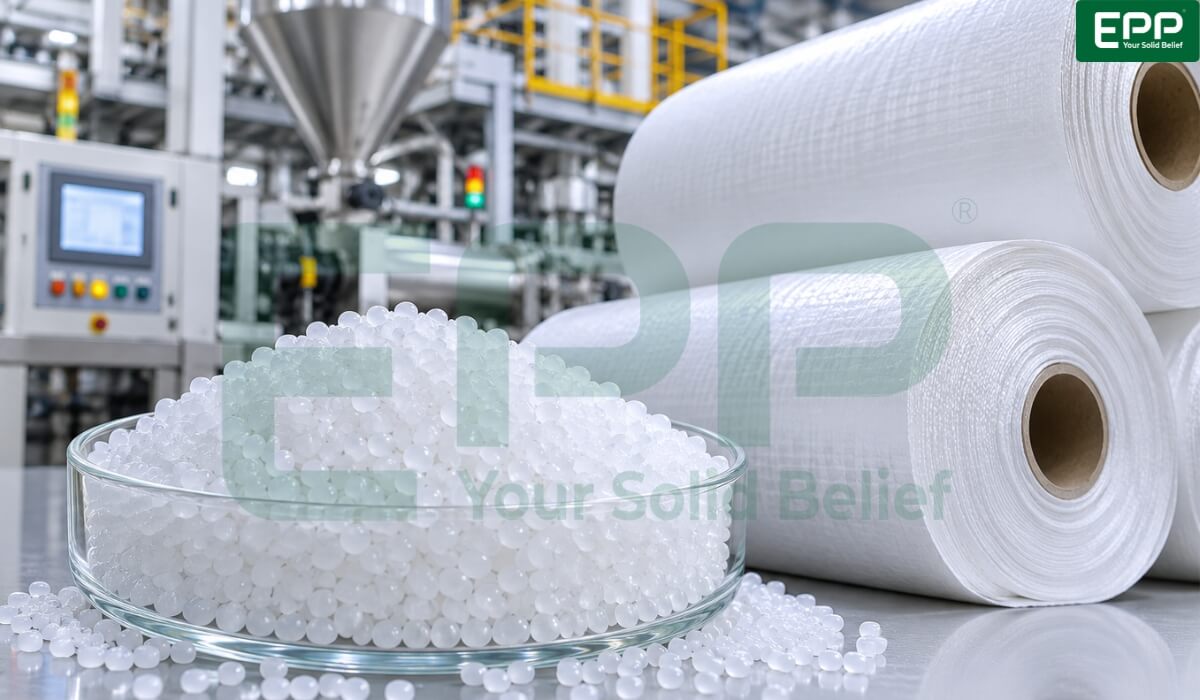
Polymer raw material grade—specifically virgin vs. recycled PE resin—serves as the primary baseline determinant of base tarpaulin pricing.
Petrochemical Market Dynamics: Since polyolefins are derived from crude oil refining, global oil price volatility directly impacts raw resin costs. Factory quotes typically adjust in tandem with international petrochemical benchmarks.
Polymer Base Differences: Selecting between PE, PVC, and Canvas substrates establishes different cost baselines due to varying raw material synthesis expenses. To explore specific material properties, review our guide on comparing PE, PVC, and Canvas material properties.
Fabric Weight (GSM), Denier, and Weave Density
Physical fabric construction dictates how much raw polymer is consumed per square meter, serving as a direct mathematical determinant of the final tarpaulin sheet price.
Fabric Weight (GSM): Measured in Grams per Square Meter (GSM), heavier fabrics require more plastic resin. A 200 GSM heavy-duty tarp uses substantially more polymer mass than a 70 GSM economy cover, resulting in a higher unit cost.
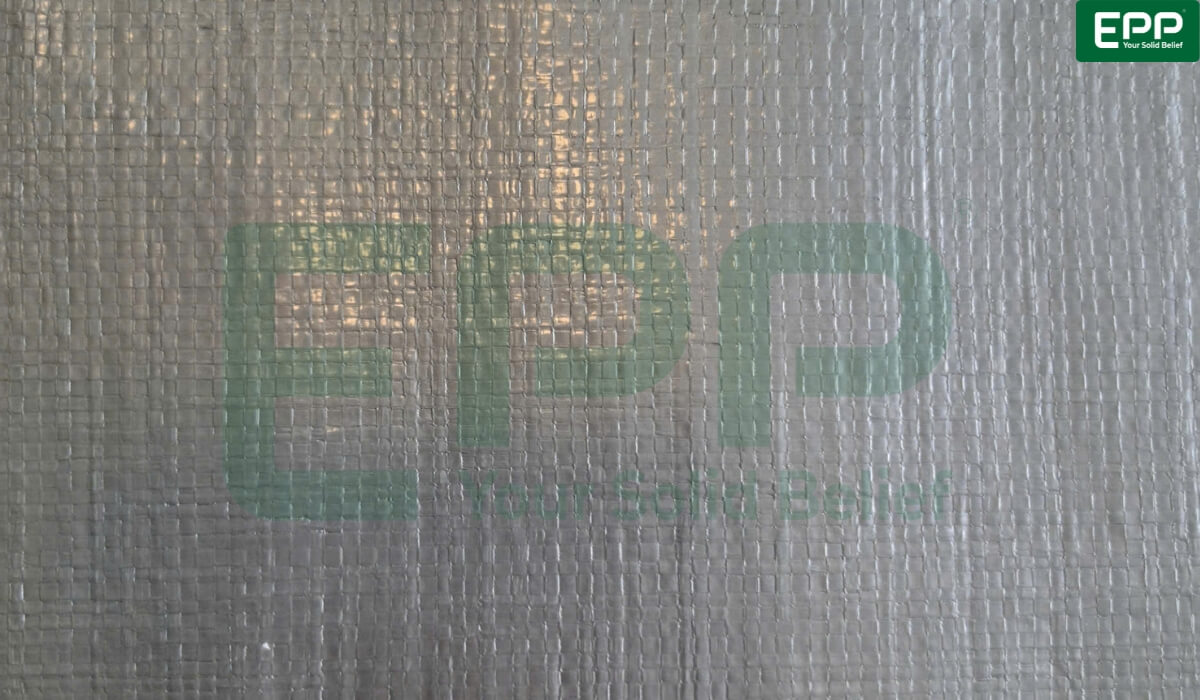
Higher GSM fabric weight and dense denier mesh counts consume more polymer mass per square meter, directly impacting the final cost per sheet.
Denier and Mesh Count: Denier measures the linear mass density of the individual synthetic threads (e.g., 600D to 1500D), while mesh count defines the weave density per square inch (e.g., 8×8, 14×14). Higher denier threads woven into a dense grid increase puncture resistance and material volume. Premium tarpaulins rely on high-tensile polypropylene woven fabric substrate to maintain strength under severe stress.
| Tarpaulin Grade | Average GSM | Typical Mesh / Denier | Primary Application | Relative Price Impact |
| Light-Duty PE | 60 – 90 GSM | 8 x 8 mesh / 600D | General covering, temporary dust protection | Economy / Low Cost |
| Medium-Duty PE | 100 – 150 GSM | 10 x 10 mesh / 800D | Construction site cover, agriculture | Standard Wholesale |
| Heavy-Duty PE | 180 – 250+ GSM | 14 x 14 mesh / 1000D+ | Cargo truck covers, long-term outdoor storage | Premium Investment |
Protective Coatings, Lamination, and Chemical Additives
Uncoated woven fabric remains porous. Applying lamination layers and functional additives transforms raw woven fabric into a functional protective barrier, introducing incremental costs based on technical requirements.
Standard Polyethylene (PE) Lamination: Standard tarpaulin construction consists of a woven core laminated on both sides with a thin extrusion layer of LDPE/LLDPE to achieve complete water impermeability and prevent seam fraying.
Optional UV Stabilizers: Adding UV stabilizer masterbatch (1% – 3%) protects the polymer chains from solar degradation. While adding UV protection increases the base tarpaulin sheet price slightly, it prevents the fabric from becoming brittle under prolonged sun exposure. Compare performance differences in our overview of UV-stabilized weather-resistant tarpaulin.
Special Fire-Retardant (FR) Additives (If Necessary): When specific project safety codes require flame resistance (such as CPAI-84 or NFPA 701 standards), specialized FR chemical additives are blended into the lamination batch, adding a technical premium to the quotation.
Size Requirements, Custom Fabrications, and Edge Finishing
A tarpaulin’s final conversion process—cutting, seaming, eyelet installation, and corner reinforcement—adds labor, machinery time, and hardware costs to the overall tarpaulin sheet price.
Standard vs. Custom Cut Sizes: Mass-produced standard sizes run continuously on automated conversion lines at lower costs. Custom dimensions require manual machine adjustments and generate fabric scrap, raising the unit price per square meter. Review standard dimensions in our guide to custom tarpaulin sheet dimensions.
Hem Reinforcement & Hardware Quality: Heavy-duty tarpaulins feature heat-sealed outer hems reinforced with embedded PP rope. The choice of eyelets—ranging from basic aluminum grommets to heavy-duty rustproof brass or molded plastic corners—directly influences hardware expenses.
Aesthetic Customization: Specialty multi-color printing and custom striping patterns require dedicated extrusion runs and printing setup fees, as demonstrated in our collection of heavy-duty multi-color striped tarpaulins.
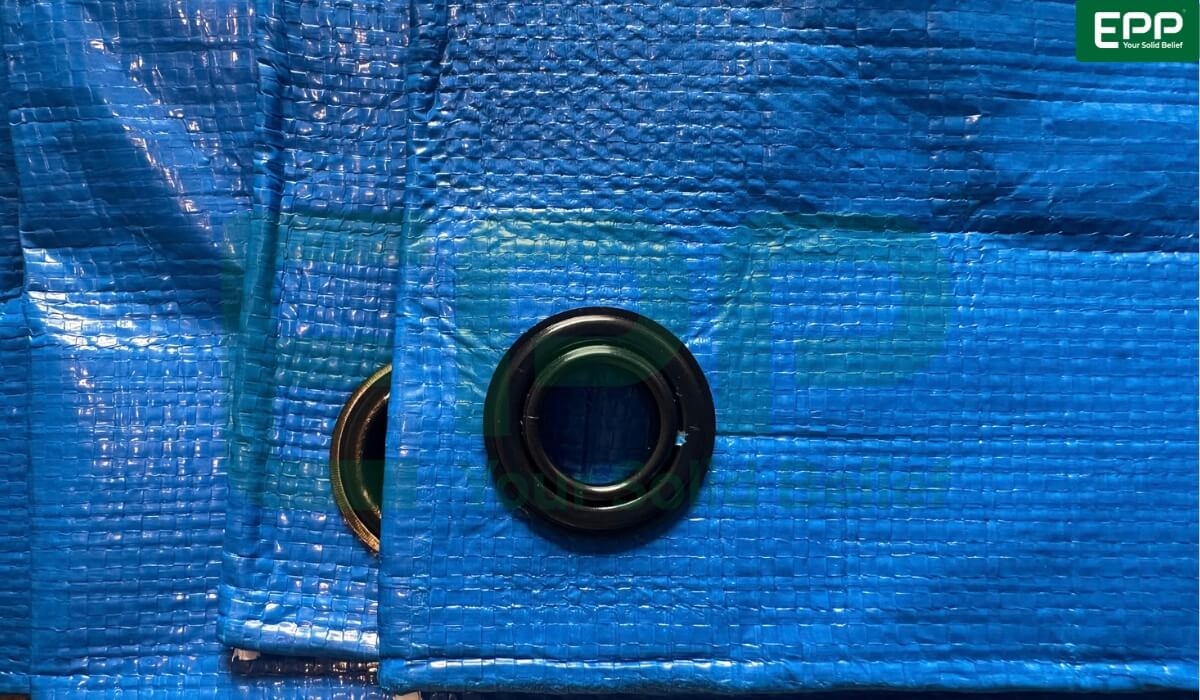
Quality hardware conversion—including plastic reinforced corners, brass eyelets, and rope-reinforced hems—adds durability while factoring into unit pricing.
Order Volume, Manufacturing Scale, and Global Logistics (Incoterms)
Beyond physical product parameters, order logistics and purchasing scale significantly influence the final landed tarpaulin sheet price.
Economies of Scale & Minimum Order Quantity (MOQ): High-volume production runs allow factories to amortize setup times, reduce machine downtime, and negotiate bulk resin discounts. Ordering Full Container Loads (FCL) yields a substantially lower per-square-meter price compared to Less than Container Load (LCL) orders.
Quality Management Systems: Sourcing from ISO 9001:2015 certified manufacturers ensures systematic quality control, preventing costly defect rates and freight claims.
Incoterms and Shipping Formats: Quotations vary depending on the agreed Incoterms (e.g., FOB Hai Phong vs. CIF or DDP Destination Port) and packaging efficiency (high-density hydraulic bale packing vs. individual carton packing).
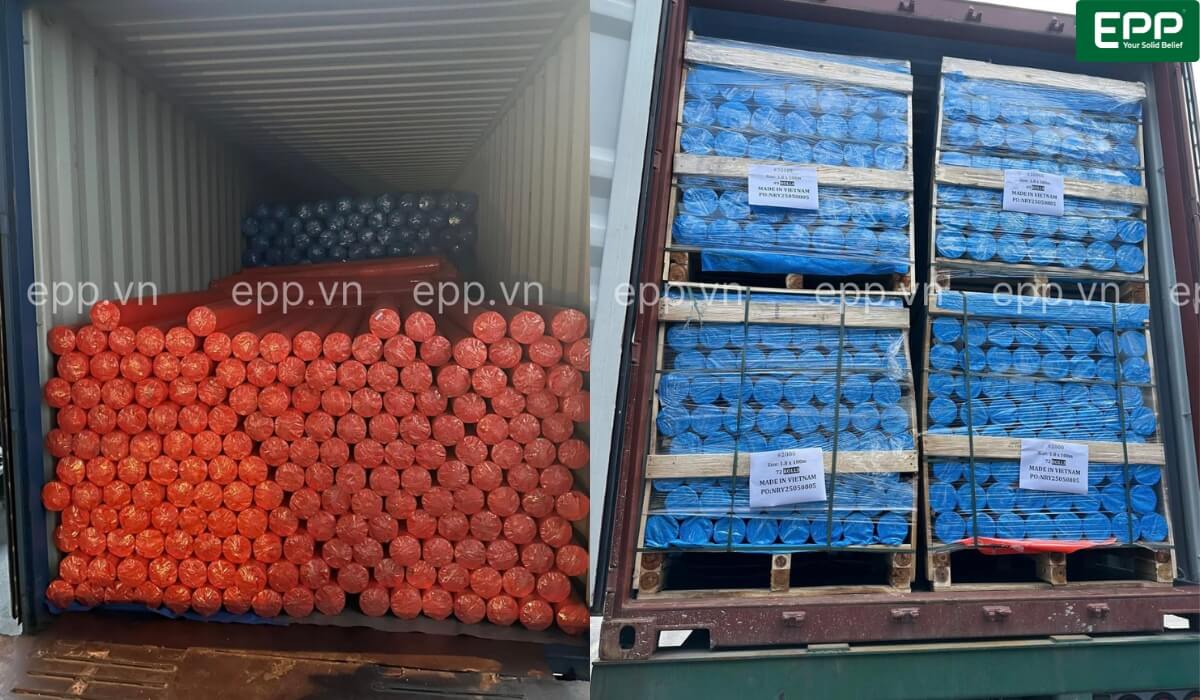
Ordering in full container loads (FCL) amortizes production setup costs and maximizes shipping density.
How to Compare Tarpaulin Sheet Quotations Fairly?
Comparing B2B tarpaulin quotes requires aligning all proposals to a standardized technical baseline to identify genuine value:
- Standardize the Measurement Metric: Confirm whether quotes are based on Cut Size (the raw fabric dimensions before folding and hemming) or Finished Size (the exact final dimensions after hem folds, which can be 3% – 5% smaller).
- Verify Raw Material Composition: Request explicit confirmation on the percentage of virgin polymer resin versus recycled additives, as well as exact GSM and lamination thickness specifications.
- Audit Included Accessories: Ensure that grommet spacing (e.g., every 50 cm vs. every 100 cm), corner plastic patches, and internal rope hem reinforcements are identically specified across all competing proposals.
Frequently Asked Questions About Tarpaulin Sheet Price
What is the main factor affecting tarpaulin sheet price?
The primary factor is the polymer raw material grade (virgin vs. recycled PE/PVC resin) combined with the fabric weight (GSM). Because plastic resin represents the largest proportion of manufacturing inputs, resin grade and weight exert the greatest influence on overall cost.
Is a higher GSM tarpaulin always more expensive?
In most cases, yes, because higher GSM requires more plastic resin per square meter. However, a lower GSM tarpaulin with specialized technical treatments (such as flame-retardant additives, heavy brass grommets, or intricate custom sizing) can sometimes carry a higher unit price than a basic high-GSM sheet.
Why does PE tarpaulin cost less than PVC tarpaulin?
PE (Polyethylene) tarpaulins utilize lightweight woven polyolefin strands coated with thin plastic films, enabling rapid high-volume production. PVC tarpaulins feature heavy polyester mesh coated with liquid polyvinyl chloride paste, resulting in exceptional tear resistance but higher raw material and processing costs.
Should I choose the lowest tarpaulin price?
Selecting the lowest initial quote can be risky if it involves unverified recycled resin, insufficient lamination thickness, or omitted UV protection. Substandard tarpaulins degrade quickly under sunlight and physical stress, leading to frequent replacements and higher long-term operational costs.
Calculating the true value behind a tarpaulin sheet price requires evaluating polymer purity, GSM weight, construction quality, and total logistics costs alongside the initial quotation figure. Partnering directly with an established manufacturer guarantees technical transparency, consistent material quality, and competitive factory-direct pricing for international supply chains.
Contact the technical export team at EPP Vietnam today to request tailored product specifications, lab-tested samples, and factory-direct B2B quotations for your bulk tarpaulin requirements.
Website: epp.vn
Alibaba website: https://eppvietnam.trustpass.alibaba.com/
Email: [email protected] Hotline/ Whatsapps: +84 986 002 888