Selecting the optimal tarpaulin material for large-scale commercial, industrial, or agricultural operations is one of the most critical decisions a procurement manager can make. Choosing an incorrect fabric spec, improper Grams per Square Meter (GSM) weight, or substandard polymer blend can lead to sudden tear failures, premature UV degradation, and costly cargo damage during transit.
At EPP Vietnam, drawing on over 20 years of expertise as a global supply chain orchestrator in the technical polyolefin and bulk packaging industry, we assist international B2B buyers in navigating complex material choices. This guide breaks down the core physical properties, material science, and commercial applications of modern tarpaulin fabrics to help you optimize your procurement strategy.
5 Common Tarpaulin Materials
To select the right protective covering, procurement officers must evaluate the trade-offs between tensile strength, flexibility, chemical resistance, weight, and total cost of ownership. The global industrial market relies primarily on five standard tarpaulin materials.
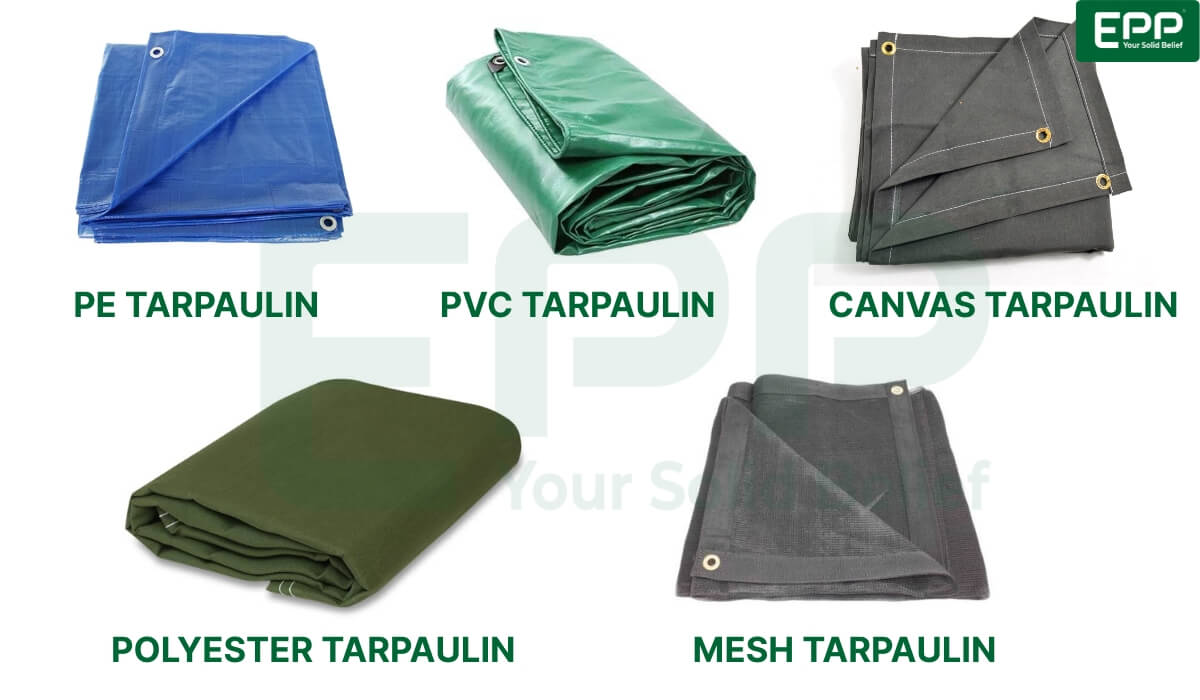
5 common types of tarpaulin materials
Polyethylene (PE)
For high-volume industrial, commercial, and logistics applications, polyethylene tarp material holds over half of the global market share. Its dominance stems from its chemical inertness, cost efficiency, high strength-to-weight ratio, and circular recyclability. However, it has lower tensile strength compared to PVC and can degrade over time if exposed to direct sunlight for prolonged periods.
Constructed from a dense core of high-tenacity woven High-Density Polyethylene (HDPE) tapes laminated on both sides with Low-Density Polyethylene (LDPE) film, this 3-layer structure provides 100% waterproofing and high tear resistance. To meet exact dimensional, GSM, or color requirements for your operations, explore PE custom tarp covers from EPP Vietnam engineered for heavy-duty industrial protection.
Polyvinyl Chloride (PVC)
PVC tarpaulin is known for its durability and is suitable for heavy-duty and industrial applications. Its excellent weather and tear resistance make it the top choice for long-term use in harsh conditions. The downside is that PVC tarpaulin is heavier and generally more expensive than PE options.
Canvas
Canvas tarpaulin is made from cotton or synthetic fibers and is favored for its breathability and eco-friendliness. It controls condensation well, making it suitable for protecting crops and equipment. However, canvas is less waterproof than PE or PVC and usually requires treatment to improve its weather-resistant properties.
Polyester
Polyester tarpaulin combines strength and UV resistance, making it ideal for outdoor applications like boat covers and awnings. While it holds color well and is strong, it can be more expensive than PE and may require additional treatment to enhance waterproofing.
Nylon
Nylon tarpaulin is famous for its outstanding strength-to-weight ratio. It’s resistant to mildew and tears, making it a preferred option for specialty applications like lightweight tarps and backpacks. However, nylon is generally more expensive than other tarpaulin materials and may not be as waterproof unless specifically treated.
| Tarpaulin Material Type | Core Polymer / Base Fabric | Weight Range (GSM) | Thickness Range (Mil) | Outdoor Lifespan | Tensile Strength (N/5cm) | Primary Industrial Application |
| Polyethylene (PE) | HDPE Woven Fabric + LDPE Lamination | 60 – 300+ GSM | 6 – 18 Mil | 1 – 3+ Years (UV Treated) | 800 – 1600 N | Transport, Agriculture, Construction, Cargo |
| PVC (Vinyl) | Coated/Laminated Polyester Scrim | 400 – 900 GSM | 14 – 30 Mil | 3 – 7 Years | 2000 – 3500 N | Heavy Truck Curtains, Long-Term Covers |
| Cotton Canvas | 100% Woven Cotton (Wax Treated) | 300 – 600 GSM | 15 – 25 Mil | 1 – 2 Years | 600 – 1200 N | Breathable Machinery Covers, Vintage Gear |
| Polyester (Coated) | Woven Polyester + Polyurethane/Vinyl | 250 – 550 GSM | 10 – 20 Mil | 2 – 5 Years | 1500 – 2500 N | Industrial Curtains, Marine Covers |
| Polypropylene Mesh | Woven PP / PVC Mesh Yarns | 100 – 250 GSM | 8 – 14 Mil | 1 – 2 Years | 700 – 1400 N | Debris Netting, Windbreaks, Shade |
How to Match Tarpaulin Materials with Industrial Applications?
Aligning material properties with operational hazards ensures long product service life and protects capital assets.
Marine and Boat Enclosures
Selecting a boat tarp material demands extreme resistance to saltwater corrosion, high wind shear, and continuous UV radiation. Heavy-duty 14–16 mil PE tarpaulins treated with UV stabilizers or specialized vinyl-coated polyester are recommended. They provide total water impermeability without adding excessive dead weight that complicates installation.
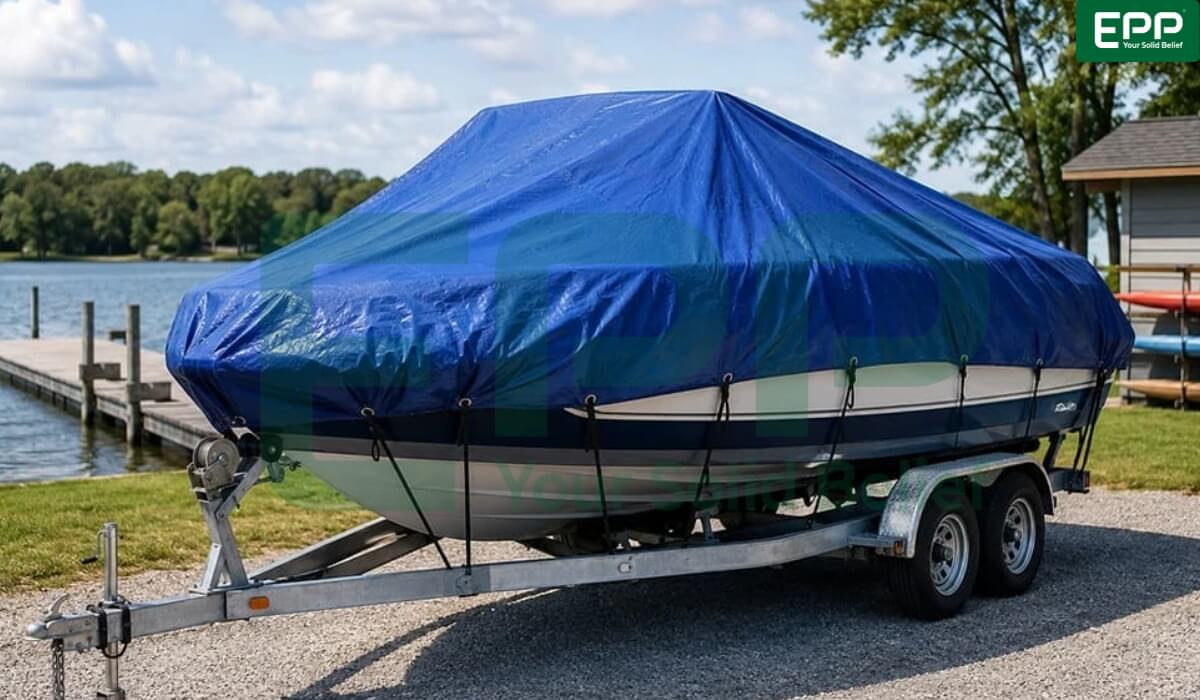
Blue heavy-duty tarp providing waterproof and UV-resistant protection for trailered boats
When choosing color options for outdoor marine storage, many buyers wonder: Is a yellow tarpaulin as good as a blue tarpaulin? While both utilize protective masterbatches, yellow tarps offer higher visual visibility and heat reflection, whereas dark blue tarps absorb more heat but provide solid shade opacity depending on the UV additive formulation.
Freight, Trucking, and Cargo Covers
Over-the-road freight requires materials that withstand constant wind whipping and road debris. While heavy PVC side-curtains are standard for flatbeds, multi-temp flatbed covers and top tarps rely heavily on 200+ GSM heavy-duty poly tarps due to their lower tare weight, which maximizes legal cargo payloads.
Agriculture and Grain Protection
Agricultural applications require a clear distinction between sealed storage and ventilated storage:
- Sealed Silo & Hay Storage: Requires heavy-duty 180–250 GSM poly tarp material with high hydrostatic water head pressure (>2000 mm H2O) to prevent rain penetration.
- Ventilated Produce Covers: Requires breathable tarp material such as treated cotton canvas or specialized porous mesh to allow internal heat and moisture moisture vapor to escape, preventing rot and spoilage.
Construction Enclosures and Scaffolding
Building sites require weather resistant tarp material (80–120 GSM) featuring high puncture resistance and reinforced hem borders. These covers protect open structures from adverse weather while allowing natural light transmission when transparent or natural white LDPE coatings are applied.
Specialized Tarpaulin Material Additives & Customization Options
Standard virgin polymers will degrade under environmental stress unless enhanced with specialized additives during the extrusion and lamination process.
UV Inhibitors and Accelerated Weathering
Unprotected polyethylene breaks down under solar UV-A and UV-B radiation within 60 days, leading to polymer embrittlement and cracking. Incorporating 3% to 5% UV masterbatch into the LDPE coating layer protects the polymer chain from photo-oxidation. This enables high-grade uv resistant tarp material to withstand over 3,000 hours of QUV accelerated weathering tests (ASTM G154 standards), delivering 2 to 3+ years of continuous outdoor service in high-irradiance regions.
Flame Retardants, Anti-Static, and Thermal Pigments
For hazardous industrial environments, specialized additives provide critical compliance features:
- Flame Retardants: Additives conforming to CPAI-84, NFPA 701, or DIN 4102 B1 international fire safety standards prevent self-sustained combustion.
- Anti-Static Additives: Prevent static discharge buildup in dry bulk powder handling or electronic cleanroom enclosures.
- Thermal Regulation Pigments: Utilizing dual-color masterbatches—such as Silver/Black or White/Black—reflects solar radiation on the exterior while maintaining complete opacity inside the covered enclosure.
Reinforced Edge Finishing and Hardware Specs
A tarpaulin fabric is only as strong as its perimeter finishing. Industrial-grade fabrications feature:
- Rope-In-Hem Reinforcement: Ultrasonic heat-welded seams enclosing a continuous high-tenacity PP cord around the perimeter to distribute point loads.
- Grommet Selection: Heavy-duty polycarbonate, brass, or aluminum eyelets placed at custom intervals (18″ to 36″) with reinforced plastic corner patches to absorb tension.
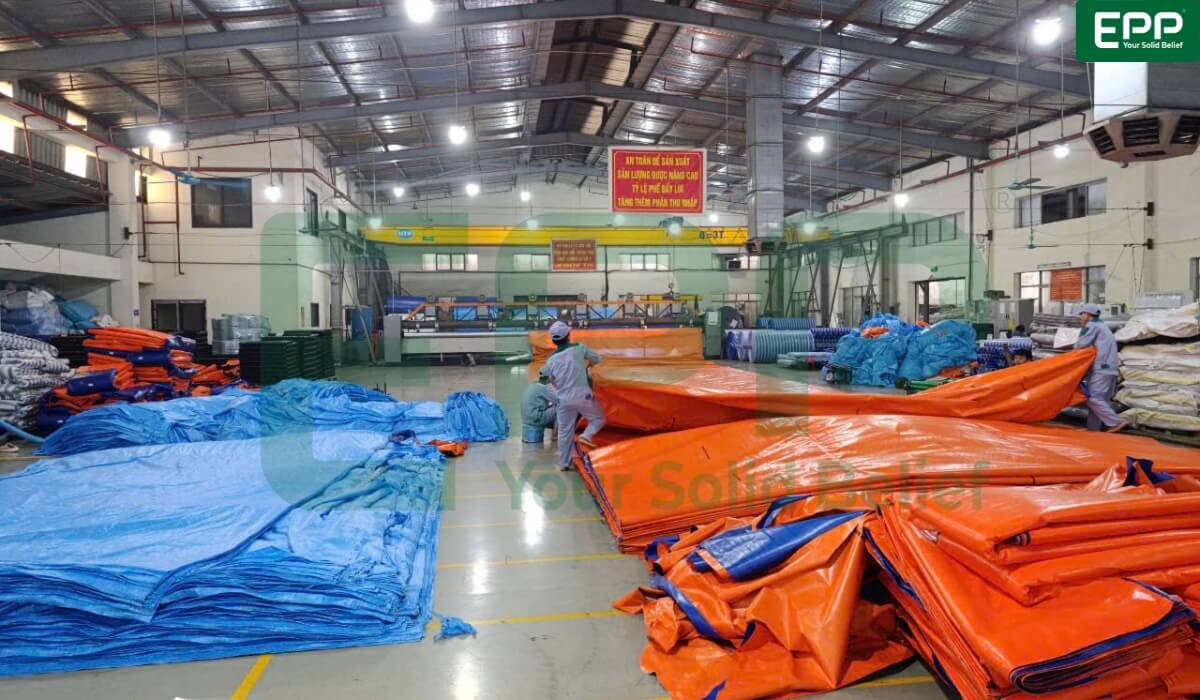
Blue and orange heavy-duty PE tarpaulins inside an ISO-certified production factory.
FAQs
How do I choose the right tarpaulin material for my needs?
Choosing the right tarp material depends on the intended use. For temporary covers, lightweight options like PE are ideal, while industrial applications may require the strength of PVC. Assess environmental conditions, budget, and required durability to make the best choice.
How do I properly clean and maintain tarpaulin material?
To clean tarpaulin, use mild soap and lukewarm water, applying a soft brush if necessary. Rinse thoroughly and allow it to dry completely before storing, as moisture can lead to mildew and degradation. Avoid harsh chemicals that could damage the material.
Is PVC or PE tarpaulin better?
The better option depends on your requirements. PVC offers superior durability and weather resistance, making it ideal for heavy-duty applications. In contrast, PE is lightweight and cost-effective, suitable for general use. Consider the specific conditions in which you’ll use the tarp to determine the best choice.
Which GSM is better for tarpaulin?
The GSM (grams per square meter) rating indicates the thickness of the tarpaulin material. Generally, a GSM of 120-200 is suitable for light-duty use, while heavier-duty applications may require 250-400 GSM or more for enhanced durability.
Is tarpaulin material environmentally friendly?
While many tarpaulins are made from synthetic materials, eco-friendly options like canvas are biodegradable. Additionally, some manufacturers incorporate sustainable practices and offer recyclable products. Always check the specifications and certifications if environmental impact is a concern.
Conclusion
Choosing the right tarpaulin material is a strategic decision that protects assets and optimizes budgets. Whether you require the lightweight convenience of PE for temporary shelter or the industrial strength of PVC for multi-year protection, a clear understanding of material properties is non-negotiable.
For businesses and organizations seeking high-quality, durable tarpaulins—from standard PE to specialized vinyl and recyclable options—it is crucial to partner with a manufacturer capable of meeting international quality standards. For dependable sourcing and manufacturing expertise, especially in the Southeast Asian market, look to EPP Vietnam for buying high-quality tarp that meet your exact specifications for protection and longevity.