When securing assets, construction sites, agricultural yields, or industrial machinery, selecting the wrong protective covering can lead to catastrophic losses. While a standard utility tarpaulin might seem adequate at first glance, placing it in high-stress outdoor environments often results in rapid degradation, water ingress, and structural tears.
Understanding the engineering differences between a weather resistant tarpaulin and a normal tarpaulin is essential for procurement managers, logistics coordinators, and project leaders seeking long-term performance and lower total cost of ownership.
What Is a Normal Tarpaulin?
A normal or standard tarpaulin is an economical, light-duty cover designed for short-term protection, indoor shielding, or mild outdoor applications.
- Material & Structure: Typically manufactured from low-density, light-gauge woven Polyethylene (PE) or basic Canvas with minimal thread counts (8 x 8 or 10 x 10 mesh).
- Coating: Features thin or non-existent lamination layers, making it susceptible to moisture penetration over extended exposure.
- Intended Use: Dust protection, temporary ground covers, short-distance cargo shielding, or light shade.
While budget-friendly for quick fixes, standard tarps degrade rapidly when exposed to continuous direct sunlight, strong wind forces, or sub-zero temperatures.
What Is a Weather Resistant Tarpaulin?
A weather resistant tarpaulin—often engineered as an extreme duty weather resistant tarp—is a high-performance industrial covering designed to withstand prolonged exposure to aggressive environmental conditions.
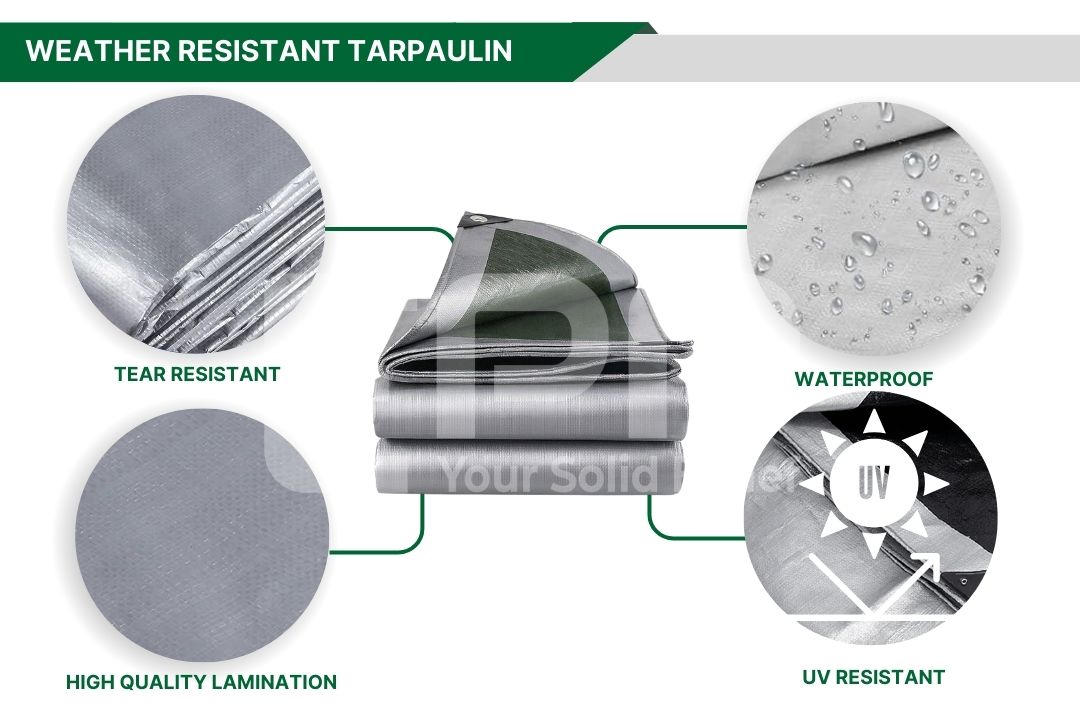
- High-Density Base Fabric: Built using heavy-gauge, high-density woven fabrics (12 x 12 to 14 x 14 mesh or higher) engineered to resist intense tensile loads and tear propagation. To compare core woven substrates, review our other type of woven fabric.
- Dual-Sided Extrusion Lamination: Heavy layers of molten Low-Density Polyethylene (LDPE) are extruded onto both sides of the base weave under high pressure, sealing every microscopic interstice against moisture and gas transmission.
- Specialized Chemical Additives: Formulated with active Ultraviolet (UV) stabilizers, anti-aging agents, and cold-crack additives to preserve elasticity across extreme temperature ranges (-30°C to +70°C).
Key Performance Features of Weather-Resistant Tarpaulins
Core Technical Differences: Weather Resistant vs. Normal Tarpaulins
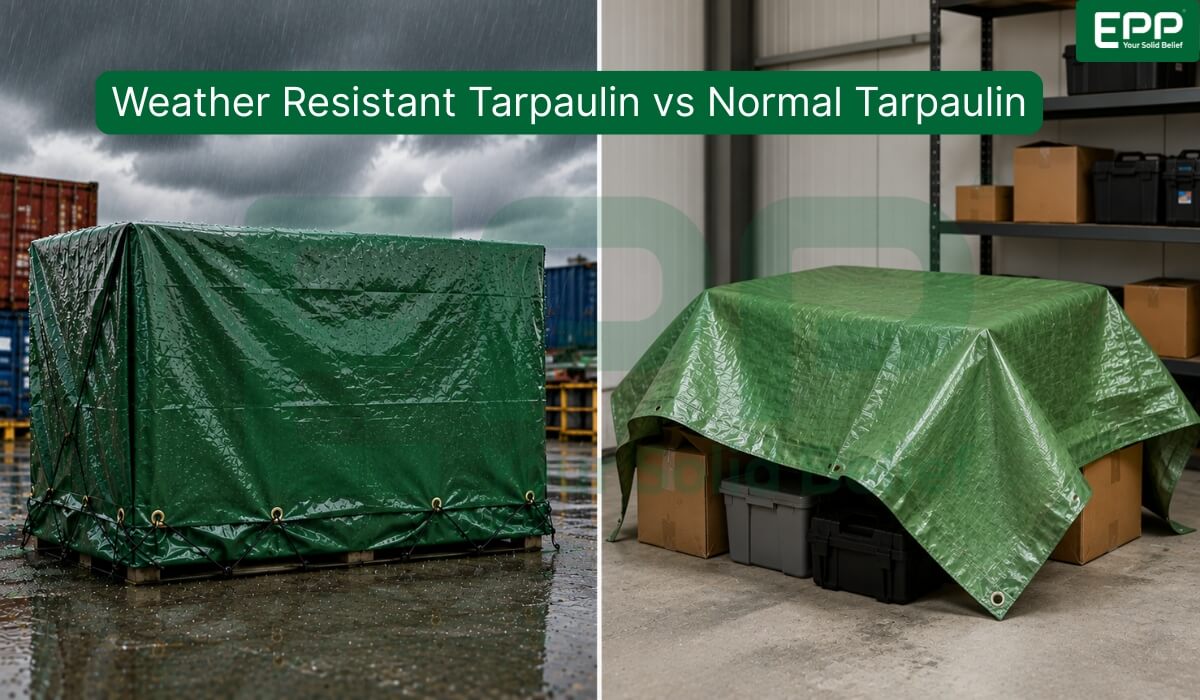
Evaluating the technical differences between these two packaging and covering solutions highlights why industrial applications demand specialized weatherproofing.
Weather-Resistant vs. Normal Tarpaulins: Choosing the Right Protection for Your Application
| Performance Parameter | Normal Tarpaulin | Weather Resistant Tarpaulin |
| Fabric Density & Weight | 65 – 120 GSM (6 – 8 mil) | 180 – 350+ GSM (12 – 20+ mil) |
| Mesh Count (Weave Density) | 8×8 to 10×10 per inch | 12×12 to 14×14+ per inch |
| UV Resistance | Unstabilized or minimal (< 6 months) | HALS UV Inhibitors (2 – 5+ years lifespan) |
| Waterproof Performance | Water-resistant (Leaks under hydrostatic head) | 100% Waterproof (High hydrostatic resistance) |
| Seam Construction | Basic stitched or lightly glued seams | Heat-sealed, high-frequency welded seams |
| Edge Reinforcement | Folded hem with light string insert | Triple-thick hem with heavy PP rope insert |
| Grommet/Eyelet Quality | Standard aluminum (Easily pulls out) | Rust-proof brass/heavy aluminum at 50cm intervals |
The structural capacity of a tarpaulin directly correlates with its weight (GSM – grams per square meter) and thickness (mils). A light duty weather resistant tarp starts around 120 – 150 GSM, offering a balance between portability and weather resistance, whereas heavy industrial applications require 200+ GSM specifications.
To explore how material density affects overall performance across polymer types, read our detailed comparison on which tarpaulin material is right for you.
How Weather Resistant Tarpaulin Outperform?
1. Advanced UV Protection & Anti-Aging
Standard Polyethylene breaks down quickly when exposed to solar radiation; ultraviolet rays snap the polymer chains, making the tarp brittle, faded, and prone to flaking within months.
A high-grade best weather resistant tarp incorporates Hindered Amine Light Stabilizers directly into the polymer resin during extrusion. This additive neutralizes free radicals created by solar radiation, maintaining structural tensile strength even after thousands of hours of continuous sun exposure.
2. Complete Waterproofing & Hydrostatic Resistance
Industrial weather-resistant covers utilize continuous Extrusion Lamination combined with Heat-Sealed Seams. By fusing the material overlaps with thermal energy rather than puncturing them with sewing needles, the seam achieves the same waterproof integrity as the solid sheet.
3. Superior Tear Strength & Hardware Durability
When high winds catch a loose tarpaulin, stress concentrates at the anchor points (grommets).
- Standard Tarps: Grommets pull free from the single-folded hem under light wind loads.
- Weather Resistant Tarps: Feature PP rope-reinforced hems, plastic-reinforced corner patches, and heavy-duty grommets spaced every 50cm. This distribution allows a large heavy duty tarp to handle high dynamic wind loads without tearing.
Choosing the Right Tarp for Your Application
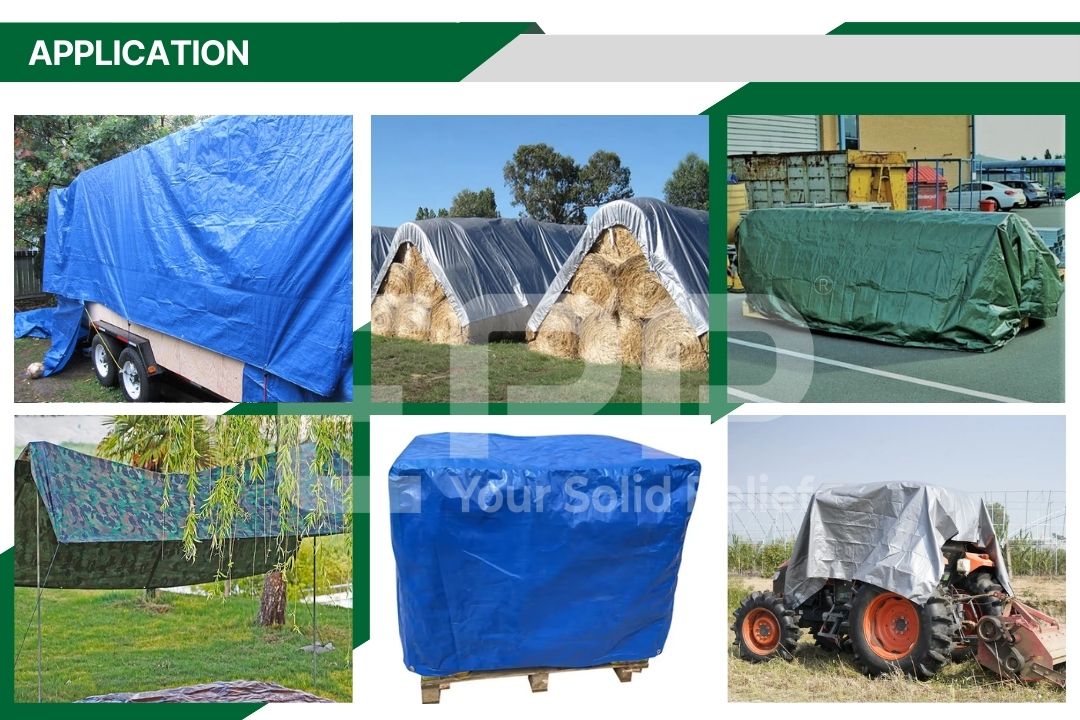
Choosing the right tarpaulin comes down to matching the environment and exposure duration to the fabric’s technical threshold.
Versatile Weather-Resistant Tarpaulin Uses
Some FAQs About Weather Resistant Tarpaulin
What is the Best Material for Outdoor Tarps?
The best material for outdoor tarps depends on your specific needs. For most applications, polyethylene and PVC are excellent choices due to their durability and waterproof properties. For lighter uses, canvas can be suitable, especially when ventilation is required.
What Temperature Can a Tarp Withstand?
The temperature resistance of a tarp varies by material. Generally, weather resistant tarpaulins can withstand temperatures ranging from -20°F to 120°F (-29°C to 49°C) without losing structural integrity. Always check the manufacturer’s specifications for precise temperature ratings.
What Color Tarps Last Longest in the Sun?
Tarps in darker colors, such as black or blue, typically have better UV resistance compared to lighter colors. However, they may absorb more heat. Silver tarps reflect sunlight and can help keep contents cooler, making them a popular choice for prolonged outdoor use.
How long does a weather resistant tarpaulin last outdoors?
Depending on the GSM rating and the percentage of UV stabilizers added during production, a high-quality weather resistant tarp typically lasts anywhere from 2 to 5+ years under continuous outdoor sun and weather exposure. Standard tarps usually begin degrading and flaking within 3 to 6 months.
What is the main difference between GSM and mil thickness when ordering tarps?
GSM (Grams per Square Meter) measures the overall mass and density of the fabric weave and lamination, while mil thickness measures the physical depth (1 mil = 1/1000 inch). For industrial covers, both metrics matter: a higher GSM indicates a denser, stronger weave, while a higher mil rating indicates thicker protection against abrasion and punctures.
Conclusion
While a normal tarpaulin serves well for temporary indoor dust protection or short-term utility needs, selecting a weather resistant tarpaulin is critical for any demanding outdoor deployment. By combining high-density woven fabrics, dual-sided lamination, UV stabilization, and heat-sealed reinforcements, weather-resistant covers deliver long-term protection, preventing costly material damage and job-site downtime.

Weather Resistant Tarpaulin Wholesale Production at EPP Vietnam
Partnering with an experienced manufacturer like EPP Vietnam ensures your industrial tarpaulins are custom-engineered to meet rigorous performance and environmental requirements. Contact our engineering team today to review technical specifications or request fabric samples for testing.
Website: epp.vn
Alibaba website: https://eppvietnam.trustpass.alibaba.com/
Email: [email protected] Hotline/ Whatsapps: +84 986 002 888