
Knowing how to install tarpaulin sheets correctly is the primary line of defense against costly weather damage and asset breakdown in industrial logistics, construction, and agriculture. Improper tensioning, wrong tie-down methods, or weak fabric specs lead to tearing, standing water pooling, and severe wind uplift.
As a premier supplier for tarpaulin in Vietnam, EPP Vietnam provide high-density, UV-stabilized polyethylene tarpaulins for global supply chains. This technical guide covers pre-installation checks, step-by-step tie-down methods, application protocols, repair fixes, and B2B quality standards.

Essential Pre-Installation Preparations & Material Inspection
Proper site preparation and material inspection prevent premature fabric failure and field delays before unfolding the tarp.
Site Surface Inspection & Sharp-Edge Protection
Before placing the tarp, clear the area of sharp debris, protruding nails, or metal burrs on structural frames or container tops. Wrap sharp corners on machinery or cargo containers with foam padding, heavy-duty rubber strips, or polyethylene film wrapping to eliminate friction points that tear fabric under wind pressure.
Material Specifications & Dimension Matching
Verify that your polyethylene tarpaulin matches the required technical specifications, including weight ratings from 120 GSM to over 300 GSM and weave densities from 10×10 to 14×14 mesh. Always allow an extra 20 cm to 40 cm along each edge to accommodate double-folded hem overlaps and corner grommet anchoring points. For large-scale projects, reviewing standard tarpaulin sheet sizes helps ensure you select pre-sized seamless rolls instead of piecing together small sheets.
How to Install Tarpaulin: Step-by-Step Field Installation Process
Executing a secure, weather-tight installation requires following a standardized sequence that balances tension distribution with wind resistance.
Step 1: Directional Unfolding
Unroll the tarp smoothly over the structure or equipment, paying close attention to wind direction. Always unfold the fabric downwind so gusts glide over the surface rather than catching beneath it, which creates a sail effect that can rip the fabric out of workers’ hands.
Step 2: Diagonal Cross-Tensioning
Anchor two opposite diagonal corners first to center the sheet and establish your base tension line. Once the opposing corners are pinned, stretch and secure the remaining two corners to form a flat, uniform surface free of sagging pockets. Use elastic ball bungees or ratchet tie-down straps rather than rigid, static ropes to absorb wind shocks.
Step 3: Edge Securing & Pitch Slope Rules
Anchor every grommet along the hem at standard 50 cm to 100 cm intervals to distribute load tension evenly. Skipping grommet attachment points concentrates wind stress on the remaining eyelets, increasing the risk of edge tearing. For outdoor roofing and shelter applications, maintain a minimum pitch derrick slope of 15° to 30° to ensure rainwater drains off rapidly and avoids standing water pooling.
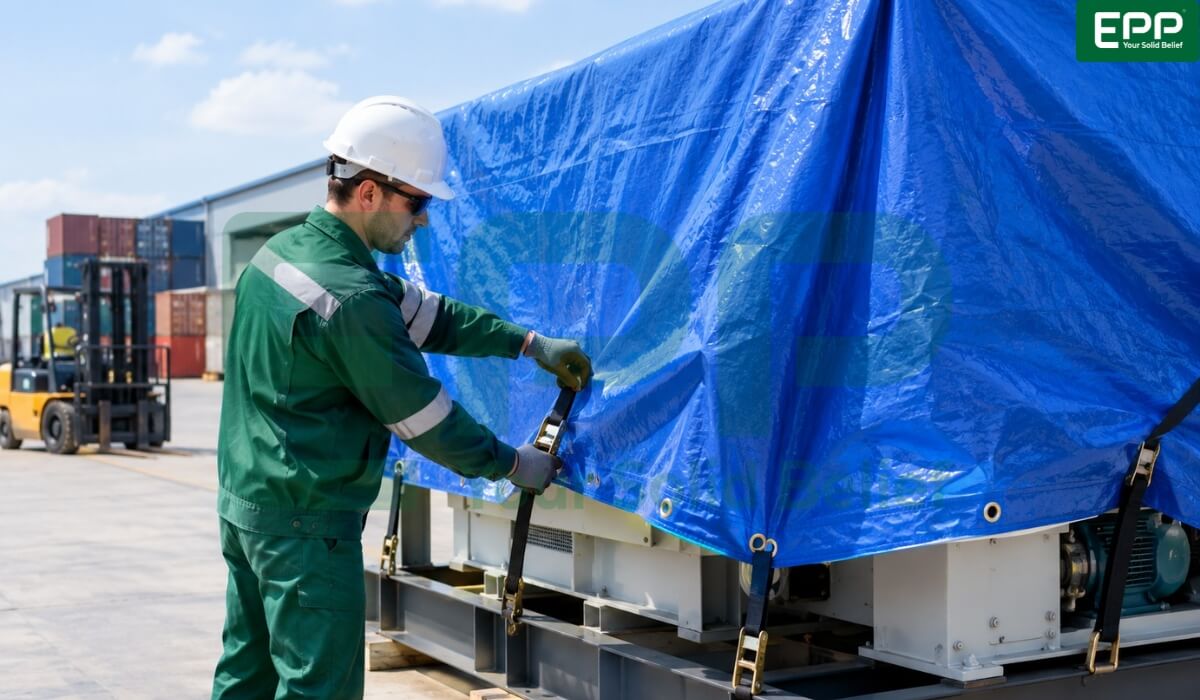
Professional heavy duty polyethylene tarpaulin installation.
How to Install Tarpaulin for Different Applications?
Different industrial settings present unique environmental stresses that require tailored installation techniques.
1. Temporary Roof Covering & Construction Sites
Covering damaged roofs or active building sites requires wood-lathing techniques rather than relying solely on grommet eyelets. Secure the tarp by placing wooden furring strips over the folded fabric hems and nailing through the wood directly into structural rafters. This distributes wind uplift forces along the entire length of the timber strip instead of concentrating stress on individual eyelets. Always extend the ridge tarp at least 50 cm over the roof crown to prevent water from driving beneath the upper edge.
2. Flatbed Trucks & Logistics Cargo Transport
Securing cargo on moving flatbed trucks requires front-to-back fabric overlapping to minimize wind resistance at highway speeds. Fold the front edge of the tarp over the rear section so oncoming airflow glides over the seam without catching the underside. Fasten the tarp body using heavy-duty ratchet straps across primary load points and attach ball bungees to side drop-hooks to maintain continuous tension during vehicle vibration.
3. Outdoor Industrial Machinery & Bulk Storage Yards
Covering idle machinery outdoors requires proper air circulation to prevent internal moisture condensation, which causes equipment rust and fabric degradation. Elevate the tarp 10 cm to 15 cm above ground level or install side ventilation gaps to promote airflow. Anchor bottom hems using heavy sandbags or flexible weights tied to grommets rather than rigid ground stakes so the cover can shift slightly during strong wind gusts.
4. Greenhouse Covers & Agricultural Facilities
Agricultural shade covers and greenhouse structures require uniform tensioning across arched frames without punching holes in the film. Secure PE tarp edges into aluminum base channels using zigzag spring wires to hold the material taut like a drumhead without tearing the plastic matrix. To select the right polymer composition for agricultural or industrial use, read our guide on choosing the right tarpaulin material.

How to Repair Tarpaulin: Maintenance and On-Site Fixes?
Addressing small tears immediately prevents wind shear from expanding punctures into complete field failures.
Patching Minor Tears and Punctures
Clean the damaged area with isopropyl alcohol to remove dirt, grease, and moisture. Cut a circular patch from matching PE tarp fabric, avoiding sharp corners that peel easily. Apply heavy-duty waterproof PE repair tape or industrial adhesive to both the upper and lower surfaces of the tear, pressing firmly with a hand roller to create an airtight seal.
Heat-Welding Large Seams and Grommet Tears
To join large tarps together or fix seam splits, hot-air heat welding provides a stronger connection than sewing or adhesives. Use a handheld hot-air gun set between 350°C and 450°C to melt the PE lamination layers along a 5 cm to 10 cm overlap seam, then press the layers together with a silicone pressure roller to form a fused, 100% waterproof join. When evaluating the cost differences between custom seamless rolls and welded multi-tarp assemblies, consider the factors outlined in our analysis of tarpaulin sheet price factors.
Re-anchor pulled-out corner grommets using a portable eyelet punch tool, backing the area with a plastic triangle corner patch to distribute tension across the reinforced hem.
Common Tarpaulin Installation Mistakes and How to Avoid Them
- Inadequate Pitch Slope: Flat installations allow rainwater to pool, creating heavy water pockets that collapse support frames and stretch synthetic fibers.
- Over-Tightening Rigid Ropes: Tying static ropes directly to grommets without shock absorbers causes eyelets to pull out under sudden wind gusts. Always use elastic bungees or tension springs.
- Exposing Unprotected Sharp Edges: Unpadded metal corners or sharp machinery edges wear through heavy-duty woven plastic under continuous wind friction.
- Tying Off Off-Center: Anchoring eyelets out of alignment creates uneven stress lines across the fabric grid, leading to diagonal seam splits.
Critical E-E-A-T Quality Checklist for B2B Tarpaulin Procurement
To ensure long-term field performance and protect your supply chain investments, verify that your supplier meets these core quality metrics:
- [ ] 100% Virgin Polyethylene Resin: Manufactured without recycled plastic fillers to prevent cracking and premature UV breakdown.
- [ ] High-Grade UV Stabilization: Formulated with 2% to 5% HALS additives to withstand over 10,000 hours of continuous outdoor solar exposure.
- [ ] Reinforced Rope Hems: Features heat-sealed double-folded edges reinforced with embedded PP rope along the full perimeter.
- [ ] Rust-Proof Metal Grommets: Fitted with heavy-duty aluminum or brass eyelets spaced every 50 cm to 100 cm, complete with plastic corner patch reinforcement.

Frequently Asked Questions (FAQ)
How do I keep my tarpaulin from flapping violently in high winds?
Prevent wind flapping by maintaining firm, uniform surface tension using elastic ball bungees rather than rigid ropes. Running a center ridgeline rope beneath the tarp provides central support, while anchoring bottom edges with heavy sandbags prevents wind from catching under the hem.
What is the strongest way to join two polyethylene tarps together?
Thermal heat welding using a hot-air gun and silicone pressure roller creates the strongest seam. Overlapping the PE edges by 5 cm to 10 cm and fusing the plastic lamination layers creates a 100% waterproof bond that outperforms sewn seams or adhesive tapes.
Can a Tarpaulin Be Repaired After Tearing?
Yes. Clean small punctures with isopropyl alcohol and seal both sides with heavy-duty waterproof PE repair tape. For large rips or split seams, hot-air heat welding a PE fabric patch over the damaged area restores structural strength and waterproofing.
Partner with EPP Vietnam for Certified Industrial Tarpaulins
Selecting the right high-grade materials makes knowing how to install tarpaulin sheets simple and efficient. EPP Vietnam is a trusted exporter of heavy-duty polyethylene tarpaulins, agricultural films, and FIBC bulk packaging for commercial markets worldwide.
We offer tailormade industrial tarp specifications:
- Custom weight options from 70 GSM to over 300 GSM.
- Seamless roll widths up to 6.0 meters or custom heat-welded panel assemblies.
- Certified ISO 9001:2015 and BRCGS manufacturing with direct factory pricing.
Contact our technical export team today to request product samples, technical datasheets, and competitive quotes:
Website: epp.vn | eppvietnam.trustpass.alibaba.com
Phone / WhatsApp: +84 986 002 888
Email: [email protected]