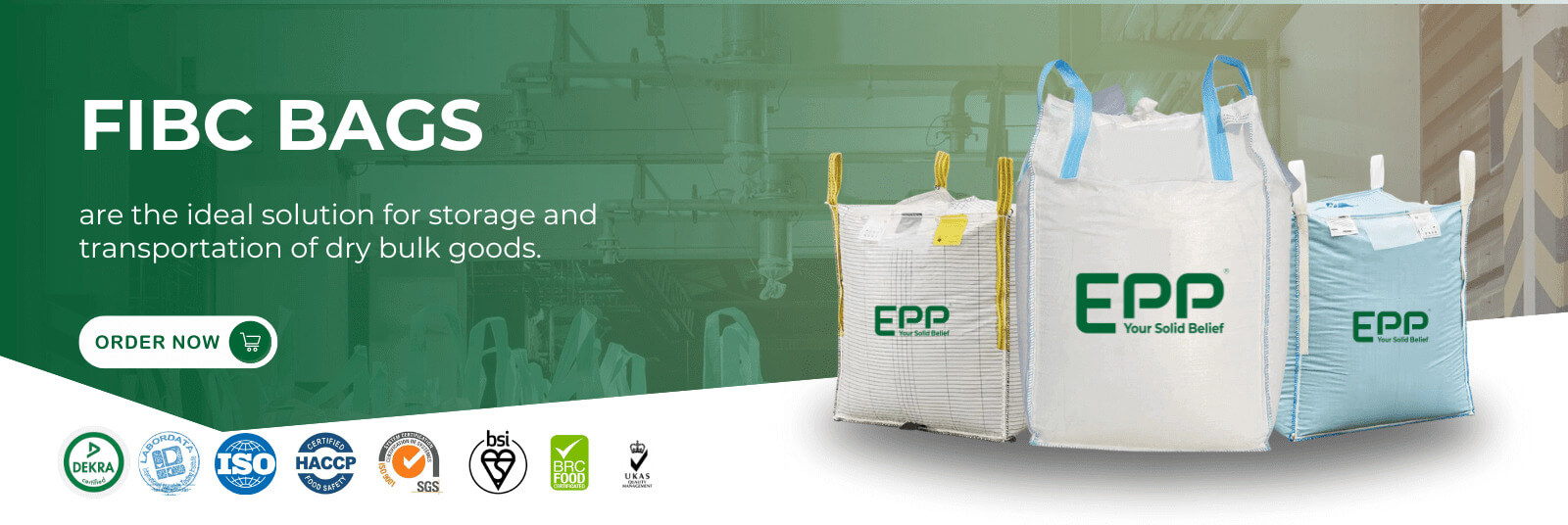
When transporting fine chemical powders, hygroscopic agricultural products, or high-purity pharmaceutical ingredients, relying on standard woven bulk packaging often leads to moisture contamination and product leakage. High-performance lined super sacks provide a complete seal, isolating sensitive cargo from external humidity, atmospheric oxygen, and microscopic seepage during long ocean transits.
However, successfully deploying lined super sacks requires more than simply dropping a plastic bag inside a woven polypropylene container. Sizing errors, air entrapment, and improper liner fixation can lead to severe operational failures like liner blowouts or discharge line blockages. As a leading FIBC supplier, EPP Vietnam breaks down the three critical mechanical and structural factors you must know before specifying lined bulk bags for your packaging line.
1. Geometry & Dimensioning Math for Lined Super Sacks
Achieving a seamless fit between the internal liner and the outer woven big bag requires precise structural alignment. Imprecise sizing compromises volume capacity and leads to product trapping or structural failure.
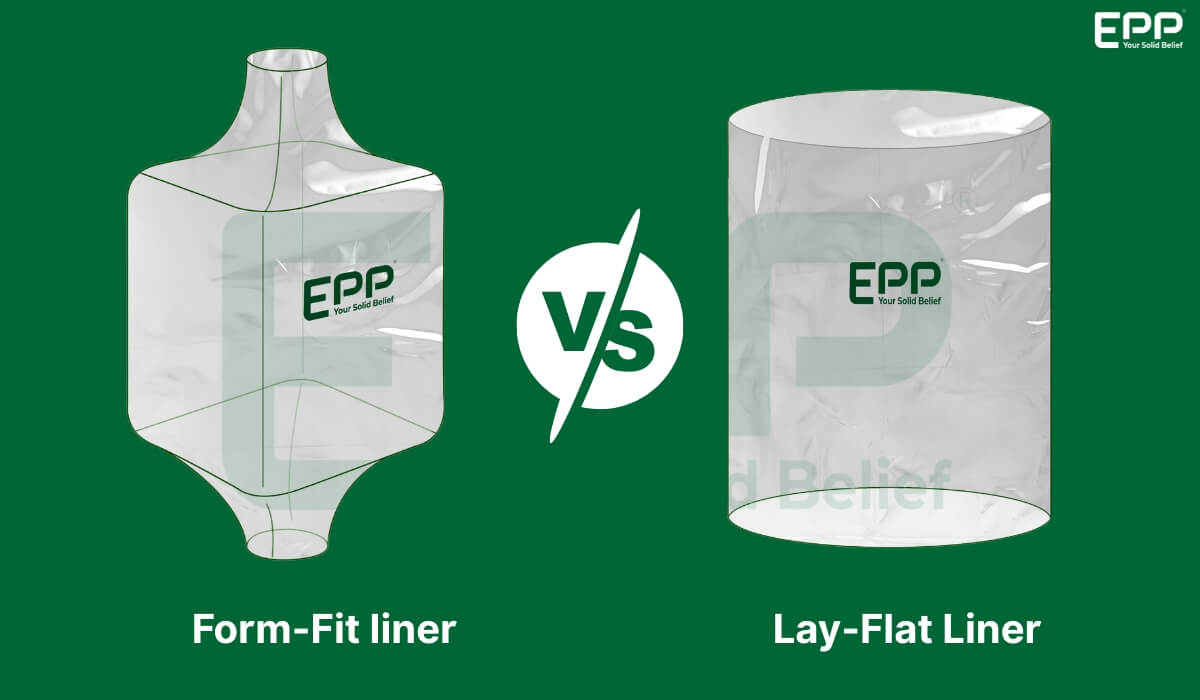
Form-fit liners inside lined super sacks mirror the exact geometry of the discharge spout.
Form-Fit vs. Lay-Flat Liners in FIBC bags with liner
Choosing between a lay-flat liner and a form-fit liner impacts how material flows into and out of your bulk bags with liners. Whether you are using standard models or custom-engineered personalized bulk bags, selecting the correct liner geometry is critical for maximizing material throughput and preventing costly operational downtime.
| Feature / Technical Parameter | Lay-Flat /Tubular Liner | Form-Fit Liner |
| Manufacturing Geometry | Continuous flat plastic tube sealed at the ends | Custom-shaped to mirror exact FIBC internal contours (spouts & corners) |
| Internal Fit & Aesthetics | Creates excess fabric folds, wrinkles, and dead corners | Fits 100% flush with outer body panels without creasing |
| Discharge Efficiency | Moderate; fine powders get trapped in fabric folds | Maximum (100% complete discharge); eliminates material clinging |
| Filling Line Compatibility | Manual or semi-automated filling setups | High-speed, fully automated filling & closed-loop systems |
| Risk of Material Sifting | Higher risk due to trapped product at discharge corners | Near-zero risk; smooth guided flow through the discharge spout |
| Cost Profile | Economical / Low production cost | Premium / Engineered for high-value or sensitive cargo |
Precision Mathematical Formulas for Liner Sizing
Flat Width Formula (Wl):
Wl = (Perimeter of FIBC Body / 2) + Expansion Allowance (5–10 cm)
Total Liner Length Formula (Ll):
Ll = H + Sf + Sd + C
Where:
- H = Height of the FIBC body panel
- Sf = Length of the liner fill spout
- Sd = Length of the liner discharge spout
- C = Safety allowance (100 cm) for folding, tying, and fabric thermal expansion
Practical Calculation Example
Suppose you are specifying a standard 90 cm x 90 cm x 120 cm FIBC bulk bag equipped with a 50 cm top fill spout and a 50 cm bottom discharge spout:
Step 1: Perimeter = (90 cm x 4) = 360 cm
Step 2: Wl = (360 cm / 2) + 10 cm = 180 cm + 10 cm = 190 cm
Step 3: Ll = 120 cm + 50 cm + 50 cm + 100 cm = 320 cm (Where H = 120 cm, Sf = 50 cm, Sd = 50 cm, and C = 100 cm)
Final Specification: For a 90 x 90 x 120 cm FIBC, your liner supplier must produce a liner with a Flat Width of 190 cm and a Total Length of 320 cm to ensure zero mechanical stress on the film during filling and transport.

Preventing Liner Migration in Lined Super Sacks
Securing the internal liner to the outer body fabric is essential for operational safety during high-speed discharge. Unfixed liners present severe risks to downstream processing machinery.
The Operational Hazards of Unfixed Liners
When discharging high-density powders or operating closed-loop rotary valves, the kinetic friction of the falling cargo pulls down on loose liners. This phenomenon, known as liner migration, causes the liner to slip out of the bag and block downstream hoppers, crushing equipment, or mixing vats.

Tabbed fixation holds the liner securely inside lined super sacks during high-speed discharge.
Industrial Attachment Methods for Lined Super Sacks
Packaging engineers utilize four primary fixation systems to keep lined jumbo bags structurally secure:
| Fixation Method | Discharge Safety Level | Compatible FIBC Liners | Recommended Filling Line |
| Loose Inserted | Low (High risk of slipping) | Lay-Flat / Tubular | Manual filling, coarse granules |
| Tabbed (8-Point Taping) | High | Form-Fit / Baffle Liner | Semi-automated discharge systems |
| Glued (Hot-Melt Points) | Very High | All PE / EVOH Liners | High-speed automated filling lines |
| Welded / Flange | Absolute (100% Locked) | Form-Fit Liners | Fully automated closed-loop systems |
Advanced Barrier Materials for Heavy-Duty Lined Super Sacks
While standard polyethylene liners provide excellent moisture protection, specialized bulk cargo requires advanced barrier polymers engineered for gas isolation or electrostatic dissipation.
High-Barrier EVOH and Aluminum Foil Lined Super Sacks
- EVOH Barrier Liners: Ethylene Vinyl Alcohol (EVOH) co-extruded liners prevent oxygen, carbon dioxide, and nitrogen transmission. They protect organic food products, flavors, and sensitive industrial chemicals from oxidation and flavor degradation.
- Aluminum Foil Liners: Constructed from a multi-layer laminate of PET, aluminum foil, and PE. They deliver near-zero Water Vapor Transmission Rates (WVTR ~0 g/m²/24h) and total light blockage, making them the ultimate moisture barrier liner for highly reactive or hygroscopic chemicals.
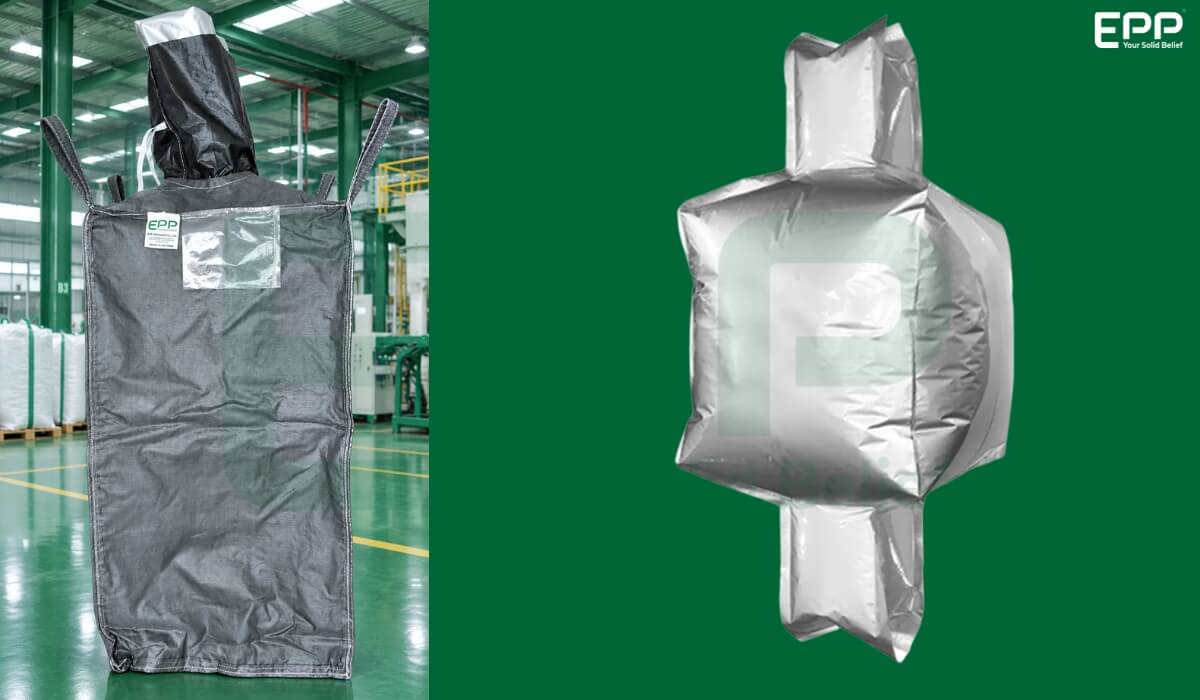
Aluminum foil form-fit liner installed inside lined super sacks for chemical packaging.
Electrostatic Safety Guidelines for Lined Super Sacks (IEC 61340-4-4)
hen transferring dry combustible powders, static electricity generated by material friction presents a serious dust explosion hazard. According to static protective classification standards (as outlined by CROHMIQ under IEC 61340-4-4 guidelines), inner liners must be strictly classified and matched with the correct outer FIBC:
- Type L1 & L1C Conductive Liners: Feature a surface resistivity < 10^8 Ω or an internal conductive aluminum laminate (L1C). The conductive layer must be electrically bonded to the grounding system of the bag. Strictly permitted only in Type C conductive FIBCs.
- Type L2 Static Protective Liners: Designed as general-purpose protective liners without isolated conductive layers. Safe for use in Type B, Type C, and Type D FIBCs (specific qualification and ignition testing are required when paired with Type D bags).
- Type L3 Insulating Liners: Made from insulating materials with a low breakdown voltage (< 4 kV) to prevent propagating brush discharges (PBD). Permitted strictly and exclusively in Type B FIBCs.
For a deeper analysis on electrostatic mitigation, read our technical breakdown on maximizing safety with static protective FIBC liners.
Matching Lined Super Sacks to Specific Cargo Requirements
Selecting the correct combination of outer fabric, FIBC liner material, and spout configuration depends entirely on your product’s physical characteristics and handling environment.
Fine Powders & Hygroscopic Chemicals
Fine powders like calcium carbonate, carbon black, and active chemical catalysts easily sift through the needle holes of woven polypropylene fabric.
- Recommended Specification: A 100-micron form-fit PE liner for FIBC combined with hot-melt glue fixation.
- Benefit: Eliminates material loss, prevents ambient moisture absorption, and keeps transit environments clean.
To learn more about standard polyethylene inner bag specifications, review our technical guide on PE liner options.
Food & Pharmaceutical Bulk Goods
Sanitary materials like milk powders, starch, sugars, and active pharmaceutical ingredients require strict contamination control.
- Recommended Specification: A cleanroom-manufactured EVOH form-fit liner with flange-welded spouts, fitted inside an FIBC produced in a BRCGS facility.
- Benefit: Guarantees zero particulate contamination, maintains freshness, and complies with FDA and EU food contact regulations.
For specialized discharge configurations, explore our guide on the 7 most popular types of FIBC bag bottoms.
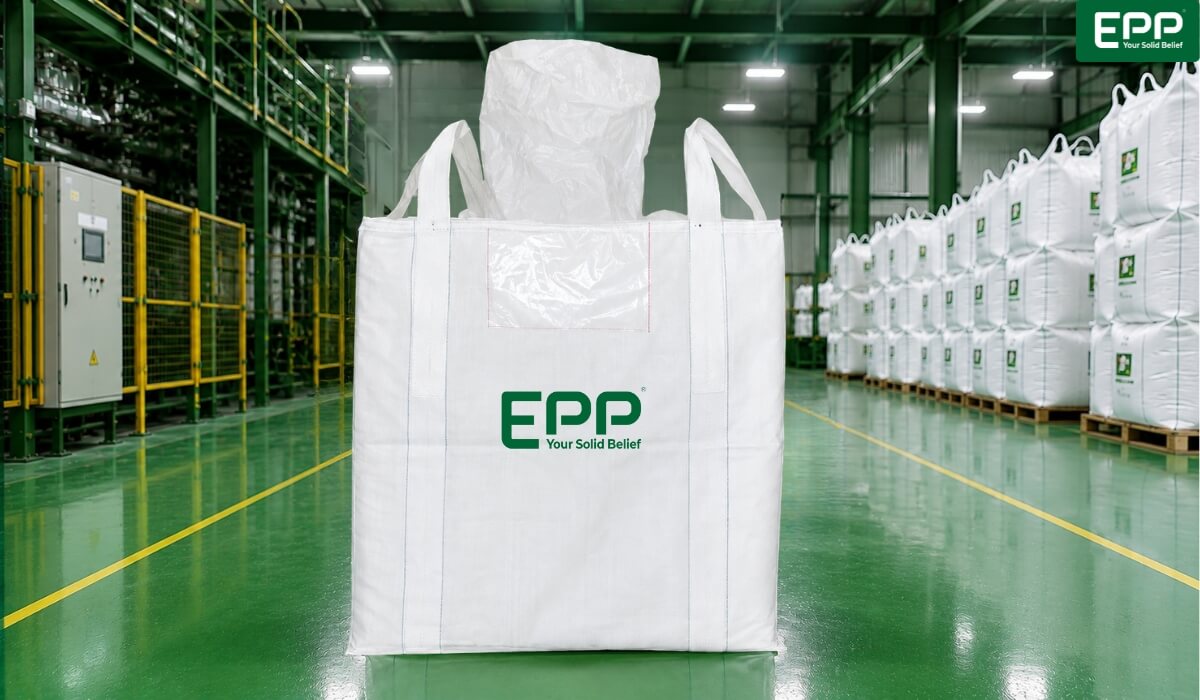
Food grade FIBC bags made from PP resin
FAQs About Lined Super Sacks
What is the benefit of a tabbed liner over a loose inserted liner ?
A loose inserted liner is placed freely inside the jumbo bag and can twist, bunch, or slide completely out during discharge, blocking receiving hoppers. A tabbed liner is anchored at eight points to the outer FIBC seams, keeping the inner liner firmly in place and ensuring smooth, uninterrupted material flow.
Can lined super sacks be customized for high-temperature filling?
Yes. Standard polyethylene liners handle continuous fill temperatures up to 80°C. For hot-fill applications involving asphalt, molten waxes, or hot chemicals up to 100°C – 120°C, specialized high-temperature polypropylene (PP) or polyamide (PA) co-extruded liners are available.
How do I prevent static buildup in lined super sacks during discharge?
Static buildup is controlled by matching the liner to the electrical properties of the cargo and facility. Use Type L2 antistatic liners or Type L3 conductive liners paired with a grounded Type C FIBC or a static-dissipative Type D outer bag to safely ground electrostatic charges.
Which standards apply to FIBC liners?
FIBC liners are governed by several international standards: ISO 21898 (non-rigid bulk container performance), IEC 61340-4-4 (electrostatic classification), FDA 21 CFR / EU 10/2011 (food contact compliance), and UN Dangerous Goods regulations for hazardous cargo transport.
Conclusion
Specifying the ideal lined super sacks requires a clear understanding of liner geometry, structural attachment methods, and advanced polymer barrier chemistry. By selecting precise form-fit dimensions, secure 8-point fixation, and appropriate static safety features, logistics managers eliminate product loss, prevent equipment damage, and protect cargo integrity across long-distance supply chains.
EPP Vietnam delivers fully customized, factory-audited packaging solutions tailored to your operational demands. Contact EPP Vietnam’s packaging engineers today to request technical drawings, order product samples, and optimize your bulk cargo supply chain with high-performance lined super sacks.
Website: epp.vn
Alibaba website: https://eppvietnam.trustpass.alibaba.com/
Email: [email protected] Hotline/ Whatsapps: +84 986 002 888