
Static protective FIBC liners are essential components in the bulk packaging industry, designed to enhance safety and efficiency. These liners play a crucial role in protecting sensitive materials from the risks associated with static electricity, thereby ensuring safe handling and transportation.
In this article, we will explore the characteristics, importance, classification, and best practices for using static protective FIBC liners, ultimately guiding you to make informed decisions for your business needs.
What Are Static Protective FIBC Liners?
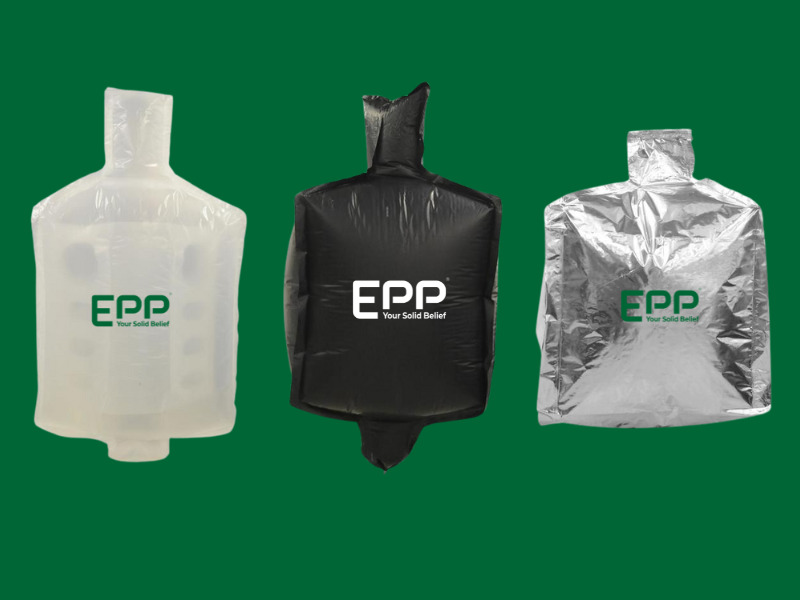
Static protective FIBC liners are specialized inner linings inserted into jumbo bags, super sacks, or FIBC bulk containers to control electrostatic risks. Standard untreated plastic liners are electrical insulators that generate significant static charges through triboelectric charging during high-speed filling and discharge operations.
By incorporating conductive, anti-static, or dissipative materials, static protective liners safely vent or dissipate static electricity. This ensures the packaging system meets international biosecurity and electrostatic safety benchmarks, allowing safe material flow without compromising container integrity.
The Importance of Static Protection in Industrial Packaging
Managing electrostatic hazards directly protects both human personnel and physical assets in high-risk processing environments:
- Preventing Fires and Explosions: Bulk handling of fine combustible powders or flammable solvents creates atmospheres vulnerable to electrostatic ignition. Static protective liners neutralize surface charges, eliminating propagating brush discharges.
- Enhancing Operational Efficiency: Eliminating static charges prevents fine particles from clinging to bag walls, ensuring faster, complete material discharge and reducing downtime caused by clogged discharge spouts. To learn more about optimizing bag bottoms for discharge performance, explore our detailed analysis on popular types of FIBC bag bottoms.
- Protecting Product Quality: Controlled static charges prevent airborne dust, moisture, and fine particulates from being attracted to the container surface during filling operations.
Classification of Static Protective FIBC Liners (IEC 61340-4-4 Standard)
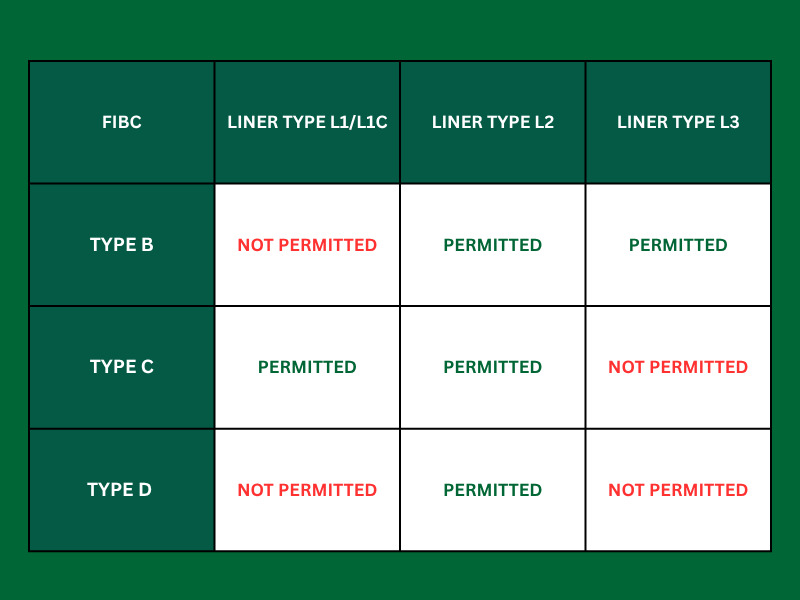
International Standard IEC 61340-4-4 establishes rigorous safety requirements for electrostatic classifications of FIBC liners. Selecting the correct classification depends on the specific FIBC bag type and environmental hazard level.
Type L1 & L1C Liners
Type L1 liners are specifically designed for use in Type C FIBCs. These liners have a resistivity of less than 10^8 ohms on one or both surfaces. In the third edition of IEC 61340-4-4, a new configuration for Type L1 liners was introduced: the Type L1C liner, which is made from a multi-layer laminate featuring a conductive internal layer, typically aluminum.
A critical safety requirement for both Type L1 and L1C liners is that the conductive layer must be electrically bonded to the grounding system of the Type C FIBC, ensuring a secure connection to ground. This connection must be robust enough to withstand the rigors of filling, transport, and emptying. If the electrical connection fails, the liner can become an isolated conductor, posing a significant explosion risk due to electrostatic discharge.
Type L2 Liners
Type L2 liners serve as versatile static protective options, suitable for use in Type B, Type C, and Type D FIBCs. There are several permissible configurations for Type L2 liners, allowing for flexibility in application. Notably, when Type L2 liners are used in Type D FIBCs, the combination must pass ignition testing to ensure safety.
Type L3 Liners
Type L3 liners are exclusively permitted in Type B FIBCs. These liners are constructed from insulating materials but must maintain a breakdown voltage of less than 4 kV to prevent propagating brush discharges, ensuring that they do not initiate static-related hazards.
Additional Safety Considerations
It is crucial to note that conductive materials, such as aluminum, must not be incorporated into Type L2 or L3 liners. Using conductive materials in liners for non-grounded bulk bags, like Type B and Type D FIBCs, creates a risk of hazardous electrostatic discharge.
Furthermore, the inclusion of a liner must not alter the type classification of the FIBC. For instance, adding a Type L2 liner to a Type B FIBC does not change its classification, meaning it remains subject to the safety requirements and restrictions applicable to Type B FIBCs.
Selecting the Right Static Protective Liner for Your Application
Selecting an ideal liner requires evaluating several core technical variables:
- Chemical Compatibility: Ensure the liner material (PE, PP, EVOH, or Aluminum foil) does not react with the packed goods. For a technical comparison between internal films and exterior coatings, consult our guide on choosing between lined super sacks and coated bulk bags.
- Hazard Level & Environmental Conditions: Assess whether the material generates flammable vapors or combustible dusts to determine if conductive or anti-static protection is required.
- Exact Dimensions and Form-Fitting: A improperly sized liner can fold or stretch during filling, causing localized stresses or blocking discharge spouts. Specialty options like iris closure FIBCs prevent dust and product loss when paired with form-fitted liners.
- Regulatory Certification: High-purity applications in food processing or pharmaceutical manufacturing require full compliance with FDA, BRCGS, and ISO standards to guarantee safe contact.
Static Protective FIBC Liners for Each Application
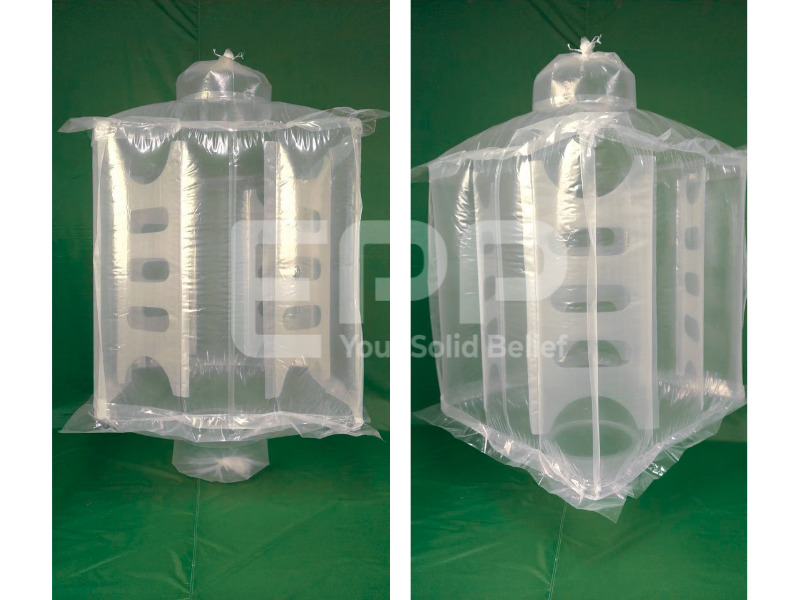
Static protective FIBC liners are versatile and can be adapted for various applications across multiple industries:
- Chemical Industry: Conductive Type L1 and L1C liners provide essential safety when moving flammable resins, powders, and fine chemical compounds in explosive processing environments.
- Pharmaceutical Manufacturing: High-barrier, anti-static liners safeguard sensitive active pharmaceutical ingredients (APIs) against static hazards, ambient humidity, and airborne contaminants.
- Food Processing & Agriculture: Food-grade anti-static liners prevent fine powders (like flour, starch, or sugar) and agricultural fertilizers from igniting while maintaining strict hygiene standards. Explore our complete range of certified FIBC bulk bags designed for high-purity applications.
By tailoring the choice of static protective FIBC liners to specific applications, businesses can enhance safety and ensure the quality of their products.
Common Challenges and Practical Solutions
| Issue | Potential Cause | Recommended Solution |
| Unexpected Static Build-Up | Incorrect liner type or missing ground connection. | Audit material resistivity and verify ground continuity on Type C/L1 combinations. |
| Physical Liner Damage / Tears | Improper filling speeds or sharp material edges. | Train operators on proper loading practices and conduct regular visual inspections. |
| Moisture Infiltration | Inadequate barrier properties in basic PE film. | Upgrade to high-barrier aluminum foil or EVOH multi-layer laminate liners. |
| Discharge Blockage | Oversized or un-attached liner dropping into spout. | Use tabbed, glued, or form-fit liners to keep the film secured to the outer FIBC wall. |
FAQ for Static Protective FIBC Liners
What is the primary function of a static protective FIBC liner?
A static protective FIBC liner dissipates or controls static electricity generated during high-speed filling, transport, and discharge operations. By managing surface resistivity and electrostatic discharge (ESD), these liners prevent dangerous sparks, fires, or explosions in processing environments handling combustible powders or flammable materials.
Why can’t aluminum or conductive materials be used in Type L2 or L3 liners?
Using conductive films like aluminum in un-grounded bags (Type B or Type D) creates an “isolated conductor.” Without a continuous path to ground, static charges accumulate on the conductive surface until they discharge in a high-energy spark, creating a severe explosion hazard in flammable or dusty atmospheres.
Does inserting a Type L2 liner into a Type B bag turn it into a Type D bag?
No. Adding an inner liner never upgrades or changes the primary safety classification of the outer FIBC container. Placing a Type L2 liner into a Type B bulk bag leaves the container classified as Type B, meaning all operational constraints and safety rules for Type B bags still apply.
Can static protective liners be customized for food or pharmaceutical applications?
Yes. Static protective FIBC liners can be manufactured using food-grade, FDA-compliant, or pharmaceutical-certified resins (such as anti-static PE, EVOH, or aluminum laminates) to ensure full ESD protection alongside hygienic barrier performance against moisture and contamination.
Streamline Your Industrial Packaging Safety with EPP Vietnam
Deploying static protective FIBC liners according to international standards (IEC 61340-4-4) is essential for safe material handling, regulatory compliance, and risk management. Selecting the correct liner type—whether L1, L2, or L3—ensures seamless operations across chemical, pharmaceutical, food, and agricultural logistics.
EPP Vietnam delivers export-grade, certified FIBC bulk bag solutions manufactured to international safety standards. Contact our technical team today to develop tailored packaging systems engineered for your operational demands.
Website: epp.vn
Alibaba website: https://eppvietnam.trustpass.alibaba.com/
Email: [email protected] Hotline/ Whatsapps: +84 986 002 888