Imagine shipping a multi-ton bulk consignment of fine mineral powder across the ocean, only to have the recipient reject the entire shipment because fine dust leaked through the container seams, contaminating the cargo hold and caking under port humidity. In global B2B logistics, a minor specification oversight in bulk packaging can instantly escalate into thousands of dollars in lost product, clean-up fees, and damaged client trust.
For procurement managers, navigating Flexible Intermediate Bulk Container (FIBC) options usually comes down to a critical technical crossroads: is an integrated layer of extrusion coating sufficient, or does your cargo demand a heavy-duty internal liner?
This comprehensive guide breaks down the technical differences between coated bulk bags (also known as laminated FIBCs) and lined super sacks, helping procurement managers optimize packaging budgets while safeguarding cargo integrity.
What Are Coated Bulk Bags?
A coated bulk bag is constructed by applying a thin, molten layer of Polypropylene (PP) or Polyethylene (PE) film directly onto the surface of woven PP fabric. This process, known as Extrusion Lamination, applies a uniform coating weight typically ranging between 15 GSM and 30 GSM (grams per square meter).
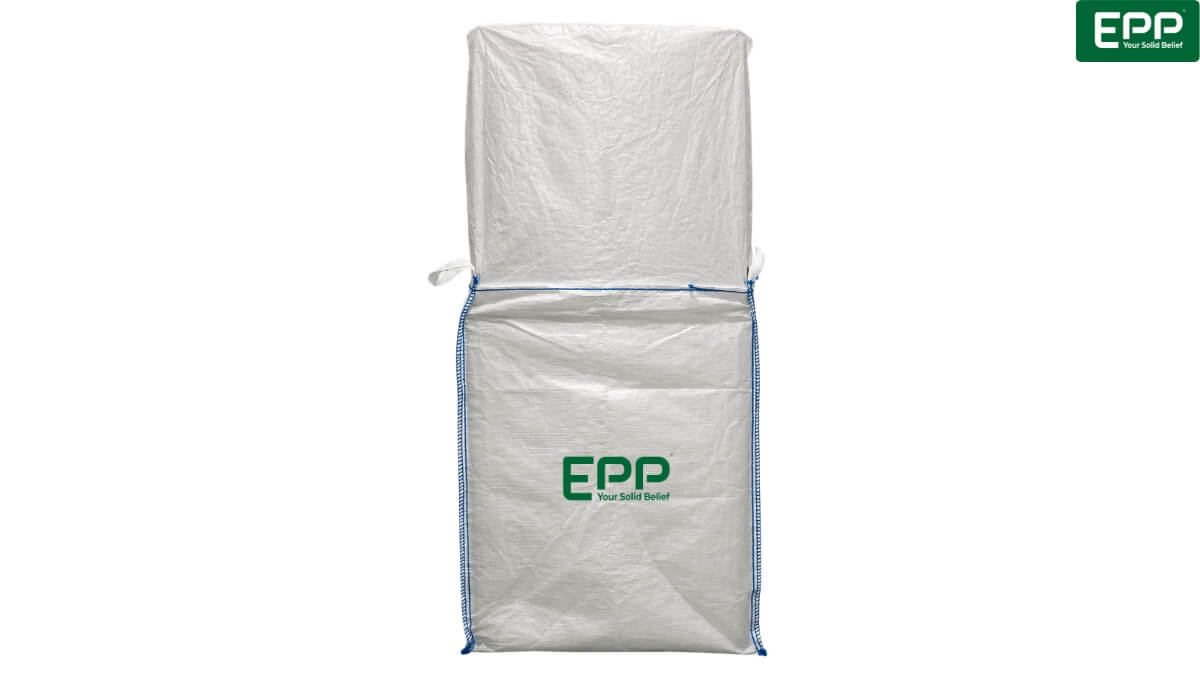
High quality 4-loop jumbo bags with coated fabric
The Bonding Process: During extrusion, liquid PP resin is sprayed onto the woven fabric under high pressure, effectively sealing the microscopic gaps between individual woven tapes.
Coating Placement:
- Inside Coating: Accounts for nearly 85% of industrial applications, preventing fine powders from trapping inside the weave during discharge.
- Outside Coating: Applied to the bag’s exterior to shield against surface moisture and environmental abrasion.
Structural Durability: High-grade extrusion lamination maintains a peel strength benchmark preventing film delamination during dynamic ocean or rail transport.
By transforming porous woven polypropylene into a solid, dust-tight surface, FIBC coated bulk bags provide an economical first line of defense against product dusting and light ambient humidity.
What Are Lined Super Sacks?
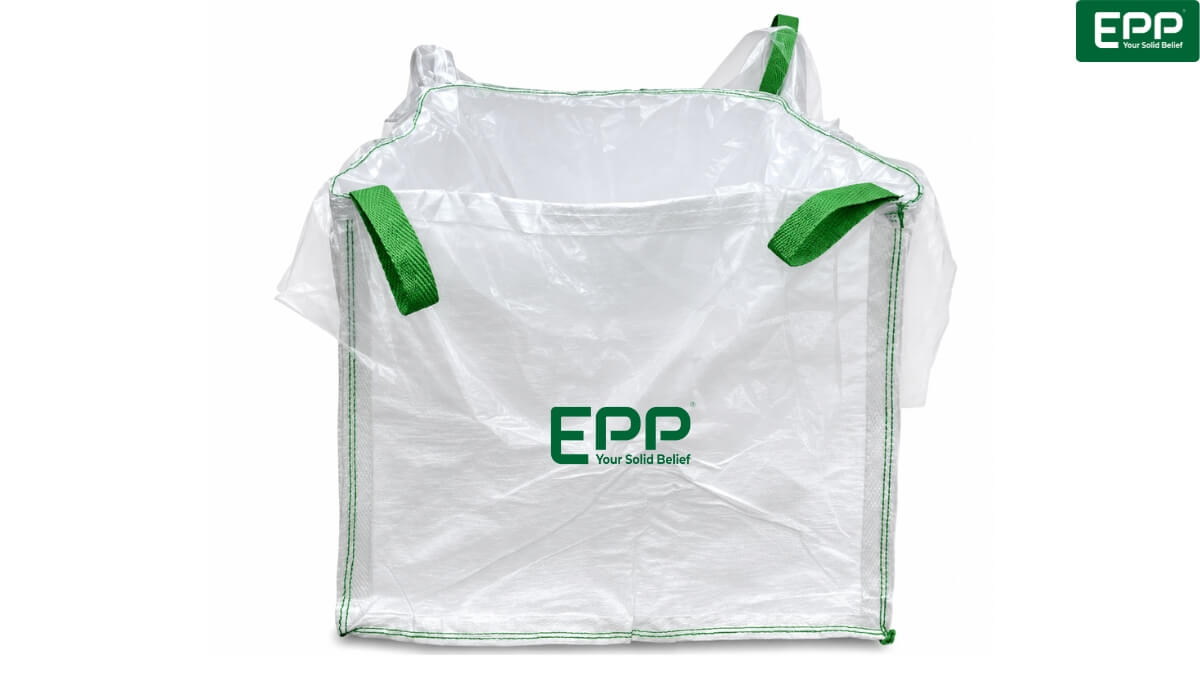
Lined super sacks with tubular liner from EPP Vietnam
While coated fabric uses an integrated surface film, lined super sacks utilize a separate internal film insert (typically 80-100 MIC LDPE, Aluminium or multi-layer EVOH) placed inside the uncoated woven outer tonne bag. This forms a continuous, seam-free interior barrier against moisture and vapor transmission.
Because internal liners feature heat-sealed seams rather than sewn stitching, they are primarily reserved for liquid-sensitive, highly hygroscopic, or ultra-pure chemical products.
To explore internal liner specifications and barrier options in detail, review our dedicated guide on 3 things to know about lined super sacks.
Technical Head-to-Head Comparison: Coated bulk bags vs. Lined FIBCs
When evaluating coated fabric against internal liners, procurement teams must balance structural capabilities against budget constraints
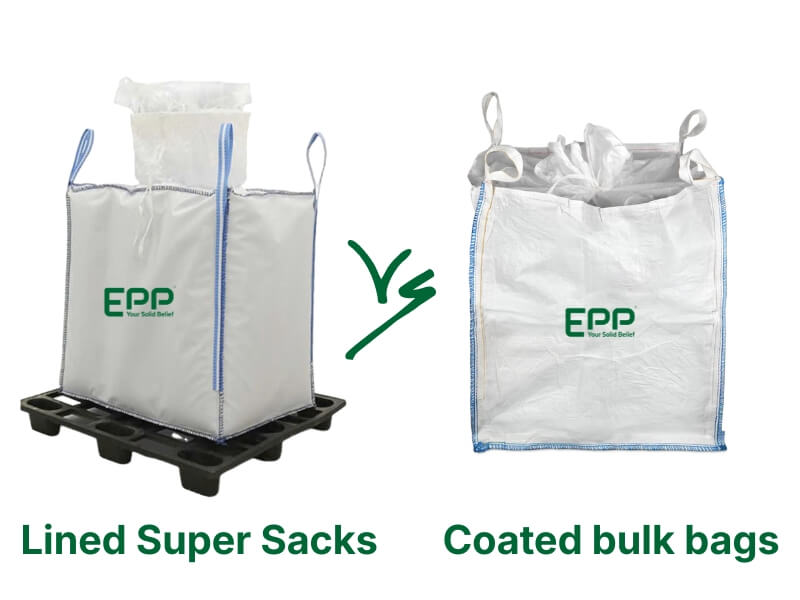
Which one should you choose Coated bulk bags or Liner super sacks?
| Performance Parameter | Coated Bulk Bags | Lined Super Sacks |
| Primary Barrier Method | Extrusion Lamination (15-30GSM) | Separate Internal PE Film (80-100 MIC) |
| Moisture Resistance | Water-resistant (Resists splashes & humidity) | 100% Waterproof (Total vapor seal) |
| Sift Resistance | High (Requires sift-proof seam cords) | Absolute (Zero dust leakage) |
| Gas / Oxygen Barrier | Minimal | High to Total (With multi-layer EVOH) |
| Seam Construction | Standard sewn seams with needle punctures | Continuous heat-sealed internal barrier |
| Recyclability | High (PP mono-material design) | High (Requires liner separation) |
| Unit Cost Impact | 5% to 15% lower initial cost | Higher initial unit cost |
While lamination completely seals the woven fabric grid, industrial sewing needles create thousands of microscopic punctures along load-bearing seams during bag assembly. Under vibration and pressure, fine powders (<100microns) can escape through these needle holes.
To achieve complete dust containment with coated bags without paying for an internal liner, manufacturers apply Sift-Proof Sewing (Dust-Proofing).
Proper selection of base fabric weight and tape density prior to lamination is critical. For a deep dive into fabric construction, read our guide on choosing PP woven fabric for FIBC jumbo bags.
Advanced Safety Considerations
Handling dry bulk powders requires strict compliance with international electrical, mechanical, and safety standards to prevent catastrophic hazards during loading and discharge.
Electrostatic Safety & Anti-Static Selection
When fine powders are rapidly filled or emptied from an FIBC, friction creates severe static electricity buildup. Standard non-conductive materials act as insulators, storing static charges that can discharge as sparks—potentially triggering atmospheric dust explosions in ATEX environments.
Choosing Coated Bulk Bags (Type B, C, or D):
- Type B Bags: Ideal for dry powders where breakdown voltage must stay below 6 kV to prevent high-energy propagating brush discharges.
- Type C Bags (Groundable): Woven with a conductive grid (carbon/silver threads) that must be grounded during fill/discharge. Lamination must be precision-applied so it does not insulate the ground tab connections.
- Type D Bags (Dissipative): Manufactured with anti-static static-dissipative fabric that safely discharges energy into the air without requiring a ground cable.

EPP Vietnam engineers custom Big bags for severe industrial environments
Expert Field Advice from EPP Vietnam:
When handling extremely fine or volatile powders with ultra-small particle sizes, electrostatic charge generation accelerates exponentially, and standard coated bags—even with felt sift-proofing—may still pose a subtle migration risk or static buildup.
In these high-risk scenarios, EPP Vietnam strongly recommends switching from a standard laminated ton bag to a lined super sack equipped with a Type L2 anti-static inner liner (complying with IEC 61340-4-4 standards). A Type L2 inner liner provides specialized surface resistivity to safely dissipate charges while ensuring absolute zero-dust containment.
To review complete anti-static liner classifications, explore our guide on maximizing safety with static protective FIBC liners.
International Compliance Standards (BRCGS, UN)
- Food & Pharma Hygiene (BRCGS Grade A): Food-grade coated bags must be produced in certified Class 10,000 cleanrooms using 100% virgin FDA-compliant resins and ultrasonic fabric cutting to prevent thread contamination.
- Hazardous Goods Transport (UN Certification): Regulated under UN Chapter 6.5 and the IMDG Code. Coated non-lined bags carrying dangerous goods fall under the UN 13H3 specification and must pass rigorous top-lift (6 x SWL), drop (1.2 for PG II), and stacking tests.
Which Packaging Solution Should You Choose?
Selecting the optimal spec depends on particle size, moisture exposure, and cost targets:
| Packaging Solution | Ideal Particle / Material Type | Technical Configuration | Primary Operational Benefits | Cost & Efficiency Impact |
| Uncoated Bulk Bag | Granules, pellets, coarse aggregates (>150 microns) | Standard woven PP fabric | Maximum airflow and breathability | Lowest initial unit cost; basic handling |
| Coated Bulk Bags | Non-hygroscopic powders, dry construction materials | PP Extrusion Lamination (15-30 GSM) | Seals fabric body gaps; prevents surface moisture & dusting | 10% to 15% cost savings over lined bags; fast filling |
| Coated Bag + Sift-Proof Seams | Fine powders (50-150 microns) e.g., cement, flour, starch | Lamination + Single or Double Felt seam cords | Mechanically seals needle punctures; stops dust migration | Prevents product loss & port rejections without liner costs |
| Lined Super Sack | Ultra-fine powders (<50 microns), hygroscopic goods, APIs | Independent PE/EVOH liner | 100% heat-sealed vapor barrier; zero dust/gas transmission | Higher unit cost; critical for strict sterility/moisture protection |
| Lined Bag (Type L2 Anti-Static) | Volatile, combustible, or highly static-prone ultra-fine powders | Heat-sealed Type L2 anti-static inner liner | Surface resistivity dissipates static charges in ATEX zones | Maximum explosion protection and zero-leakage containment |
Expert FAQ
Q: Can I use coated bulk bags for food products?
A: Yes, but only if the lamination is made from FDA-approved virgin resins. However, for fine food powders like icing sugar or cocoa, we generally recommend a liner to ensure 100% sift-proof performance and to prevent the product from coming into contact with any sewing thread.
Q: Are laminated jumbo bags harder to recycle?
A: Because a laminated FIBC consists of two layers of polypropylene (the weave and the film) bonded together, it is generally considered a mono-material and can be recycled. However, it requires different processing than non-coated bags.

Q: What is “Sift-Proofing” and do I need it if my bag is coated?
A: Sift-proofing (using felt or cord at the seams) is often used in conjunction with coated bulk bags. While the fabric is sealed by the coating, the needle holes at the seams remain open. Sift-proofing cord plugs those holes.
Q: How do I know if my lamination is thick enough?
A: Standard lamination for coated FIBC is typically 15 to 30 grams per square meter (GSM). If you are shipping highly abrasive materials, you may require a thicker coating to prevent the material from “scratching” through the barrier.
Conclusion
Selecting between coated bulk bags and lined super sacks comes down to balancing material sensitivity against total operational cost. For most dry industrial bulk solids, coated bulk bags equipped with sift-proof seams deliver an economical, highly effective defense against dusting and surface moisture.
Partnering with an experienced manufacturer like EPP Vietnam ensures your bulk packaging specifications are fully optimized for safe, compliant, and cost-effective international shipping. Contact our technical team today to discuss your material requirements or request certified sample bags for laboratory testing.
Website: epp.vn
Alibaba website: https://eppvietnam.trustpass.alibaba.com/
Email: [email protected] Hotline/ Whatsapps: +84 986 002 888