
The Strait of Hormuz is currently the single most dangerous 21-mile stretch of water on the planet. As of March 19, 2026, the world is holding its breath as global energy supplies are being throttled in a high-stakes game of chicken. If you’ve noticed your fuel prices or shipping costs jumping this week, this narrow chokepoint is the primary driver.
At EPP Vietnam, we aren’t just observers; we’re deeply embedded in global industrial logistics. When the Strait narrows, the ripple effect hits everything from oil barrels to the production costs of heavy-duty packaging solutions. In this guide, we examine the drivers behind this 2026 crisis and its practical impact on global supply chains.
Why is Iran closing Strait of Hormuz 2026?
To put it bluntly: Iran is closing the Strait of Hormuz because it is the primary economic leverage point available to them. Following the escalation of Operation Epic Fury on February 28, 2026—a joint US-Israeli campaign that severely damaged Iranian military infrastructure—Tehran found itself backed into a corner.
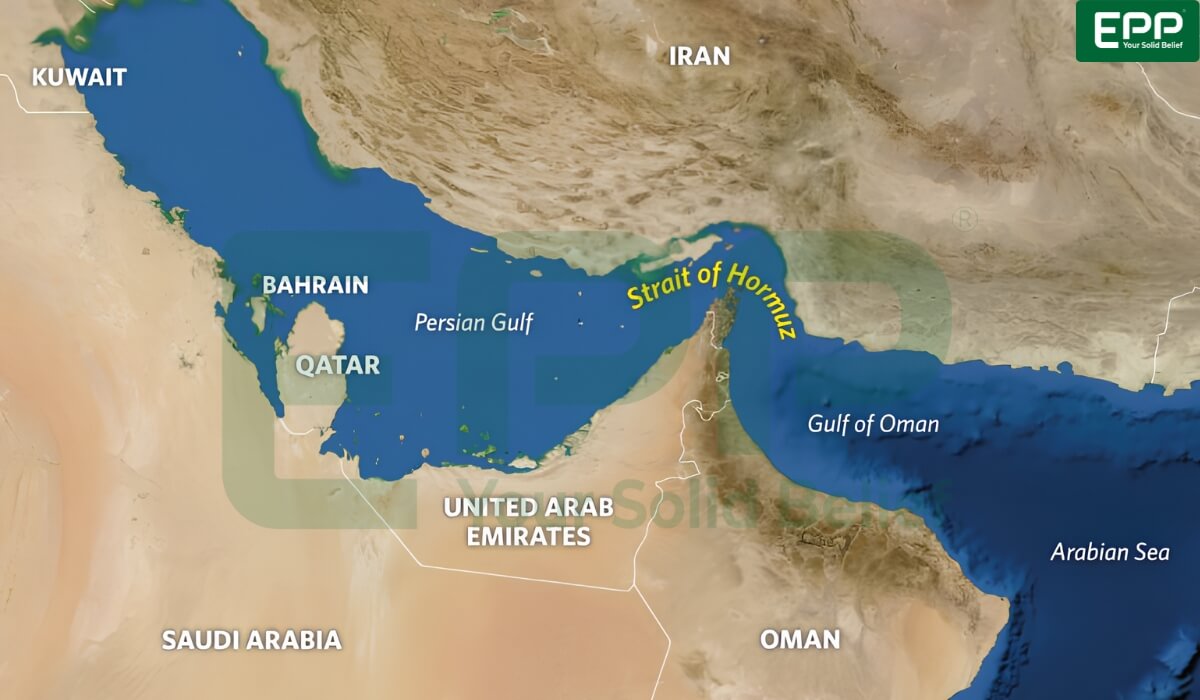
The Strait of Hormuz serves as a vital maritime corridor for global oil and industrial freight transport.
The closure is a calculated act of asymmetric retaliation. By blocking the passage that carries roughly 20.5 million barrels of oil per day, Iran is effectively asserting that if their exports and stability are compromised, global energy flows will face equal risk. Specifically, Iran is using the blockade to:
- Force a Ceasefire: They aim to halt ongoing military operations on their territory.
- Economic Leverage: They are driving up global energy prices to increase the financial burden of sustained Western military engagement.
- Strategic Retaliation: This represents a direct response to the reported loss of high-ranking Iranian officials in early March 2026.
How can Iran easily block the Strait?
Disrupting a narrow maritime corridor does not require an expansive naval fleet. The Strait of Hormuz spans approximately 21 miles at its narrowest point, with functional deep-water shipping lanes measuring just two miles wide in each direction.
Iran’s Islamic Revolutionary Guard Corps (IRGC) employs a multi-layered defense and interdiction strategy:
- Sea Drones (USVs): Iran has deployed hundreds of low-cost, explosive-laden drones. They are small, fast, and can overwhelm a billion-dollar destroyer’s defense systems.
- Smart Mines: Thousands of sophisticated naval mines have been dropped into the shipping lanes. Clearing these is a slow, agonizing process that can take months.
- Coastal Missiles: Hidden in the rugged cliffs of the Musandam Peninsula, mobile missile batteries can pick off tankers from miles away.
- The “Selective” Filter: Iran isn’t stopping every ship. They are using AIS (Automatic Identification System) data to allow “friendly” ships (like those from China) to pass while threatening any vessel with Western or Israeli ties.
To learn more about how global supply chain fluctuations interact with trade policies, read our report on how 2026 US tariffs affect Vietnam export growth.
Which Countries Have Had Their Sea Routes Blocked by the Closure?
The blockade of the Strait of Hormuz has created a stark division across global energy markets. While transit restrictions are applied selectively, elevated risk profiles and surging marine insurance premiums have disrupted traffic across all major commercial fleets:
| Country Category | Specific Nations | Impact Severity |
| The Locked Exporters | Saudi Arabia, Iraq, Kuwait, Qatar, UAE | Critical: Over 90% of petroleum export revenue is trapped behind the chokepoint. |
| The Dependent Importers | Japan, South Korea, Taiwan | Severe: High reliance on the Gulf region for up to 80% of national crude energy imports. |
| The Political Targets | USA, UK, Israel | High: Commercial vessels face targeted interdiction risk from IRGC units. |
| The “Safe” Corridor | China, India, Pakistan | Moderate: Negotiated limited passage privileges, though insurance surcharges remain elevated. |
These geopolitical tensions also trigger wider economic reactions across international markets. For a broader perspective on Western economic exposure, see our analysis on how Trump’s 30% tariff could shake the EU economy.
How is the Closure Impacting the Global Economy and Oil Prices?
As of mid-March 2026, Brent Crude oil has spiked past $110 per barrel. But it’s not just about the gas in your car.
Higher crude oil costs drive up the price of Naphtha, which serves as the primary feedstock for Propylene monomer. Propylene is the fundamental building block for Polypropylene (PP) resin—the key raw material used to weave high-strength bulk sacks.
Because PP resin dictates raw material costs, the energy squeeze caused a 20% to 30% price surge across industrial packaging sectors. Exporters face rising overhead as packaging materials tied directly to energy feedstocks experience market inflation. To manage these market shifts, B2B buyers can secure cost-effective packaging solutions through FIBC bulk bags for industrial materials or utilize high-durability agricultural films for crop protection.
Simultaneously, major container ocean carriers (including Maersk and MSC) have diverted vessel fleets around Africa’s Cape of Good Hope, adding up to 12 days to international transit routes and incurring substantial bunker fuel surcharges per voyage.
The US and its Allies Responding to the Blockade
Naval and diplomatic responses to the blockade reflect a complex balance of military intervention and economic risk management:
CENTCOM Operations: The US Navy initiated “Operation Sentinel Shield,” utilizing carrier strike groups to target drone launch sites along coastal zones. However, tracking mobile installations across rugged terrain presents ongoing operational challenges.
Maritime Escort Limitations: While naval escorts have been dispatched to protect commercial tankers, marine underwriters remain reluctant to issue coverage due to naval mine hazards.
Coalition Policy Variations: European partners have expressed caution regarding full-scale naval engagement, advocating for diplomatic resolutions to prevent prolonged disruptions to global trade.
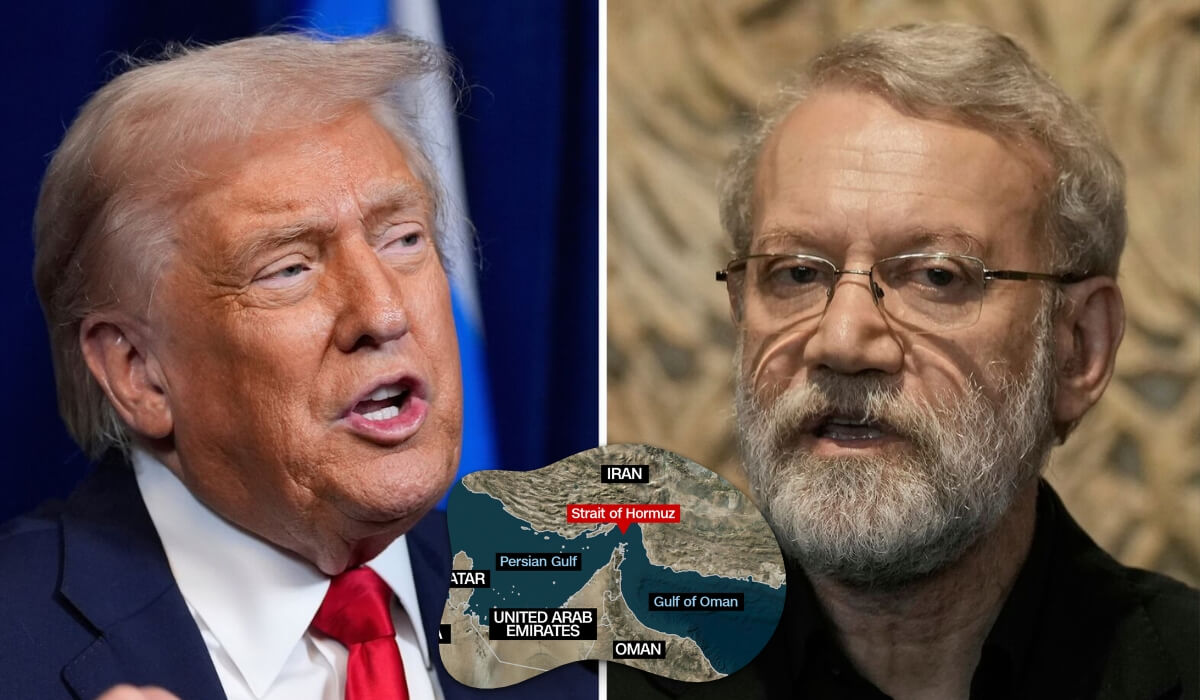
U.S.-Iran diplomatic and strategic tensions center around the critical oil transport chokepoint of the Strait of Hormuz.
Recent diplomatic efforts have shown how quickly market sentiments can pivot during military tensions. To understand how market prices reacted to recent ceasefire developments, review our report on how oil prices cratered under $100 after the surprise Trump ceasefire.
People Also Ask About the Strait of Hormuz Crisis
Which country controls the Strait of Hormuz?
Technically, navigation through the Strait is governed by the United Nations Convention on the Law of the Sea (UNCLOS). However, territorial waters are shared between Iran and Oman. Because deep-water shipping lanes fall within these territorial boundaries, Iran maintains significant tactical influence over traffic flows through the channel.
How much US oil goes through the Strait of Hormuz?
Direct US crude imports passing through the Strait account for less than 10% of total domestic consumption due to expanded US shale production. However, because petroleum is a globally priced commodity, supply constraints in Asian markets drive up global benchmark prices, directly impacting North American energy costs.
Did Iran ever block the Strait of Hormuz previously?
While Iran has threatened transit disruptions historically (notably during the 1980s “Tanker War”), sustained blockades were historically limited in duration. The 2026 crisis represents the most technically advanced and sustained transit restriction campaign in the region’s history.
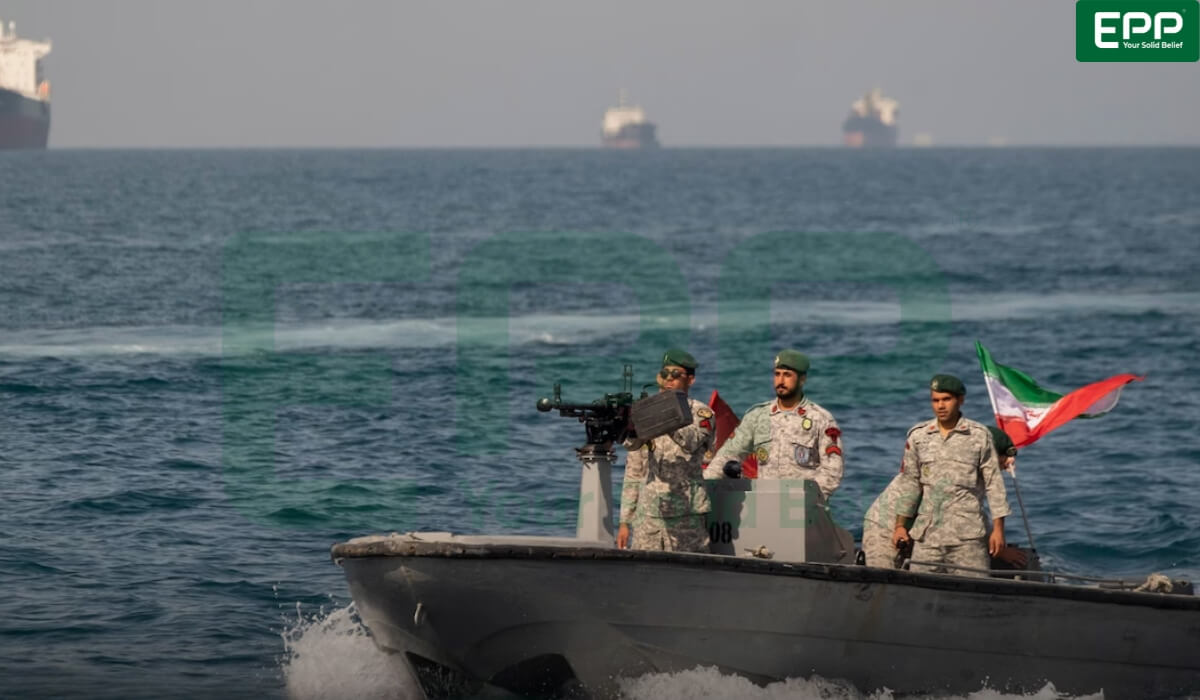
Naval security presence surrounding commercial shipping corridors in the Strait of Hormuz.
Who is Iran’s biggest oil buyer?
China remains the largest importer of Iranian crude. This trade relationship has enabled selective transit corridors for Chinese-flagged vessels through designated transit lanes during the blockade.
Is there an alternative to the Strait of Hormuz?
Overland bypass pipelines offer partial capacity:
- Saudi Arabia: The East-West Pipeline extending to Red Sea ports.
- UAE: The Habshan-Fujairah pipeline terminating outside the Persian Gulf.
Even at 100% operational throughput, these pipeline networks bypass approximately 6.5 million barrels per day, leaving roughly 14 million barrels per day dependent on maritime transit through the Strait.
Conclusion: A Tense Path Forward
The 2026 Strait of Hormuz crisis isn’t just a military conflict; it’s an economic earthquake. Whether you’re worried about the price of gas at the pump or the rising cost of PP resin for your FIBC bags, the reality is the same: geography still rules the world. Until a diplomatic solution is found, the “Selective Gatekeeper” strategy will continue to keep the global economy on a razor’s edge.