In the global industrial packaging market, ensuring the structural integrity of your bulk bags during storage, transit, and discharge is paramount. As a leading FIBC supplier in Vietnam with over two decades of manufacturing expertise, EPP Vietnam understands that the foundation of any high-performance bulk bag lies in its material composition.
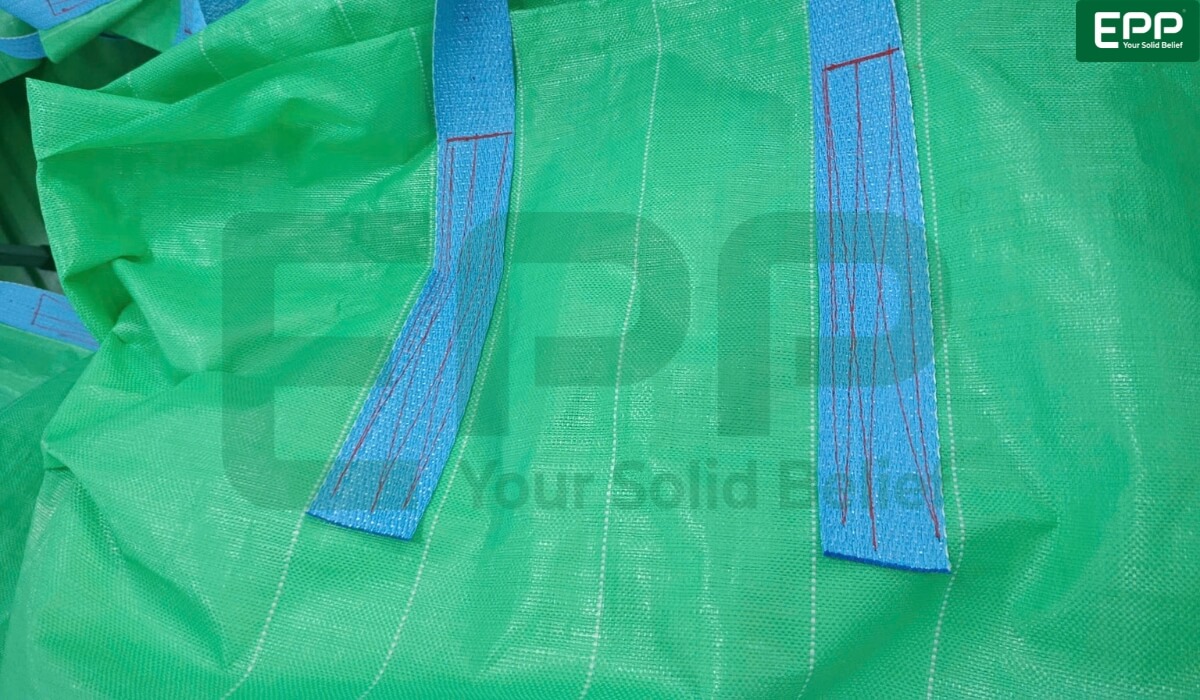
Close-up of heavy-duty green PP woven fabric featuring reinforced blue lifting loops with high-tenacity stitching for FIBC bulk bags.
PP woven fabric for FIBC jumbo bags serves as the critical skeleton, absorbing heavy mechanical stresses, protecting contents against environmental hazards, and guaranteeing workplace safety during lifting operations. Selecting the right polypropylene fabric for bulk bags is not merely a purchasing decision—it is a core engineering requirement that directly impacts supply chain reliability.
Understanding the Structural Role of PP Woven Fabric in FIBC Safety
The mechanical performance of FIBC fabric relies on converting virgin PP resin into high-tenacity yarn via extrusion and precision loom weaving. During processing, individual polypropylene tape filaments are oriented to achieve high tensile strength in both warp and weft directions. This engineered woven polypropylene fabric provides the tensile strength, tear resistance, and controlled elongation needed to resist wall deformation under intense internal pressure. When loaded to its Safe Working Load (500kg 0 2000kg), a well-designed fabric profile ensures that body panels and seams maintain structural integrity without suffering premature failure or tearing.
To meet international safety benchmarks such as ISO 21898, every batch of FIBC woven fabric undergoes rigorous drop and stacking tests. These evaluations verify the required Safety Factor (SF), typically rated at 5:1 for single-trip bags or 6:1 for heavy-duty multi-trip bags. Strict quality control over FIBC fabric denier and weave density during extrusion and weaving is essential for consistent performance. Maintaining tight batch consistency prevents localized weak spots, ensuring the bulk bag withstands dynamic shock loads and functions safely during top lift, forklift handling, and long-distance transport.
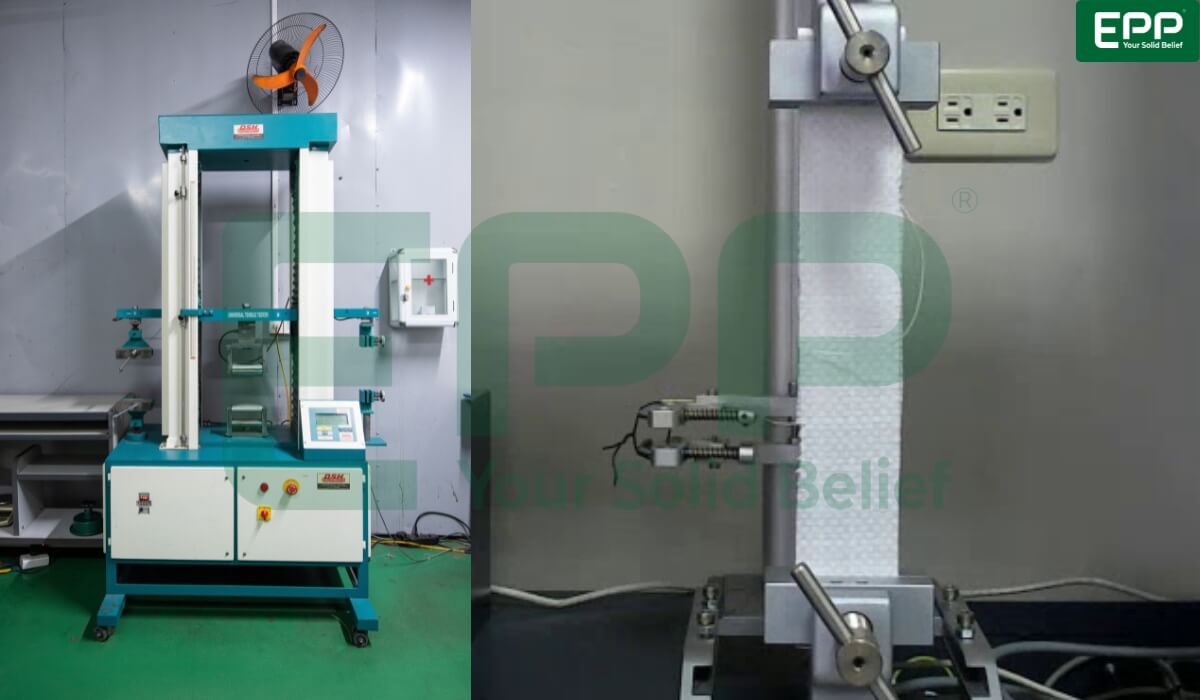
Laboratory testing verifies the tensile strength and elongation of PP woven fabric for FIBC jumbo bags to ensure ISO 21898 compliance.
Key Technical Notes When Selecting PP Woven Fabric for FIBC Jumbo Bags
Selecting the ideal PP woven fabric for FIBC jumbo bags requires a clear understanding of key technical metrics and how they align with your specific material handling needs.
1. Matching FIBC Fabric GSM and Denier
The primary baseline of any FIBC fabric specification is its fabric weight, measured in GSM (Grams per Square Meter). Higher FIBC fabric GSM values correlate directly with thicker yarns and higher mechanical endurance:
- Lightweight (120 – 140 GSM): Ideal for lightweight, non-abrasive agricultural goods or small bulk bags.
- Medium-duty (150 – 180GSM): The industry standard for 1000 kg payloads containing grains, plastic pellets, or non-hazardous chemicals.
- Heavy-duty (190 – 240GSM): Required for dense minerals, metal powders, or high-capacity bags requiring 6:1 multi-trip performance.
Additionally, checking the FIBC fabric denier (the mass in grams per 9,000 meters of yarn) ensures that individual tapes possess sufficient breaking tenacity before weaving.
2. Coated vs. Uncoated FIBC Fabric
Choosing between coated FIBC fabric and uncoated FIBC fabric depends on whether your payload requires moisture protection or breathability:
- Uncoated FIBC fabric: Highly breathable, allowing air exchange for agricultural products like coffee beans or potatoes. However, fine powders can seep through the weave intersections.
- Coated FIBC fabric: Features an added layer of PE lamination or PP coating (typically 25 – 30GSM) applied via extrusion onto the woven base. This creates a dust-proof and water-resistant barrier.
When moisture barrier demands are extreme, buyers often evaluate whether they should use lined super sacks or coated bulk bags to achieve optimal protection without compromising operational efficiency.

3. Circular Loom Tubular Fabric vs. Flat Fabric Construction
Fabric construction directly dictates bag geometry and seam distribution:
- Tubular fabric: Woven in a seamless cylinder, eliminating vertical side seams. This design is widely used in circular to reduce seam weakness and potential leak points.
- Flat fabric: Woven flat and cut into panels. It is essential for U-panel bag, 4-panel bulk bags, baffle bags (Q-bags), and specialized top/bottom components.
When designing bags with heavy top-lift requirements, engineers often compare structural loops on flat versus tubular bodies, analyzing options like corner loop or cross corner loop configurations to balance load distribution evenly across the fabric.
4. UV Stabilization for Outdoor Resistance
Polypropylene naturally degrades under prolonged exposure to solar ultraviolet (UV) radiation. For outdoor storage or long ocean freight transit, selecting UV treated jumbo bag fabric is non-negotiable. Quality manufacturers incorporate a 1% – 3% UV stabilization additive during resin extrusion, enabling the material to maintain at least 50% of its original tensile strength after 200 to 300 hours of accelerated weathering tests (e.g., ASTM G154).

UV masterbatch for bulk bag production.
Advanced Safety Standards & Electrostatic Considerations
When handling sensitive chemicals, food products, or combustible materials, buying standard polypropylene woven fabric is insufficient. Advanced industry applications demand strict compliance with international safety protocols.
1. Anti-Static FIBC Fabric Selection
During rapid filling and discharge of dry powders, triboelectric charging generates static electricity on the fabric surface. To prevent dangerous spark discharges in explosive atmospheres, choosing the correct anti-static FIBC fabric is critical under IEC 61340-4-4 standards:
- Type A: Standard fabric with no electrostatic safety features.
- Type B: Low breakdown voltage (< 6 kV) to prevent high-energy sparks.
- Type C: Woven with interconnected conductive carbon or metal threads. Must be grounded during operation.
- Type D: Uses special static-dissipative threads that safely discharge energy into the atmosphere without grounding.
2. Food Grade FIBC Fabric and Cleanroom Compliance
For agricultural, pharmaceutical, and food-processing industries, food grade FIBC fabric must be produced exclusively from 100% virgin PP FIBC fabric resins—free from recycled contaminants, heavy metals, or phthalates. Manufacturing should take place within BRCGS-certified cleanroom facilities equipped with ultrasonic fabric cutting, light inspection tables, and vacuum cleaning systems to guarantee zero loose threads or foreign contaminants.
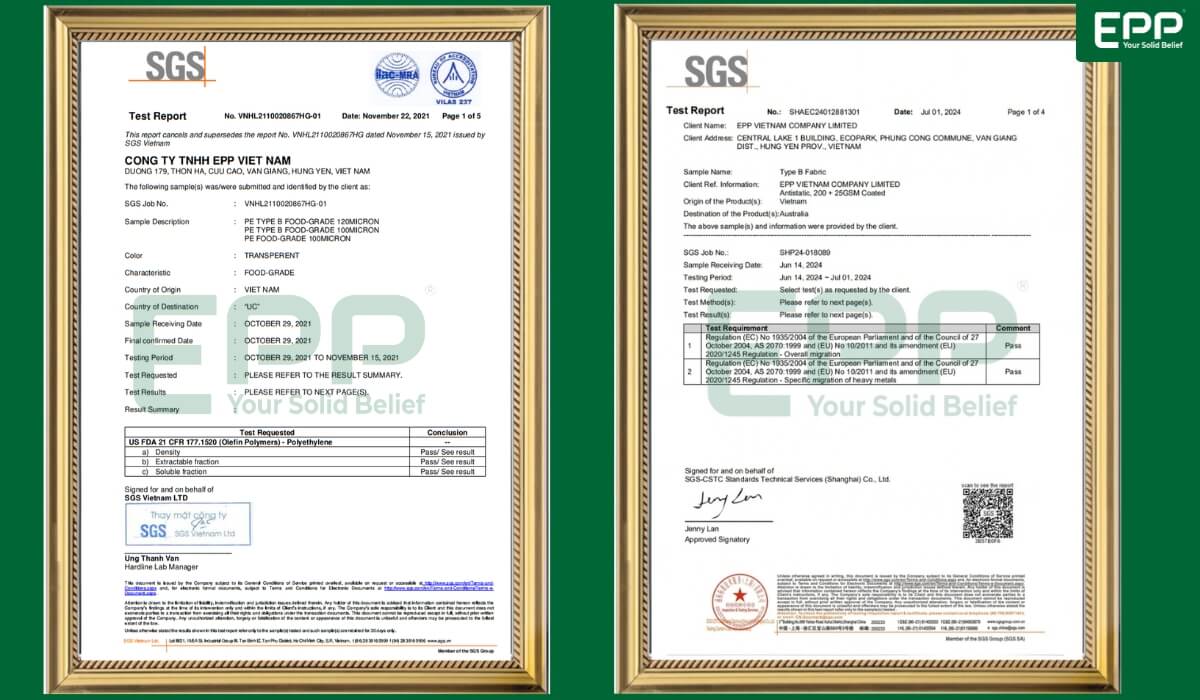
SGS test report certificates verifying FDA food-grade compliance and EU No 10/2011 quality standards for EPP Vietnam’s PP woven fabric.
Optimizing FIBC Performance Through Tailored Fabric Accessories
Achieving maximum bulk bag performance involves more than just selecting the main body panel. Every component—from top spouts and discharge bottoms to internal liners—must feature matching fabric specifications.
A high-performance PP woven fabric for FIBC jumbo bags must be paired with durable sewing thread, anti-sift cordage, and robust spout fabrics to prevent fine powder dusting during discharge. For ultra-fine or hygroscopic powders, combining premium fabric construction with specialized discharge mechanisms—such as understanding how iris closure FIBCs stop dust and product loss—ensures seamless material flow while maintaining a dust-free work environment.
Common Mistakes When Choosing FIBC Woven Fabric
Even experienced procurement managers can overlook subtle technical details when specifying bulk bag materials. Avoid these frequent pitfalls:
- Over-specifying GSM instead of checking tensile strength: Assuming a heavier fabric is automatically stronger can lead to unnecessary material costs. Yarn quality and extrusion stretching often matter more than raw fabric weight.
- Ignoring coating compatibility with hot-fill goods: Applying standard PE coating to products filled at temperatures above 80°C can cause the lamination layer to melt or delaminate.
- Using recycled PP resin for heavy-duty applications: Recycled materials degrade yarn tenacity and drastically reduce UV resistance, increasing the risk of bag collapse during outdoor storage.
- Neglecting humidity factors in storage: Choosing uncoated fabric for hygroscopic goods (like sugar or fertilizers) in high-humidity transit routes leads to caking and product damage.
- Overlooking batch testing certificates: Failing to demand mill test certificates for FIBC fabric testing (checking warp/weft strength, UV hours, and GSM uniformity) leaves your supply chain vulnerable to inconsistent quality.

Frequently Asked Questions about PP Woven Fabric for FIBC Jumbo Bags
What is the standard GSM of PP woven fabric for a 1-ton FIBC jumbo bag?
For a standard 1000 kg (1-ton) capacity bulk bag with a 5:1 Safety Factor, the standard body fabric weight typically ranges between 160 GSM and 180 GSM for uncoated fabric. If a PE coating is applied, it usually consists of a 150 GSM base fabric combined with a 30 GSM lamination layer (180 GSM total).
How do I know if my PP woven fabric needs UV stabilization?
If your fibc container bag is stored outdoors, exposed to direct sunlight during transport, or staged in open yards for more than 12 to 15 days, UV stabilization is required. Standard UV treated FIBC fabric incorporates 1% to 3% UV inhibitors to ensure the bag retains at least 50% of its tensile strength after prolonged exposure to solar radiation.
What weave density is suitable for FIBC bags?
The standard weave density for most heavy-duty FIBC applications ranges from 10 × 10 to 14 × 14 picks per inch (tapes per inch in warp and weft). A higher weave density (12 × 12 or 14 × 14) provides superior structural stability, higher tear resistance, and better sift-resistance for finer materials.
Partnering with an experienced FIBC fabric supplier like EPP Vietnam ensures that every roll of fabric meets international safety standards, precise technical specifications, and custom project requirements. Contact our technical engineering team today to optimize your bulk packaging strategy.
Website: epp.vn
Alibaba website: https://eppvietnam.trustpass.alibaba.com/
Email: [email protected] Hotline/ Whatsapps: +84 986 002 888