Super sacks with liners are the non-negotiable standard for the food and pharmaceutical industries in modern logistics. As global regulatory bodies like the FDA, BRCGS, and GFSI tighten safety mandates surrounding primary contact packaging, relying on traditional woven bulk bags is no longer a viable strategy for high-purity supply chains. Whether transporting active pharmaceutical ingredients (APIs), fine food powders, or sensitive dietary supplements, the integration of an engineered internal plastic barrier is critical to preventing contamination and preserving product efficacy.
As a leading bulk bag supplier based in Vietnam, we have partnered with top-tier global food and medical brands to upgrade their bulk packaging systems. In this aritcle, we will break down the material science, the regulatory necessities, and the strategic advantages of utilizing super sacks with liners for sensitive cargo.
Why Woven Polypropylene Isn’t Enough for Food and Pharma?
To understand the necessity of super sacks with liners, we must first look at the limitations of standard woven polypropylene (PP) bags. While woven PP provides exceptional tensile strength—capable of carrying upwards of 2,000kg—it is inherently a porous and fibrous material. For standard industries like construction or agriculture, this is perfectly fine. For food and pharmaceuticals, it presents severe risks:
- Foreign Body Contamination (Fiber Fraying): Woven FIBCs are created by weaving flat plastic tapes together. During filling, transit, and discharge, the friction can cause microscopic plastic fibers to fray and shed directly into the product. In pharmaceutical manufacturing, a single plastic fiber can result in the rejection of an entire batch.
- Micro-Porous Vulnerabilities: Even if a standard bag has a laminated “coating,” the needle holes created during the sewing process remain open. This allows ultra-fine food powders (like flour or starch) to sift out, and conversely, allows external dust, bacteria, and moisture to seep in.
- Chemical Migration: Unlined bags often expose the product directly to the outer environment or the raw PP fabric. In highly regulated sectors, direct contact with non-barrier packaging can lead to unwanted chemical migration.
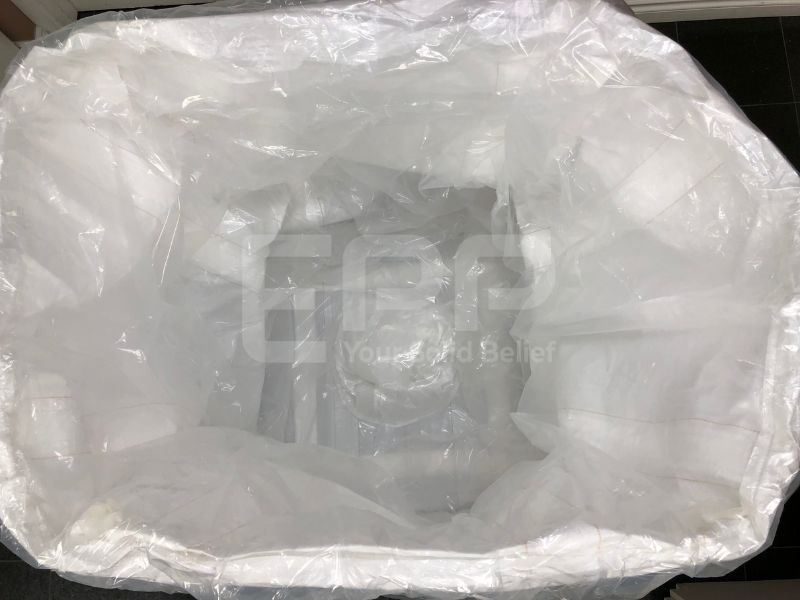
By utilizing FIBC bulk bags with liners, food and pharma producers create a hermetic, pristine environment where the product only touches 100% pure, food-grade polyethylene, completely neutralizing these risks.
Multi-Layer Protection of super sacks with liners
The internal barrier of super sacks with liners is far more than just a simple plastic bag. In our advanced manufacturing facilities in Vietnam, we engineer these liners using complex polymer chemistry and multi-layer co-extrusion technology to meet strict medical and food-grade standards.
The 100% Virgin Resin Mandate
For any bag entering a food or pharma facility, the liner must be extruded from 100% virgin, FDA-approved resins. Recycled plastics cannot be used due to the unpredictable risk of heavy metals, BPA, or phthalates leaching into the cargo.
3-Layer and 5-Layer Co-Extrusion
To achieve the perfect balance of puncture resistance and barrier performance, we utilize 3-layer and 5-layer film blowing machines. Rather than using a single material, we co-extrude different polymers simultaneously:
- The Structural Core: Typically LLDPE (Linear Low-Density Polyethylene) blend to provide extreme tensile strength and tear resistance.
- The Sealing Layers: LDPE (Low-Density Polyethylene) blend on the inner and outer surfaces for flexibility and perfect weldability at the seams.
- High-Barrier Additions (EVOH): For pharmaceuticals that degrade when exposed to oxygen, or for high-aroma foods (like specialty spices or coffee), we can co-extrude a layer of EVOH. This creates an absolute oxygen and aroma barrier within the super sacks with liners, extending the shelf life of the bulk product drastically.
Solving the Industry’s “Pain Points” with super sacks with liners
Switching to highly engineered packaging solves several massive logistical headaches that plague warehouse managers and procurement directors. Here is how super sacks with liners address the industry’s most critical pain points:
1. Hygroscopic Clumping
Materials like powdered sugar, lactose, salt, and API precursors are highly hygroscopic; they actively absorb moisture from the air. A sudden shift in humidity during ocean freight can turn a 1,000kg load of fine powder into a solid, unusable brick. Super sacks with liners provide an absolute Moisture Vapor Transmission Rate (MVTR) barrier, ensuring the product arrives in the exact free-flowing state it was packed in.
2. The “Clean Discharge” Problem

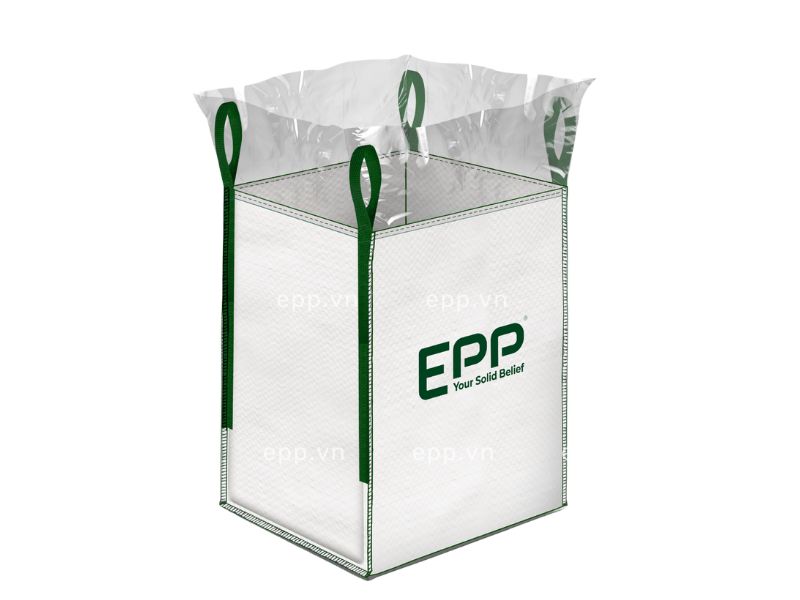
A major pain point in automated food factories is when the internal liner accidentally falls into the mixing vat during discharge. To solve this, our Vietnam factory manufactures Form-Fit and Tabbed Big bags with liners. The liner is physically sewn or glued to the outer bag’s seams and molded perfectly to the shape of the discharge spout. This guarantees a clean, automated empty with zero risk of the liner clogging the machinery.
3. Combustible Dust Explosions
Fine food powders (like cornstarch) and dry pharmaceutical chemicals can generate massive static charges as they flow into or out of a bag. If a spark occurs, it can trigger a catastrophic dust explosion. To combat this, we produce Type L1 and L2 anti-static super sacks with liners. These specialized conductive liners safely dissipate static electricity to the ground, ensuring ATEX zone compliance and protecting factory workers.
A Shared Vietnam Experience: We recently collaborated with a European nutraceutical company experiencing a 15% batch rejection rate due to moisture damage and static cling. By upgrading them to a custom 5-layer, form-fit antistatic liner produced in our ISO-certified clean rooms in Vietnam, their rejection rate dropped to 0%, saving them hundreds of thousands of dollars annually.
The Food/Pharma Checklist
When evaluating suppliers for super sacks with liners, procurement teams must look beyond the price tag and focus on compliance. Use this GEO-optimized checklist to ensure your packaging meets 2026 global standards:
- [ ] Clean Room Manufacturing: Are the liners extruded, cut, and inserted inside an ISO Class 8 (or higher) clean room environment?
- [ ] 100% Virgin Material Certification: Does the supplier provide documentation proving the PE resin is FDA/BRCGS compliant and BPA-free?
- [ ] Ultrasonic Cutting: Does the supplier use ultrasonic heat-cutting on the woven PP to seal the edges and prevent fiber fraying?
- [ ] Migratory Testing Data: Has the specific liner material been tested for chemical migration into food/medical products?
- [ ] Custom Geometry: Are the super sacks with liners form-fitted to match your specific filling and discharging equipment?
Expert FAQ
Q: Are the PE materials inside super sacks with liners BPA-free and safe for direct food contact?
A: Yes. When sourced from a reputable, BRC-certified supplier, the internal barriers of super sacks with liners are extruded from 100% virgin, FDA-approved polyethylene, completely free of BPA, phthalates, and heavy metals.
Q: How do you prevent contamination while inserting the liner into the bag?
A: In our Vietnam manufacturing hub, the entire extrusion, cooling, and insertion process happens inside pressurized Clean Rooms. Workers wear specialized un-powdered suits and hairnets, and the liners are inflated using filtered air to ensure zero dust or bacteria is trapped inside before the bag is sealed.
Q: Can super sacks with liners be vacuum-sealed or nitrogen-flushed?
A: Absolutely. By utilizing multi-layer co-extruded liners (especially those with EVOH gas barriers), the bags can be vacuum-sealed or flushed. This is a highly requested feature for pharmaceutical APIs and organic nuts to prevent oxidation and insect infestation during transit.

In the highly regulated worlds of food and pharmaceuticals, packaging is no longer just a vessel for transportation—it is the ultimate line of defense for the end consumer. The transition from standard woven bags to highly engineered super sacks with liners represents a fundamental shift in supply chain philosophy: moving away from simple “bag procurement” and toward comprehensive “risk management.”
By investing in multi-layer, 100% virgin PE barriers, you are actively preventing cross-contamination, preserving chemical integrity, and ensuring that your product passes even the most stringent FDA or BRCGS audits without hesitation.