
Food grade plastic refers to polymers specifically engineered and certified to safely contact edible products without leaching harmful chemicals, toxins, or heavy metals. According to global regulatory frameworks, a plastic is classified as “food grade” when it is synthesized under controlled purity conditions—typically utilizing 100% virgin polymer resin without unregulated recycled contaminants.
This technical article provides an in-depth look at evaluating food-contact plastics, outlining their structural characteristics, regulatory standards, and stringent safety parameters necessary to maintain food safety throughout the global supply chain.
What is food grade plastic?
Core Criteria for Food-Safe Polymers
Food grade plastics are non-reactive, high-purity thermoplastic materials designed to withstand mechanical stress, thermal fluctuations, and chemical erosion from organic acids, fats, and alcohols. Unlike commercial or recycled plastics, food-safe polymers must prevent chemical leaching—the physical transfer of low-molecular-weight additives, unreacted monomers, or heavy metal catalysts into surrounding food matrices.

Resin identification codes (#1–#7) and food-grade plastic safety symbols
When non-food-grade resins are exposed to elevated temperatures or prolonged storage, they degrade and release hazardous chemical compounds like bisphenols, phthalates, and aromatic amines into food products.
Food Grade vs. Regular Plastic: Key Differences
The primary structural and regulatory distinctions between standard commercial plastics and food grade polymers focus on purity, traceability, and chemical stability:
| Property / Feature | Regular Commercial Plastic | Food Grade Plastic | Regulatory / Technical Basis |
| Resin Source | Post-consumer recycled (PCR) or industrial regrind | 100% Virgin resin with fully traceable batch origin | FDA 21 CFR 177.1520 |
| Heavy Metal Content | Variable; may contain lead, cadmium, or antimony | < 100 ppm combined total (Pb, Cd, Hg, Cr VI) | EU Directive 94/62/EC / CONEG |
| Additive Restrictions | Unregulated plasticizers, UV stabilizers, and dyes | FDA / EFSA approved non-toxic, non-migratory additives | EU No 10/2011 Annex I |
| Hygiene Production | Standard industrial environment | Cleanroom manufacturing (Class 100,000 / ISO 8) | ISO 14644-1 / BRCGS Issue 6 |
Common Types of Food Grade Plastic
The plastics industry uses the Plastic Identification Code (RIC) system to categorize polymers. When manufacturing food-contact packaging, the following plastics are dominant due to their naturally inert structure:
1. Polyethylene Terephthalate (PET / PETE – Code 1)
Polyethylene Terephthalate (PET) is a semi-crystalline, lightweight polymer renowned for high optical clarity, excellent tensile strength, and superior gas barrier properties against oxygen and carbon dioxide.
- Primary Uses: Water bottles, beverage containers, thermoformed food trays, and clear protective packaging.
- Thermal Performance: Continuous operating range from -40°C to 70°C.
- Safety Considerations: Intended primarily for single-use applications due to microbial retention risks during repeated washing.
2. High-Density Polyethylene (HDPE – Code 2)
High-Density Polyethylene (HDPE) is a linear polymer with minimal chain branching, providing an exceptionally high strength-to-density ratio (0.93 to 0.97 g/cm³), structural rigidity, and resistance to acids and organic solvents. Detailed technical specifications on mechanical performance are available in our comprehensive guide on HDPE resin and what you should know.
- Primary Uses: Milk jugs, food storage buckets, rigid drums, cutting boards, and industrial packaging caps.
- Thermal Performance: Melting point range of 130°C–135°C (per ASTM D3418 thermal analysis standards), permitting hot-fill applications and steam cleaning.
- Safety Considerations: Extremely stable, highly resistant to environmental stress cracking, and virtually non-leaching.
3. Low-Density Polyethylene (LDPE – Code 4)
Low-Density Polyethylene (LDPE) exhibits high polymer chain branching, resulting in a flexible, tough, and highly moisture-resistant polymer structure.
- Primary Uses: Squeeze bottles, food wrap films, frozen food bags, and heavy-duty protective inner bag liners.
- Thermal Performance: Continuous operating temperature up to 80°C; exceptional flexibility under sub-zero freezing conditions down to -50°C.
- Safety Considerations: High chemical inertness with zero leaching risks under refrigerated or ambient storage conditions.

Low-Density Polyethylene (LDPE) Resin Pellets
4. Polypropylene (PP – Code 5)
Polypropylene (PP) is an exceptionally durable, semi-rigid thermoplastic polymer with a high melting point (160°C–165°C), high fatigue resistance, and superior tensile strength. Detailed physical properties and molecular structures are outlined in our article on what is polypropylene PP and what is it used for.
- Primary Uses: Microwave-safe food containers, hot-fill packaging, pharmaceutical containers, and high-strength woven packaging like bulk bags (FIBCs).
- Thermal Performance: Withstands high-temperature sterilization, steam autoclaving, and hot filling without loss of structural integrity.
- Economic Factors: Fluctuations in crude oil and monomer refining impact resin pricing; stay informed with our market breakdown on resin price things you should know.
Quick Reference: Food Grade plastic Performance Matrix
| Resin Code | Polymer Type | Key Material Attributes | Temperature Safety Range | Primary Applications |
| Code 1 | PET | High clarity, excellent gas & aroma barrier, rigid. | Cold to Ambient (Max: ~70°C / 158°F) | Soda/water bottles, salad dressing jars, biscuit trays. |
| Code 2 | HDPE | Opaque/translucent, high chemical resistance, impact-tough. | Freezer to Hot Fill (Max: ~120°C / 248°F) | Milk jugs, grocery bags, industrial bulk food drums. |
| Code 4 | LDPE | Highly flexible, transparent, high elongation, moisture-proof. | Freezer to Ambient (Max: ~80°C / 176°F) | Cling film, bread bags, squeezable condiment bottles. |
| Code 5 | PP | High melting point, chemically inert, exceptional fatigue resistance. | Microwave / High Heat (Max: ~140°C / 284°F) |
Which Plastic Number Should I Avoid?
To prevent toxic chemical migration and structural degradation, three resin identification codes are strictly regulated or prohibited from direct food contact applications
- Polyvinyl Chloride – PVC (Code 3): PVC often contains added plasticizers (such as phthalates) to increase flexibility. These chemicals easily leach into foods high in oil or fat and have been warned as endocrine disruptors. Absolutely do not use PVC for storing or heating food.
- Polystyrene – PS (Code 6): Widely known as Styrofoam, PS is easily degraded by heat. When exposed to high temperatures or fats, it can leach styrene—a suspected carcinogen—directly into hot liquids or food.
- Other / Composite Plastics (Code 7): This composite group includes polycarbonate plastics, which used Bisphenol A (BPA) in their synthesis. Unless explicitly certified as “BPA-Free,” Code 7 plastics must undergo extremely rigorous testing or be completely removed from food contact.
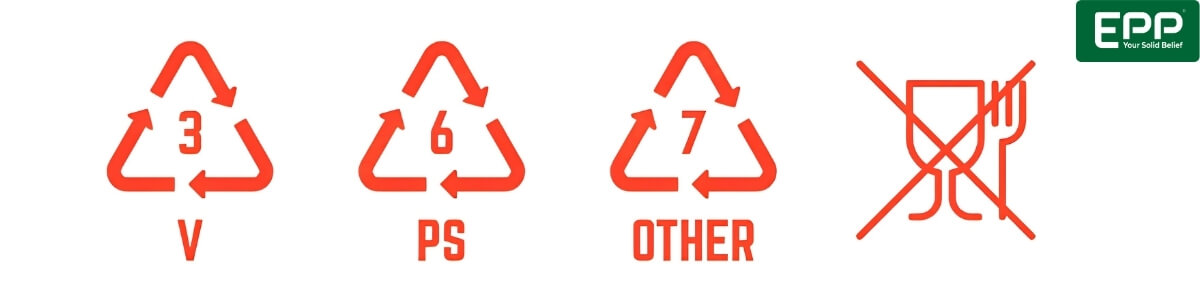
Non-Food-Safe Plastic Resin Symbols
Global Frameworks & Safety Standards for food grade plastic
A material cannot simply label itself as food grade plastic without rigorous third-party inspection and compliance testing. Global supply chains today typically adhere to two main legal pillars:
FDA (United States) Regulatory Framework
In the United States, food contact plastics are governed under FDA 21 CFR (Code of Federal Regulations):
- 21 CFR 177.1520: Specifies purity standards, extraction limits, and maximum density levels for Olefin polymers (Polypropylene and Polyethylene).
- FDA Indirect Food Additives Approval: Requires raw resin producers to verify that colorants, antioxidants, and processing aids do not migrate into food simulants beyond established thresholds.

U.S. FDA compliance in food-grade plastic manufacturing
EFSA (European Union) Regulatory Framework
The European Food Safety Authority (EFSA) enforces strict food contact requirements under EU Regulation No 10/2011:
- Overall Migration Limit (OML): Restricts the total concentration of non-volatile substances migrating from plastic into food to 10 mg/dm² of contact surface area.
- Specific Migration Limits (SML): Sets binding individual caps for specific heavy metals, plasticizers, and primary aromatic amines.
Industrial Cleanroom & BRCGS Packaging Standards
For bulk food processing, agriculture, and ingredient transportation, utilizing certified food-safe resin is only the first step. Primary packaging materials must be manufactured in controlled hygienic environments:
- BRCGS Packaging Materials (Grade AA): Global benchmark certifying hygiene management, HACCP hazard controls, and foreign body contamination prevention across production lines.
For industrial food processors requiring large-scale storage and transport solutions, explore our engineered, food-certified customized big bags manufactured under cleanroom conditions.
Expert FAQ
How to identify food grade plastic?
Examine the container for international compliance markings, such as the Fork & Glass symbol alongside official Resin Identification Codes #1 (PET), #2 (HDPE), #4 (LDPE), or #5 (PP). For B2B procurement, request an official Certificate of Analysis (COA) confirming FDA 21 CFR 177.1520 or EU 10/2011 compliance from the manufacturer.
Is Plastic #5 (Polypropylene) safe for food?
Yes, Polypropylene (#5) is one of the safest food contact plastics available. It features a high thermal resistance point, contains zero Bisphenol A (BPA), and resists chemical leaching, making it ideal for hot-fill applications, microwave containers, and industrial bulk packaging.
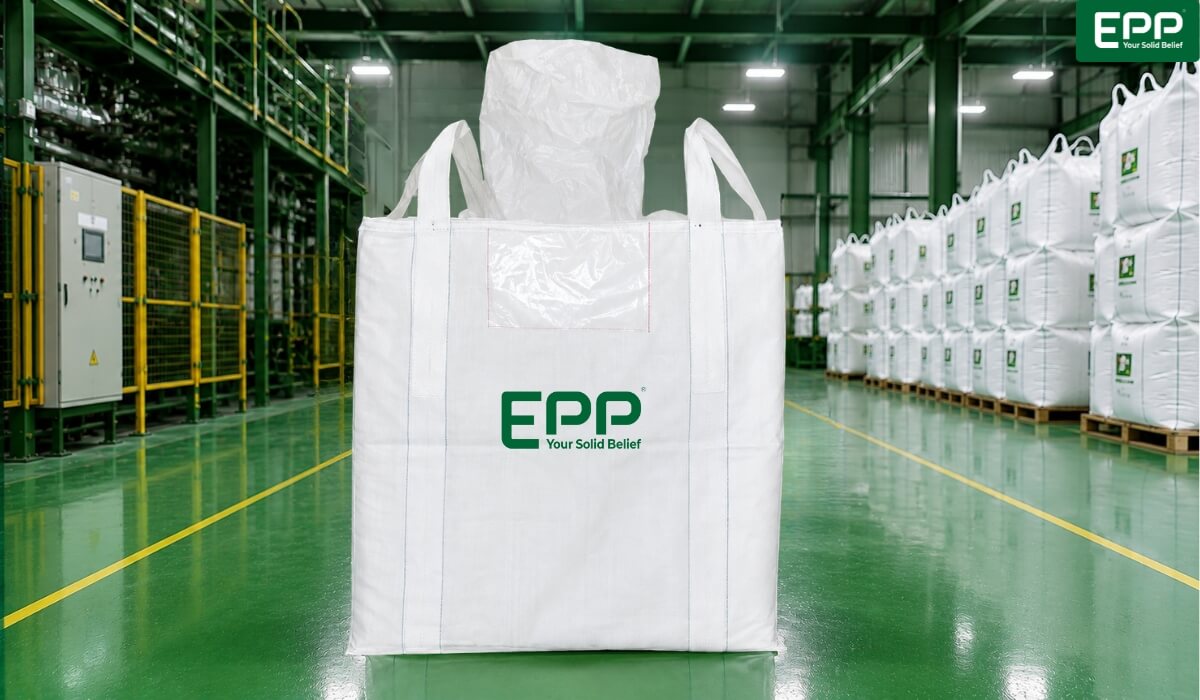
Food grade FIBC bags made from PP resin
Does food grade plastic contain BPA or other carcinogens?
No, true food grade plastics manufactured from virgin Polypropylene (PP), HDPE, LDPE, or PET do not contain BPA, phthalates, heavy metals, or known carcinogens. BPA is primarily used in polycarbonate (Code 7) plastics and epoxy container linings, not in standard olefin polymers.
What is the difference between food grade plastic and regular plastic?
Food grade plastic is produced from 100% virgin resin with full raw material traceability, controlled migration additive limits, and zero recycled plastic contamination. Regular plastic often utilizes post-consumer recycled (PCR) materials, unapproved dyes, and heavy metal stabilizers that can leach hazardous substances into food.
Conclusion
Accurately evaluating and selecting food-grade plastics is a mandatory requirement to protect the integrity of your product quality and brand reputation. From compact retail packaging to heavy-duty shipping packaging, understanding the properties of plastic materials will ensure a safe, compliant, and highly efficient supply chain.
At EPP Vietnam, we design and manufacture high-quality food-grade certified Jumbo FIBCs in a state-of-the-art cleanroom system, meeting the most stringent global standards. Contact our technical team today to review your food packaging strategy and receive expert advice on legal compliance.
Website: epp.vn
Alibaba website: https://eppvietnam.trustpass.alibaba.com/
Email: [email protected] Hotline/ Whatsapps: +84 986 002 888