
Industrial bulk bags are popular products all over the world, because of their great benefits. These days, you can see this bag used in almost every factory. However, choosing a factory to ensure quality products and reasonable prices is not an easy thing. If you want to purchase industrial-use FIBC bags, please follow our article to make a worthwhile decision.
Information about industrial bulk bags
Industrial FIBC bags have a large capacity usually from about 500kg – 2500kg. Therefore, they help to arrange goods in the warehouse neatly, save workshop space, manage goods easily and create a professional warehouse.
FIBC bags are applied in industries with machinery and equipment to fill and discharge goods quickly and easily. Tons of products contained in jumbo bags can be also moved by forklifts. As a result, the work progress of your business will be greatly improved.
Why are industrial bulk bags widely used?
FIBC super sacks are perfect products from design to high application. The main material of the FIBC bag is PP (polypropylene). The dimension may vary depending on the intended use. The following outstanding advantages will prove the ideal of this product.
Wide application
Jumbo bags are chosen to pack products according to the industry application as industrial bags for domestic consumption or export needs.
The development of packaging and lifting machinery and equipment combined with the right container bag helps your work to be carried out quickly. At the same time, it can save time, increase labor productivity, and ensure the correct leading time to import and export goods as customers request.
Ensuring Product safety
Jumbo big bags have large dimensions and withstand heavy loads, helping businesses to not only pack more goods but also maintain product safety. Whether your products are fine powder, bulk goods, granules or liquids, you can find a dedicated type of High Quality Bulka bag for them.
With good quality PP input materials, big bags have high moisture resistance, toughness, and limit punctures or scratches in the process of packing and transporting compared to poor quality bags.
Each individual material will be best preserved in FIBC bags with the anti-static ability and moisture resistance. Your goods are in good quality without damage, corrosion, loss, helping businesses reduce risks than using normal bags.
Cost savings
FIBC bags offer a significant advantage in terms of reusability and cost savings for businesses. Unlike single-use bulk bags, FIBC bags can be used multiple times, reducing the need for frequent purchases and disposal. This reusability not only contributes to environmental sustainability but also translates into substantial cost savings for businesses in the long run.
Moreover, businesses that have used single-use bulk bags can often find ways to liquidate them, either by selling them to other businesses or recycling them for their material value. This adds an additional layer of cost-effectiveness to using single-use bags.
As a result, the combination of reusability and potential liquidation value makes used FIBC bags an attractive choice for many businesses and individuals seeking to optimize their packaging and material costs. By opting for used FIBC bags, businesses can reduce their environmental footprint while simultaneously improving their bottom line.
Modern printing technology
With modern Flexo printing technology, FIBC big tote bags have eye-catching packaging designs and colors without being blurred when being used. There is no harm to the products when printing on the package because our company uses 100% imported ink.
Purchasing Industrial bulk bags at low price from EPP
EPP supplies FIBC bags directly without intermediaries and commits to giving customers the cheapest price compared to other same bulk bags. For long-term customers or large orders, we always have high incentives and discounts.
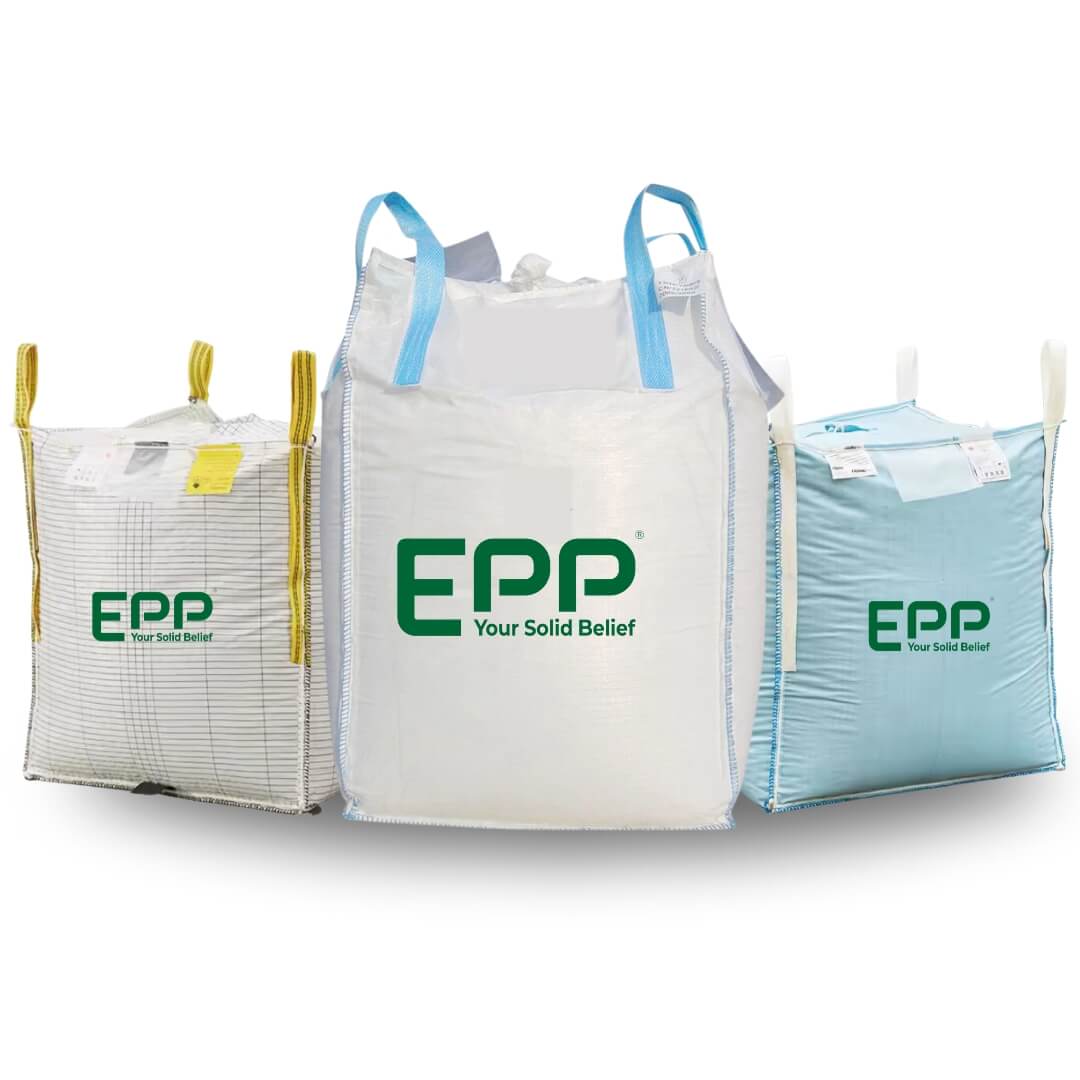
At the same time, EPP has a system of modern and professional machinery. When purchasing polypropylene big bags at EPP VietNam, you will be able to take advantage of an advanced production line and skilled technical staff, supervisors and workers. We are committed to providing high quality products, good prices and always ensuring the interests of customers.
Readers have just learned about industrial bulk bags and their great advantages. To purchase or know more details about the product, you can visit https://epp.vn or contact hotline 84 986 002 888.
🌐Website:https://epp.vn// https://eppvietnam.trustpass.alibaba.com/
📲Contact: +84 986 002 888 – [email protected]

