Global shipping presents an unforgiving environment for dry bulk commodities. Transoceanic routes expose cargo to drastic temperature fluctuations, moisture condensation inside containers (“container rain”), and severe mechanical stresses. For high-purity chemicals, food ingredients, and fine agricultural powders, standard packaging formats often fall short.
The combination of PP woven bags with liner provides a dual-layer barrier system. This structure delivers structural integrity alongside total atmospheric isolation, making it a reliable standard for enterprise-level global distribution.
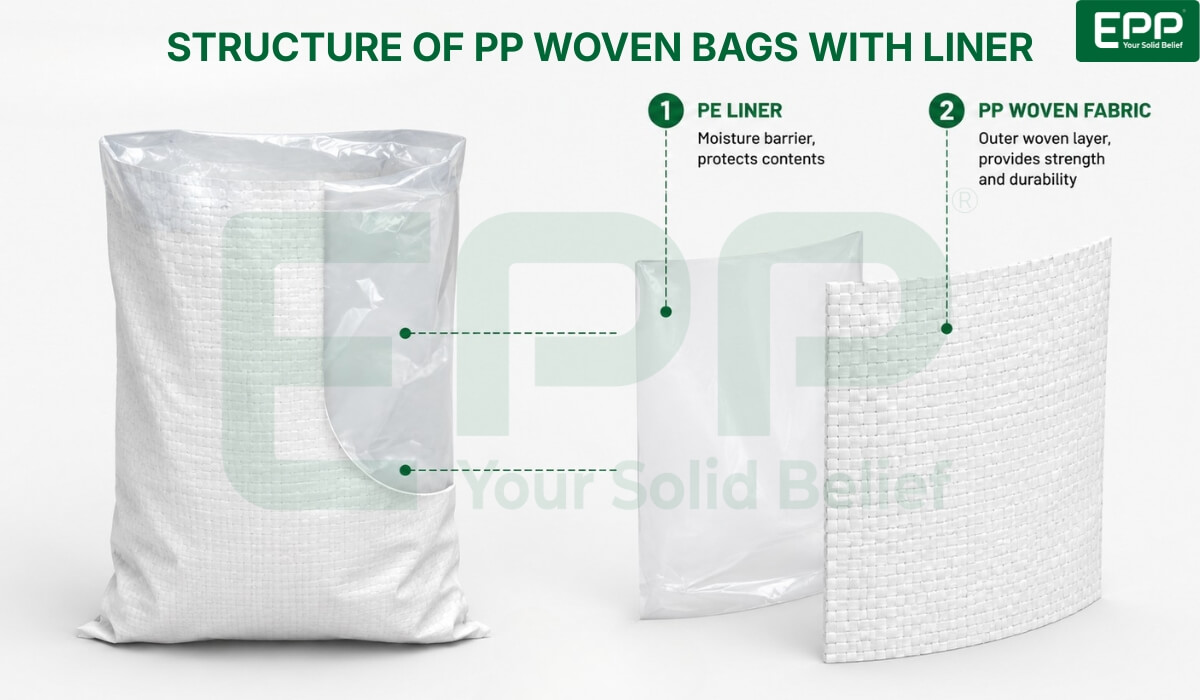
Structure of outer PP woven bag paired with a protective inner PE liner
How Are PP Woven Bags with Liner Manufactured?
Understanding the manufacturing process highlights why PP woven bags with liner perform consistently under extreme transit conditions. The production cycle requires tight tolerance controls across both synthetic polymer extrusion and mechanical conversion phases.
1. Polymer Extrusion and Tape Stretching
High-purity polypropylene virgin resin granules are melted and extruded into flat plastic sheets. These sheets are slit into narrow ribbons (tapes), which are thermally stretched through a hot-air oven. Stretching aligns the polymer molecules, increasing the tensile strength of each thread to handle heavy working loads.
2. Circular Weaving
The stretched PP tapes are wound onto bobbins and loaded into high-speed circular looms. The machines weave the warp and weft tapes into a seamless tubular fabric. Tubular weaving eliminates side seams, removing a common point of structural failure found in flat-stitched bags.
3. Inner Liner Extrusion (PE Film)
Simultaneously, a low-density polyethylene (LDPE), linear low-density polyethylene (LLDPE), or high-density polyethylene (HDPE) inner liner is manufactured using a blown film extrusion process. The molten PE resin is inflated into a bubble to form a seamless tube, engineered to exact thickness tolerances (typically between 30 to 100 microns).
4. Insertion, Cutting, and Sewing
The tubular PE liner is inserted into the outer PP woven tube. Depending on end-use automated filling requirements, the inner liner is integrated using one of three primary methods:
- Loose Insertion: The liner is placed inside manually or mechanically, turned over at the top cuff.
- Bottom Stitched: The PE liner and outer PP fabric are hemmed and stitched together at the bottom seam.
- Glue/Tabbed Attachment: Heat-activated adhesive dots secure the liner to the inner walls of the PP bag, preventing liner collapse or twisting during automated discharge.
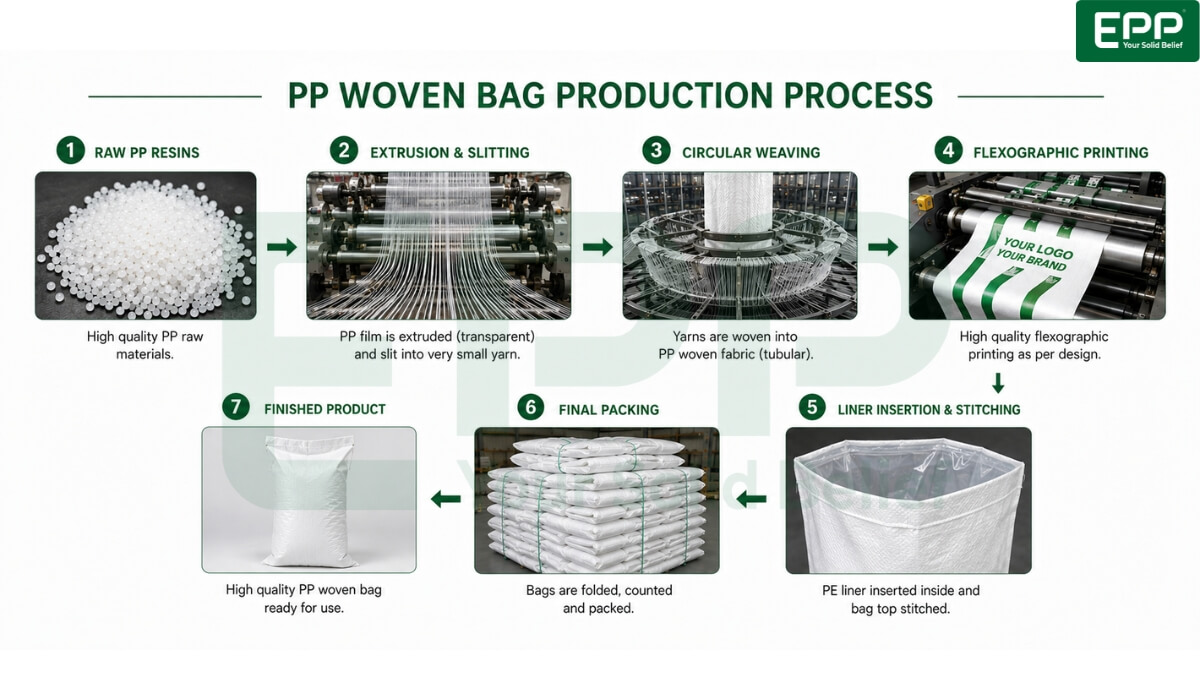
Production process of PP woven bags with liner
For global enterprise buyers looking for reliable, high-volume sourcing, explore our complete catalog of industrial woven polypropylene sacks built for demanding export environments.
Uncoated PP Woven Bags with Liner vs. Laminated PP Woven Bags
Selecting between an uncoated bag paired with an internal liner and a coated (laminated) PP bag requires matching the material properties to the specific characteristics of the cargo.
| Technical Feature | Uncoated PP Woven Bag with Liner | Laminated (Coated) PP Woven Bag |
| Moisture Protection | 100% Hermetic Barrier: Continuous internal PE film isolates cargo from air and moisture. | Moderate Barrier: Thin PP/PE extrusion film applied directly to the woven fabric surface. |
| Fine Powder Containment | Zero Leakage: Continuous liner prevents micro-particulates from sifting through fabric weaves. | Risk of Sifting: Micro-punctures or gaps at seam stitches can leak ultra-fine powders. |
| Flex Crack Resistance | High: Flexible internal liner floats independently from the outer woven fabric shell. | Moderate: Lamination layer can micro-crack when folded repeatedly, compromising barrier integrity. |
| Thermal Expansion Flexibility | High: Outer fabric handles structural loads while the liner expands freely without stress concentrations. | Low: Rigid bonded layers can delaminate under extreme temperature shifts or heavy drop impacts. |
| Primary Industry Suitability | Hygroscopic chemicals, fine sugar, milk powders, technical resins. | Grains, animal feed, fertilizer pellets, coarse agricultural goods. |
Why Choose Uncoated with Liner Over Lamination?
Laminated bags use a thin extrusion layer (15 to 25 microns) applied directly to the woven PP fabric. While effective against light moisture, lamination remains vulnerable to micro-fissures along fold lines and needle perforations created during sewing.
For highly hygroscopic products (such as industrial salts, ammonium nitrate, or refined sugar), even minor micro-cracks can cause moisture ingress, resulting in product caking or spoilage.
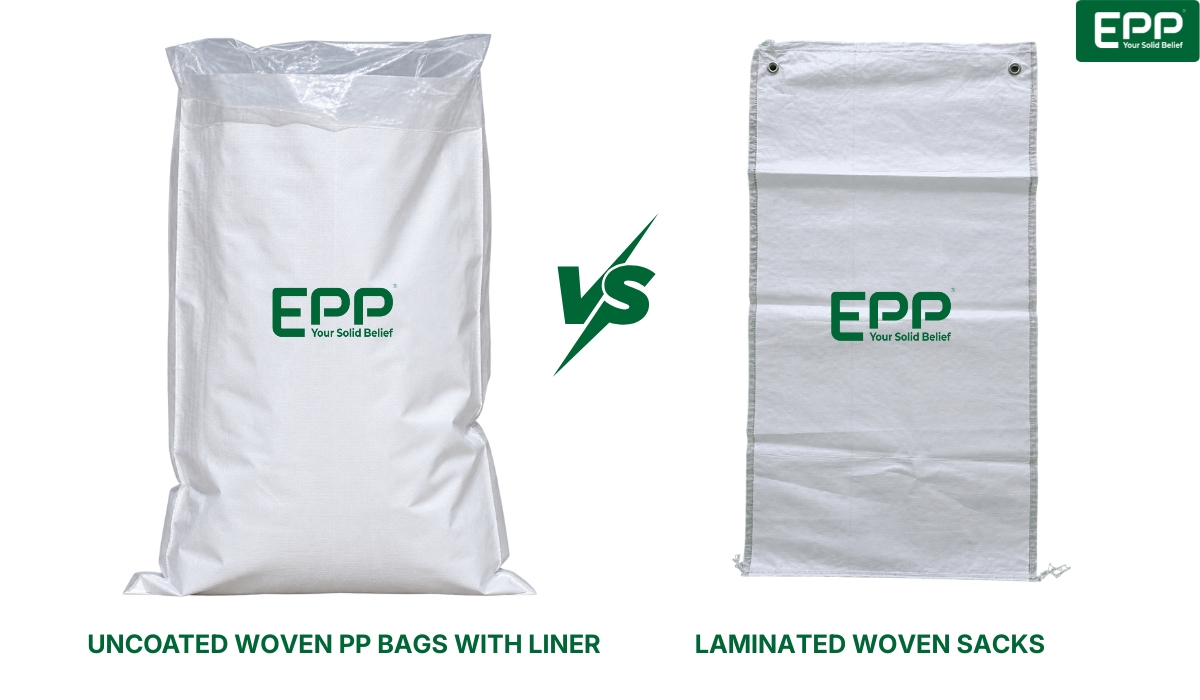
Uncoated PP woven bag with PE liner and a standard laminated PP bag
An uncoated PP woven bag with a separate PE liner separates structural support from barrier protection. The outer uncoated fabric absorbs handling stress and provides high tensile strength, while the inner liner provides an uninterrupted, hole-free protective barrier.
Procurement managers looking to explore the full spectrum of woven container formats can review our different types of woven bags to find the ideal match for their bulk commodities.
Key Technical Benefits of PP Liner Bags for Global Wholesale Buyers
For high-volume export operations, bulk packaging must offer durability, full regulatory compliance, and maximum ocean freight efficiency.
1. Complete Protection Against Hygroscopic Damage
Hygroscopic materials absorb moisture directly from ambient air. Long transit routes through tropical maritime environments create internal container condensation. A sealed PE liner prevents atmospheric moisture from reaching the product, ensuring fine powders arrive dry and free-flowing.
2. Cleanroom Production and Food-Grade Hygiene
For food-grade products like starch, additives, and dry ingredients, contamination risks must be completely eliminated. High-purity liners produced under cleanroom conditions prevent foreign particles, loose threads, and dust from contacting the payload.
3. High Tensile Strength and Drop Impact Endurance
Woven polypropylene offers an exceptional strength-to-weight ratio. When filled and stacked in 20-foot or 40-foot High-Cube shipping containers, the outer PP matrix withstands heavy bursting forces, abrasion against container walls, and multi-tier stacking pressure.
4. Specialized Hazard Control Options
For hazardous chemicals, liner systems can be custom-engineered. The UN pp woven bag is engineered to meet UN Dangerous Goods standards, passing drop, puncture, and stacking tests for international transit safety.
Buyers aiming to align with global ESG mandates can also review structural advances in recycled polypropylene bags.
Frequently Asked Questions (FAQ)
1. What industries commonly use PP woven bags with liners?
PP woven bags with liners are heavily utilized in industries requiring strict moisture control and contamination prevention. Primary sectors include:
- Chemicals & Petrochemicals: Fine polymer powders, resins, fertilizers, ammonium sulfate, and hazardous chemical compounds. For heavy-duty industrial compounds, explore our specialized chemical bags.
- Food & Agriculture: Refined sugar, salt, flour, starches, cocoa powder, milk powders, and agricultural grain ingredients. Exporters handling rice commodities frequently rely on dedicated PP woven bags for rice.
- Minerals & Construction Materials: Hydrated lime, pigments, cement additives, and fine mineral powders.
2. Can I customize the size and color of the bags?
Yes. As an enterprise supply chain provider, EPP Vietnam manufactures custom-engineered PP woven bags with liner tailored to your automated filling lines. Customizable specifications include:
- Dimensions & Load Capacity: Standard 25kg, 50kg, or custom metric dimensions.
- Fabric Weight & Color: Fabric density ranges from 55 gsm to over 120 gsm, available in natural white, transparent, or custom brand colors.
- Printing Options: High-definition flexographic printing up to 8 colors for branding, handling instructions, and barcode traceability.
- Liner Configurations: Choice of LDPE, LLDPE, HDPE, or aluminum foil barriers in specified micron thicknesses, with loose-inserted, bottom-stitched, or tabbed attachments.

3. Are these bags recyclable?
Yes, PP woven bags with liner are made from 100% recyclable thermoplastic polymers. Polypropylene (PP) and Polyethylene (PE) belong to the polyolefin plastic family.
For efficient mechanical recycling, the inner PE liner should be separated from the outer PP woven bag during processing. Both materials can then be washed, shredded, and re-pelletized into recycled resins for non-food industrial manufacturing.
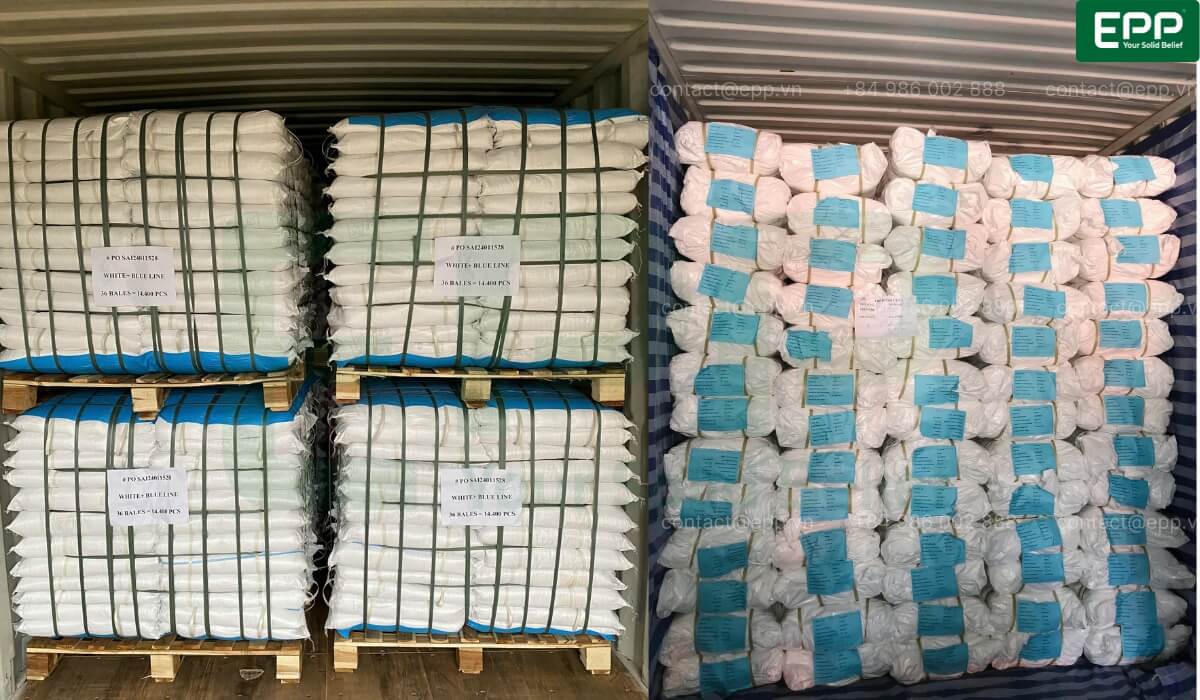
Shipments of PP woven bags with liners from EPP Vietnam
Optimize Your Packaging Logistics with EPP Vietnam
Integrating high-performance PP woven bags with liners into your supply chain protects product quality, eliminates moisture damage, and reduces total packaging costs.
EPP Vietnam stands ready as your strategic supply chain partner. Contact our technical team today to review your bulk material specifications, request product samples, or obtain a competitive B2B wholesale quotation.
Website: epp.vn
Alibaba website: https://eppvietnam.trustpass.alibaba.com/
Email: [email protected] Hotline/ Whatsapps: +84 986 002 888