
Modern supply chains require high-performance solutions that balance heavy-duty load protection with environmental responsibility. Recycled Polypropylene Bags have emerged as a primary alternative to conventional plastics, allowing international distributors and manufacturers to lower their carbon footprint without sacrificing operational reliability.
As an experienced plastic packaging supplier, EPP Vietnam connects global clients with top-tier manufacturing networks across Southeast Asia. This comprehensive guide explores how Recycled Polypropylene Bags deliver measurable environmental benefits, uphold structural strength, and satisfy international quality standards for small-to-medium woven packaging.
What Are Recycled Polypropylene Bags?
Understanding the composition of Recycled Polypropylene Bags begins with the underlying raw material and processing method. Polypropylene (PP) is a versatile thermoplastic polymer widely used in industrial packaging due to its high tensile strength, chemical resistance, and durability. Through mechanical recycling, post-use PP plastic is collected, sorted, cleaned, shredded, and re-extruded into high-grade recycled resin pellets (rPP). These pellets are subsequently blended with virgin polypropylene, melted, extruded into tapes, and woven into high-strength fabric.
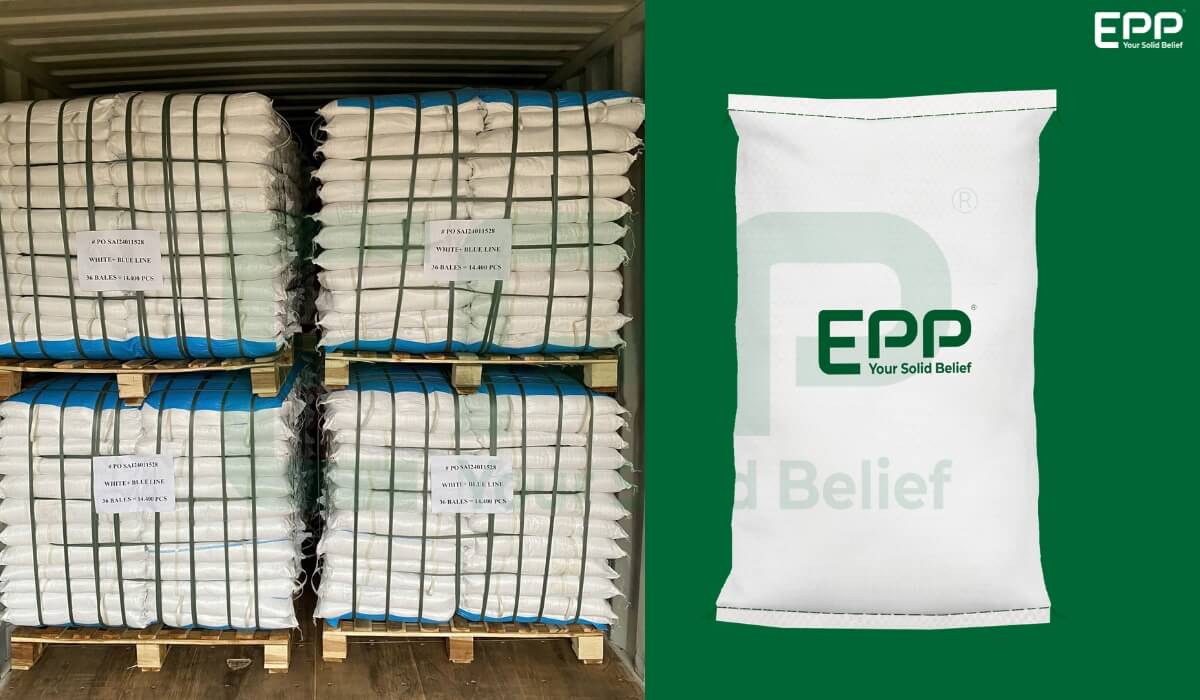
Durable Recycled Polypropylene Bags engineered for sustainable industrial packaging
To evaluate technical performance and sustainability claims, procurement managers must distinguish between two primary sources of recycled packaging materials:
- Post-Industrial Recycled PP (PIR): Sourced directly from manufacturing scrap, such as yarn trimmings and edge cuts. PIR material offers consistent purity, predictable melt flow index, and high mechanical performance.
- Post-Consumer Recycled PP (PCR): Derived from end-of-life plastic goods collected from commercial or household waste streams. PCR polypropylene requires advanced washing, deodorizing, and decontamination processes to meet quality benchmarks.
By specifying the exact recycled content percentage, buyers can tailor their recycled PP packaging to balance technical requirements with environmental targets. For an overview of traditional woven configurations, explore our core line of high-strength PP woven bags.
Core Sustainability Benefits of Recycled Polypropylene Bags
Adopting Recycled Polypropylene Bags delivers immediate environmental advantages while helping global companies comply with increasingly stringent packaging laws. Switching from 100% virgin plastic to recycled alternatives significantly reduces reliance on fossil feedstocks and supports the global circular economy.
Carbon Footprint & Resource Conservation
Manufacturing virgin polypropylene requires intensive petroleum extraction and refining. By incorporating rPP resin into recycled PP woven bags, manufacturers substantially lower embodied greenhouse gas emissions. Life Cycle Assessment (LCA) data indicates that utilizing a 30% to 50% recycled content mix reduces overall carbon emissions by approximately 25% to 35% compared to prime resin production. Furthermore, recycling diverts thousands of tons of plastic waste from landfills and ocean ecosystems, preserving vital natural resources.
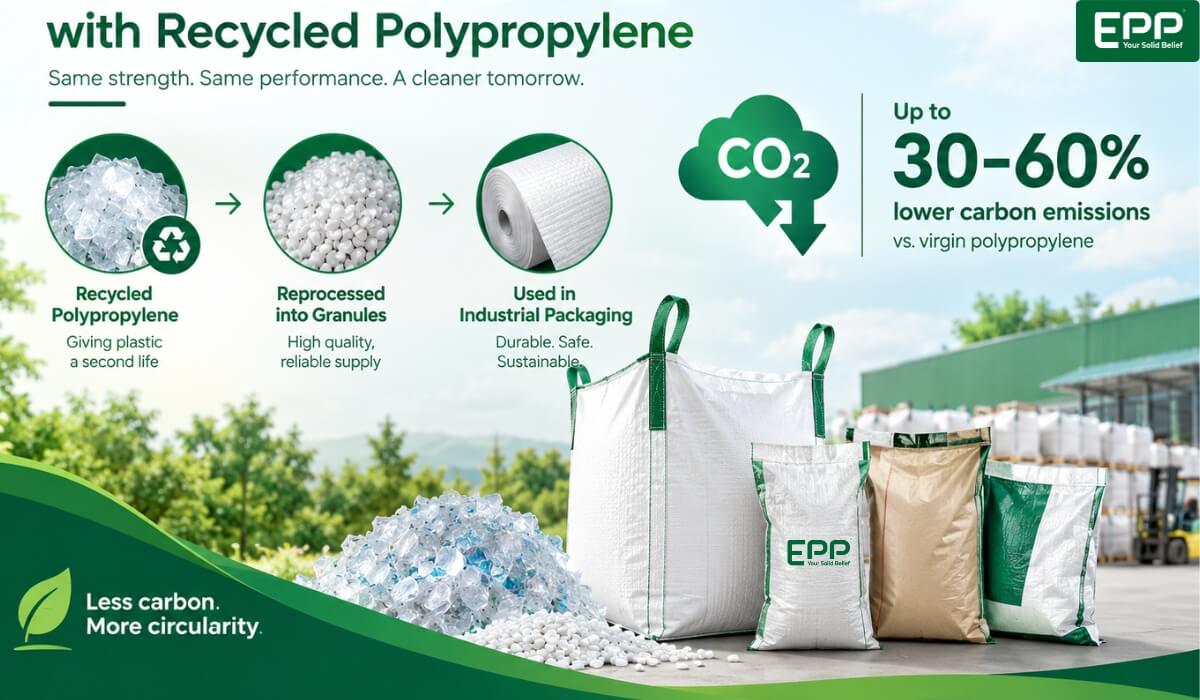
Carbon emission reductions achieved by incorporating recycled polypropylene into industrial packaging.
Compliance with Global Legislation (EU PPWR & Plastics Tax)
Regulatory frameworks worldwide are incentivizing the adoption of eco-friendly PP woven bags. The European Union’s Packaging and Packaging Waste Regulation (EU PPWR) mandates minimum recycled content thresholds for industrial packaging, while markets like the UK impose plastic packaging taxes on items containing less than 30% recycled material. Integrating recycled polypropylene bags into your logistics network helps avoid tax penalties, ensures regional compliance, and future-proofs supply chain operations.
Do Recycled Bags Sacrifice Structural Strength?
A common concern among supply chain executives is whether recycled plastic bags compromise load-bearing capacity. Standard small-to-medium PP woven sacks are engineered to transport payloads ranging from 10 kg to 50 kg under demanding freight conditions.
When produced using advanced mechanical recycling and specialized coupling additives, recycled polypropylene woven bags retain excellent tensile strength, burst resistance, and seam durability. Controlled blending ensures that structural integrity is maintained across standard handling procedures.

Industrial Applications of Recycled PP Packaging
Due to their versatility and strength, recycled PP packaging bags are widely used across diverse agricultural and industrial sectors. Customizing weave density, fabric weight (GSM), coatings, and closures allows these eco-friendly bags to perform under severe logistics conditions.
- Agricultural Commodities: Highly durable recycled woven bags are ideal for bulk grains, animal feed, seeds, and dry legumes. They provide excellent ventilation while protecting contents from physical abrasion during transit.
- Fertilizers & Construction Materials: Coated recycled PP sacks with PE inner liners protect hydroscopic goods such as fertilizers, cement, quartz sand, and dry mortar from moisture ingress.
- Chemical & Mineral Products: Heavy-duty recycled polypropylene packaging handles raw polymers, rubber additives, and mineral powders safely. For specific chemical handling requirements, review our detailed guide on engineered chemical bags.
To meet food security standards, specialized food-grade commodities often require dedicated packaging formats. You can read more about tailored agricultural packaging options in our article on selecting the ideal PP woven bag for rice.
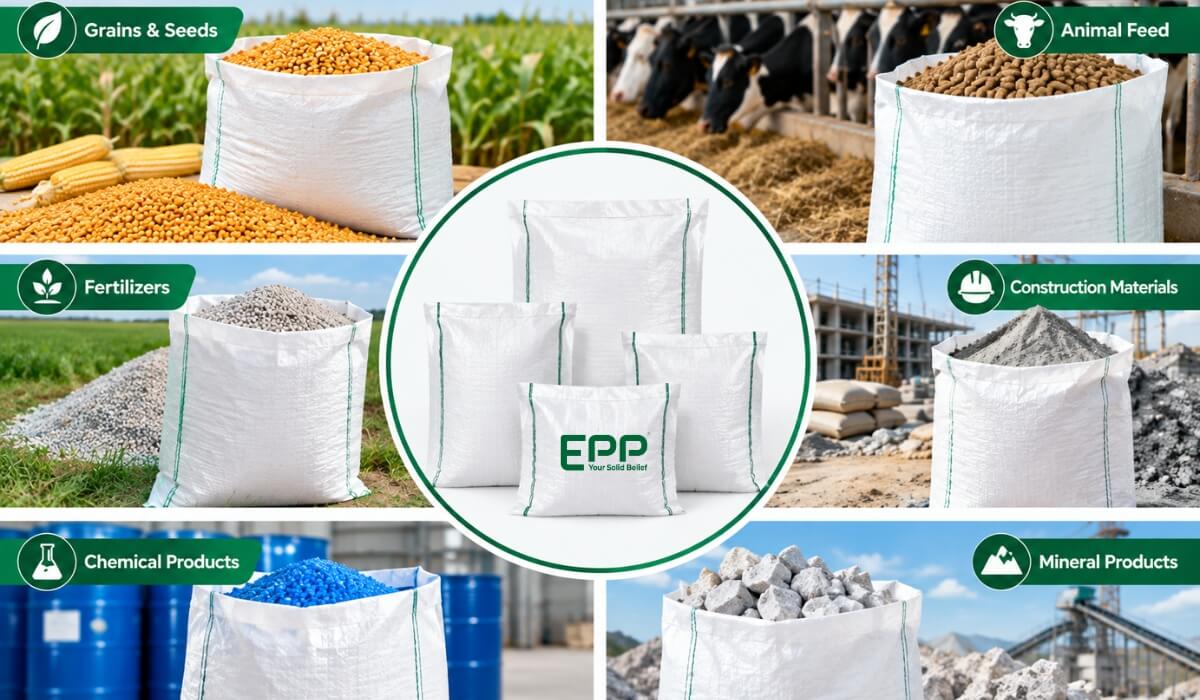
Common application of Recycled Polypropylene Bags.
Virgin vs. Recycled Polypropylene Packaging
Choosing between virgin packaging and Recycled Polypropylene Bags requires evaluating operational needs, target markets, and budget constraints. While virgin materials offer maximum clarity and tensile values, recycled options provide superior environmental performance and tax advantages.
| Evaluation Factor | Virgin Polypropylene Bags | Recycled Polypropylene Bags |
| Raw Material Source | 100% Prime Petrochemical Resin | PIR / PCR Blended rPP Resin |
| Carbon Footprint | Baseline High (Petroleum Extracted) | 25% – 35% Lower CO2 Emissions |
| Plastic Tax Exposure | Subject to Full Plastic Packaging Taxes | Exempt / Reduced Tax Exposure |
| Tensile & Load Capacity | Maximum Engineering Limits | High Performance (Optimized via Blends) |
| Regulatory Compliance | Global Standards Baseline | EU PPWR & ESG Compliant |
| End-of-Life Recyclability | 100% Recyclable | 100% Recyclable (Circular Economy) |
Quality Standards & International Certifications for Sustainable Bags
Verifying sustainability claims and material origin is essential when sourcing recycled polypropylene packaging. International certifiers provide chain of custody audits to guarantee that recycled content claims are accurate, traceable, and legally compliant.
Key certifications for sustainable packaging suppliers include:
- Global Recycled Standard (GRS): Verifies recycled content percentage (both PIR and PCR) while auditing social responsibility, environmental management, and chemical restrictions throughout the supply chain.
- Recycled Claim Standard (RCS): Tracks raw material chain of custody from origin to finished product for low-percentage recycled blends.
- ISO 9001:2015: Ensures consistent quality management, standardized extrusion tolerances, and rigorous tensile testing across every production batch.
Sourcing certified recycled polypropylene bags protects buyers against greenwashing and ensures full compliance with international import audits.
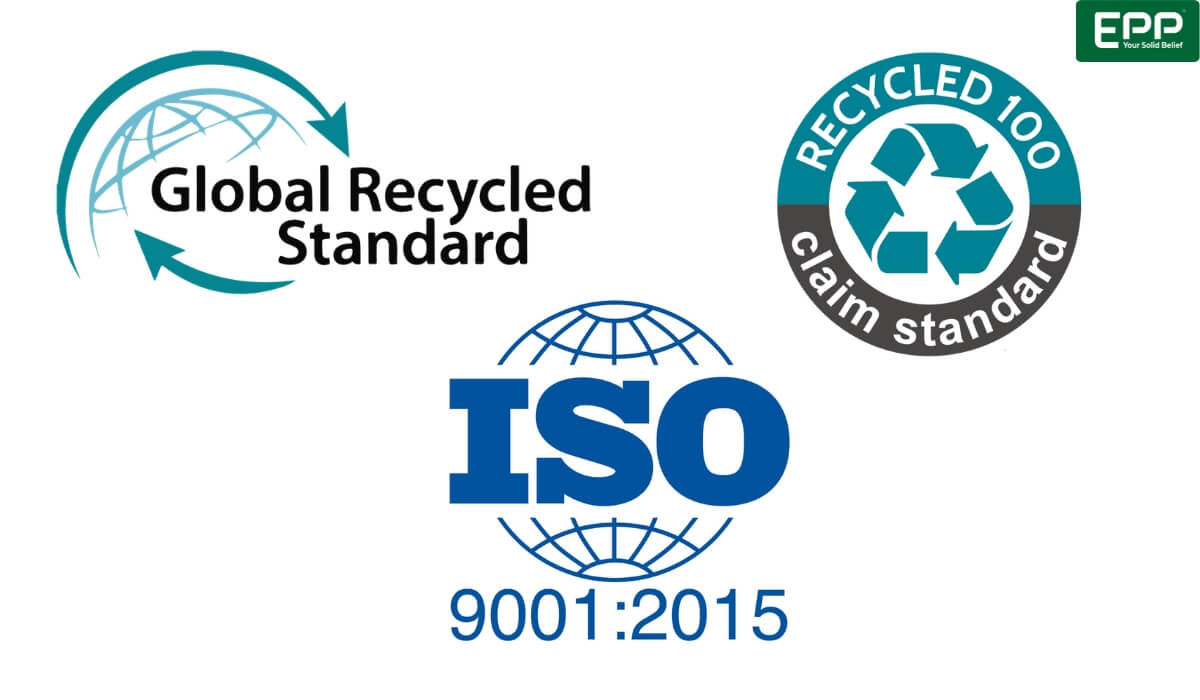
International certifications verifying chain of custody and recycled content accuracy.
Frequently Asked Questions (FAQ)
Can Recycled Polypropylene Bags Be Used for Food Packaging?
Direct food contact generally requires 100% virgin polypropylene resin or specialized food-contact approved barrier liners. However, Recycled Polypropylene Bags featuring post-industrial recycled (PIR) material or fitted with certified virgin PE liners are widely used for secondary agricultural packaging, such as outer sacks for grains, seeds, and dry produce.
Is recycled PP the same as PCR PP?
Not entirely. Recycled PP (rPP) is a broad term encompassing all reprocessed polypropylene. PCR PP (Post-Consumer Recycled Polypropylene) specifically refers to material recovered from end-of-life consumer waste. In contrast, PIR PP (Post-Industrial Recycled Polypropylene) comes from clean manufacturing scrap.
What documents should I request from a recycled PP bag supplier?
When working with a recycled polypropylene bags supplier, request a Global Recycled Standard (GRS) or Recycled Claim Standard (RCS) certificate, a Technical Data Sheet (TDS) detailing safe working loads, an ISO 9001 quality certificate, and a Certificate of Analysis (COA) for tensile performance.

Are recycled polypropylene bags environmentally friendly?
Yes. Recycled Polypropylene Bags significantly reduce petroleum usage, lower embodied carbon emissions by 25% to 35%, and divert plastic waste from landfills. Because polypropylene is 100% recyclable, these bags can be re-processed at the end of their lifecycle, supporting a circular packaging economy.
Conclusion
Transitioning to Recycled Polypropylene Bags represents a practical, effective strategy for reducing supply chain environmental impact while maintaining packaging reliability. By utilizing advanced PIR and PCR blends, businesses can achieve measurable carbon reductions, satisfy global regulatory requirements, and protect goods during international transit.
EPP Vietnam is dedicated to simplifying sustainable packaging procurement. By integrating top-tier manufacturing infrastructure, rigorous QA/QC protocols, and complete chain-of-custody verification, EPP Vietnam delivers high-performance recycled PP packaging tailored to your exact operational requirements. Contact EPP Vietnam today to request technical samples, review certification documentation, and optimize your bulk packaging strategy.
Website: epp.vn
Alibaba website: https://eppvietnam.trustpass.alibaba.com/
Email: [email protected] Hotline/ Whatsapps: +84 986 002 888

Thanks for your compliment. Please follow on to read more article from our website.