
CIF, or Cost, Insurance, and Freight, is a crucial term in international shipping and trade that show the responsibilities of both the buyer and the seller in transactions involving the transportation of goods. Understanding this incoterm is essential for businesses engaged in international trade, as it clarifies costs, risks, and obligations associated with shipping. This article delves into what CIF means in shipping, the obligations of sellers and buyers, insurance requirements, when to use it, and how it compares to other Incoterms like Free on Board (FOB).
What is CIF in Shipping?
CIF stands for Cost, Insurance, and Freight (named port of destination). It is an Incoterm® reserved exclusively for sea and inland waterway transport. Under CIF terms, the seller is contractually obligated to arrange and pay for the ocean freight, export clearance, and maritime transit insurance required to ship the goods to the buyer’s specified destination port.
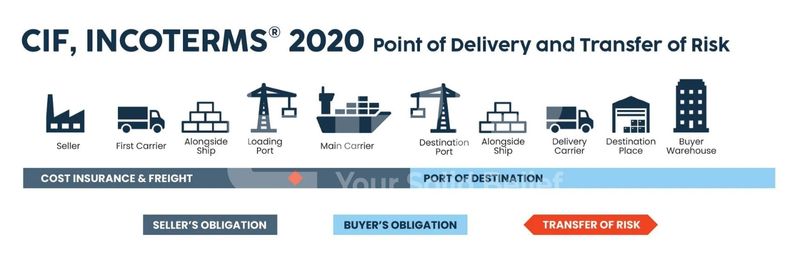
CIF Incoterms 2020: Point of Delivery, Cost Allocation, and Transfer of Risk Diagram.
When a supplier quotes a CIF price (e.g., CIF Rotterdam Port), the quoted figure reflects a bundled cost comprising:
- Cost: The base commercial purchase price of the manufactured goods.
- Insurance: The premium paid for marine insurance covering transit risks.
- Freight: The ocean freight charges to transport the container or bulk cargo to the destination port.
Key Rule: While the seller pays for transportation and insurance up to the destination port, CIF is NOT a destination-delivery term regarding risk. Risk transfers to the buyer the moment the cargo passes the ship’s rail and is loaded onboard at the port of origin.
How CIF Works When Importing FIBC Bags From Vietnam?
Importing FIBC jumbo bags from Vietnam under CIF terms streamlines ocean logistics while protecting high-value bulk packaging shipments across long-distance maritime routes. Vietnam has become a global hub for industrial PP packaging, and applying CIF terms creates a clear division of duties between Vietnamese suppliers and international buyers.
When importing FIBC bags from a specialized sourcing partner like EPP Vietnam under CIF:
- Factory Manufacturing & Quality Check: EPP Vietnam manages production, cleanroom packing, and compression baling or palletizing to ensure optimal container space utilization.
- Vietnam Export Clearance & Port Dispatch: EPP Vietnam arranges inland trucking to major departure ports (such as Hai Phong Port or Cat Lai Port in Ho Chi Minh City), clears Vietnamese export customs, and pays all local Origin Terminal Handling Charges (OTHC).
- Vessel Loading & Risk Transfer: Once the FIBC container is loaded onboard the ocean vessel, the risk of loss or damage transfers to the buyer. EPP Vietnam issues the marine insurance certificate naming the buyer as beneficiary and provides the negotiable Bill of Lading (B/L).
- Ocean Transit & Document Delivery: While the vessel is in transit, EPP Vietnam dispatches the full shipping document set (B/L, Commercial Invoice, Packing List, Certificate of Origin, Insurance Policy) via courier or telex release to enable bank processing under LC terms.
- Arrival Port Operations: Upon arrival at the destination port, the buyer pays destination terminal fees, completes import customs clearance, and arranges container trucking to their final warehouse.
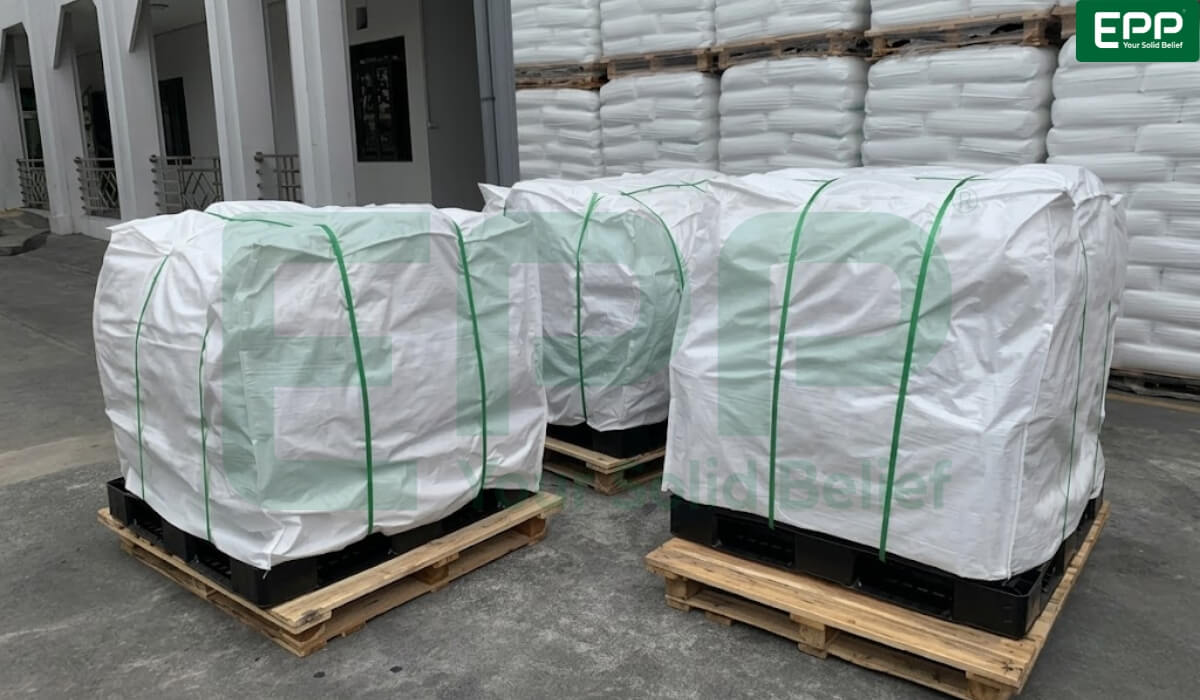
High-quality FIBCs in Vietnam are systematically packaged and quality-checked for international sea freight.
Seller’s Obligations Under CIF
Under the official Incoterms 2020 framework, the seller carries several primary logistics and financial responsibilities:
Export Compliance & Clearances: Obtaining export licenses, completing export customs clearance, and paying any export tariffs in the country of origin.
Pre-Carriage & Port Loading: Transporting the goods to the departure port and paying all origin Terminal Handling Charges (OTHC) to load the cargo onboard the vessel.
Freight Contracting: Selecting the ocean carrier, booking container space, and paying the main maritime freight charges to the agreed destination port.
Procuring Marine Insurance: Securing a valid transit insurance policy from a reputable underwriter that names the buyer (or the holder of the bill of lading) as the beneficiary.
Shipping Documentation: Supplying the buyer with clean commercial invoices, the insurance certificate, and a negotiable Bill of Lading (B/L) enabling the buyer to claim the goods at destination.
Buyer’s Obligations Under CIF
While the seller handles the freight booking and insurance policy, the buyer retains critical operational and financial duties at the arrival port:
Contract Payment: Paying the agreed CIF invoice amount as outlined in the commercial contract or Letter of Credit (L/C).
Risk Assumption Onboard: Bearing all risks of cargo loss or damage once the seller successfully loads the goods onto the vessel at the shipment port.
Destination Terminal Handling Charges: Paying unloading fees, demurrage, detention, and terminal handling charges at the arrival port (unless explicitly included in the ocean freight contract).
Import Customs Clearance: Filing import declarations, providing import licenses, and paying all applicable import duties, tariffs, VAT, and excise taxes required by local customs authorities.
On-Carriage Transport: Organizing and financing land transport (trucking or rail) from the destination port terminal to the final warehouse or job site.
Insurance Under CIF (Incoterms 2020)
Under the latest version of Incoterms, CIF mandates that sellers provide insurance coverage for the goods during transit. The insurance must be for a minimum of 110% of the contract value and should cover the buyer’s interests. This coverage protects the buyer against risks such as loss or damage to the goods while they are in transit.
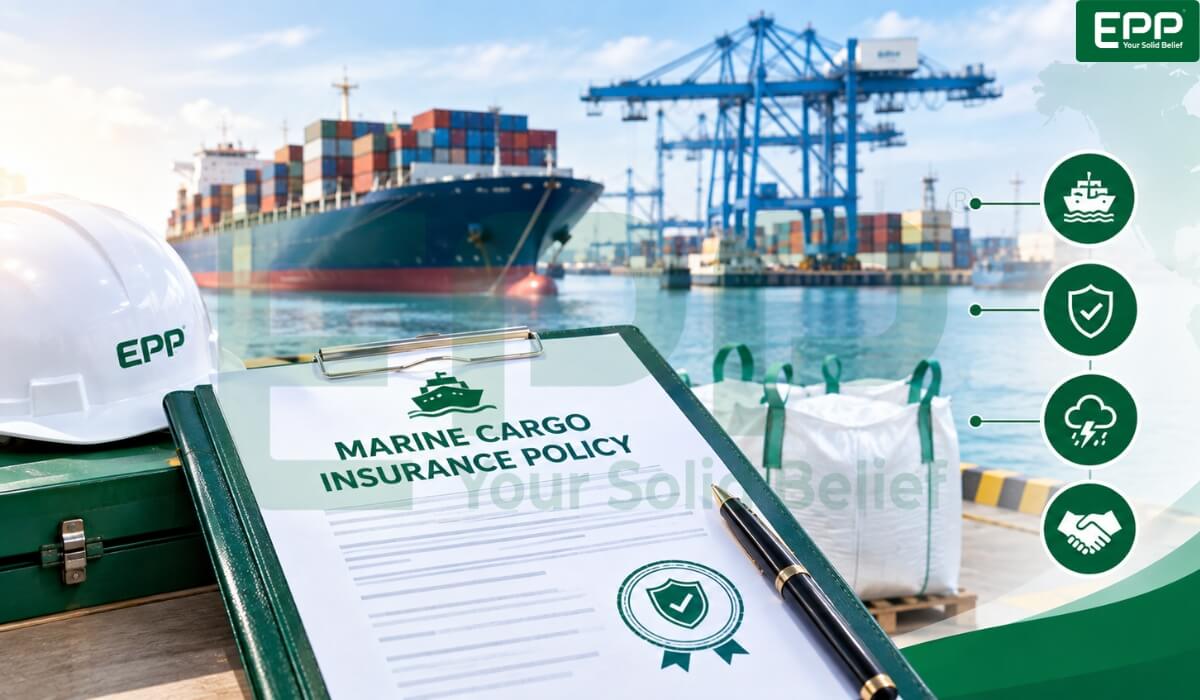
Marine Transit Insurance Policy under CIF Incoterms 2020
The seller is responsible for selecting the insurance provider and ensuring that the policy meets the minimum coverage requirements. However, buyers can also opt for additional insurance if deemed necessary. Understanding the insurance aspect of CIF is crucial, as it helps mitigate risks associated with international shipping.
CIF vs. Other Incoterms: FOB & DDP
Evaluating trade terms requires understanding how CIF compares with other popular Incoterms like FOB and DDP. Selecting the right incoterm depends on your team’s internal shipping capabilities, risk tolerance, and import expertise.
| Incoterm Feature | CIF (Cost, Insurance, and Freight) | FOB (Free on Board) | DDP (Delivered Duty Paid) |
| Main Ocean Freight | Seller pays ocean freight | Buyer pays ocean freight | Seller pays ocean & door freight |
| Marine Insurance | Seller must purchase (min. 110%) | Buyer arranges optional insurance | Seller handles all risk & insurance |
| Risk Transfer Point | Onboard vessel at origin port | Onboard vessel at origin port | Buyer’s final door/warehouse |
| Import Customs & Taxes | Buyer clears customs & pays duty | Buyer clears customs & pays duty | Seller clears customs & pays all duties/taxes |
| Best Used For | Buyers wanting bundled ocean freight without door handling | Experienced buyers with contracted freight rates | Buyers wanting door-to-door hands-free delivery |
FAQ
Frequently Asked Questions (FAQ)
How does CIF charge you?
CIF charges appear as a single consolidated invoice price that combines the cost of goods, export processing, ocean freight, and marine transit insurance up to the destination port.
Who pays terminal handling charges in CIF?
Origin Terminal Handling Charges are paid by the seller. Destination Terminal Handling Charges at the arrival port are typically paid by the buyer, unless the ocean freight contract explicitly incorporates DTHC into the prepaid freight rate.
What is the point of delivery for CIF?
Under Incoterms 2020, the delivery point occurs at the origin port when the seller places the goods onboard the designated vessel. The cost destination point is the named destination port.
Who is responsible for customs clearance under CIF?
The seller handles export customs clearance in the country of origin. The buyer is entirely responsible for import customs clearance, tariff payments, VAT, and regulatory compliance at the destination port.
Can CIF be used for air freight or intermodal container transport?
Technically, no. CIF is strictly reserved for sea and inland waterway transport. For air freight, road transport, or multimodal container shipping, the equivalent Incoterm is CIP (Carriage and Insurance Paid To).
Streamline Your Global Packaging Sourcing with EPP Vietnam
Navigating international shipping terms like CIF requires an experienced manufacturing and sourcing partner. EPP Vietnam provides complete export packaging solutions—including high-tenacity FIBC jumbo bags, container liners, and woven bags—tailored to meet global compliance standards.
Whether you prefer CIF quotes to simplify your ocean freight logistics, FOB pricing to leverage your own shipping contracts, or DDP terms for door-to-door delivery, our technical logistics team delivers transparent cost structures, full documentation support, and certified export quality.
Contact our international sales team today to discuss your packaging specifications and receive a competitive quotation:
Website: epp.vn
Alibaba website: https://eppvietnam.trustpass.alibaba.com/
Email: [email protected] Hotline/ Whatsapps: +84 986 002 888