As global trade policies shift toward decarbonization and stricter waste management regulations, multinational corporations are actively evaluating their supply chain materials. Selecting high-performance eco-friendly packaging is no longer solely a corporate social responsibility initiative—it is a strategic requirement to mitigate environmental taxes, lower freight emissions, and ensure regulatory compliance in key export markets across Europe, North America, and the Asia-Pacific region.
At EPP Vietnam, drawing from over two decades of technical expertise as a leading supplier of bulk containment solutions, we recognize that true packaging sustainability requires balancing material efficiency with uncompromised structural integrity. Transitioning to green packaging must protect high-value bulk goods during long-distance transit without adding unnecessary costs or operational risks.
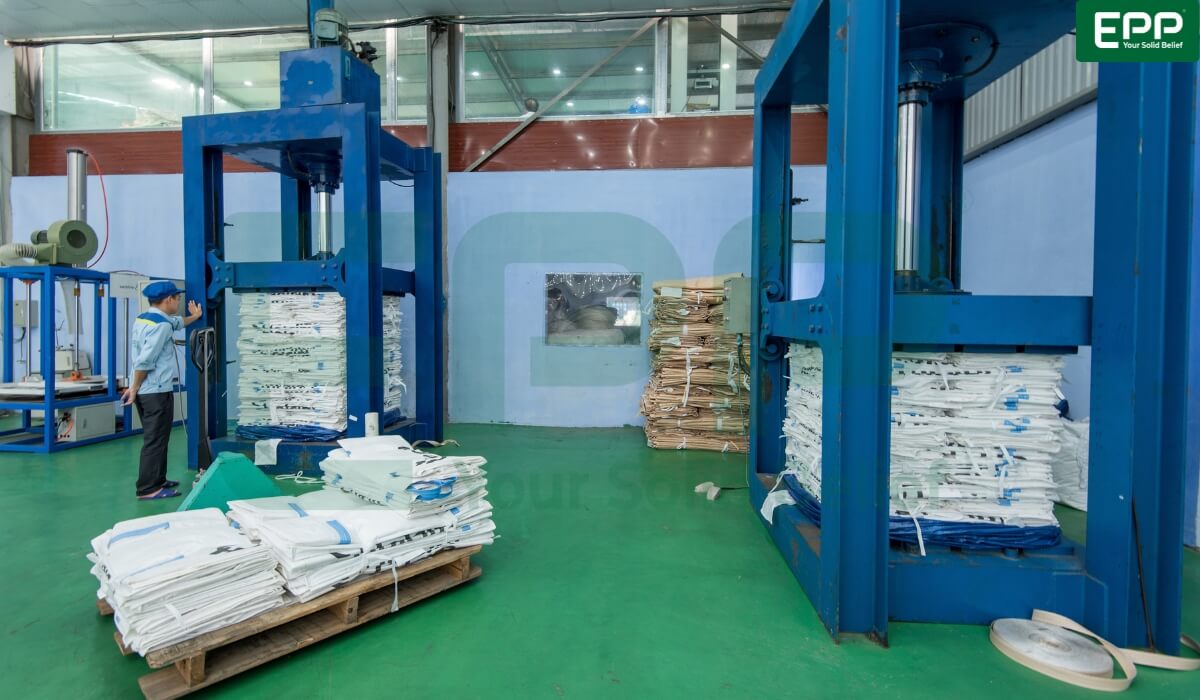
EPP Vietnam supplies certified, eco-friendly packaging solutions engineered for global industrial supply chains.
Understanding What Makes the Best Quality Eco-Friendly Packaging
Determining the quality of sustainable packaging requires looking beyond basic “green” marketing labels. High-grade eco-friendly packaging is defined by its full Life Cycle Assessment (LCA), technical durability, and alignment with circular economy principles.
Key criteria for evaluating high-quality sustainable packaging include:
- Material Reduction: Utilizing advanced resin compounding or structural engineering to produce thinner, lighter packaging that reduces raw material consumption without sacrificing tensile or burst strength.
- 100% Recyclability: Designing packaging from single-polymer structures (such as 100% Polypropylene or 100% Polyethylene) to simplify collection and mechanical recycling without needing multi-layer separation.
- Post-Consumer Recycled (PCR) Content: Incorporating verified percentages of recycled resins (e.g., rPP or rPET) into the production loop, reducing reliance on fossil-based virgin materials.
- Reusability & Circularity: Creating heavy-duty packaging with high safety factors (e.g., 6:1 Safety Factor for multi-trip industrial bags) that can endure multiple transport cycles before entering recycling streams.
To learn more about structural classifications and industrial material selection, explore our comprehensive guide on industrial packaging definition and classification.
Top Best Quality Eco-Friendly Packaging Options for Modern Industries
Different industries require specialized material properties based on product weight, moisture sensitivity, and logistics environments. Below are the leading sustainable packaging options across industrial and commercial sectors.
Heavy-Duty Recyclable & Reusable FIBC Jumbo Bags
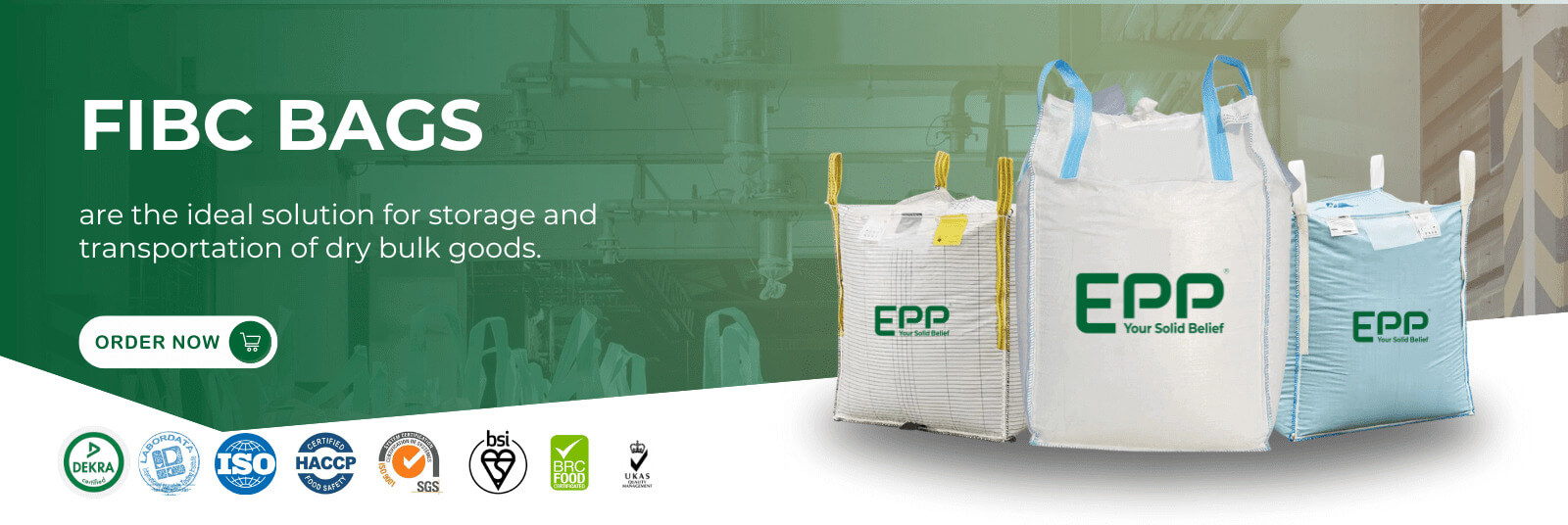
For bulk logistics handling materials from 500 kg to 2,000 kg, Flexible Intermediate Bulk Containers (FIBCs)—commonly known as Jumbo bags or bulk bags—represent the pinnacle of eco-friendly packaging for industrial operations.
Manufactured from 100% woven Polypropylene (PP) mono-material, FIBC bags offer an exceptional strength-to-weight ratio. They are 100% recyclable and can be easily collected, re-pelletized into rPP granules, and reprocessed into secondary industrial goods.
Multi-trip FIBCs engineered with a 6:1 Safety Factor (SF) allow companies to reuse the same container across multiple transport legs, reducing plastic waste by up to 60% compared to single-use options. Furthermore, for volatile powder environments, these bags integrate electrostatic protection meeting IEC 61340-5-1 international safety standards.

Lightweight & Retail Packaging Materials
For e-commerce, small-format retail, and inner cushion protection, paper and plant-based options provide practical alternatives:
- Corrugated Cardboard & Kraft Paper: Excellent strength-to-weight ratio for retail boxes and mailers; easily recycled through standard municipal paper streams.
- Molded Pulp & Starch-Based Inserts: Made from recycled paper or agricultural waste, molded pulp creates shock-absorbing trays that replace expanded polystyrene (EPS) foam for industrial parts and electronics.
Bio-Based & Compostable Flexible Packaging Films
For food wrap, agricultural liners, and lightweight consumer bags, bio-based films such as PLA (Polylactic Acid) and PBAT blends provide closed-loop organic waste solutions. These materials break down under compost conditions without leaving synthetic microplastics.

Some Best Quality Eco-Friendly Packaging solutions for Modern Industries.
How to Choose Eco-Friendly Packaging for Your Product?
Selecting the correct packaging matrix requires a systematic procurement framework to balance environmental goals with product protection:
-
Assess Load Requirements & Environmental Stress: Heavy industrial powders, chemicals, and agricultural minerals demand high tensile strength and puncture resistance (such as heavy-duty FIBCs), whereas lightweight goods can utilize paper or bio-films.
-
Evaluate End-of-Life Infrastructure: Match your packaging design to the waste processing capabilities of your target market. If the destination country lacks industrial composting facilities, choosing 100% recyclable mono-materials (RIC #4 or RIC #5) is more effective than compostable plastics.
-
Verify Total Cost of Ownership: Factor in potential savings from reduced carbon taxes, lower tariff brackets, optimized freight weight, and packaging reusability rather than focusing solely on initial unit purchasing costs.
For insights into how sustainable material choices enhance brand positioning and commercial value, see our breakdown on the role of plastic packaging in marketing strategy.
What International Certifications and Standards Matter?
Procurement teams must ensure that sustainability claims are backed by rigorous international testing and facility accreditations.
FSC for Responsible Paper Sourcing
When procuring paper, corrugated boxes, or Kraft wrapping, the Forest Stewardship Council (FSC) certification verifies that wood fibers originate from responsibly managed forests that preserve biodiversity and local worker rights.
BRCGS Packaging Materials
The BRCGS Packaging Materials standard provides a technical framework that helps manufacturing sites demonstrate product quality, legal compliance, and authenticity. It is a critical credential for facilities producing packaging intended for food, pharmaceutical, and hygienic supply chains.
Note: BRCGS certification applies specifically to operational site management and process control; it indicates rigorous quality assurance but does not automatically mean that every material produced is ecologically superior.
ISO 18601 and the ISO 18600 Series
ISO 18601 specifies the general requirements and framework for the ISO 18600 series of standards governing packaging and the environment. This suite defines standardized global procedures for evaluating packaging optimization, reuse, material recycling, energy recovery, and organic recovery.
ASTM D6400 and Compostable Plastics
For bio-based or compostable plastic packaging, compliance with ASTM D6400 (or European equivalent EN 13432) verifies that the material disintegrates within a specific timeframe in municipal or industrial composting facilities without leaving toxic heavy metals or chemical residues.
Food-Contact Compliance
For packaging used in food and beverage supply chains, environmental claims must be strictly separated from food-contact compliance. A material can be eco-friendly yet fail food safety regulations if it leaches non-approved additives. When evaluating top eco-friendly food packaging options, ensure your supplier provides explicit FDA or EU 10/2011 food-grade migration testing reports alongside environmental declarations.
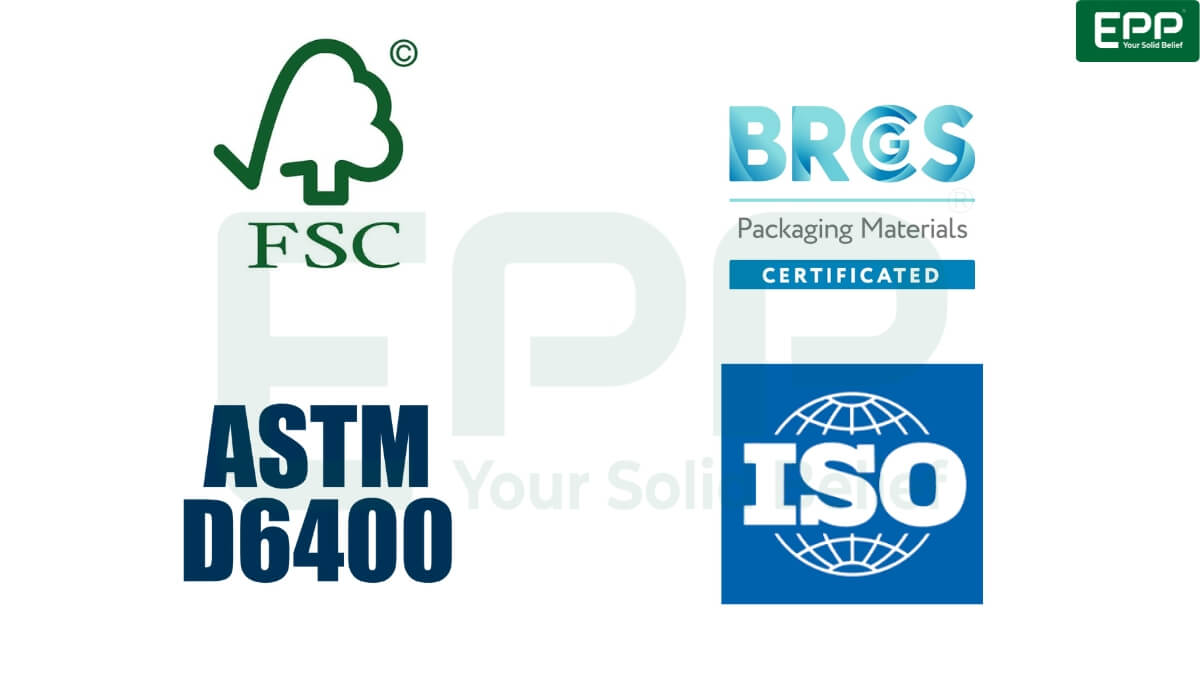
International Certifications and Standard for eco-friendly packaging.
Frequently Asked Questions (FAQ)
What is the most durable type of eco-friendly packaging for heavy industrial goods?
For heavy industrial bulk goods (500 kg to 2,000 kg), heavy-duty Flexible Intermediate Bulk Containers (FIBC Jumbo Bags) made from 100% recyclable woven Polypropylene (PP) offer the highest durability. When engineered with a 6:1 Safety Factor for multi-trip use, they combine extreme tear resistance with circular reusability.

Does eco-friendly packaging cost significantly more than traditional packaging?
While initial raw material costs for recycled resins or bio-polymers can be 5% to 15% higher, high-quality eco-friendly packaging frequently reduces Total Cost of Ownership (TCO). Reusable multi-trip designs, freight weight reductions (downgauging), and exemptions from regional plastic tax surcharges lead to net long-term savings.
What is the difference between biodegradable and compostable packaging?
Biodegradable packaging breaks down through biological action into natural elements over an unspecified period. Compostable packaging meets strict standardized timelines (e.g., ASTM D6400 / EN 13432) to degrade under controlled composting conditions into non-toxic biomass, $CO_2$, and water without leaving synthetic residues.
Is plastic packaging always bad for the environment?
Not necessarily. When designed as a 100% mono-material (such as PP or LDPE), plastic packaging features an exceptionally low carbon footprint during manufacturing and transport due to its lightweight nature. When integrated into efficient mechanical recycling or multi-trip circular systems, recyclable plastics offer lower lifetime emissions than heavier alternative materials.
Transitioning to Sustainable Packaging with EPP Vietnam
Adopting high-quality eco-friendly packaging is no longer just a corporate goal—it is a critical strategy for optimizing total cost of ownership, navigating global carbon regulations, and safeguarding your bulk materials during international transit. From lightweight paper and compostable films to 100% recyclable, heavy-duty FIBC Jumbo bags, selecting the right material backed by international certifications (BRCGS, ISO, FSC, ASTM) ensures both environmental compliance and supply chain security.
As a leading FIBC manufacturer in Vietnam, EPP Vietnam is committed to driving circular economy solutions through advanced mono-material engineering, rPP formulations, and rigorous quality assurance.
Ready to upgrade your enterprise packaging strategy?
🌐Website:https://epp.vn – https://eppvietnam.trustpass.alibaba.com
📲Contact: +84 986 002 888 – [email protected]