
In global supply chain management, industrial packaging serves as the critical line of defense for products moving from factory floors to distribution hubs. Unlike retail or commercial packaging—which focuses primarily on consumer branding and shelf appeal—industrial packaging is engineered for extreme durability, logistics efficiency, product containment, and regulatory compliance.
What Is Industrial Packaging?
Industrial packaging refers to heavy-duty, functional packaging solutions used to store, protect, and transport raw materials, bulk commodities, hazardous chemicals, heavy machinery, and finished goods throughout B2B supply chains.
Beyond protection, modern B2B packaging plays a crucial commercial role. Understanding the role of plastic packaging in marketing strategy helps manufacturers leverage heavy-duty containers for brand recognition, trace-ability, and professional presentation across global trade routes.
| Feature | Commercial Packaging | Industrial Packaging |
| Primary Goal | Brand appeal & sales | Product protection & transport safety |
| Target Audience | End consumers / retail shoppers | B2B businesses, factories & logistics |
| Volume Size | Small, individual units | Large bulk loads (pallets, drums, bulk bags) |
| Key Metric | Visual appeal & unboxing | Structural strength & stackability |
| Labeling | Marketing, branding & nutrition info | Shipping barcodes, UN hazard warnings & handling icons |
| Environment | Store shelves & home delivery | Forklift handling, freight trucks & warehouses |
What Are the Classifications of Industrial Packaging?
Industrial packaging solutions are categorized across three main structural and functional frameworks: by packaging level, by structural flexibility, and by material composition.
1. Classification by Packaging Level (Hierarchy)
Packaging is divided into three functional tiers that work together during transport:
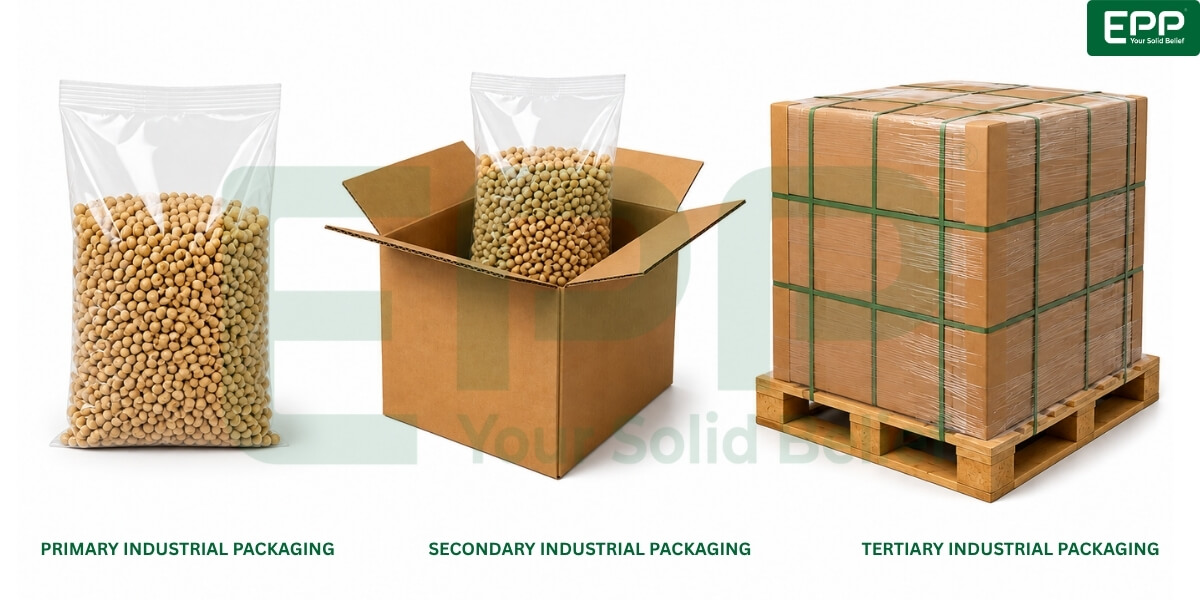
Visual comparison of primary product packaging, secondary cardboard boxing, and tertiary stretch-wrapped pallet loads
- Primary Industrial Packaging: The container that directly holds the product (e.g., steel drums containing liquid chemicals, woven PP bulk bags holding fine powders, or IBC totes storing liquid food ingredients).
- Secondary Industrial Packaging: Structures used to group, stabilize, and protect primary containers (e.g., heavy-duty multi-wall Gaylord boxes, protective internal partitions, and wooden crates).
- Tertiary Industrial Packaging: The outermost unitization layer designed for warehouse storage and freight transit (e.g., wooden pallets, heavy stretch film, edge boards, and high-tensile steel or PET strapping).
2. Classification by Structural Form & Rigidity
Flexible Packaging: Adaptable containers made from flexible woven polymers or films. They fold completely flat when empty, saving massive storage space and freight volume during return legs. Examples include FIBC bulk bags (jumbo bags), woven polypropylene bags, and multi-wall paper sacks. Businesses looking for high-capacity flexible options often select specialized custom printed bulk bags to combine high-tensile strength with customized corporate branding.
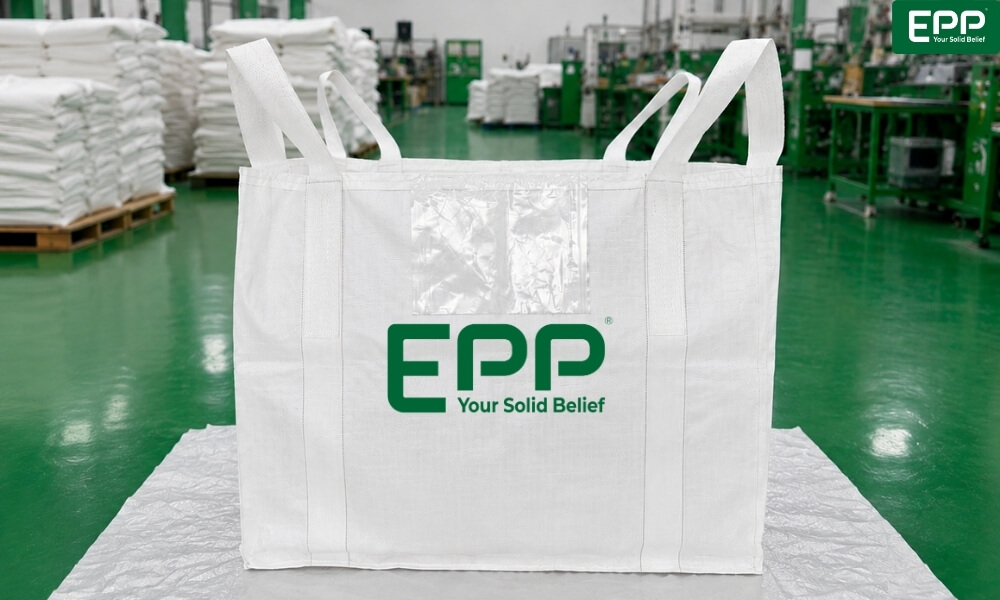
White EPP FIBC bulk bag designed for industrial storage and safe material handling
Rigid Packaging: Non-deformable, high-impact containers engineered to withstand heavy vertical stacking, rough handling, and hazardous contents under strict safety standards. Examples include cold-rolled steel drums, stainless steel tanks, and rigid Intermediate Bulk Containers (IBC totes).
Semi-Rigid Packaging: Molded or corrugated containers that hold a fixed shape under light loads but yield slightly under heavy impact to absorb shock. Examples include heavy-duty corrugated plastic containers, plastic pails, and thermoformed industrial trays.
3. Classification by Material Composition
| Material | Key Characteristics | Common Applications |
| Woven Polypropylene (PP) & Polymers | High tensile strength, lightweight, chemical resistance, tear resistance | FIBC super sacks, woven bags, plastic pails, stretch wrap, composite IBC liners |
| Metal (Steel & Stainless) | Fire resistance, extreme durability, non-porous structure | Drums for volatile chemicals, hazardous liquids, high-temperature compounds |
| Corrugated Fiberboard | Recyclable, cost-effective, custom die-cut designs | Multi-wall bulk shipping boxes, edge protectors, Gaylord boxes |
| Wood | High bending strength, custom fabricability, repairable | Pallets, skids, machinery crates, structural framing |
Regardless of the material chosen, buyers must confirm that manufacturers adhere to important criteria in packaging production, such as rigorous raw material testing, tensile stress evaluations, and certified cleanroom manufacturing.
Tips for Choosing the Right Packaging Types
Selecting the correct industrial packaging solution requires balancing physical protection, logistical costs, and operational needs.
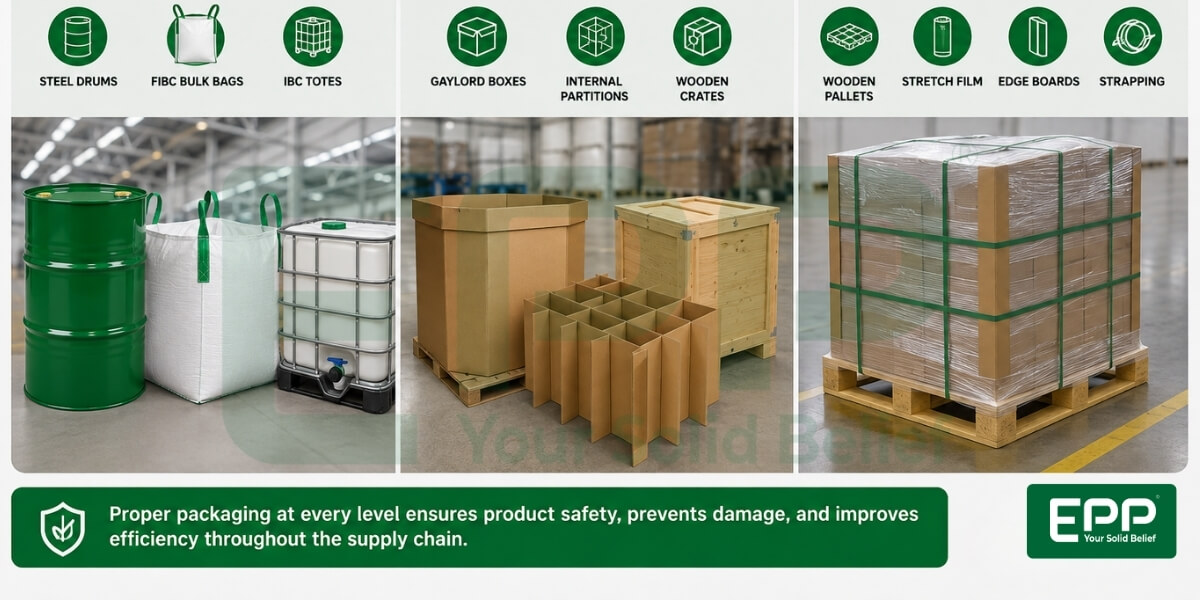
Guide to common industrial packaging types designed for safe transport and supply chain efficiency
- Analyze Physical Product State: Determine whether your product is a dry bulk solid, fine aerated powder, corrosive liquid, or fragile component. Fine powders require dust-proof sift-resistant seams or PE liners, while hazardous liquids demand chemical-resistant HDPE or steel containment.
- Account for Storage & Transit Stress: Calculate total weight and stacking height in your facility. Ensure primary and secondary containers support cumulative vertical loads without buckling or leaning.
- Adopt Modern Industry Trends: Keep pace with the latest trends in the packaging industry, such as smart inventory tracking features, recyclable single-polymer fabrics, and automated filling compatibility to future-proof your logistics.
- Optimize Tare Weight & Footprint: Heavy rigid containers increase freight costs. Utilizing high-strength flexible solutions like FIBC jumbo bags reduces tare weight while maximizing full container load (FCL) shipping volume.
Frequently Asked Questions (FAQs)
What is the main difference between industrial packaging and commercial packaging?
Industrial packaging is designed for B2B logistics, prioritizing heavy load protection, stackability, and transit safety for bulk or hazardous goods. Commercial (or retail) packaging focuses on end-consumer appeal, brand graphics, shelf visibility, and unboxing convenience.
How do I determine if my industrial packaging requires a UN rating?
If your products are classified as dangerous goods or hazardous materials under international transportation codes (such as chemicals, flammable liquids, or toxic powders), your primary packaging must undergo certified UN testing to verify its drop resistance, pressure endurance, and leak-proof integrity.
What are the most common causes of industrial packaging failure during transit?
The most frequent causes of packaging failure include exceeding the container’s safe stacking weight limit, improper load securing (insufficient strapping or stretch wrapping), using un-settled aerated bulk materials that cause leaning, and environmental exposure to moisture or UV radiation.
How does industrial packaging impact sustainability?
Modern industrial packaging emphasizes circular supply chains through reusable rigid containers (like IBC totes and steel drums), recyclable monomaterial plastics (like 100% polypropylene bulk bags), and optimized designs that reduce overall material usage and transit emissions.
Secure Your Logistics with High-Performance Packaging Solutions
Selecting the ideal industrial packaging setup is essential to protecting your product value, safeguarding warehouse staff, and driving down total landed logistics costs.
Whether you need heavy-duty flexible bulk bags, custom PE liners, or expert advice on bulk material storage, EPP Vietnam delivers factory-direct packaging solutions tailored to your operational needs. Contact our packaging engineers today to receive detailed technical specifications and a competitive quotation for your global supply chain!
🌐 Website: https://epp.vn – https://eppvietnam.trustpass.alibaba.com
📲 +84 986 002 888 – [email protected]