Agricultural products represent some of the most sensitive, high-volume goods moving through global trade routes today. According to the Food and Agriculture Organization (FAO) of the United Nations, global post-harvest losses reach approximately 13.2% annually, largely driven by inadequate storage, improper handling, and sub-standard containment.
Selecting the right packaging for agricultural products is a vital operational decision that directly impacts product quality, shelf life, and international compliance. Understanding how to align crop biology with packaging design allows procurement managers to minimize product degradation and optimize logistics costs.
Understanding Agricultural Packaging Needs
Agricultural commodities possess distinct biological requirements. Raw goods like unroasted coffee beans or fresh onions continue to respire and generate moisture after harvest, requiring active ventilation to prevent fermentation and mold growth. Conversely, processed grains, milled flour, or refined sugars are highly hygroscopic and will ruin if exposed to ambient humidity.
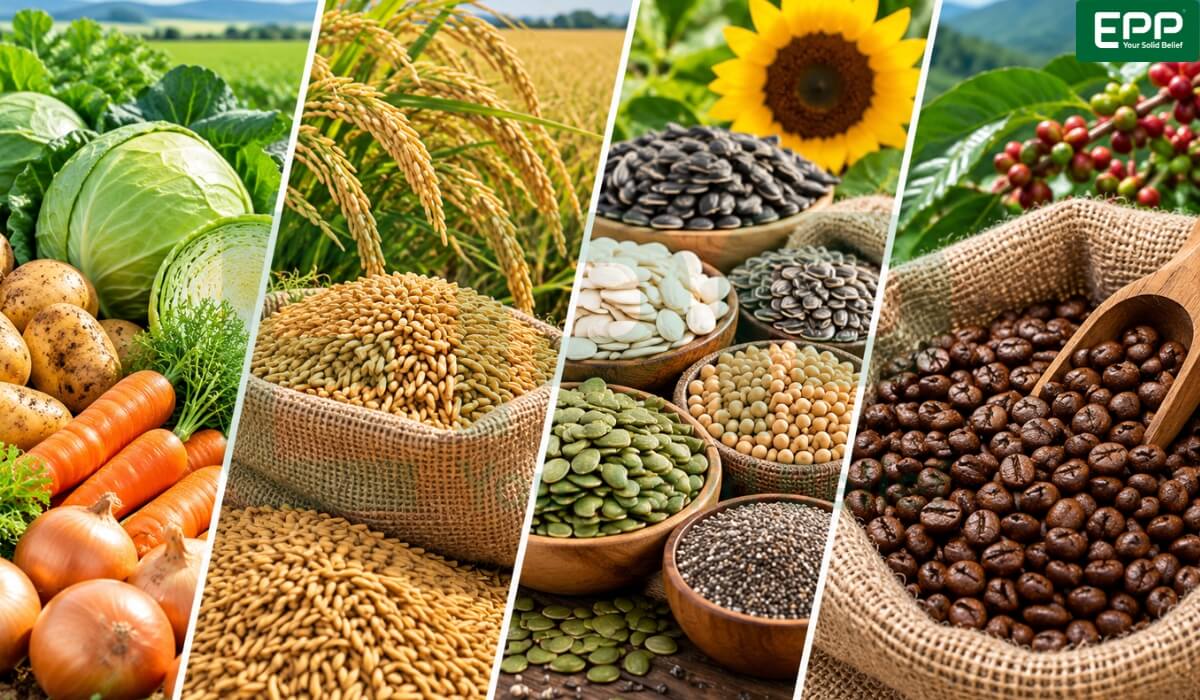
Different agricultural products require tailored packaging solutions
Effective packaging for agricultural products functions as a micro-climate management vessel. Selecting the correct technical specifications protects cargo integrity from the farm gate through multi-modal ocean transportation to the final recipient.
Key Factors to Consider When Choosing Packaging
Evaluating the technical requirements of your cargo ensures optimal safety and compliance throughout the supply chain. Stay informed on broader sector shifts by reading about the latest trends in the packaging industry.
1. Breathability vs. Barrier Requirements
As I mentioned earlier, airflow is everything.
- Ventilated Fabric: For products prone to mold (potatoes, onions, raw beans), we recommend ventilated fabric.
- Lamination & Liners: For dry powders or processed grains, we use internal lamination or PE liners. In my observations, using a 100-micron liner is the only way to ensure 100% moisture protection during long-haul sea freight.
2. Food-Grade Safety (BRCGS Standards)
Packaging coming into direct contact with food must meet stringent global standards. Verify that your supplier maintains international hygiene credentials. For detailed requirements on export compliance, read our guide on standards for export packaging.
| Standard / Certification | Target Application | Primary Technical Focus |
| BRCGS Packaging Materials | Food, Pet Food & Pharma | Foreign body control, cleanroom production, full traceability. |
| ISO 22000 / FSSC 22000 | Food Contact Goods | Comprehensive hazard analysis and food safety management systems. |
| FDA Contact Compliance | Direct Food Contact | Migration test compliance using 100% virgin polypropylene (PP) resin. |
Using ultrasonic fabric cutting instead of thermal cutting prevents loose micro-plastic fray from contaminating the bulk cargo during filling and discharge.

3. UV Resistance and Durability
Agricultural goods are often stored in open-air docks or farm yards. We’ve seen standard bags burst after only two weeks of tropical sun exposure. We now engineer our bags with high-grade UV stabilizers to ensure the structural integrity of the packaging for agricultural products remains intact under harsh sunlight.
4. Space and Logistical Efficiency
Shipping costs are a major pain point. We often recommend Baffle Bags (Q-Bags). In our tests, we found that these bags maintain a square shape instead of bulging, allowing our clients to fit 25% more product into a single 40ft container.
Top Popular Packaging for Agricultural Products
The packaging for agricultural products landscape is diverse, ranging from small retail units to massive industrial containers.
Small-Scale & Retail Solutions
- Corrugated Cardboard: Best for fruits and vegetables like apples or tomatoes. We’ve noticed a shift toward moisture-resistant cardboard for cold-chain logistics.
- Plastic Crates: Ideal for local “Farm-to-Table” loops where the containers can be washed and reused.
- Net/Mesh Bags: Common for retail-sized onions or citrus to allow maximum visibility and airflow.
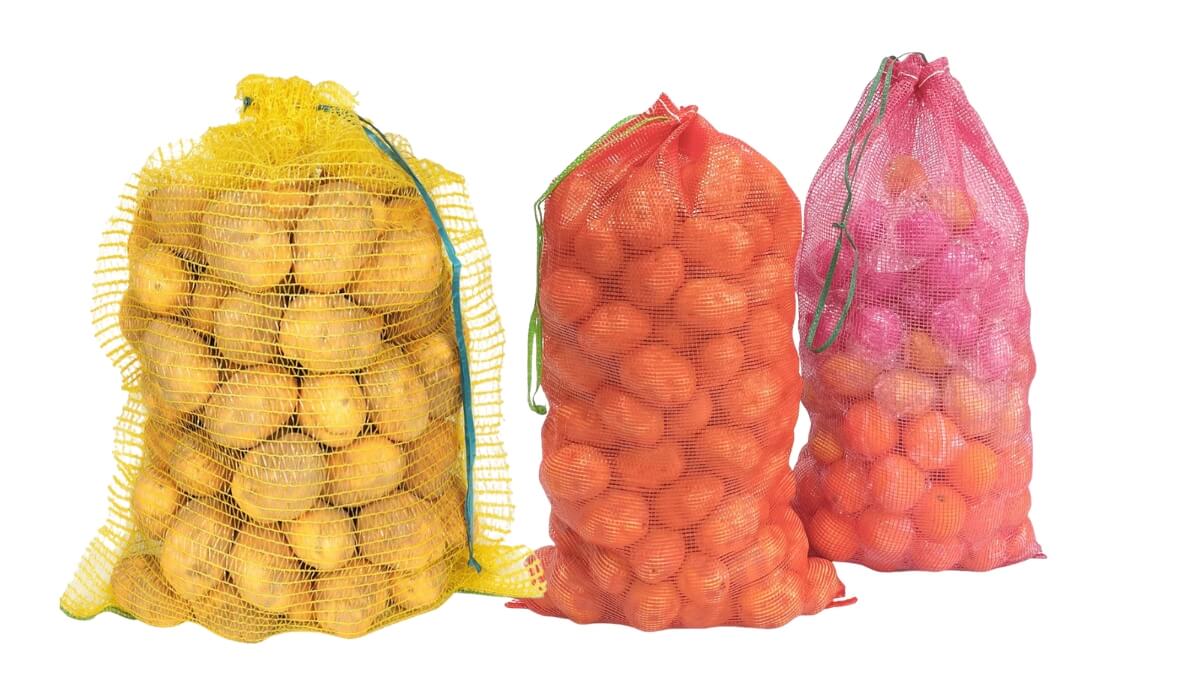
Mesh net sacks are ideal solutions for fruits and potatoes.
Intermediate Sacks
- Woven Bags (25kg – 50kg): The global workhorse for milled rice and animal feed. We’ve found that laminating these bags is the best way to prevent the “dusting” effect in warehouses.
- Multi-wall Paper Bags: Frequently used for seeds and flour because they are easy to stack and offer a premium branding surface.

Some types of woven bags for Agricultural products
Large-Scale Bulk Solutions
- FIBC bulk bags serve as the primary bulk export medium for high-volume agriculture, carrying loads between 500 kg and 2,000 kg.
- Ventilated or mesh FIBCs: Ideal for coffee beans, cocoa, nuts, and fresh produce requiring aeration.
- Baffle FIBCs: Ideal for bulk grains and seeds where maximizing ocean container fill rates is essential.
- Flexitanks: For liquid agriculture (oil/juices), these turn a standard dry container into a liquid tanker.
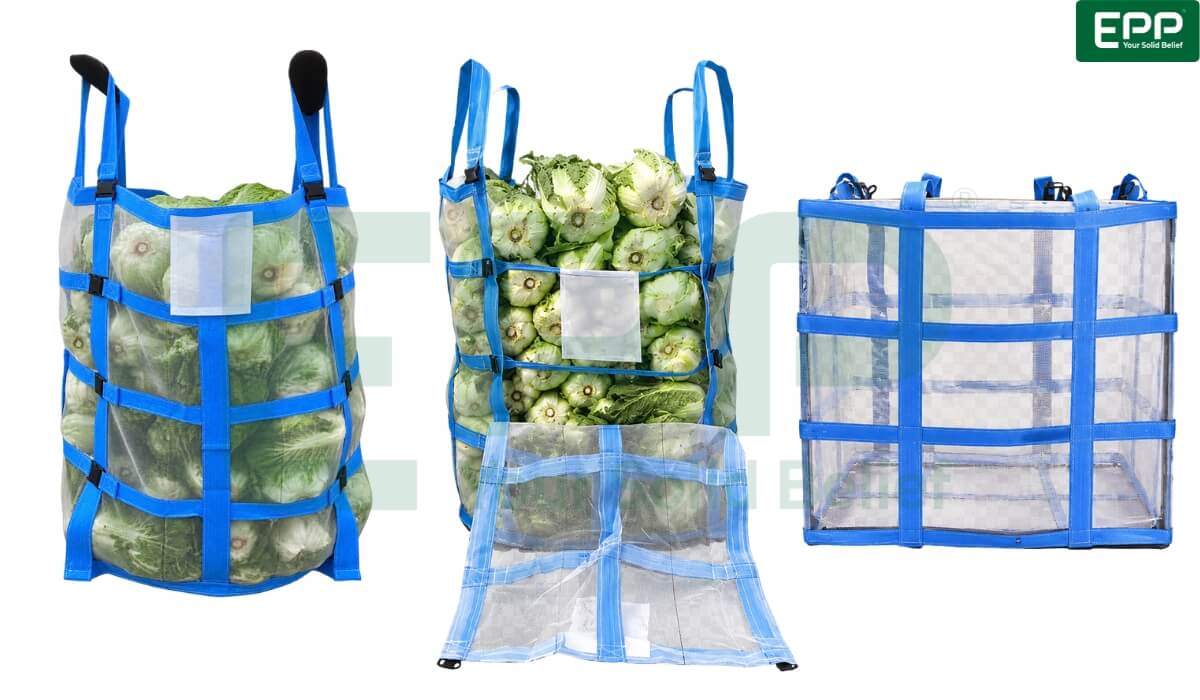
Mesh bulk bags from EPP Vietnam for fresh cabbages
Learn more about eco-conscious developments in our article on top 5 eco friendly food packaging options.
How EPP Vietnam Optimizes Agricultural Packaging Sourcing?
Direct factory sourcing can present capacity bottlenecks, inconsistent quality controls, and single-point-of-failure risks during peak harvest seasons. EPP Vietnam operates as an integrated leading supplier, connecting global procurement teams to an extensive network of certified bulk packaging manufacturing facilities in Vietnam.
Consolidated Multi-Product Ocean Containers
For clients supplying different types of agricultural products, sourcing multiple packaging specs often results in high shipping costs and unused container space. EPP Vietnam solves this by consolidating up to 3 different packaging products into a single container (e.g., combining Ventilated FIBCs for coffee, Woven PP bags for rice, and Small PE Mesh bags for produce). This flexible loading capability drastically reduces freight overhead, eliminates minimum order quantity (MOQ) bottlenecks for individual items, and simplifies inventory management for multi-crop distributors.

Rigorous Quality Control
EPP Vietnam maintains an independent Quality Control (QC) team that conducts rigorous raw material inspections, yarn tensile tests, and cleanroom audits across every production batch. This multi-facility model provides international buyers with flexible capacity, competitive pricing, and full compliance with global food-grade standards.
Expert FAQ
Q: What is the best packaging for agricultural products that are prone to mold?
A: Ventilated FIBC or a Mesh Sack. These designs feature “air-strips” or an open-weave pattern that allows air to flow through the product, preventing heat buildup and condensation that triggers mold growth.
Q: Can super sacks be reused for different types of crops?
A: We only recommend reuse if the bag is rated as a “Multi-trip” (6:1 Safety Factor) bag. However, for food-grade products, we strongly advise using a fresh bag or a new inner liner to prevent cross-contamination between different crop types.
Q: How do I ensure my packaging complies with FDA or European food safety laws?
A: You must check the manufacturer’s certifications. At EPP Vietnam, we provide migration test reports to prove that our packaging for agricultural products does not transfer chemicals to the food. Look for BRCGS, ISO 22000, or FSSC 22000 seals.
Q: What is the difference between a standard PP bag and a food-grade PP bag?
A: A standard bag is made in a general environment and may contain recycled materials. A food-grade bag is made in a sealed, pest-controlled “Cleanroom” using 100% pure virgin resin. When we produce food-grade bags, even the sewing machines use food-grade oil to ensure zero contamination.
Conclusion:
The right packaging for agricultural products is more than just a cost; it is an insurance policy for your harvest. At EPP Vietnam, we believe that the highest level of “Expertise” comes from listening to the farmers and exporters who use our bags every day. By combining world-class Austrian Starlinger machinery with a deep understanding of agricultural biology, we ensure that your product reaches its destination in the same condition it left the farm.
Are you ready to optimize your agricultural supply chain with high-performance packaging? Contact EPP Vietnam today for a technical consultation.
Website: epp.vn
Alibaba website: https://eppvietnam.trustpass.alibaba.com/
Email: [email protected] Hotline/ Whatsapps: +84 986 002 888