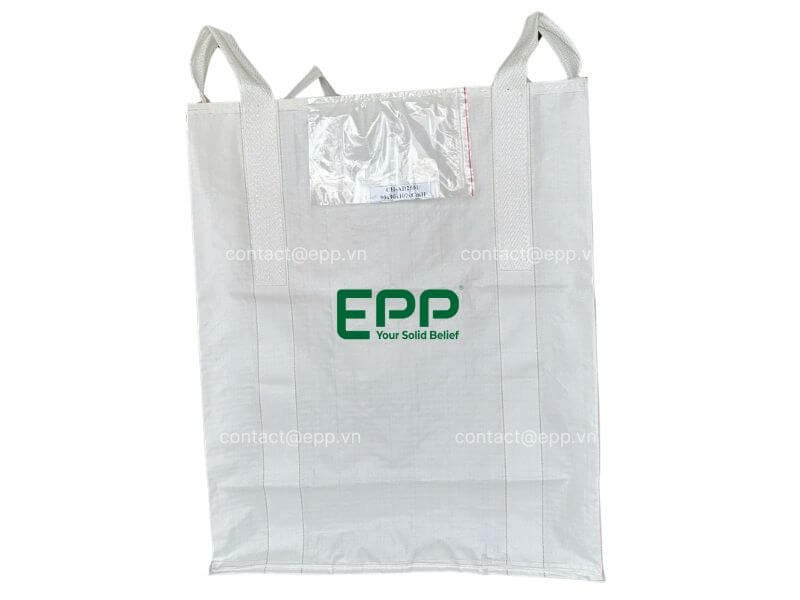
A high-quality container bag is the cornerstone of modern industrial logistics, acting as a high-performance vessel that ensures the integrity of global supply chains. At EPP Vietnam, we have spent decades refining the engineering behind these massive containers, which are often referred to as jumbo bags, bulk bags, or FIBC bags. In my experience as a leading supplier, I have seen firsthand that the difference between a standard sack and a truly superior packaging solution lies in the meticulous attention to its structural anatomy.
In this comprehensive guide, we will share our deep expertise in how we build these super sacks to withstand the harshest environments, from humid tropical ports to the high-vibration decks of cargo ships.
What is a High-Quality Container Bag?
In our view, a high-quality container bag is not just a commodity; it is a precision-engineered tool. While a standard FIBC bag might appear simple to the untrained eye, we define a high-quality version by its ability to maintain a 5:1 or 6:1 safety factor consistently across thousands of production units.
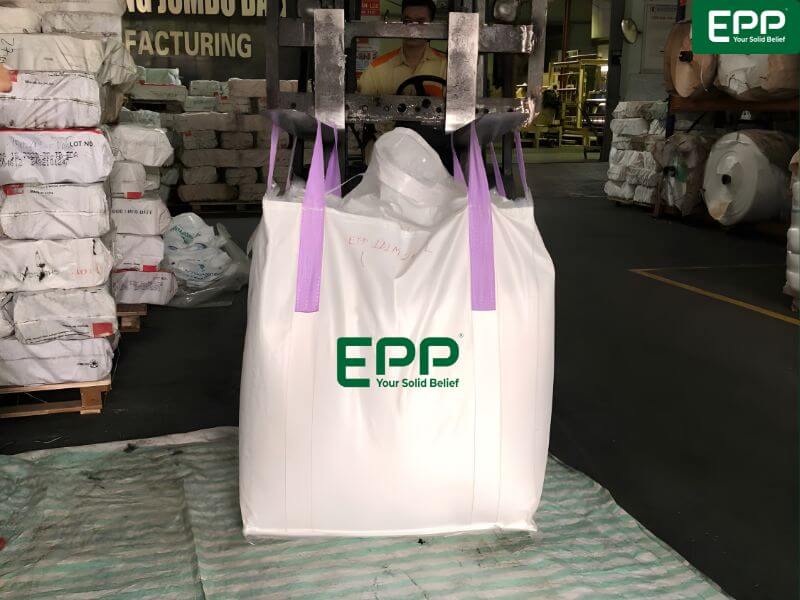
When we manufacture these bulk bags, we focus on “Stable Quality.” This means that every seam, every loop, and every square inch of fabric is inspected to meet international standards like ISO 9001 and BRCGS. For us, a truly ideal jumbo bag must provide three things: absolute safety for personnel, complete protection for the product, and seamless integration into the customer’s automated filling systems.
The Molecular Foundation: 100% Virgin Polypropylene
The “DNA” of a high-quality container bag starts with the raw material. At EPP Vietnam, we have a non-negotiable policy: we exclusively use 100% virgin polypropylene (PP) resin.
In our laboratory testing, we have compared virgin resin against “regrind” or recycled materials often used by low-cost competitors. We discovered that recycled PP lacks the molecular chain length required for high tensile tenacity. When we use virgin resin, I notice that the resulting super sacks have significantly better UV resistance and do not become brittle over time.
Furthermore, using virgin material ensures that our FIBC bags are food-safe. If you are transporting rice, sugar, or pharmaceuticals, any impurities in the plastic could contaminate the load. By sticking to 100% virgin PP, we guarantee a pure foundation for every bulk bag we ship.
The Skeleton: Fabric Geometry & GSM of high-quality container bag
If the resin is the DNA, the woven fabric is the skeleton of the high-quality container bag. The strength of this skeleton is determined by the GSM (Grams per Square Meter) and the precision of the weave.
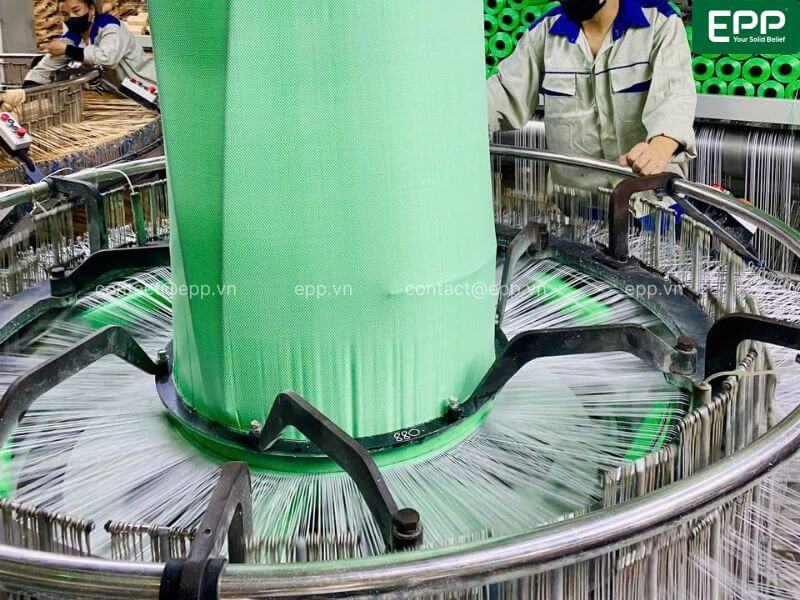
In our production facility, we utilize famous brand weaving looms. We have found that these machines produce the most consistent fabric geometry in the world. When we set a loom for a 12×12 mesh count, it stays exactly at 12×12. This level of “Expertise” ensures that there are no “weak spots” in the fabric that could lead to a burst.
Technical Insight: We’ve observed that many industrial failures occur because the fabric “stretches” unevenly under a 1,500kg load. By optimizing our GSM—usually between 160 and 220 for heavy-duty jumbo bags—we create a rigid, form-stable skeleton that maintains its shape even when stacked three high in a shipping container.
The Muscles of a High-Quality Container Bag: Lifting Loops & Seam Reinforcement
The lifting loops are the “muscles” that bear the entire weight of the high-quality container bag during transit. This is the most dangerous point of failure if not engineered correctly.
- Loop Construction: We use high-tenacity multifilament yarns to weave our loops. Whether they are cross-corner or side-seam, we ensure they have a higher denier than the bag body itself.
- Seam Reinforcement: In our “Break-to-Failure” tests, we found that loops don’t usually snap; they pull out of the bag’s body. To prevent this, we use a “double-needle” or “chain-stitch” pattern with reinforcement patches at each attachment point.
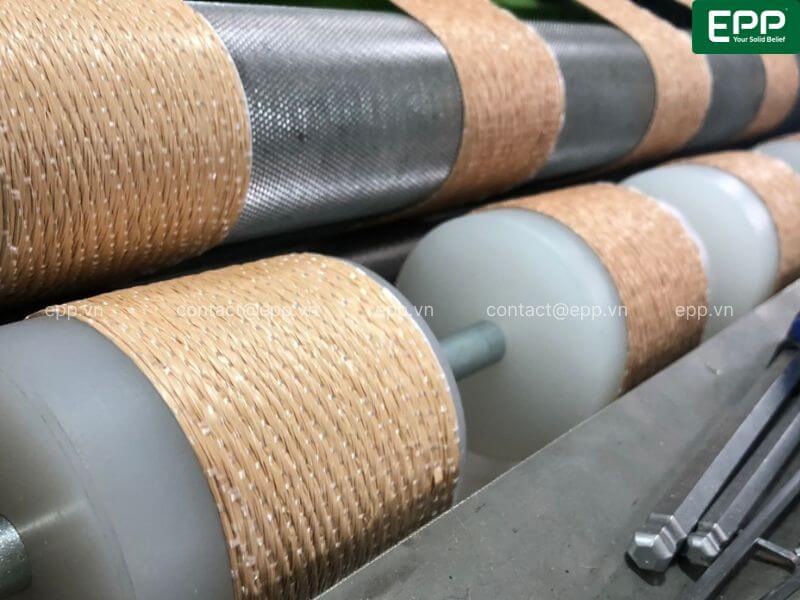
Our Observation: When using these super sacks in a forklift-heavy environment, the “muscles” are subjected to sudden shocks. We design our bulk bags to absorb these dynamic loads, providing a buffer of safety that exceeds the nominal capacity.
The Respiratory System: Coatings & High-Tech Liners
We think of moisture and oxygen protection as the “respiratory system” of the high-quality container bag. Depending on the product, the bag needs to either breathe or be completely airtight.
- Internal Lamination: For many jumbo bags, we apply a thin layer of PP coating (lamination) to the fabric. I’ve noticed this is essential for preventing fine powders from leaking through the weave.
- Advanced Liners: When we work with sensitive chemicals, we integrate Aluminium or PE liners. In my research, I have found that a Type L2 antistatic liner is the best way to move combustible powders safely while maintaining a moisture-proof seal.
By controlling the “breathability” of the FIBC bag, we ensure that products like coffee beans stay fresh while preventing “sifting” (leakage) of fine-grain minerals.
The Digestive System: Filling & Discharge Anatomy
The “digestive system” of a high-quality container bag consists of the filling spout at the top and the discharge spout at the bottom. This anatomy must match your facility’s machinery with millimeter precision.
I once visited a client whose filling line was constantly jamming. We discovered their previous supplier’s spouts were 2cm too wide. At EPP Vietnam, we customize every spout to the customer’s exact diameter and length.
For the discharge system, we often recommend “Petal” or “Iris” closures. These allow the operator to control the flow of the material safely. In our view, an ideal bulk bag should empty completely in seconds without any “bridging” (material getting stuck in the corners). This efficiency is a hallmark of high-quality container bags.
Expert FAQ
Q: Can a high-quality container bag be reused?
A: We produce both single-trip (5:1 safety factor) and multi-trip (6:1 safety factor) jumbo bags. If you intend to reuse your super sacks, we strictly recommend the 6:1 multi-trip version for safety compliance.
Q: How does EPP Vietnam ensure the “Stable Quality” of these bulk bags?
A: We have a dedicated control team present at the factory for every order. They act as your representative, checking the fabric GSM, the loop strength, and the spout dimensions before the bags are packed.
Q: Are these FIBC bags UV protected?
A: Yes. In our experience, UV degradation is a major risk for outdoor storage. We incorporate high-grade UV stabilizers during the extrusion process to ensure the high-quality container bag maintains its strength even in intense sunlight.
Conclusion: Partnering with EPP Vietnam
Understanding the anatomy of a high-quality container bag is essential for any business that moves bulk materials. At EPP Vietnam, we don’t just supply jumbo bags; we provide engineered solutions born from decades of experience. By focusing on 100% virgin resin, precision fabric geometry, and reinforced lifting systems, we ensure that your cargo is always in safe hands.
Ready to upgrade your logistics? Contact EPP Vietnam today to discuss how our high-quality container bags can optimize your supply chain.