Adopting eco-friendly food packaging is now a strategic requirement for global food manufacturers and exporters navigating strict environmental mandates like the EU PPWR and global plastic bans. Transitioning to green food packaging requires balancing structural durability, cost efficiency, and strict food contact compliance without compromising product safety during transit.
As a leading FIBC supplier in Vietnam, EPP Vietnam works with international buyers to deliver certified sustainable packaging that optimizes supply chain performance. Below are the top five eco-friendly food packaging options transforming retail and industrial supply chains.
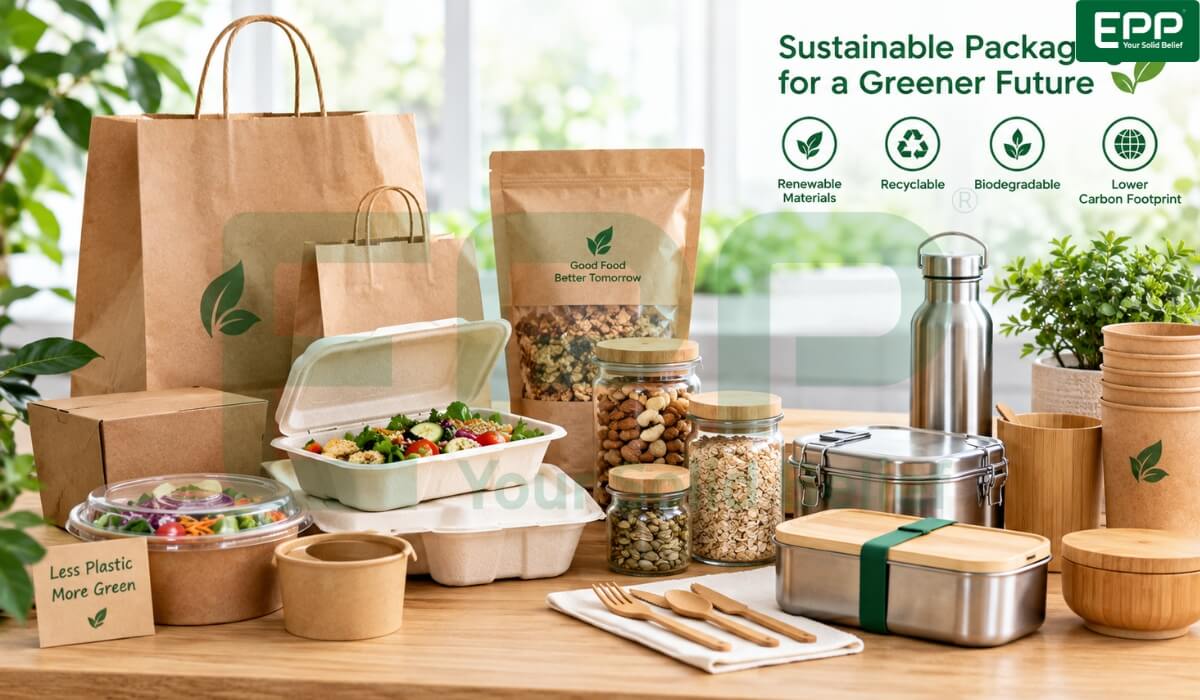
Adopting eco-friendly food packaging options helps businesses balance functional performance, regulatory compliance, and ecological responsibility.
What Makes Food Packaging Eco-Friendly?
Understanding what truly constitutes environmentally friendly food packaging requires looking beyond marketing claims and evaluating the entire lifecycle of sustainable packaging materials. A packaging solution qualifies as genuinely eco-friendly when it addresses three core pillars:
- Sustainable Sourcing & Material Origin:Utilizing rapidly renewable, bio-based materials (such as bamboo, bagasse, or agricultural byproducts) or highly circular, 100% recyclable polymers (like pure Polypropylene or glass). Bio-based food packaging reduces dependency on fossil fuels.
- Resource Efficiency & Technical Performance: Optimizing packaging barrier properties to minimize material usage while extending packaging shelf life. To better understand how protective structural engineering maintains product integrity across supply chains, review our guide on the essential functions of packaging.
- Packaging End of Life & Circularity: Ensuring a clear post-consumer pathway. Whether classified as compostable food packaging, recyclable food packaging, or reusable food packaging, the material must naturally decompose without leaving microplastics or re-enter the industrial loop through high-efficiency recycling systems.
The Top 5 Eco-Friendly Food Packaging Options
Selecting the appropriate sustainable food packaging materials depends heavily on product volume, shelf-life requirements, moisture sensitivity, and supply chain scale. To see how these green options compare against traditional materials, consult our overview of the most common packaging on the market today. Here are the top five sustainable packaging options shaping modern food distribution:
1. Kraft Paper & Kraft-Laminated Packaging
Kraft paper food packaging is one of the most widely adopted sustainable food packaging solutions. Produced from wood pulp via the Kraft process, it is naturally strong, biodegradable, and easily recyclable across standard paper streams. In retail and food service, it is widely utilized for grocery bags, bakery boxes, and takeaway packaging.
For heavy-duty applications, high-tensile laminated kraft paper bags integrate woven fabric reinforcement to create multi-wall structures. This hybrid construction delivers superior tear resistance and moisture protection for handling bulk powders like sugar, flour, and starch. The natural brown aesthetic of Kraft paper also reinforces an authentic eco-conscious brand image.
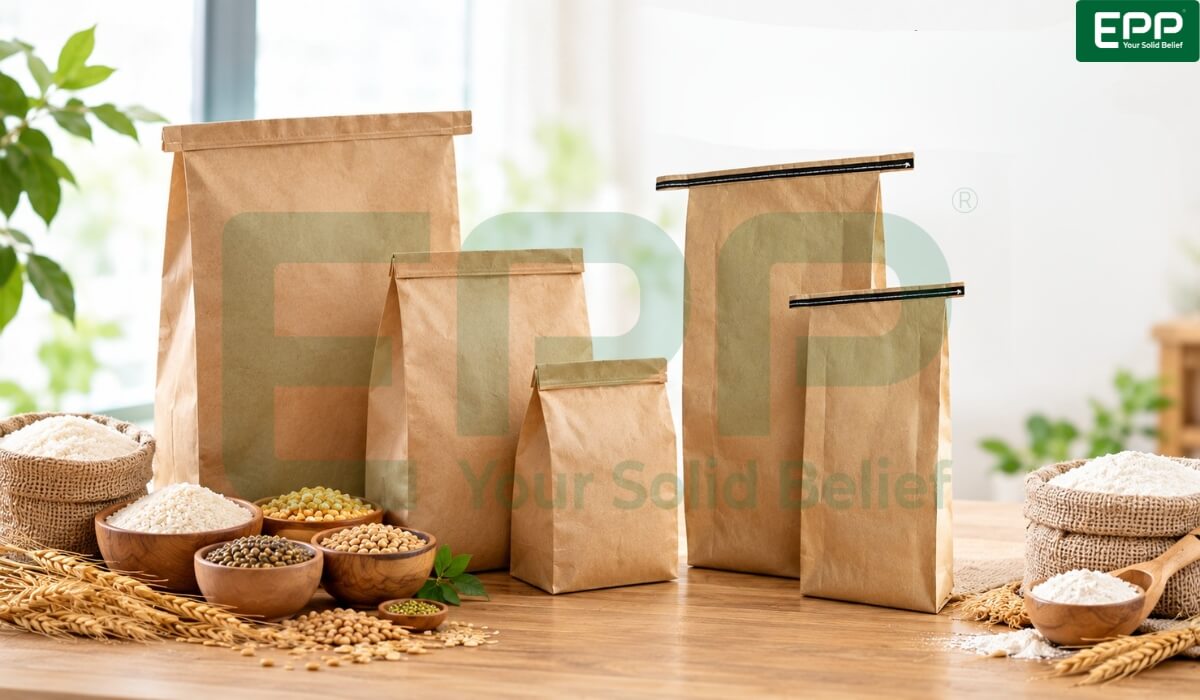
Kraft paper offers a practical eco-friendly food packaging alternative, combining natural aesthetics with reliable structural strength.
2. Bagasse (Sugarcane Fiber Containers)
Bagasse food packaging is derived from the fibrous sugarcane pulp remaining after juice extraction. By upcycling an agricultural byproduct that would otherwise be discarded or incinerated, bagasse represents a highly renewable compostable food packaging alternative to petroleum-based polystyrene.
Bagasse containers are sturdy, microwave-safe, heat-resistant, and suitable for both home and industrial composting facilities. They are widely used for takeaway containers, disposable plates, bowls, and fresh produce trays. Bagasse allows food service providers to eliminate single-use plastics without sacrificing liquid or grease resistance.

3. Glass Containers
Glass food packaging is one of the safest and most inert sustainable food containers available. It is infinitely recyclable without any degradation in quality, purity, or strength, making it a cornerstone of closed-loop circular packaging.
Because glass non-porous and chemically inert, it guarantees absolute food contact safety, ensuring zero leaching of chemicals into liquids or acidic foods. Glass jars and bottles are ideal for sauces, preserves, premium beverages, and pantry storage. Although heavier and more fragile during transit, glass offers high consumer reuse value and a premium shelf presentation.

4. Stainless Steel (Inox)
Stainless steel represents the pinnacle of reusable food packaging. Known for its exceptional durability, it resists corrosion, withstands extreme temperatures, and lasts for years under continuous commercial use. At the end of its extended lifecycle, stainless steel is 100% recyclable.
Common applications include commercial food containers, reusable lunch boxes (bento boxes), and beverage bottles. While initial sustainable packaging procurement costs are higher than single-use alternatives, its long service life yields an exceptionally low total cost per use, making it popular for zero-waste initiatives and closed-loop catering systems.

5. Bamboo Materials
Bamboo food packaging leverages one of the fastest-growing renewable plant resources on Earth. Bamboo matures in a fraction of the time required by traditional timber, requiring no heavy pesticides or artificial irrigation.
Lightweight, naturally durable, and fully biodegradable food packaging, bamboo is processed into single-use utensils, straws, and food trays, as well as long-lasting serving bowls and container lids. Its natural grain finish appeals directly to consumers seeking plastic-free, aesthetically pleasing green food packaging.
Emerging Innovations in Sustainable Food Packaging
Beyond the primary material options, advanced material science is introducing cutting-edge bio-based technologies to address niche packaging challenges:
- Seaweed-Based Packaging: Offers edible, marine-degradable films and sachets designed for single-serve condiments and dry seasonings, eliminating microplastic accumulation in oceans.
- Mushroom Packaging (Mycelium): Created by binding agricultural waste with fungal mycelium roots. It provides a 100% compostable alternative to synthetic EPS (expanded polystyrene) foam for protective cushioning.
- PLA & PHA Bioplastics: PLA food packaging (Polylactic Acid) and PHA (Polyhydroxyalkanoates) are derived from fermented cornstarch or sugarcane. These transparent bioplastics substitute traditional PET for cold-drink cups and fresh salad containers, though PLA specifically requires dedicated industrial composting facilities to fully decompose.
Key Factors to Evaluate When Choosing Eco-Friendly Food Packaging
When evaluating potential options with a food packaging supplier, procurement and sustainability teams should review the following technical factors:
- Food Contact Materials Compliance: Ensure all materials meet FDA food packaging requirements, EU food contact materials standards (EU Regulation 10/2011), and maintain valid BRCGS Packaging Materials certification.
- Local Waste & Recycling Infrastructure: Match your packaging material to the end-of-life infrastructure available in your destination market. A compostable item is ineffective if the target market lacks industrial composting facilities.
- Packaging Barrier Properties & Shelf Life: Verify that the material effectively seals out moisture, oxygen, and light to prevent premature food spoilage and wastage.
- Lifecycle Cost & Freight Optimization: Balance raw material costs with shipping efficiency. Using durable, lightweight woven bags or optimized paper sacks lowers overall weight and reduces transit emissions per ton shipped. For industrial logistics managers, understanding industrial packaging and its classification is crucial for choosing the correct bulk container category.
- Structural Integrity & Load Capacity: Ensure the packaging withstands stacking pressure, cold-chain humidity, and rough freight handling without tearing or leaking. To compare retail and bulk packaging performance, review our overview of the most common packaging on the market today.

Frequently Asked Questions (FAQs)
What Certifications Should Eco-Friendly Food Packaging Have?
To ensure complete safety and regulatory compliance, food contact packaging should hold global certifications such as BRCGS Packaging Materials (Grade A), ISO 22000 for food safety management, FDA food packaging compliance, and EU food packaging regulations clearance (EU 10/2011). For compostable items, look for compostability certification standards like OK Compost Industrial (EN 13432) or BPI Certification.
Why is evaluating the local recycling infrastructure crucial?
Choosing recyclable or compostable packaging only provides environmental benefits if the destination market possesses the facility infrastructure to process it. For example, if PLA food packaging ends up in a standard landfill due to a lack of industrial composting facilities, it will not decompose as intended. Matching material selection to local infrastructure ensures true circularity.
Can Kraft paper packaging withstand heavy food packaging requirements?
Yes. When manufactured in multi-wall constructions or laminated with high-strength woven Polypropylene (PP) fabrics, Kraft paper offers exceptional tear resistance, bursting strength, and barrier performance. This hybrid construction is widely used for heavy industrial sacks containing sugar, flour, and agricultural food ingredients.
What Is the Most Eco-Friendly Food Packaging?
There is no single “most eco-friendly” material for every scenario; the optimal choice depends on application context. For single-use takeaway food, bagasse and kraft paper are ideal due to their compostability and ease of recycling. For long-term reuse and zero-waste storage, stainless steel and glass excel. For industrial B2B bulk food transport, 100% recyclable PP FIBC bulk bags provide the highest payload efficiency and circularity.
Strategic Support from EPP Vietnam for Sustainable Global Packaging
Transitioning to certified sustainable food packaging is a critical strategy for mitigating regulatory risks, optimizing supply chain costs, and building brand equity in international markets. Whether your business requires retail-ready sustainable materials or industrial-scale bulk packaging, aligning with a certified supplier ensures your operations meet strict global standards.
As a leading FIBC supplier in Vietnam, EPP Vietnam delivers high-grade, 100% recyclable bulk packaging manufactured in BRCGS-certified cleanroom environments. Contact our export team today to request technical specification sheets, verify compliance certifications, or receive a customized quotation for your global packaging needs.
Website: epp.vn
Alibaba website: https://eppvietnam.trustpass.alibaba.com/
Email: [email protected] Hotline/ Whatsapps: +84 986 002 888