In bulk material handling, logistics, and industrial supply chains, knowing how to preserve FIBC bulk bags directly impacts freight efficiency, worker safety, and total operational costs. For procurement managers, plant engineers, and warehouse directors, proper bulk bag maintenance prevents premature fabric degradation, contamination, and costly product losses during long-term storage.
As a leading FIBC and industrial packaging supplier in Vietnam, EPP Vietnam delivers high-grade bulk bag solutions engineered to withstand demanding global supply chain environments. This technical guide outlines essential warehouse storage practices, environmental protection strategies, pest control measures, and pre-use inspection protocols.
Why Proper FIBC Bulk Bag Storage Matters?
Maintaining the structural integrity and Safe Working Load (SWL) of your flexible intermediate bulk containers requires strict adherence to warehouse storage protocols. Unprotected exposure to harsh indoor or outdoor conditions can weaken polypropylene (PP) fibers, reducing loop tensile strength and increasing the risk of bag failure during handling.
To effectively preserve FIBC bulk bags, warehouse teams should follow three foundational rules:
- Keep Dry: Maintain low humidity levels to prevent mold growth, fabric weakening, and loop rot.
- Block UV Exposure: Protect woven PP fabric from direct sunlight and high-intensity ultraviolet sources.
- Elevate Off Ground: Always store filled and empty bags on clean pallets to prevent moisture absorption from concrete floors.
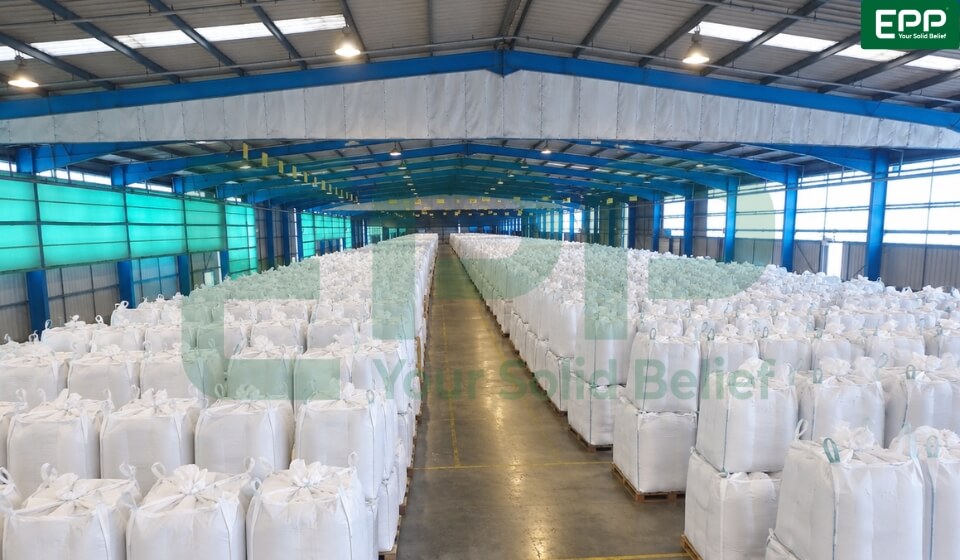
Correct warehouse environment to preserve FIBC bulk bags, keeping them elevated on pallets and shielded from direct sunlight.
How to Preserve FIBC Bulk Bags in the Right Warehouse Conditions?
Polymers used in woven PP bulk sacks are susceptible to photo-oxidation and thermal degradation when exposed to improper environmental conditions. Mitigating these risks requires proactive facility management and technical safeguards.
To preserve FIBC bulk bags over extended storage periods, facilities must address three primary environmental threats:
UV Radiation & Sunlight Oxidation: Direct UV rays break down PP molecular chains, causing fabric embrittlement. Super sacks stored near open bay doors or windows must be shielded with UV-resistant covers (rated for a minimum of 200 KLY protection).
Moisture & High Humidity: Relative humidity exceeding 65% encourages fungal growth on lifting straps and compromises hygienic integrity, particularly for food-grade packaging.
Temperature Extremes: Ideal indoor storage temperatures range between 0°C and 35°C. Big bags must be kept away from heaters, steam pipes, and reactive chemical splashes.
Under international testing standards such as ISO 21898, quality FIBC woven fabrics are subjected to accelerated weathering cycles to ensure that UV-stabilized bags retain at least 50% of their original tensile strength after prolonged exposure to light. To understand the operational hazards associated with uncertified packaging, read our detailed analysis on the risks of substandard PP super sacks.
Proven Tips to Control Insects in the Warehouse for Bulk Bag Protection
Pest and insect infestation poses a severe threat to bulk packaging integrity, especially when storing agricultural commodities, food ingredients, or pharmaceutical powders. Insects can chew through outer woven fabrics, contaminate internal contents, and compromise cleanroom certifications.
Implementing proactive tips to control insect in the warehouse ensures your packaging remains sterile and structurally intact:
- Implement a Perimeter Vegetation Zone: Maintain a 1-meter vegetation-free gravel barrier around the warehouse exterior to prevent crawling insects from nesting near loading docks.
- Maintain Strict Hygiene and Dust Control: Regularly vacuum spilled grains, powders, and organic debris. Accumulated product dust attracts beetles, moths, and rodents.
- Utilize High-Efficiency Air Curtains and Flying Insect Traps: Install UV fly traps near entryways and air curtains above loading bays to prevent flying pests from invading storage zones.
- Encase Sacks in Protective PE Inner Liners and Stretch Wrap: Store empty or filled sacks wrapped in tight stretch film or with sealed polyethylene liners to form a physical barrier against pests.
- Schedule Regular Professional Fumigation and Monitoring: Conduct routine pest inspections and non-toxic fumigation cycles to maintain compliance with international food safety standards like BRCGS and FDA.
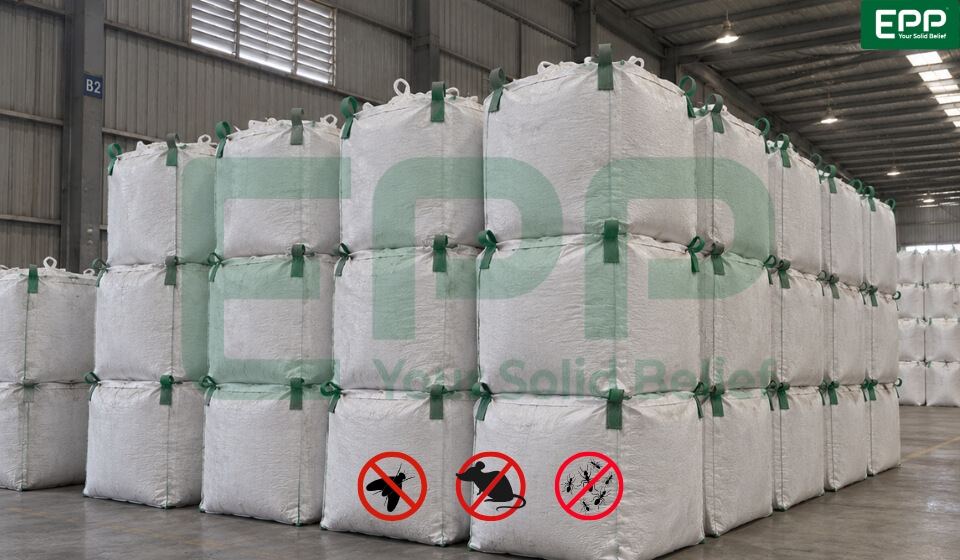
Implementing proactive warehouse insect control measures helps protect packaging materials from contamination and structural deterioration.
How to Organize and Stack FIBC Bulk Bags Safely?
Proper stacking techniques maximize warehouse floor space while preventing side-to-side load shifting and bottom-bag compression.
When organizing storage layouts to preserve FIBC bulk bags, adhere to these palletizing guidelines:
Pallet Selection: Use smooth, damage-free wooden or plastic pallets (such as 1200 x 1000 mm ISO pallets) without protruding nails or splintered edges that could puncture bag bottoms.
Pyramid Stacking Method: When stacking filled bags three tiers high or more, use a pyramid pattern (stepping back each upper tier) to maintain a stable center of gravity.
Stacking Height Limits: Never exceed recommended safe stacking heights (typically 2 to 3 tiers high depending on whether the bag carries an SF 5:1 single-trip or SF 6:1 multi-trip rating).
To prevent unstable stacking patterns and structural collapse, explore our detailed guide on stacking bulk bags. For complete handling procedures during forklift transport, review our FIBC safe handling and operation protocols.
FIBC Inspection Checklist: What to Check Before Use?
Before re-deploying stored bulk bags into production lines or filling stations, warehouse operators should complete a standard 5-point inspection to ensure site safety:
- Lifting Loops: Check for fraying, broken stitching, or abrasion along all corner loops.
- Fabric Condition: Inspect for brittleness, UV discoloration, punctures, or chemical burns.
- Seams & Stitching: Verify that dust-proof seams and main load-bearing stitches remain intact.
- Spouts & Tie Cords: Ensure top filling spouts and bottom discharge ties function smoothly without tearing.
- Inner Liner Check: Confirm that internal PE liners are clean, dry, and free of insect residue or moisture condensation.
As a leading FIBC supplier in Vietnam, EPP Vietnam combines over 20 years of manufacturing expertise with certified ISO 9001:2015, ISO 22000, BRCGS and UN testing standards. Discover our full line of export-ready bulk packaging in the EPP Vietnam premium FIBC bulk bags catalog.
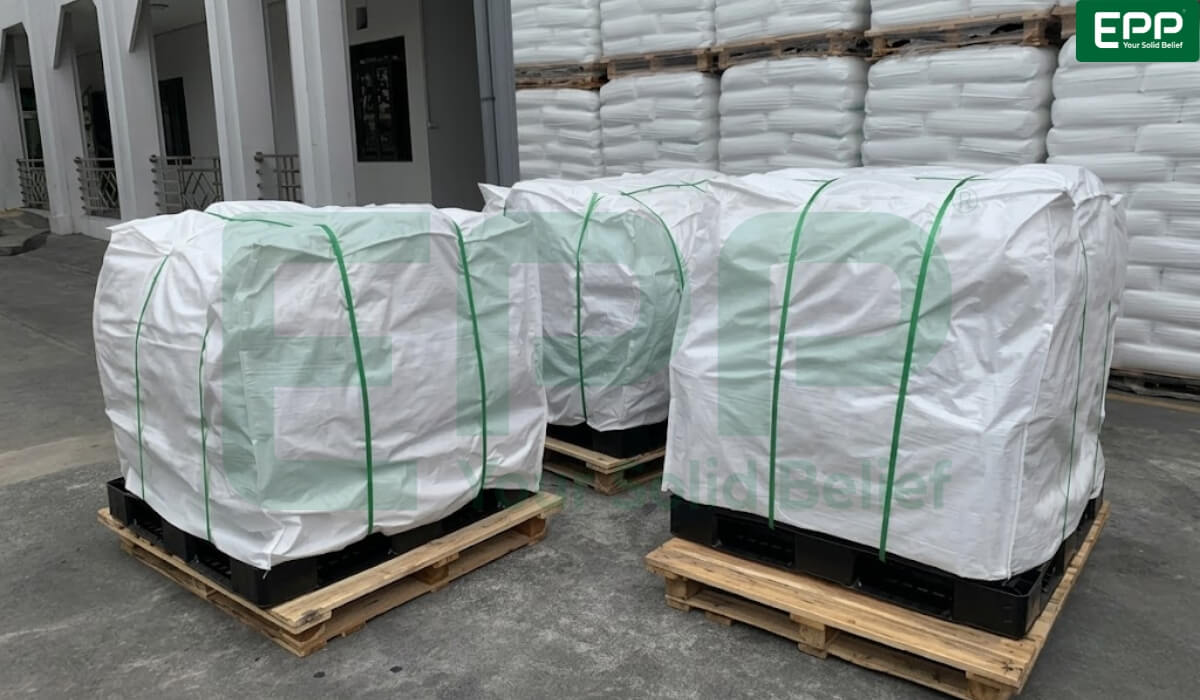
High-quality FIBCs in Vietnam are systematically packaged and quality-checked for international sea freight.
Frequently Asked Questions About Preserving FIBC Bulk Bags
Can FIBC bulk bags be stored outdoors?
Outdoor storage is not recommended. If temporary outdoor placement is unavoidable, super sacks must be elevated off the ground on pallets and completely covered with a heavy-duty, waterproof, UV-blocking tarp.
How should filled FIBC bags be stacked in a warehouse?
Filled Big bags should be stacked using a pyramid (stepped) formation or safely supported by a rigid racking system. Always ensure the bottom pallets sit level on an even concrete floor.
How can I tell if a jumbo bag is no longer suitable for use?
A Jumbo bag is unsafe for use if you observe visible fraying on lifting loops, discolored or brittle woven fabric from UV exposure, torn seams, or deep punctures anywhere along the main body.
What is the typical shelf life of an bulk bag?
Under optimal warehouse conditions (dry environment, shielded from UV rays, controlled temperature), virgin polypropylene bulk bags manufactured by EPP Vietnam maintain a shelf life of 1 to 2 years without losing structural load capacity (SWL).

Conclusion
Mastering proper storage protocols to preserve FIBC bulk bags protects your packaging investment, maintains warehouse safety, and prevents product contamination. By combining environmental controls, proper stacking practices, and effective pest management, supply chain leaders can optimize operational efficiency and product quality.
Contact EPP Vietnam today to speak with our technical packaging specialists and receive tailored quotes for high-durability Bulk bag solutions!
Website: epp.vn
Alibaba website: https://eppvietnam.trustpass.alibaba.com/
Email: [email protected] Hotline/ Whatsapps: +84 986 002 888