The global FIBC packaging market is undergoing a major structural shift. Driven by expanding chemical supply chains, global agricultural trade, and modern construction logistics, bulk bags have evolved from simple utility sacks into highly engineered packaging solutions. Today, international procurement managers must navigate volatile raw material costs, strict ESG (Environmental, Social, and Governance) regulations, and complex cross-border logistics to secure safe, compliant, and cost-effective packaging.
Market Size of the Global FIBC Packaging Market
The global FIBC packaging market is estimated at USD 6.38 billion and is projected to expand at a steady Compound Annual Growth Rate (CAGR) of 6.4% to reach USD 11.87 billion over the next decade. This growth is primarily fueled by the economic advantage of soft bulk packaging over traditional rigid containers such as steel drums, wooden crates, and rigid intermediate bulk containers (RIBCs).
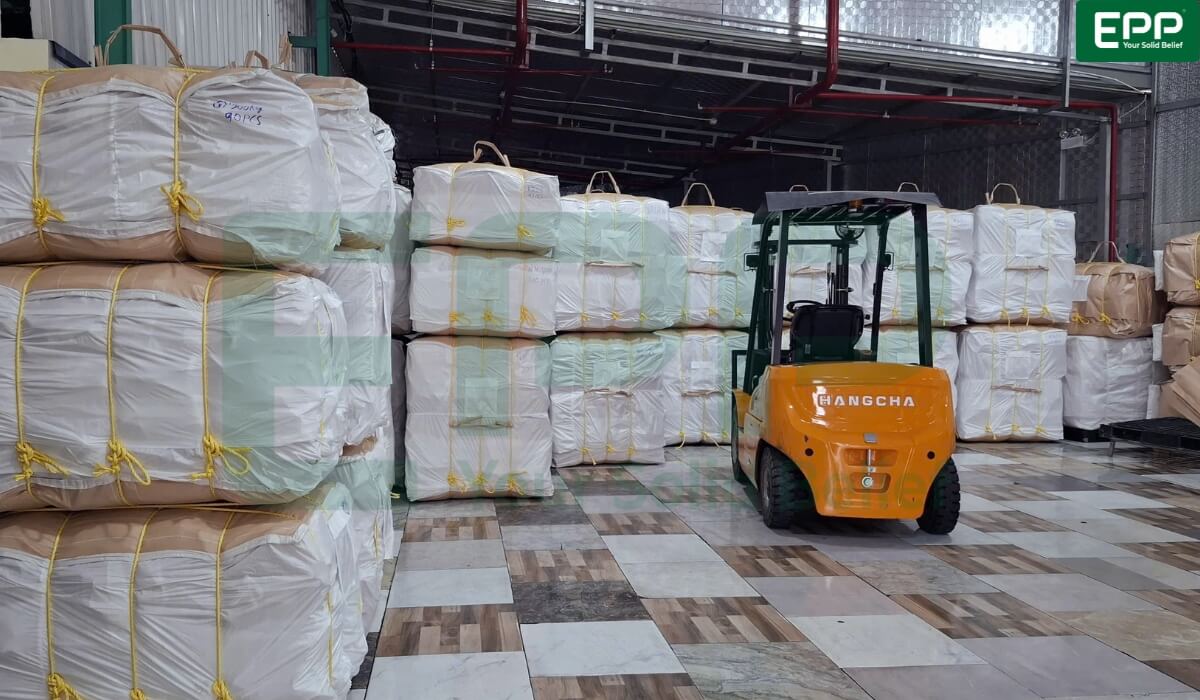
Modern FIBC jumbo bags stored in an industrial warehouse facility ready for global export.
Because unfilled bulk bags fold completely flat, they drastically reduce empty storage footprint and outbound freight costs. Chemical manufacturing and agriculture account for significant market shares, supported by high-volume demands in mineral and aggregate transport. Geographically, key emerging growth markets like China and India continue to expand rapidly with high projected CAGRs, while Europe and North America represent the largest import consumption hubs.
Regulatory Changes and the Rise of Sustainable Packaging
Environmental compliance is transforming the FIBC packaging market faster than any other single factor. European Union regulations, including the UK Plastic Packaging Tax (PPT) and EU-wide circular economy mandates, now levy substantial financial penalties on industrial packaging that contains less than 30% recycled content.
To maintain market access, manufacturers and suppliers are integrating Post-Consumer Recycled (PCR) and Post-Industrial Recycled (PIR) polypropylene resins into woven fabric production.
In fact, polypropylene coated fabric alone accounts for 45% of the total fabric type share in the global market. Incorporating recycled materials requires advanced extrusion technology, such as European Starlinger systems, to ensure that 100% virgin PP performance standards—including tensile strength, drop resistance, and a 5:1 Safe Working Load (SWL)—are not compromised. Additionally, single-polymer designs that simplify end-of-life recycling are rapidly replacing complex multi-layer laminates.
What Is Holding Back FIBC Market Growth?
Despite strong demand, several systemic bottlenecks restrict the expansion of the FIBC packaging market:
- Polypropylene (PP) Resin Volatility: As a petroleum byproduct, virgin PP resin prices fluctuate directly with crude oil dynamics, creating pricing instability for long-term supply contracts.
- Geopolitical Freight Disruption: Container shortages, port congestion, and volatile ocean freight rates periodically inflate the landed cost of Asian-manufactured bulk bags.
- Strict Certification Barriers: Meeting stringent international standards—such as UN dangerous goods regulations, BRCGS food-grade certifications, and ISO 21898 test protocols—requires significant continuous capital investment.
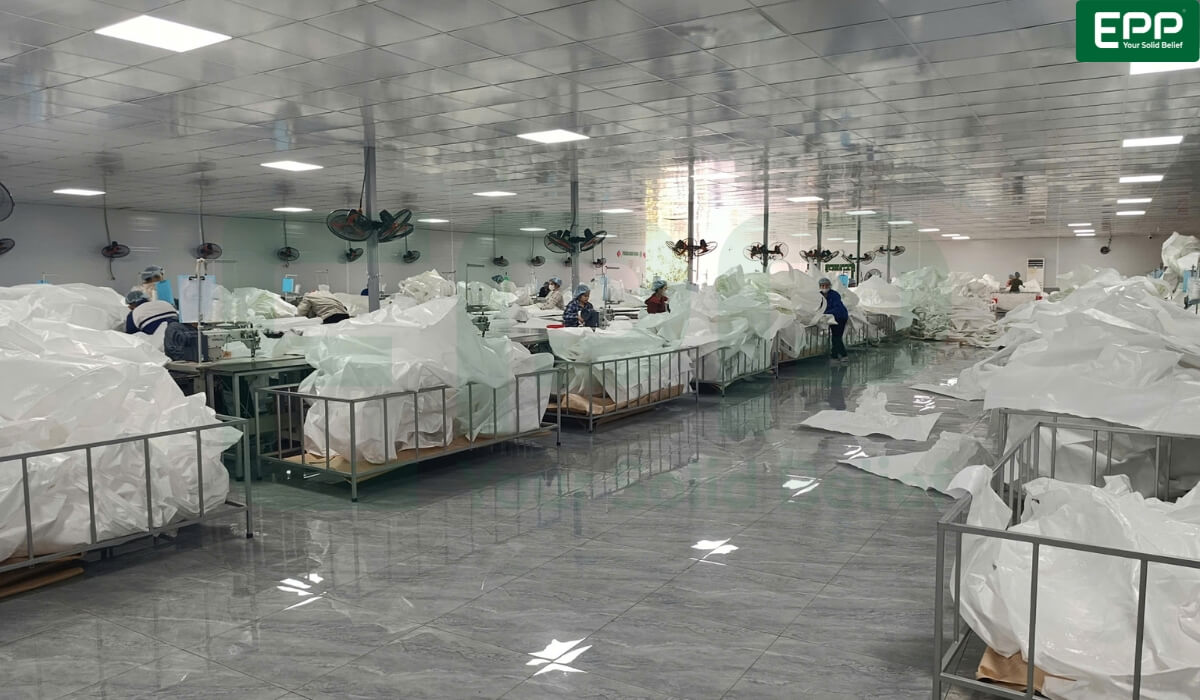
EPP Vietnam factory for producing certified bulk bags for export demand
FIBC Packaging Market and B2B Global Sourcing
Sourcing bulk packaging internationally requires balancing factory capacity, quality control, and export compliance. Relying on a single manufacturing facility exposes buyers to capacity limits, sudden lead-time delays, and unverified quality variances.
Partnering with an experienced Master Supply Chain Partner like EPP Vietnam mitigates these risks. EPP Vietnam coordinates an audited network of specialized manufacturing facilities, providing centralized quality assurance, capacity allocation, and regulatory compliance. By leveraging Vietnam’s strategic trade agreements, modern extrusion infrastructure, and port connectivity, EPP Vietnam delivers high-grade large bulk bags directly to global logistics hubs.
For detailed guidance on export clearance, HS codes, and container loading protocols, buyers can explore the guide on customs procedures in exporting fibc bulk bags.
Which FIBC Construction Types Are Shaping Buyer Demand?
Buyer preferences in the FIBC packaging market are increasingly shaped by space optimization, dust prevention, and discharge efficiency:
- Baffle Bags (Form-Stable Q-Bags): Internal fabric baffles prevent the bag from bulging into a cylinder when filled. Maintaining a square shape maximizes container space utilization by 15% to 23%, directly cutting ocean freight costs.
- Cross-Corner Loop Bags: Loops are sewn directly onto the body fabric rather than the side seams, keeping loops standing upright for easy forklift tine insertion in automated facilities.
- Medium-Capacity Dominance (1,000 to 2,000 kg): Medium-capacity bulk bags represent 45% of the total capacity segment share, striking an optimal balance between safe forklift payload efficiency and warehouse handling across chemical and construction applications.
To understand long-term historical shifts in manufacturing hubs, buyers can read more about the development of fibc industry
How Do FIBC Specifications Vary by Application?
Bulk bag specifications are custom-engineered based on the physical properties and hazard levels of the material being packaged:
- Chemicals & Minerals: Requires high SWL ratings (1,500kg to 2,000kg), UN-certified dangerous goods testing, and sifting-proof seam cordage to prevent toxic dust leaks.
- Food & Pharmaceuticals: Manufactured in certified cleanrooms (BRCGS, ISO 22000) using 100% virgin food-grade PP resin, ultrasonic cutting to eliminate loose threads, and food-safe PE liners.
- Agriculture & Grains: Requires UV-stabilized fabric (minimum 1,600 hours ASTM G154) and ventilated fabric options to prevent mold growth during transit.
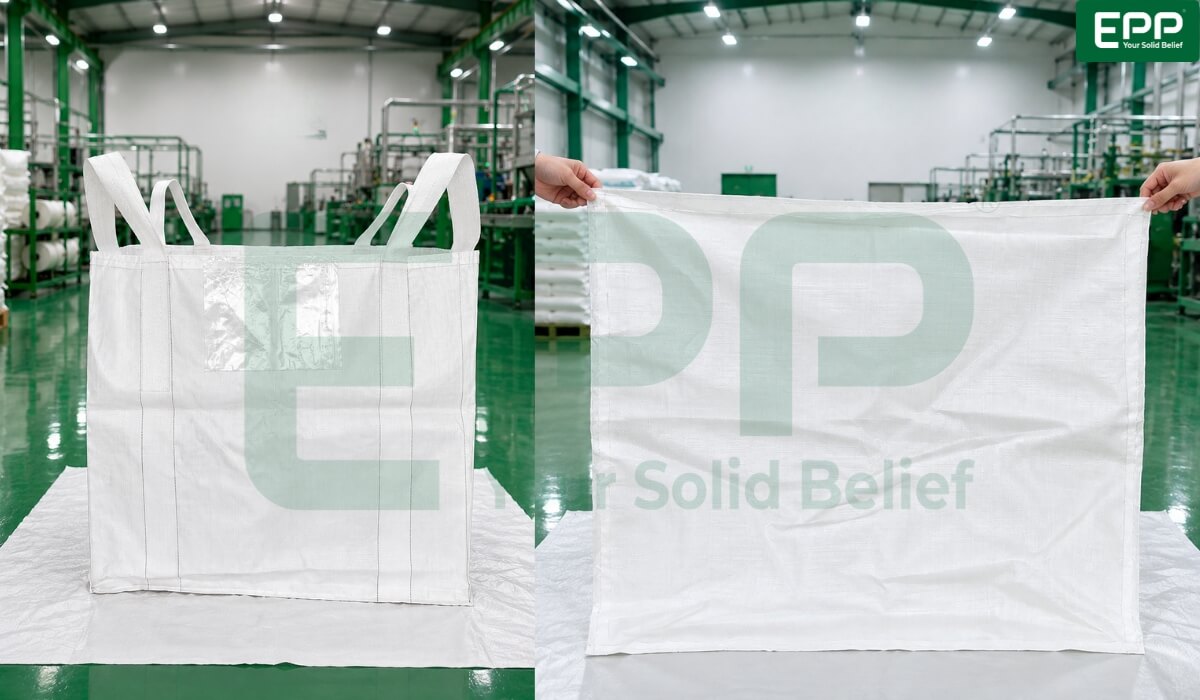
Certified FIBC Jumbo bag ready for export under Vietnam FTAs
What Should an International Buyer Ask Before Ordering FIBC?
To prevent costly quality claims or port rejections, procurement officers should insist on clear answers to four critical technical questions before issuing purchase orders:
1. What is the certified Safety Factor (SF) and Safe Working Load (SWL)? Confirm whether the bags are certified for 5:1 (single-trip) or 6:1 (multi-trip) usage under ISO 21898 protocols.
2. Can you provide third-party laboratory test certificates? Request verified lab documentation for Cyclic Top-Lift testing, UV degradation resistance, and UN hazardous material compliance.
3. What percentage of PCR/PIR recycled content is incorporated? Ensure recycled resin blending aligns with local environmental tax regulations without compromising tensile strength.
4. How does your QA/QC process verify batch consistency? Verify whether the supplier executes independent on-site inspections for fabric GSM, stitching integrity, and moisture resistance before container sealing.
Understanding total landed packaging costs also involves benchmarking across related bulk material industries; for instance, reviewing forecast of strong demand for big bags offers vital context on regional pricing trends.

Frequently Asked Questions About the FIBC Packaging Market
What primary industries are driving growth in the FIBC packaging market?
The global market growth is driven primarily by the chemical processing, agricultural commodity trade, construction materials, and food processing industries due to the cost efficiency and space-saving advantages of soft bulk packaging.
How do European plastic taxes impact international FIBC procurement?
Regulations like the UK Plastic Packaging Tax mandate that imported plastic packaging contain at least 30% recycled content or face per-ton tax levies. International buyers must partner with suppliers capable of incorporating certified PCR resin without reducing safety factors.
Why is Vietnam a strategic sourcing hub for the global FIBC packaging market?
Vietnam offers modern European weaving technology (Starlinger), competitive manufacturing costs, favorable global trade agreements (EVFTA, CPTPP), and robust port infrastructure, making it an ideal destination for high-quality, compliant bulk bag exports.
How does EPP Vietnam manage quality control across global FIBC shipments?
EPP Vietnam acts as a Master Supply Chain Partner, executing a rigorous 5-step independent QA/QC process. Every production run undergoes strict verification for GSM density, tensile strength, seam proofing, and UV stabilization before container dispatch, providing complete procurement security for international buyers navigating the global FIBC packaging market.
Building Supply Chain Resilience in a Dynamic FIBC Market
The expansion of the global FIBC packaging market presents both massive cost-saving opportunities and heightened compliance responsibilities for procurement leaders. As regulatory frameworks tighten around PCR recycled content and international trade logistics remain volatile, relying on traditional, single-factory procurement models exposes B2B buyers to unacceptable risks of supply interruption, quality inconsistency, and customs delays. Navigating this shifting landscape requires a strategic transition toward agile supply chain orchestration.
Ready to optimize your bulk packaging procurement and secure fully certified, high-performance FIBC bulk bags tailored to your exact industry specifications? Contact EPP Vietnam today to consult with our supply chain experts, request verified technical documentation, or receive a competitive quote for your next global shipment!
🌐Website:https://epp.vn// https://eppvietnam.trustpass.alibaba.com
📲Ms. Jennifer: +84 986 002 888 – [email protected]