The industrial packaging landscape in Oceania is undergoing a massive transformation, driven by expanding resource extraction, agricultural exports, and bulk chemical distribution. Across Sydney, Melbourne, Brisbane, and Perth, the demand for high-capacity flexible containers continues to surge. In the local Australian market, the term bulka bag has become the universally accepted industry name for a flexible intermediate bulk container (FIBC).
Navigating the export market of bulk bags Australia requires a deep technical understanding of regional lifting safety mandates, severe climatic conditions, and stringent biosecurity import protocols. This comprehensive guide outlines the technical specifications, regulatory frameworks, and strategic sourcing models shaping the export market of bulk bags Australia today.
Overview of the Export Market of Bulk Bags Australia
Australia’s reliance on primary industries drives strong demand for reliable industrial packaging across the mining, agricultural, and construction sectors. The country consumes millions of bulk bags annually for dry goods, ranging from quartz sand and lithium concentrates to grain, seeds, and fertilizers. Domestic manufacturing costs for woven polypropylene bags remain high, leading major mining houses and agricultural co-operatives to depend heavily on an international importer network for scalable supply lines.
Meeting these needs requires diverse bag architectures tailored to heavy, high-density payloads. Selecting the right configuration—from standard 4-loop designs to custom jumbo bags built for mineral containment—directly impacts operational safety and transport efficiency. Consequently, local buyers seek out reliable distributors offering specialized setups.
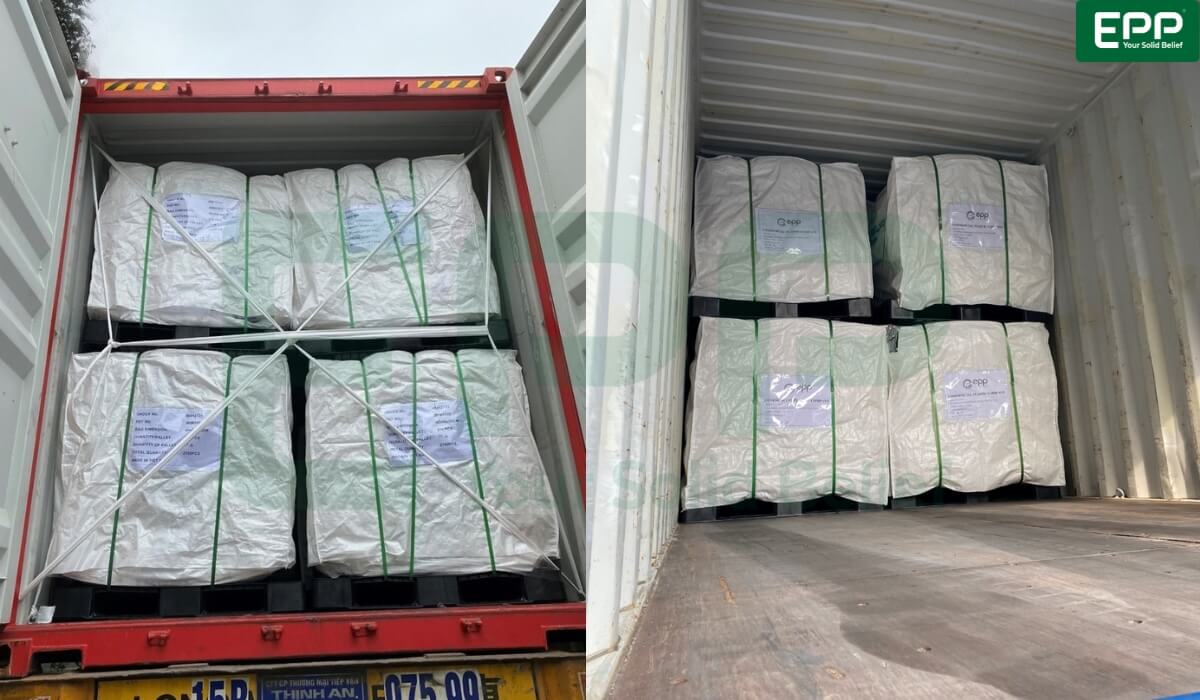
High-quality FIBC bulk bags prepared for export to the Australian market.
Strategic deep-water port proximity between Vietnam and key Australian gateways streamlines maritime logistics, making FIBC exports to Australia a highly efficient Asia-Pacific supply chain. For further perspective on global packaging trends, read our analysis on the forecast of strong demand for big bags in Europe.
Safety Standards for Bulk Bags Australia
Operating within Australia requires strict adherence to workplace safety laws and material performance standards. Products entering the export market of bulk bags Australia must pass stringent testing to prevent site accidents, material contamination, and structural degradation.
AS 3668 and ISO 21898
The primary technical benchmark for non-dangerous goods in Australia is AS 3668 (Flexible Intermediate Bulk Containers – Non-dangerous goods), alongside the international standard ISO 21898. These standards govern load capacities, stress limits, and design integrity.
- Safe Working Load (SWL): Standard Australian bulk bags are typically engineered for SWL ratings ranging from 500 kg to 2000 kg, depending on material bulk density.
- Safety Factor (SF): For single-trip applications, a safety factor of 5:1 is mandatory (meaning the bag can withstand a top-load force five times its rated SWL). For reusable multi-trip designs, a 6:1 or 8:1 safety ratio is required.
Heavy-Duty UV Protection for Harsh Australian Outdoor Climate
Australia experiences some of the highest ultraviolet radiation levels in the world. Standard PP woven bulk bags degrade rapidly when exposed to intense solar radiation, leading to fiber embrittlement and catastrophic wall collapse.

Heavy machinery loading raw minerals under extreme, high-UV weather of Australian mining sites.
To ensure longevity in outdoor mining or agricultural storage, bags bound for the export market of bulk bags Australia must be manufactured as UV-treated FIBC units. This enables the fabric to retain at least 50% to 80% of its original tensile strength even after 300 hours of accelerated weather testing.
Electrostatic Safety Spectrum
Handling fine powders, organic dusts, or volatile solvents creates severe static electricity hazards. EPP Vietnam is catering to global customers who require the full spectrum of electrostatic safety options, offering specialized Type A, Type B, Type C, and Type D bags tailored to exact material and operational needs.
For hazardous chemical shipments, EPP Vietnam coordinates the supply of fully certified UN bags tested under UN Chapter 6.5 guidelines to guarantee complete containment under extreme transport stress.

Top Popular FIBC Bulk Bag Specifications for the Australian Market
Product requirements within the export market of bulk bags Australia vary significantly across industry sectors.
1. Baffle Bulk Bags (Form-Stable Q-Bags)
Baffle bags feature internal fabric panels sewn across the four corners. These internal baffles prevent the bag from bulging into a spherical shape when filled, maintaining a clean cubic profile. Form-stable Q-bags maximize space inside sea containers, warehouse racks, and long-distance transport trucks (Road Trains) across regional Australia, lowering overall landed cost per ton.
2. Heavy-Duty Mining Bulka Bags
Designed for extreme payloads such as mineral concentrates, gravel, and metal powders, heavy-duty industrial bulk bags Australia utilize dense woven fabric ranging from 180 GSM to 240 GSM. These configurations typically feature a heavy-duty filling spout for dust-controlled loading and a bottom discharge spout with a protective petal closure for regulated unloading.

2 ton builder bags for building materials
3. Food-Grade and Agricultural FIBCs
For agricultural exports like grains, pulses, sugar, and milk powder, packaging must meet strict hygiene standards. A food-grade FIBC is produced in cleanroom environments accredited under BRCGS or ISO 22000 standards. These bags often integrate an internal PE liner or feature a coated FIBC (laminated woven PP) design to shield contents against moisture ingress, oxygen transfer, and external contamination.
You can browse EPP Vietnam’s online portfolio of high-grade bulk bags for sale (FIBC Bags) to review specifications.
Export Procedures & Customs Clearance to Australia
Successfully executing trade contracts within the export market of bulk bags Australia requires meticulous compliance with trade regulations, biosecurity measures, and customs procedures.
HS Code & Essential Import Documentation
Accurate classification is critical to avoiding delays at Australian ports like Sydney (Port Botany) or Melbourne.
HS Code: The standardized international tariff code for flexible intermediate bulk container products made from woven polypropylene is 6305.32.00.
To complete smooth customs clearance in Australia, importers must receive a complete import documentation package from their FIBC supplier Australia partner:
- Bill of Lading (B/L): The official maritime transport document detailing freight origin, carrier details, and destination port.
- Commercial Invoice: Specifying the itemized unit values, total purchase price, and agreed Incoterms (e.g., FOB, CIF, DDP).
- Packing List: Detailing gross/net weights, bale dimensions, pallet quantities, and individual batch numbers.
- Certificate of Origin (Form AANZFTA): The critical document proving origin in Vietnam under the ASEAN-Australia-New Zealand Free Trade Area, unlocking preferential tariff treatment.
For complete compliance checklists, refer to our guide on jumbo bags export documents requirements.

Quarantine, Biosecurity, and Landed Cost Optimization
Australia enforces some of the world’s strictest biosecurity laws, managed by the Department of Agriculture, Fisheries and Forestry (DAFF) through the BICON system. All packaging materials entering the country must be completely free of organic contaminants, soil, seeds, and insect infestation.
If goods are shipped on wooden pallets, the pallets must undergo heat treatment or fumigation compliant with ISPM 15 standards and display the official certification stamp. Proper palletization and bale compression allow a bulk bag export Australia shipment to maximize container load factors, significantly reducing freight expenses and optimizing overall Australia-wide delivery costs. Learn more about streamline customs execution in our overview of customs procedures in exporting FIBC bulk bags.
Frequently Asked Questions (FAQ)
What is the HS code for FIBC in Australia?
The universal Harmonized System (HS) code for a flexible intermediate bulk container manufactured from synthetic dệt polypropylene materials is 6305.32.00.
What safety factor (SF) is required for bulk bags in Australia?
Under Australian standard AS 3668, single-trip bags designed for one-time filling and emptying require a Safety Factor (SF) of 5:1. Multi-trip bags intended for repeated reuse require a higher safety factor of 6:1 or 8:1.
Can Australian buyers leverage AANZFTA for tariff benefits when importing from Vietnam?
Yes. Thanks to the ASEAN-Australia-New Zealand Free Trade Agreement (AANZFTA), Australian importers sourcing FIBC bags from Vietnam can claim a 0% import tariff rate by presenting a valid Form AANZFTA certificate of origin during customs entry.
How does EPP Vietnam ensure UV protection for the Australian climate?
EPP Vietnam specifies the inclusion of premium Hindered Amine Light Stabilizers (HALS) at a 2.5% to 3.0% dosage rate during PP yarn extrusion. This ensures that UV-treated FIBC units supplied to Australia maintain structural integrity and tensile strength under prolonged outdoor sun exposure.
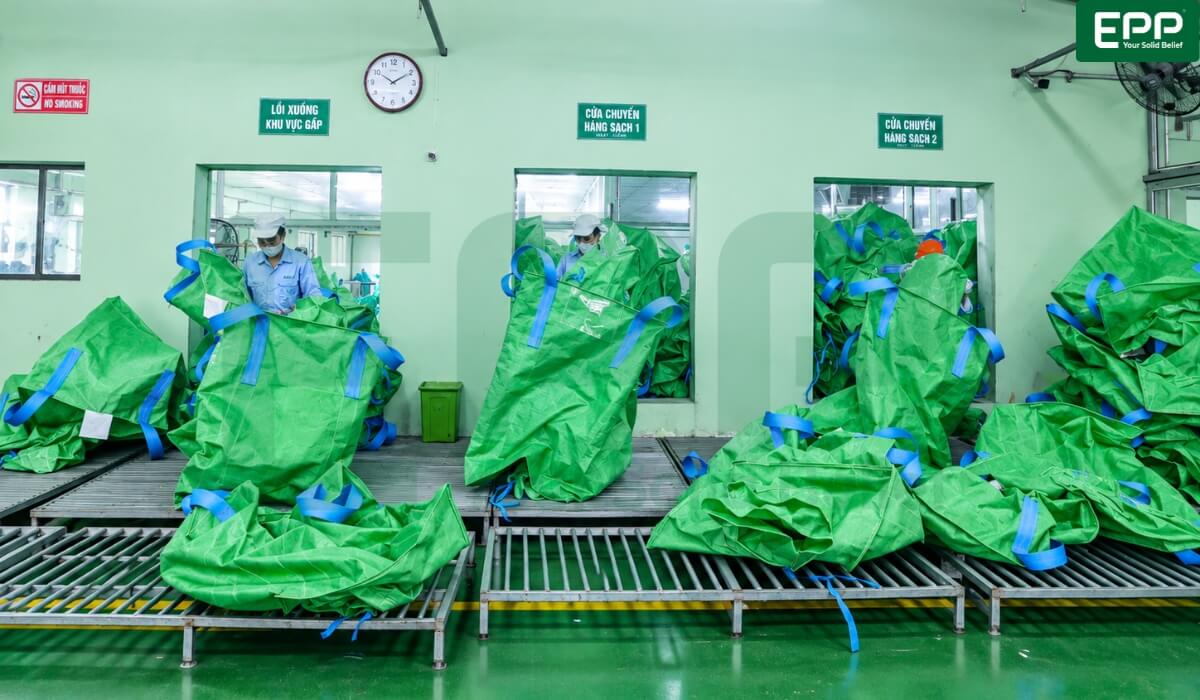
Quality Control Team before Shipment from EPP Vietnam
The export market of bulk bags Australia is built on stringent technical compliance, uncompromised handling safety, and reliable international supply chains. As Australian primary industries continue to expand, securing high-quality, cost-effective packaging solutions is essential for operational success. From understanding local standards like AS 3668 and high UV protection requirements to navigating customs clearance and biosecurity protocols, purchasing managers must partner with experienced supply chain specialists.
EPP Vietnam stands as a trusted value-chain integrator, connecting Australian businesses with Vietnam’s premier manufacturing ecosystem. By providing a full spectrum of certified bulka bag solutions—including Type A, B, C, and D electrostatic bags, food-grade packaging, and heavy-duty mining containers—EPP Vietnam ensures your supply chain remains resilient, compliant, and cost-efficient. Contact EPP Vietnam today to discuss your technical specifications and streamline your bulk bag sourcing for Australia.
Website: epp.vn
Alibaba website: https://eppvietnam.trustpass.alibaba.com/
Email: [email protected] Hotline/ Whatsapps: +84 986 002 888