In global supply chain management, choosing the right bulk handling solution dictates operational efficiency, product integrity, and overall procurement margins. Across the European continent, rapid shifts in automation, strict environmental directives, and expanding heavy industries have accelerated the demand for big bags.
For procurement directors, logistics engineers, and plant managers navigating complex international markets, understanding these macro trends is vital. As a FIBC leading supplier connecting global enterprises with top-tier production networks, EPP Vietnam provides engineered FIBC packaging Europe solutions, delivering certified big bags Europe standards that satisfy the most stringent industrial regulations.
The Surge in Demand For Big Bags Across Europe
The European FIBC market is undergoing a structural expansion driven by the transition from traditional small-sack handling to mechanized bulk distribution. Industrial end-users across Western and Eastern Europe are increasingly replacing 25 kg paper and valve bags with flexible intermediate bulk containers (FIBCs) to optimize warehouse storage, cut manual handling costs, and improve site safety.
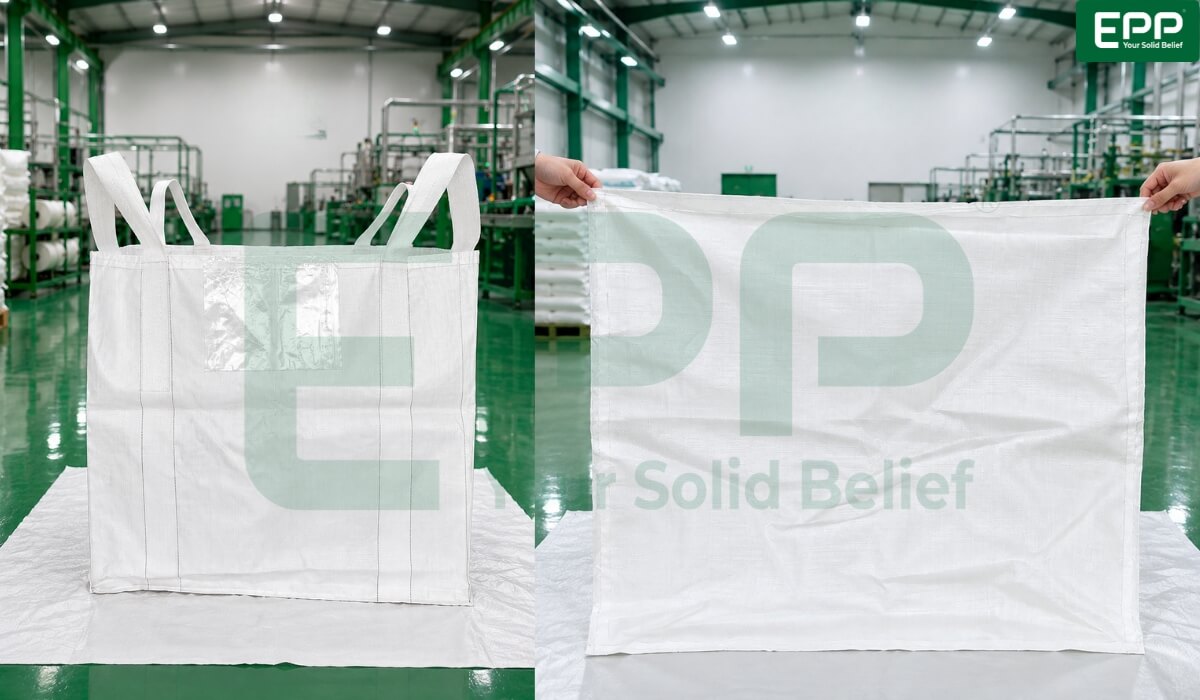
Certified FIBC Jumbo bag ready for export under Vietnam FTAs
According to recent industry data from Future Market Insights (FMI), the bulk bags market Europe valuation is projected to exceed 1.9 billion USD by the end of the decade, expanding at a compound annual growth rate (CAGR) of over 6.4%. This sustained FIBC market forecast reflects a broader shift toward high-capacity material handling in automated logistics hubs. To understand how these regional shifts fit into the global landscape, explore our historical overview of the development of the FIBC industry.
Which European Markets Are Important for Big Bags?
While the overall FIBC demand Europe shows upward momentum, consumption varies significantly across regional manufacturing hubs:
- Germany & France: Represent the largest market share for high-specification jumbo bags Europe sourcing, driven by advanced chemical processing, specialty polymers, and pharmaceutical exports.
- Italy & Spain: Maintain strong demand for FIBC for agriculture applications, including bulk handling of grain, animal feed, seeds, and fertilizer distribution.
- Eastern Europe (Poland, Czechia, Romania): Experiencing rapid industrial expansion, generating consistent demand for big bags within construction, mining, and raw material processing sectors.
How Automation Is Affecting Demand for Big Bags
Modern European logistics facilities rely heavily on robotic palletizing, automated filling stations, and high-speed discharge systems. This transition directly impacts FIBC specifications, as automated machinery demands strict dimensional consistency, precise loop positioning, and uniform fabric stiffness.
Variations in bag height or loop sagging can cause sensor misreadings and line stoppages. Consequently, European buyers are moving away from unstandardized suppliers in favor of certified FIBC supplier networks capable of maintaining rigid quality control tolerances across large volume production runs.
Where is the Demand For Big Bags Originating?
The strong Europe FIBC demand is distributed across key industrial sectors, each requiring tailored fabric construction, barrier layers, and safety certifications:
Chemical & Petrochemical Industry:
The chemical sector represents over 30% of total demand for FIBC bags in Europe. Processing fine powders and combustible synthetic resins creates hazardous dust environments, making electrostatic protection critical.
European processing facilities require specialized antistatic FIBC constructions compliant with IEC 61340-4-4 standards:
- Type C FIBC (Groundable): Woven with interconnected conductive carbon threads that must be grounded during filling and emptying to dissipate static charges safely.
- Type D FIBC (Static Dissipative): Manufactured with specialized fabric that dissipates electrical charges into the atmosphere safely without requiring a ground connection.
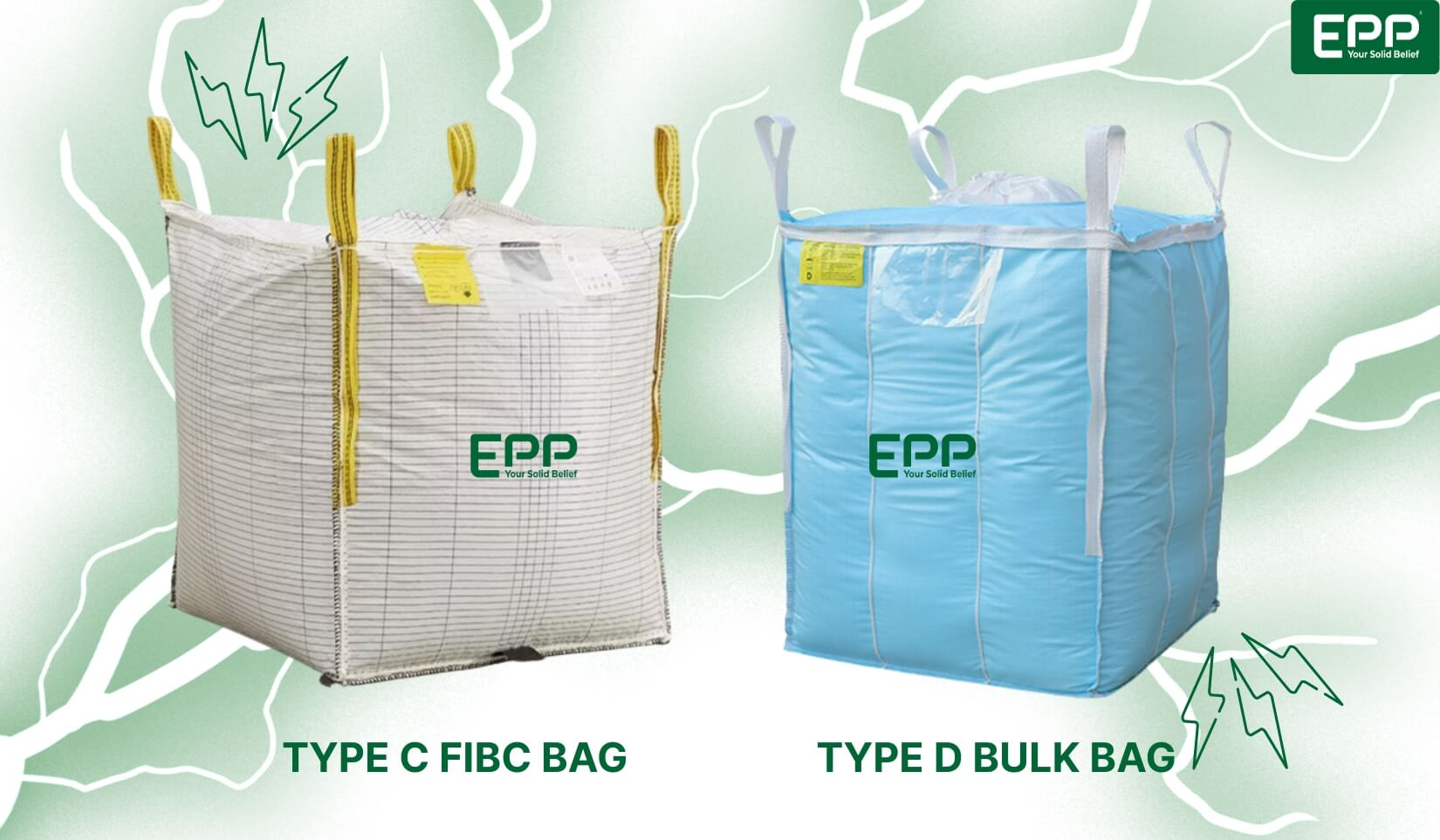
Structural comparison between Type C FIBC requiring a mechanical grounding wire and Type D FIBC with self-dissipative static technology.
Food & Pharmaceutical Sectors:
The demand for food grade FIBC solutions continues to grow due to strict European food safety laws. Processing powdered dairy, sugar, starch, and pharmaceutical ingredients requires contamination-free manufacturing.
Supplying this sector requires manufacturing in BRCGS-certified cleanroom environments using 100% virgin polypropylene resin. These bags feature ultrasonic fabric cutting to prevent loose thread contamination, triple-dust-proof seam stitching, and multi-layer PE or aluminum barrier liners to prevent moisture absorption and gas degradation.
Construction & Hazardous Waste:
Based on EPP Vietnam’s experience across European supply chains, a significant volume of demand comes from construction, renovation, and environmental remediation:
- Platten Big Bags: European contractors extensively request long, low-profile Platten Big Bags. These allow workers to lay large fiber-cement boards and insulation sheets flat inside without breaking them, preventing dangerous airborne dust hazards.
- Asbestos & Heavy Waste FIBCs: In compliance with strict EU safety mandates (e.g., TRGS 519 in Germany), EPP Vietnam supplies coated Asbestos Bulk Bags and required hazard warnings to prevent fiber release during transport. Standard 1-ton and 2-ton 4-loop bags are also widely supplied for general aggregates and masonry debris.
Agriculture & Fertilizer:
Agricultural applications generate massive seasonal bulk bags for fertilizer and seed logistics. These bags require high UV-stabilization additives (300 KLY to 1200 KLY) to withstand extended outdoor exposure during harvesting seasons without fabric breakdown. To compare these trends with other international destinations, read our analysis on the export market of bulk bags in Australia.
How European Regulations Are Changing Big Bag Demand?
Regulatory mandates within the European Union are transforming industrial packaging requirements, shifting the market toward circular economy principles:
- EU Packaging and Packaging Waste Regulation (PPWR): Mandates that all industrial packaging placed on the EU market must be designed for 100% recyclability and incorporate increasing percentages of post-consumer recycled content (rPP) without compromising structural integrity.
- Mono-Material Design Protocols: To streamline recycling, European buyers prefer 100% polypropylene bulk packaging systems—where the fabric, lifting loops, sewing thread, and document pouches are made from the same polymer family.
- Supply Chain Transparency: Importers are required to provide full traceability for raw materials, ensuring virgin resins meet REACH regulations and contain no banned hazardous substances.
What Types of Big Bags Are European Buyers Looking For?
European procurement teams evaluate European bulk packaging suppliers based on specific design configurations tailored to their handling infrastructure:
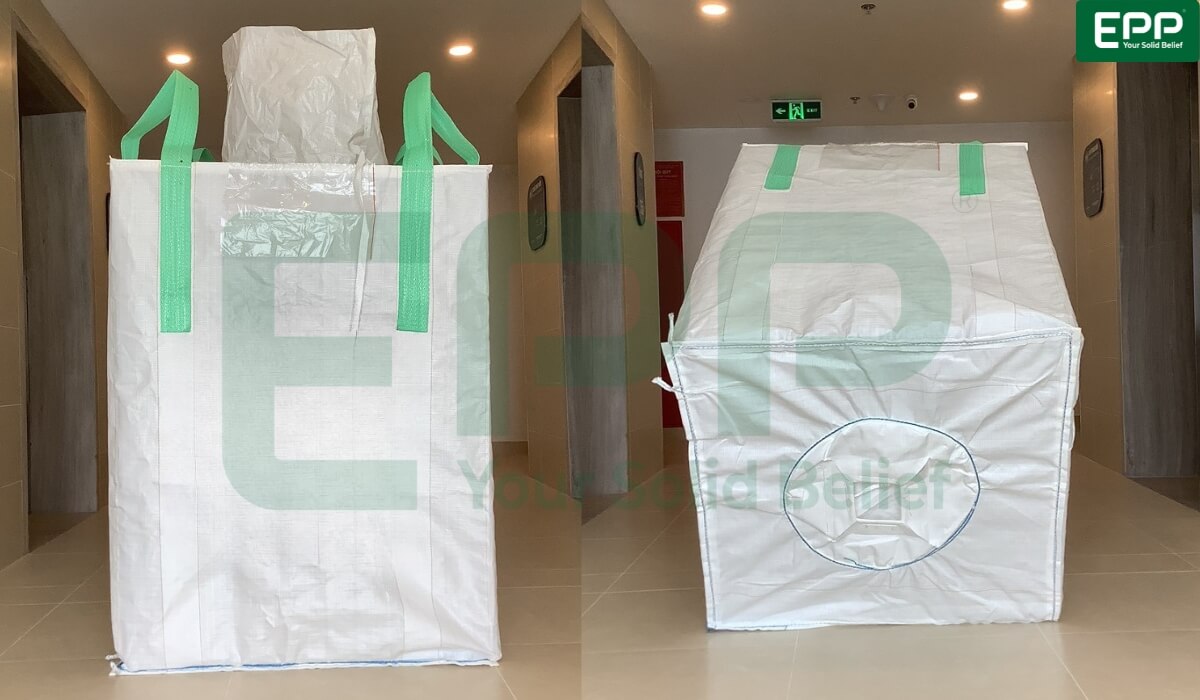
30% rPP blended bulk bag from EPP Vietnam.
| Big Bag Type | Key Features | Primary European Application |
| 4-Loop Standard FIBC | Versatile design, high Safe Working Load (SWL 500kg–2000kg), 5:1 or 6:1 Safety Factor | General industrial powders, minerals, and agricultural products |
| U-Panel FIBC | Constructed from a continuous U-shaped panel plus two side panels; offers superior lifting stability, high load distribution, and excellent shape retention | Heavy-duty industrial loading, cement, fine chemical powders, and building materials |
| Eco-Friendly rPP Big Bags (30%+ Recycled) | Integrates ≥30% Post-Consumer Recycled (PCR) polypropylene without sacrificing SWL rating; reduces carbon footprint and meets EU packaging mandates | Non-food industrial logistics, construction, mining waste, and circular supply chains complying with EU PPWR laws |
| Baffle / Q-Bags | Internal fabric baffles maintain a square shape when filled, preventing sidewall bulging | Containerized transport, optimizing space in export sea containers |
| UN-Certified FIBC | Tested for drop, topple, and top-lift resistance under UN regulations | Transporting hazardous chemicals, dangerous waste, and flammable powders |
| Vented Woven Bags | Breathable fabric strips allow continuous airflow through the bag walls | Storing and drying unseasoned firewood, onions, and potatoes |
Frequently Asked Questions
Which European Markets Are Important for Big Bags?
Germany, France, the Netherlands, Italy, and Spain represent the highest volume markets in Western Europe due to their advanced chemical, pharmaceutical, and agricultural industries. Eastern European nations like Poland and Romania are also experiencing rapid growth driven by construction, mining, and industrial manufacturing expansion.
How Automation Is Affecting Demand for Big Bags
Automation requires strict dimensional consistency in FIBC requirements. Automated filling and discharging lines depend on precise bag geometry, rigid loop orientation, and consistent fabric stiffness to operate without sensor errors or line blockages.
Do European buyers require UN-certified big bags?
Yes, UN certification is legally mandatory whenever transporting hazardous materials classified under UN dangerous goods regulations. These UN jumbo bags undergo rigorous drop, stack, and tear testing to prevent leakage or rupture during transit.

Does sustainability mean European buyers should always choose recycled PP FIBCs?
Not necessarily. While recycled PP (rPP) is ideal for non-food, standard-duty applications, direct food-contact and high-hazard chemical applications still require 100% virgin polypropylene resin to comply with BRCGS and UN safety regulations. In these cases, sustainability is achieved through 100% mono-material designs that facilitate post-use recycling.
Strategic FIBC Procurement for the European Market
As the demand for big bags across Europe continues to rise, securing a reliable, high-quality supply chain is essential for maintaining operational continuity and compliance. European enterprises need packaging partners who understand technical specifications, regulatory demands, and international logistics.
EPP Vietnam offers a comprehensive approach to FIBC sourcing Europe, combining multi-factory production capacity with independent quality assurance. Whether you require specialized antistatic FIBC bags, food-grade cleanroom solutions, or high-volume standard bulk packaging, our engineering team is ready to deliver tailored solutions for your business.
Contact EPP Vietnam today to consult with our packaging specialists, request certified product samples, and receive a competitive quotation for your European distribution operations.