To maintain predictable lead times and protect landed profit margins, international buyers must navigate the export customs procedures governing Flexible Intermediate Bulk Containers (FIBCs). As Vietnam solidifies its position as a primary manufacturing hub for industrial woven polypropylene packaging, understanding local export clearance mechanics and specialized regulatory demands is essential for procurement managers worldwide.
This guide outlines the essential steps, documentation, and regulatory frameworks required for exporting FIBC bulk bags.
Step-by-Step Customs Procedures for FIBC exporting
1. Commercial Agreement & Transport Booking
Establish the trade contract defining unit price, quantities, Incoterms (e.g., FOB, CIF), and delivery timelines. Once agreed, reserve container space with an ocean or air carrier to receive a Booking Note and confirm your cargo cutoff date.
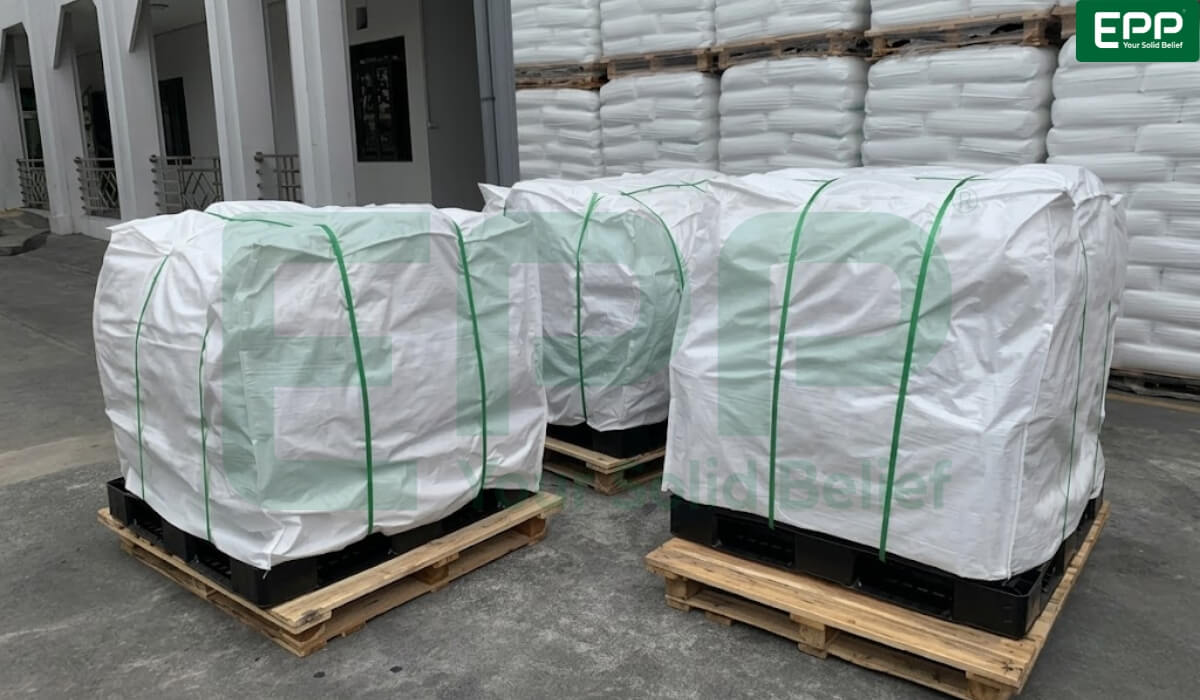
High-quality FIBCs in Vietnam are systematically packaged and quality-checked for international sea freight.
2. Export Documentation Preparation
Compile the mandatory export paperwork. For standard polypropylene (PP) FIBCs, the required documentation includes:
- Commercial Invoice: Specifying unit costs, totals, and Incoterms.
- Detailed Packing List: Outlining bag quantities, pallet dimensions, net weight, gross weight, and overall volume (CBM).
- Certificate of Origin (C/O): Required for international buyers to claim preferential trade agreement tariffs.
- Specialized Compliance Certifications: For food/pharmaceutical bags, attach hygiene certifications (BRCGS/ISO 22000). For hazardous materials, a valid UN Packaging Certificate must be provided.
3. Electronic Customs Declaration & Channel Assignment
Submit the export declaration via the national customs portal (e.g., VNACCS/VCIS in Vietnam) using the correct HS Code 6305.32.00 for FIBCs. The automated system processes the filing and assigns a clearance channel:
- Green Channel: Automatic electronic release without physical document or cargo inspection.
- Yellow Channel: Requires manual review of paper/PDF documentation by customs officials.
- Red Channel : Requires full document auditing and a physical cargo inspection at the terminal port.
4. Terminal Gating & Biosecurity Verification
Transport the stuffed container or palletized FIBCs to the port. If using wooden pallets, ensure the timber bears an official ISPM 15 heat-treatment stamp and present a valid Phytosanitary/Fumigation Certificate to port authorities.

Official ISPM 15 mark handling symbols applied to standards for export packaging.
5. Clearance Release & Bill of Lading Issuance
Once customs approves the filing and clears any duties (standard export tax on PP FIBCs under HS 6305.32.00 is 0%), the system issues a final Customs Release Note. The carrier then loads the cargo on the vessel and issues the ocean Bill of Lading (B/L).
HS Code Classification and Tariff Rates for FIBC Bags
Accurate tariff classification under the international Harmonized System (HS) prevents administrative disputes and ensures correct duty application. Globally, Flexible Intermediate Bulk Containers constructed from woven polypropylene or polyethylene textiles fall under heading 63.05.
The standard international classification for FIBC bulk bags is HS Code 6305.32.00. On a regional level, tariff schedules further divide this classification based on bag construction and weight.
Under Vietnam’s current export tariff schedule, polypropylene bulk bags categorized under HS Code 6305.32.00 carry an export duty rate of 0% and an export Value Added Tax (VAT) rate of 0%. This zero-duty structure makes Vietnamese industrial packaging highly cost-competitive in global markets.
Special Customs Regulations for High-Specification FIBCs
Industrial sectors handling specialized or hazardous cargo must comply with extra regulatory requirements beyond standard customs declarations. Failing to present mandatory safety certificates can result in immediate cargo rejection by ocean carriers and customs inspectors.
UN-Certified Bags for Dangerous Goods
Bulk bags destined for transporting flammable, toxic, or corrosive materials (DG cargo) must carry an official UN Packaging Certificate. Regulatory officers inspect bags for permanent UN markings (such as UN 13H3/Y/…) to confirm that the bag design has passed rigorous drop, stack, and top-lift testing.
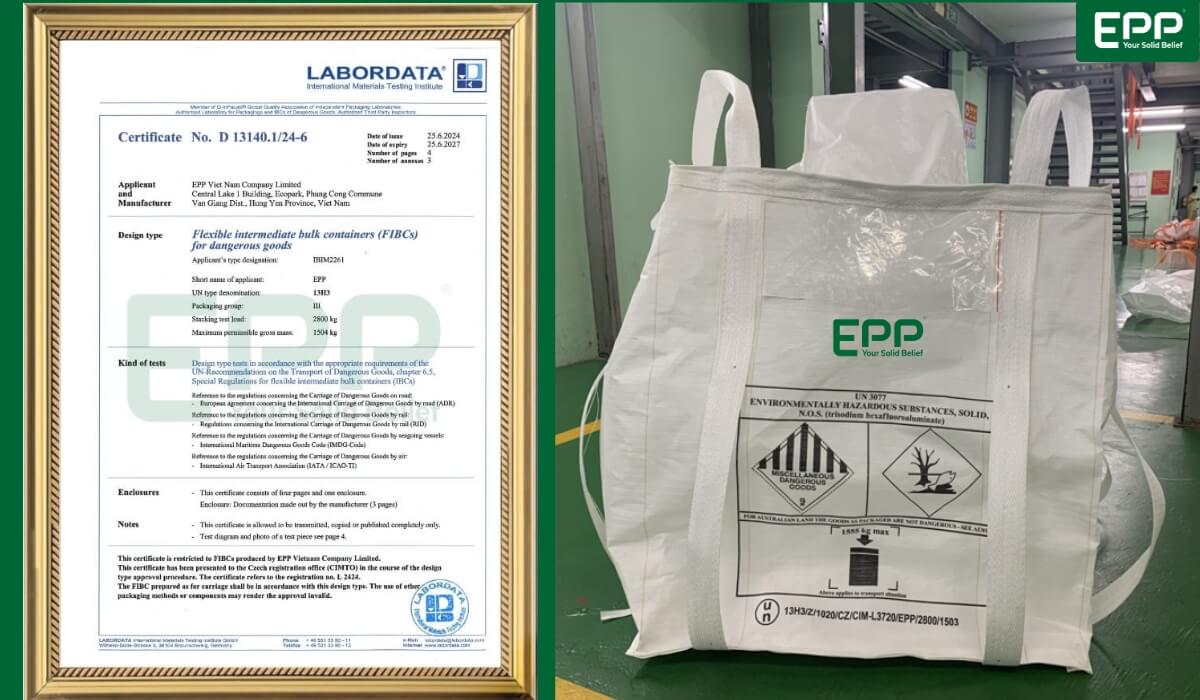
Un certification and Export-ready UN-certified bulk bags supplied by EPP Vietnam for global hazardous material transport.
Food-Grade and Hygienic Applications
Packaging supplied to the food processing, pharmaceutical, or agricultural sectors requires documented proof of sanitary compliance. Facilities certified to BRCGS, ISO 22000, or HACCP protocols ensure that raw polypropylene resins, inner liners, and cleanroom stitching prevent physical or chemical contamination. Importers seeking to enter strict European markets should review regulatory standards outlined in our analysis on importing FIBCs into the European market.
Biosecurity and Timber Packaging (ISPM 15)
When bulk bags are shipped on wooden pallets, destination customs authorities in regions such as Australia, North America, and Europe enforce strict biosecurity measures. Every wooden pallet must carry official ISPM 15 heat-treatment stamps accompanied by a valid Fumigation Certificate. To avoid port rejections down under, review our comprehensive compliance guide covering customs standards for exporting bulk bags to Australia.
Common Delays of Customs Procedures and How to Avoid Them
Avoiding border hold-ups requires a systematic auditing approach prior to vessel dispatch. The table below highlights the most frequent compliance mistakes and practical strategies to prevent them:
| Common Mistake | Root Cause / Impact | How to Avoid |
| Incorrect HS Code Declaration | Declaring standard PP woven bags under generic textile headings rather than 6305.32.00. This causes re-classification delays, tax audit adjustments, or fines. | Always verify the 6-digit heading (6305.32) with your freight forwarder or logistics provider before filing. |
| Document Discrepancies Across Filings | Net or gross weight mismatches between the Commercial Invoice, Packing List, and customs portal entries. This triggers a Yellow or Red Channel shift. | Perform a three-way document audit matching product weights, bag counts, and cargo descriptions prior to digital transmission. |
| Missing or Unstamped Wooden Pallets (ISPM 15) | Exporting FIBCs on untreated or unstamped wooden pallets. Biosecurity authorities at destination ports will reject or quarantine the cargo. | Use certified ISPM 15 heat-treated timber with clear brand stamps, obtain a Fumigation Certificate, or switch to plastic pallets. |
| Failing UN Marking Requirements for Hazardous Goods | Printing a UN symbol on a standard industrial FIBC without maintaining an active, official UN Test Certificate for that specific bag construction. | Ensure dangerous goods cargo uses verified UN-certified FIBCs (UN 13H3/Y/…) with matching test reports submitted during clearance. |
| Vague Product Descriptions | Describing the cargo simply as “plastic bags” or “packaging” on the customs declaration. | Provide exact descriptions: “100% Brand-New Flexible Intermediate Bulk Containers (FIBC) made of woven polypropylene (PP).” |
Why EPP Vietnam Is Your Trusted Export Supply Partner?
As a leading master supplier of industrial bulk bag in Vietnam, EPP Vietnam eliminates supply chain friction by combining automated manufacturing with total regulatory compliance.
Zero-Defect Export Documentation: EPP Vietnam provides meticulous shipping document sets tailored to international trade requirements, enabling buyers to clear customs rapidly and claim preferential tariff benefits.
Internationally Certified Facilities: Manufacturing operations hold ISO 9001, ISO 14001, BRCGS, ISO 22000, and UN Testing certifications, ensuring full compliance across tightly regulated global markets.
Customized Container Load Optimization: By engineering custom Baffle FIBCs (Q-Bags) and utilizing hydraulic baling presses, EPP Vietnam maximizes container payload efficiency, lowering ocean freight costs per ton delivered. Explore our full range of certified export-grade FIBC bulk bag solutions today.
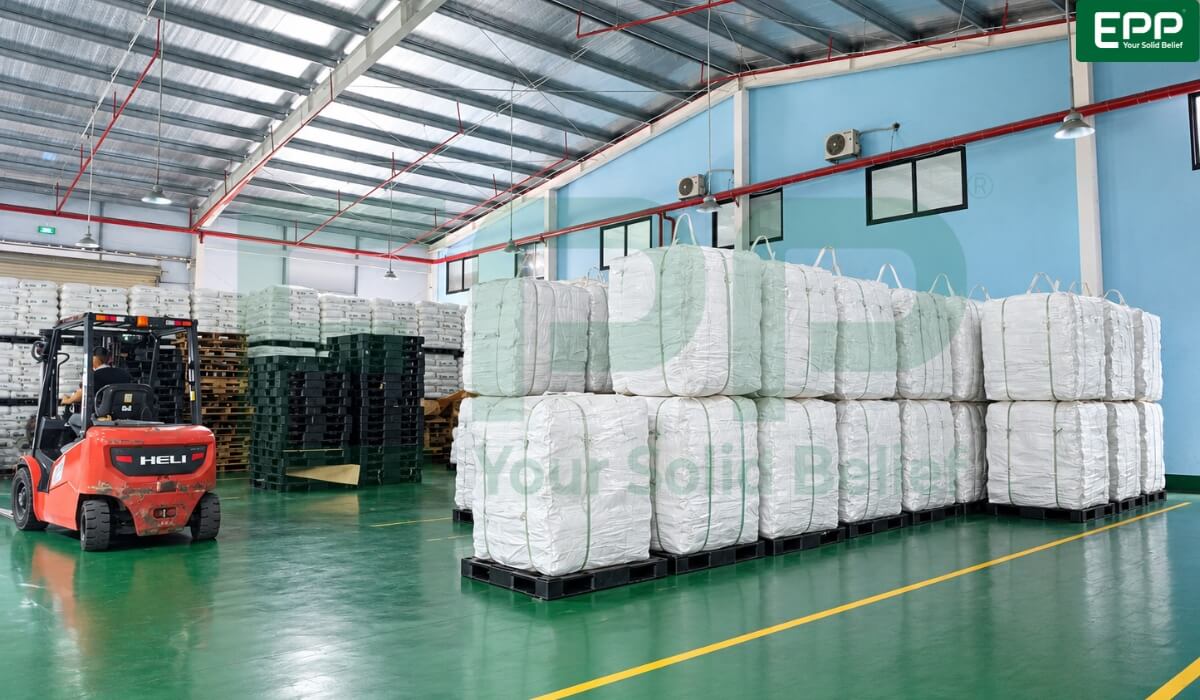
EPP Vietnam’s 30,000 m² modern manufacturing facility dedicated to global FIBC bulk bag export.
Frequently Asked Questions (FAQ)
Is there an export tax on FIBC bulk bags exported from Vietnam?
No. Under Vietnam’s current export schedule, FIBC bulk bags classified under HS Code 6305.32.00 carry an export duty rate of 0% and a 0% export VAT rate.
How do UN certifications affect customs procedures for exporting FIBC bulk bags?
UN certification proves that bulk bags meet international dangerous goods transport protocols. Customs officials require valid UN Test Certificates before issuing clearance for hazardous materials ocean freight.
Is a Certificate of Origin required for every shipment?
While not strictly mandatory for origin customs release, a Certificate of Origin (C/O) is highly recommended. Providing a preferential C/O allows buyers to claim reduced or zero import tariffs under active Free Trade Agreements.
Does export customs clearance cover import requirements in the destination country?
No. Export clearance in Vietnam releases cargo from the origin port. Import clearance requires separate compliance with destination country laws, tax payments, and local biosecurity or health authority approvals.
Navigating export customs procedures for FIBC bulk bags requires diligence, precise document matching, and strict adherence to international packaging standards. By understanding the core steps from electronic filing to biosecurity compliance, B2B buyers can prevent costly origin delays and safeguard their overall supply chain timeline.
Partnering with an experienced master supplier like EPP Vietnam ensures that every shipment meets global regulatory demands, providing full documentation support and certified industrial packaging tailored to your exact operational needs.
Website: epp.vn
Alibaba website: https://eppvietnam.trustpass.alibaba.com/
Email: [email protected] Hotline/ Whatsapps: +84 986 002 888