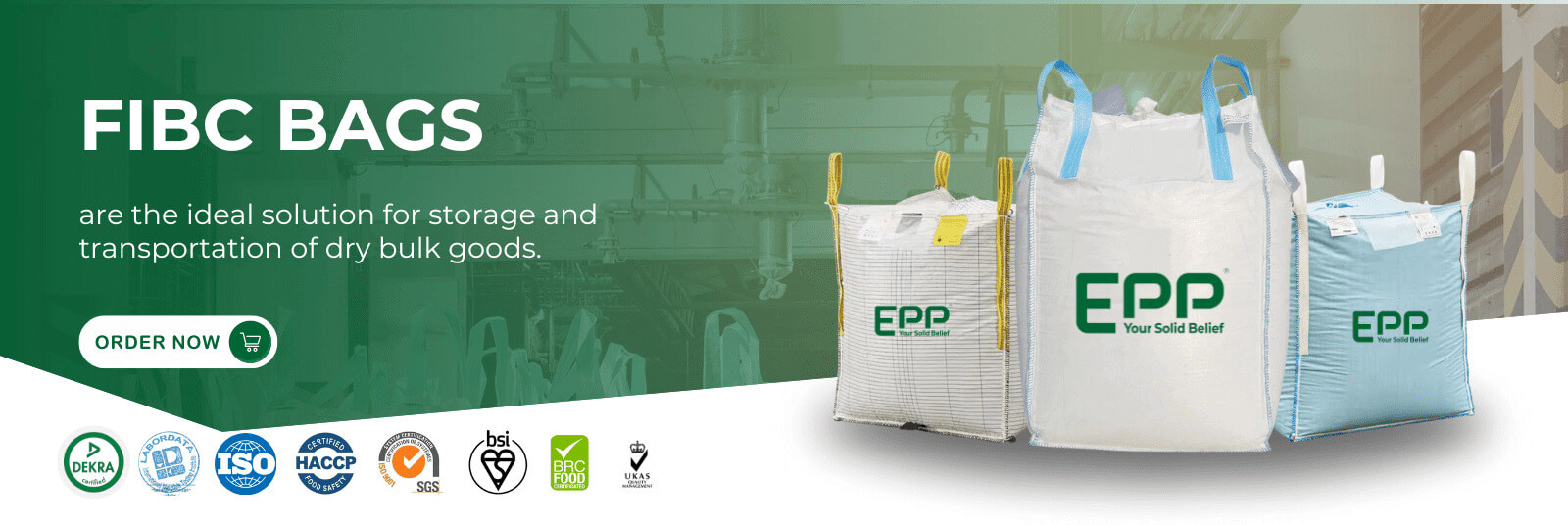
In global dry bulk logistics, selecting the right packaging involves balancing mechanical strength, operational cost, and safety compliance. While Standard FIBC Bags handle millions of tons of non-hazardous dry materials annually, deploying them in environments containing fine powders, combustible dusts, or flammable vapors can lead to severe electrostatic discharge hazards.
Navigating the choice between standard jumbo bags and specialized antistatic bulk bags requires a clear understanding of material properties, process environments, and technical standards like ISO 21898:2024 and IEC 61340-4-4:2018. This guide provides a technical breakdown to help procurement directors and safety engineers select the correct specification.
Understanding Electrostatic Risks in Bulk Material Handling
The Mechanics of Tribocharging During Filling and Discharging
Electrostatic charge generation is a natural physical outcome during dry bulk handling. As fine powders, granules, or plastic resin pellets flow at high speeds through filling chutes, spouts, or discharge pipes, constant friction between particles and the inner surface of the woven polypropylene fabric creates tribocharging (friction-induced static buildup).
When static electricity accumulates on the surface of non-conductive Standard FIBC Bags, it builds a high electrical potential. If this charge cannot safely dissipate, it may release in a sudden spark discharge. In processing plants where static charge in FIBC handling is unmanaged, a single spark can serve as an ignition source.
When people talk about standard FIBC bags, they are usually referring to Type A FIBCs. These are the workhorses of the industry, but they have very specific limitations when it comes to electricity.
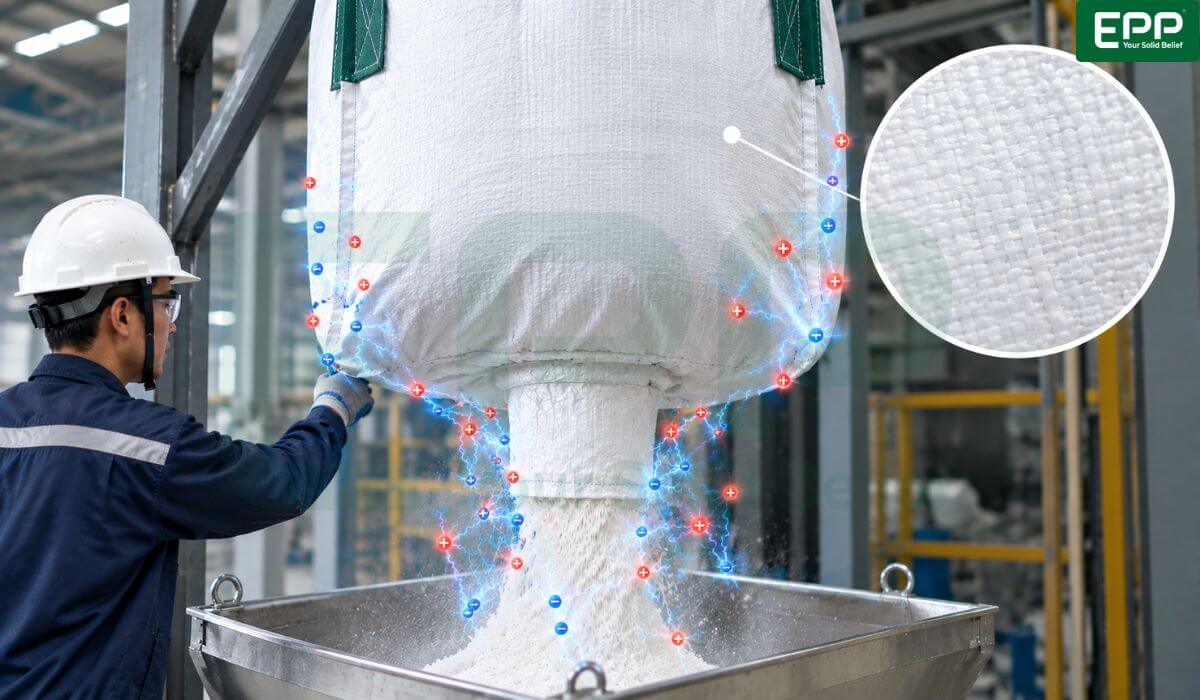
Electrostatic charge accumulation during high-speed powder discharging in standard bulk bags.
Hazardous Environments
Static hazards escalate when operations involve fine chemical powders or flammable liquids. Facilities operate under strict ATEX/hazardous zone classifications based on ignition risks:
- Combustible Dusts: Materials like starch, sugar, synthetic resins, or aluminum powder form explosive dust clouds when suspended in the air. Their sensitivity is measured by Minimum Ignition Energy (MIE).
- Flammable Vapors & Gases: Processing areas utilizing solvent cleaning, chemical synthesis, or liquid transfers present low ignition thresholds where even low-energy static sparks can trigger an explosion.
Using an incorrect bag type in these zones creates extreme operational hazards.
Technical Comparison: Standard FIBC Bags vs. Antistatic Bulk Bags
Categorization Breakdown
Understanding the engineering differences between standard FIBC vs antistatic FIBC models ensures proper specification alignment:
- Type A (Standard FIBC Bags): Constructed from plain woven PP. They provide zero electrostatic dissipation. Must not be used for combustible dusts or near flammable vapors.
- Type B (antistatic big Bags): Designed with low breakdown voltage fabric. They prevent propagating brush discharges but do not dissipate static charge. Suitable for dry combustible dusts (MIE > 3mJ) without flammable gases present.
- Type C (Conductive FIBC): Woven with interconnected conductive carbon threads forming a grounding grid. Type C bags require continuous grounding during filling and discharging (resistance-to-ground < 10⁷ Ω).
- FRAS Type C Bags (Fire Retardant Anti-Static – Engineered by EPP Vietnam): Designed for extreme high-risk environments where electrostatic ignition and thermal/flame exposure coexist. EPP Vietnam’s specialized FRAS Type C FIBC integrate an interconnected conductive grounding grid with a proprietary flame-retardant polypropylene matrix. This dual-action construction safely drains electrostatic accumulation to ground while providing self-extinguishing properties that withstand direct flame exposure, preventing flame propagation during high-risk chemical, mining, or powder handling operations.
- Type D (Static Dissipative FIBC): Manufactured with specialized static-protective yarn that safely dissipates charges into the air via low-energy corona discharge. Type D bags require no bag grounding connection.
For a deeper technical analysis of groundable vs. self-dissipative designs, review our detailed guide on Type C and Type D FIBC bags.

Technical Comparison Matrix
| Technical Feature / Parameter | Type A (Standard FIBC) | Type B (Standard FIBC) | Type C (Antistatic FIBC) | Type D (Antistatic FIBC) |
| Material Construction | Plain Woven PP | Low-Voltage PP (V< 6 kV) | Conductive Carbon Grid PP | Static Dissipative Fabric |
| Grounding Requirements | Not Possible | Not Possible | Mandatory (Grounding Clamp) | Not Required (Self-Dissipative) |
| Ideal For | Sand, Stone, Minerals, Ag-products | Dry Powders, Non-flammable zones | Fine Chemicals, Flammable Vapors | Fine Chemicals, Flammable Vapors |
| Explosion Risk | High (if vapors present) | Medium (PBD protected) | Low (if grounded) | Lowest (Eliminates human error) |
| Price Point (USD / Piece) | $6.00 – $7.00 | $7.00 – $8.00 | $8.00 – $13.00 | $8.00 – $13.00 |
How to Choose the Right FIBC for Your Facility?
Material Classification and Minimum Ignition Energy (MIE)
When evaluating standard bulk bags vs antistatic bags, the physical properties of your product dictate the minimum required protection:
- MIE > 1000 mJ: Non-combustible materials. A Type A FIBC may be appropriate when no specific electrostatic protection is required.
- MIE between 3 mJ and 1000 mJ: Combustible powders without flammable gases or vapors may be handled in Type B FIBCs, subject to the specific application and risk assessment.
- MIE ≤ 3 mJ: Type B FIBCs are not suitable. Type C conductive or Type D static-dissipative FIBCs may need to be considered, depending on the application and applicable safety requirements.
- Flammable gas or vapor present: Type B FIBCs should not be used. Type C or Type D FIBCs may be considered based on the hazardous environment, material characteristics, handling pro.
If your product also requires protection against ambient moisture during transit or outdoor storage, read our guide on waterproof jumbo bags.

EPP Vietnam engineers custom Big bags for severe industrial environments
Total Cost of Ownership (TCO) vs. Liability Risk
While Standard FIBC Bags offer lower unit costs, deploying them in hazardous zones risks catastrophic plant explosions, regulatory fines, and facility shutdown. Sourcing from a verified bulk bag supplier ensures your bags meet international ISO 21898:2024 and IEC 61340-4-4 standards.
For heavy-duty industrial applications where outdoor durability, UV resistance, or fabric aesthetic are considerations, explore our evaluation on whether black FIBC bags are worth the investment.
Leading FIBC Supplier in Vietnam for Global Packaging Standards
As a leading FIBC supplier in Vietnam, EPP Vietnam delivers international-standard bulk packaging solutions engineered for demanding global markets across Europe, North America, Australia, and Asia.
EPP Vietnam enforces strict QA/QC testing protocols on export shipments. Every production batch undergoes comprehensive laboratory verification:
- Tensile & Load Testing: Top-lift, stacking, and drop testing to guarantee Safe Working Loads (SWL 500kg–2000kg) with 5:1 or 6:1 Safety Factors under ISO 21898:2024.
- Electrostatic Verification: Surface resistivity and breakdown voltage testing according to IEC 61340-4-4 standards, complete with official FIBC test report documentation.
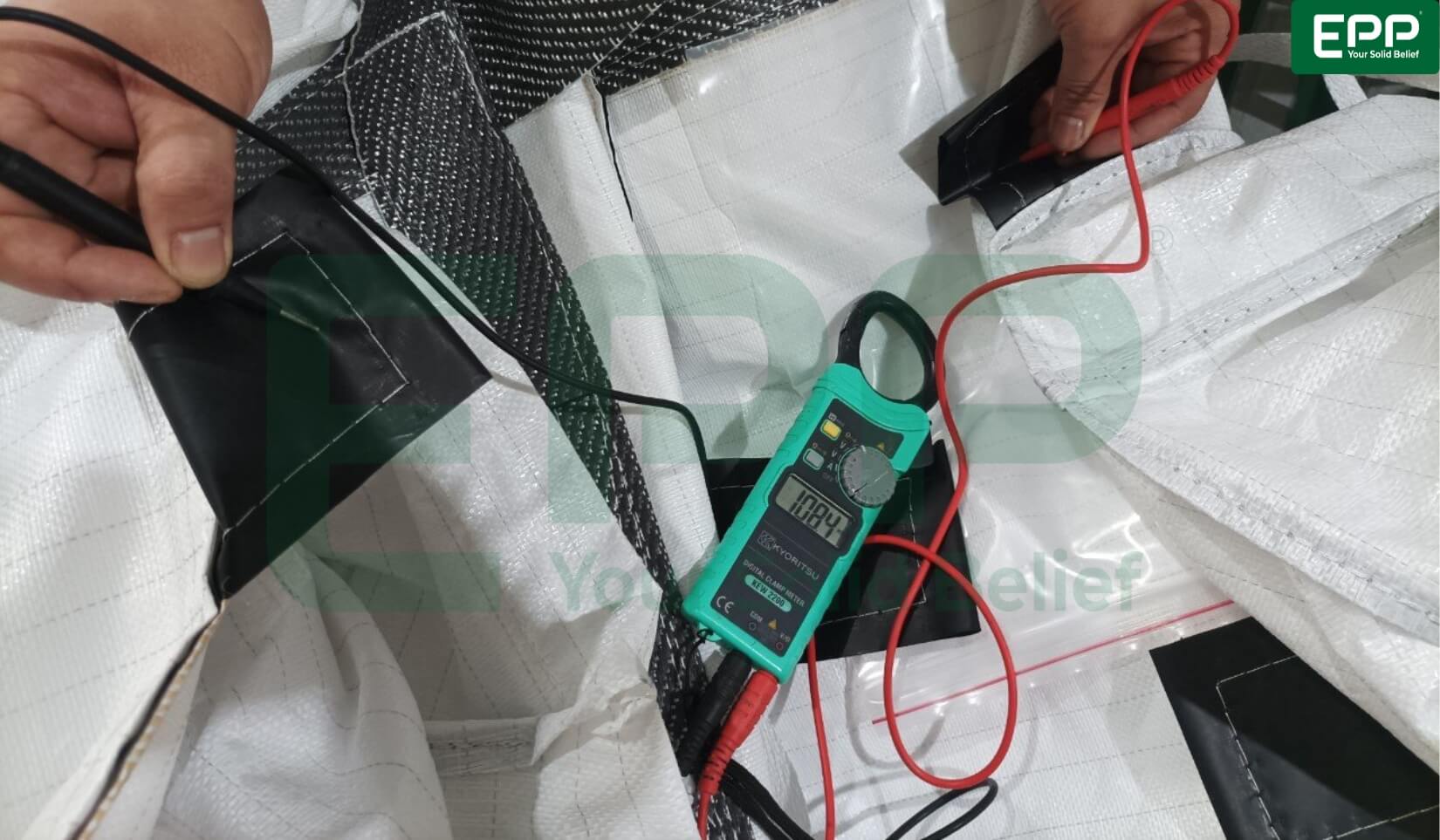
Testing the resistance of a type C conductive bag at EPP Vietnam
Frequently Asked Questions (FAQs)
Can I use Standard FIBC Bags for fine combustible powders?
No. Standard FIBC Bags (Type A) lack electrostatic protective features. High-speed discharging of fine combustible powders creates tribocharging, generating static sparks that can ignite explosive dust clouds or flammable vapors. You must specify Type B, Type C, or Type D bags based on your facility’s MIE risk assessment.

Is a Standard FIBC the same as a Type A FIBC?
Commercially, yes. When industry buyers ask for a standard jumbo bag, they are generally referring to a Type A bag designed for general non-hazardous dry bulk handling. However, “Standard FIBC” is a commercial term, whereas “Type A” is an official electrostatic safety classification defined under IEC 61340-4-4.
Does Type D FIBC require grounding?
No. Type D static dissipative FIBCs are engineered with quasi-conductive fibers that safely release static electricity into the atmosphere via low-energy corona discharge. The bag itself does not require a grounding wire connection. However, surrounding plant machinery, filling spouts, and operators must remain properly earthed.
When should I use Type B instead of Type A?
You should upgrade from a Type A to a Type B bulk bag when handling dry, combustible powders with an MIE > 3mJ in environments where no flammable solvent gases or vapors are present. Type B fabric features a breakdown voltage below 6 kV, preventing dangerous propagating brush discharges.
Strategic Procurement Summary
Selecting between Standard FIBC Bags and specialized antistatic bulk bags requires evaluating your material’s physical properties, processing speeds, and site safety zones. Using standard bags for non-hazardous materials optimizes your packaging budget, while deploying certified Type B, C, or D bags in hazardous areas protects your personnel and facilities.
Partner with EPP Vietnam—the leading FIBC supplier in Vietnam—to coordinate your packaging specifications, review technical datasheets, and request certified bulk samples for your global operations.
Website: epp.vn
Alibaba website: https://eppvietnam.trustpass.alibaba.com/
Email: [email protected] Hotline/ Whatsapps: +84 986 002 888