
FSSC 22000 Certification (Food Safety System Certification) serves as the primary benchmark for protecting global food supply chains. When primary or secondary bulk packaging comes into direct contact with food ingredients, the packaging material itself becomes a critical point of control.
This guide explores FSSC 22000 Certification, how it prevents bulk packaging contamination, how it compares to alternative standards, and how to specify certified bulk bags effectively.
What is FSSC 22000 Certification in the Food Packaging Sector?
FSSC 22000 is an international, Global Food Safety Initiative (GFSI)-benchmarked safety scheme specifically designed to audit and certify food safety management systems across the food supply chain. In the food packaging sector, it applies to facilities that manufacture rigid plastics, flexible films, paper, glass, and woven polypropylene bulk bags (FIBCs).
FSSC 22000 integrates three complementary pillars into a unified framework:
- ISO 22000:2018: The core Food Safety Management System (FSMS) framework establishing organizational structure, hazard assessment, and Hazard Analysis Critical Control Point principles.
- ISO/TS 22002-4: The sector-specific Prerequisite Program (PRP) tailored for packaging material manufacturing. It dictates operational conditions for hygiene, air/water quality, equipment design, pest control, and cross-contamination prevention.
- FSSC 22000 Additional Requirements (Version 6): Stringent criteria mandated by the FSSC Foundation covering food defense, food fraud mitigation, environmental monitoring, supplier management, and hygienic equipment design.

FSSC 22000 provides a complete food safety management blueprint for FIBC bulk packaging
How FSSC 22000 Prevents Bulk Packaging Contamination?
Because a single bulk bag holds thousands of pounds of food, localized contamination can ruin an entire production batch. FSSC 22000 mitigates these risks across five critical operational areas:
1. Control of Physical Foreign Bodies
Physical contamination—such as loose threads, plastic burrs, metal fragments, or dust—represents a major risk in FIBC manufacturing. FSSC 22000 enforces strict controls using ultrasonic fabric cutting that seals edges cleanly, high-pressure air washing, light-table inspections, shatterproof light fixtures, and inline metal detection prior to palletization.
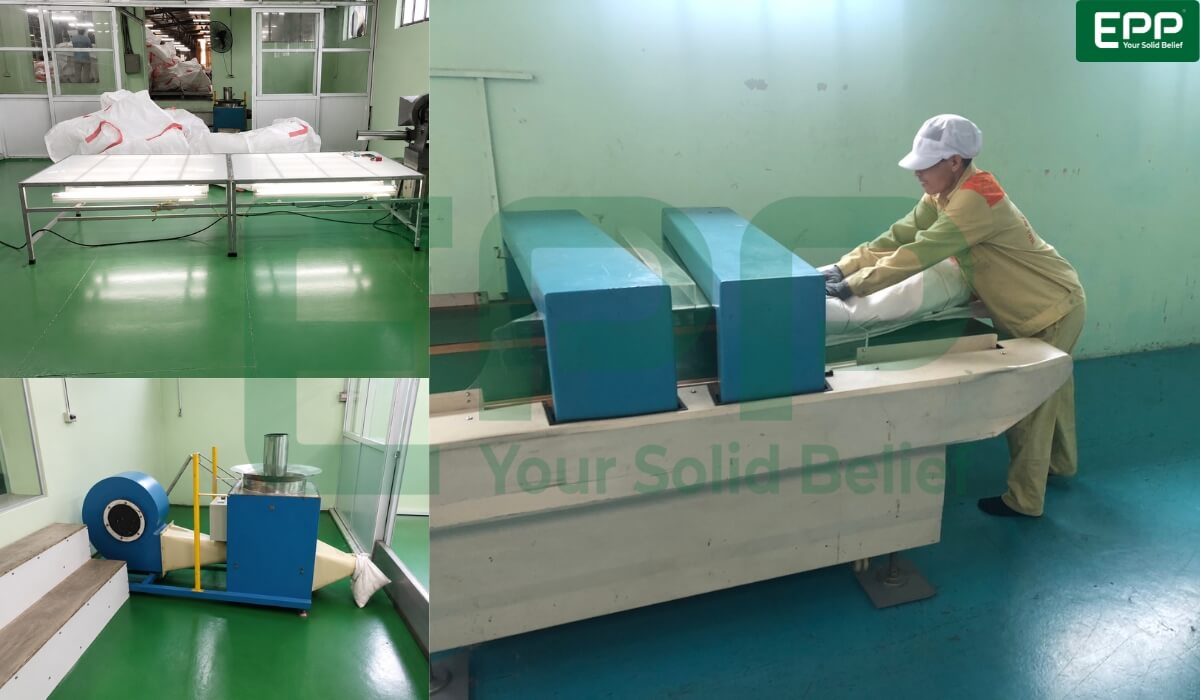
Clean room foreign object inspection in EPP Vietnam
2. Prevention of Chemical Migration
When bulk packaging holds acidic powders or fatty ingredients, chemical safety is vital. Facilities mandate 100% virgin polymer resins, strictly prohibiting post-consumer recycled (PCR) plastics in direct food-contact layers unless validated under global regulations (FDA 21 CFR 177.1520 or EU Regulation No. 10/2011). Auxiliary inputs like machine lubricants are certified NSF H1 food-grade, while exterior inks are non-migrating and solvent-free.
3. Hygienic Facility Environment
High-risk manufacturing operations (extrusion, liner blowing, and bag assembly) occur inside ISO Class 8 cleanrooms maintained under positive pressure with HEPA air filtration. Environmental entry points are guarded by automated fast-acting doors, insect light traps, and air curtains, while compressed air used for cleaning or inflating inner cavities is regularly tested for oil, moisture, and microbial impurities.
4. Hygienic Equipment Design & Maintenance
Under FSSC 22000 certification Version 6, production equipment must adhere to hygienic design principles, eliminating dead spaces where plastic dust and debris accumulate. Documented maintenance routines prevent mechanical wear from shearing off metal shavings, and visual/chemical clearance verification is required post-repair before restarting production lines.
5. Environmental Monitoring & Complete Traceability
Facilities execute Environmental Monitoring Programs (EMP) by regularly swabbing surfaces for pathogens like Listeria spp. and Salmonella. Every bulk bag is printed or tagged with a unique Lot Identification Code, guaranteeing complete backward-and-forward traceability from raw resin batches to the specific extrusion line, loom, sewing shift, and shipping pallet.
FSSC 22000 Certification vs. Other Certifications
Understanding how FSSC 22000 compares to other global certifications helps procurement and quality assurance teams select the correct packaging standard:
| Feature / Standard | ISO 22000 | FSSC 22000 | BRCGS Packaging Materials |
| GFSI Benchmarked | No | Yes | Yes |
| Foundation Base | Standalone ISO standard | Built on ISO 22000 + ISO/TS 22002-4 | Independent BRCGS Standard |
| Primary Focus | General Management System | Management System + Hazard Prevention | Operational Criteria & Process Control |
| Global Recognition | Broad international recognition | Global (Strong in Americas, Asia, EU) | Global (Strong in UK, Europe, Australia) |
| Audit Structure | 2-Stage Audit Cycle | 2-Stage Audit Cycle | 1-Stage Comprehensive Audit |
While ISO 22000 provides a broad management framework, it lacks GFSI benchmarking because it does not mandate specific Prerequisite Programs. FSSC 22000 fills this gap via ISO/TS 22002-4. GFSI-benchmarked standards are universally accepted by global retail conglomerates, eliminating redundant 2nd-party supplier audits.

FSSC 22000 Certification vs. Other Certifications
What is the FSSC 22000 Certification Process?
For a bulk bag manufacturer to earn and maintain FSSC 22000, they must complete a rigorous multi-step process:
- Gap Analysis & System Design: The facility establishes food safety management procedures, conducts hazard analyses (HACCP), and upgrades infrastructure to meet ISO/TS 22002-4 standards.
- Implementation & Internal Auditing: The system runs for a minimum of 3 to 6 months. Internal audits and management reviews verify operational compliance.
- Stage 1 Audit (Readiness Review): An accredited Certification Body (CB) reviews documentation, policies, and facility readiness.
- Stage 2 Audit (On-Site Verification): Auditors inspect facility operations, cleanroom controls, traceability logs, and employee practices.
- Certification & 3-Year Cycle: Upon resolving non-conformities, a certificate valid for three years is issued. Annual surveillance audits (including unannounced audits) are required to maintain valid status.
Step-by-Step: Specifying FSSC 22000 Bulk Bags
When procuring food-grade FIBC bulk bags, follow this step-by-step specification checklist:
Step 1: Determine Contact Type: Identify if the cargo has direct food contact (such as flour, sugar, or spices) or indirect contact (such as pre-packaged ingredients).
Step 2: Select Liner & Barrier System: Choose virgin Polyethylene (PE), Polypropylene (PP), or aluminum foil liners based on moisture, oxygen, and light sensitivity requirements.
Step 3: Specify Fabric & Bag Construction: Require 100% virgin PP resin, ultrasonic fabric cutting to prevent loose threads, sift-proof seams, and food-grade thread.
Step 4: Mandate Cleanroom Production: Require bag assembly, liner insertion, air washing, and packing to occur strictly inside an ISO Class 8 cleanroom environment.
Step 5: Request Compliance Package: Require the supplier to provide some global standards for big bags: obtain a current FSSC 22000 Certification verifying the scope explicitly covers FIBC/flexible packaging manufacturing, Migration Test Reports confirming FDA 21 CFR or EU 10/2011 compliance from accredited labs, and Certificates of Analysis (COA) verifying 100% virgin raw material purity.
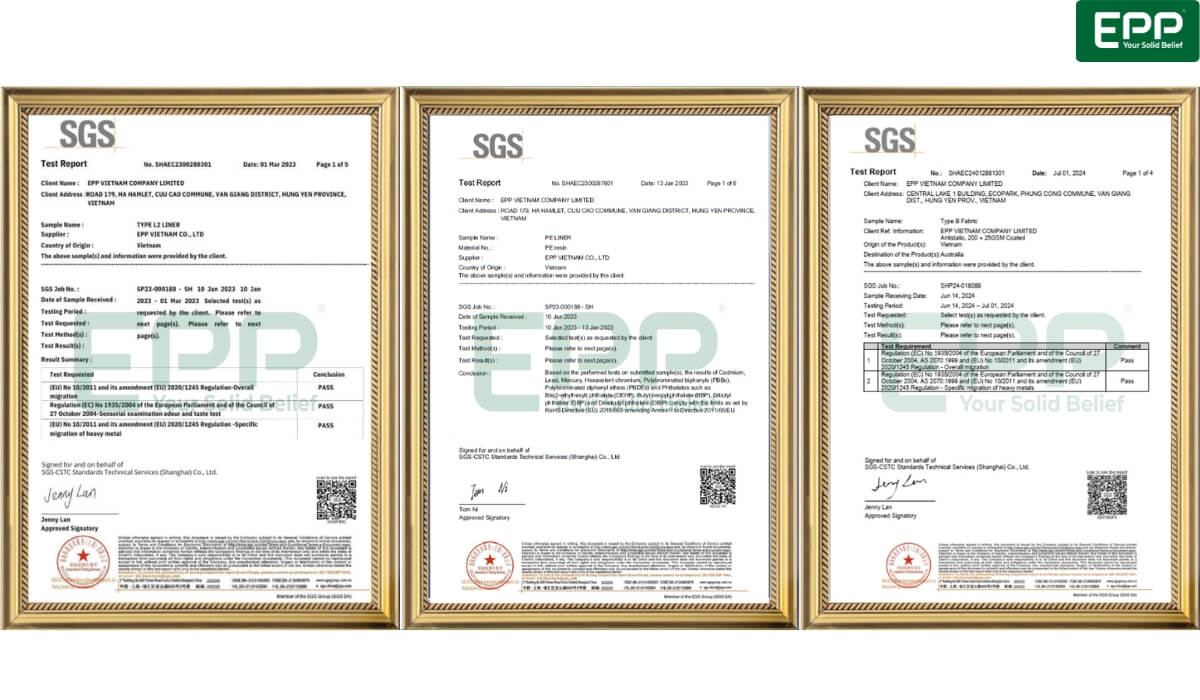
Other Food-grade Certificates from EPP Vietnam
Frequently Asked Questions About FSSC 22000 Certification
Does FSSC 22000 apply to non-food bulk packaging?
Yes. While developed for food safety, FSSC 22000 is widely adopted in pharmaceutical, nutraceutical, specialty chemical, and cosmetic industries where high cleanliness, cross-contamination control, and strict traceability are required.
Where can I source certified jumbo bags for sale?
Certified food-grade jumbo bags are available through specialized FIBC producers, industrial packaging distributors, or integrated supply chain partners. Enterprise buyers can explore certified jumbo bags for sale directly through EPP Vietnam’s dedicated FIBC product portal, supported by complete QA audit packages.
Which is better, BRC or FSSC 22000?
Neither is inherently “better”—both are GFSI-benchmarked standards recognized globally by tier-1 food manufacturers and retailers. BRCGS tends to be more prescriptive regarding site operations and is widely preferred in UK/European retail supply chains. FSSC 22000 focuses on system integration and is preferred by companies operating under existing ISO management systems (ISO 9001/14001).
Which certification is best for the food industry?
The best certification depends on customer and geographic mandates:
- Choose FSSC 22000 certification if your organization already relies on ISO management frameworks or supplies global multinationals across North America, Europe, and Asia.
- Choose BRCGS if your primary buyers are UK or European grocery chains with specific operational mandates.
- For universal acceptance, both FSSC 22000 and BRCGS satisfy major GFSI compliance criteria.
Secure Your Global Food Supply Chain
Specifying FSSC 22000-certified FIBC bulk bags safeguards cargo against physical, chemical, and biological contamination, protects brand reputation, and guarantees seamless customs clearance.
Partner with EPP Vietnam to access an audited, highly flexible, multi-plant supply network of FSSC 22000-certified FIBC packaging. Contact our technical team today to request product samples, review certification documentation, or receive a competitive procurement quote tailored to your global operations.
Website: epp.vn
Alibaba website: https://eppvietnam.trustpass.alibaba.com/
Email: [email protected] Hotline/ Whatsapps: +84 986 002 888