
In the food industry, reputation and safety are everything. One illness outbreak can close a business, trigger massive recalls, and permanently destroy consumer trust. This is why the Hazard Analysis and Critical Control Point (HACCP) system is not just a regulatory compliance measure—it is the ultimate insurance policy for any food-related operation.
HACCP is a systematic, preventative approach to food safety that identifies potential hazards and puts control measures in place to eliminate or reduce risk before it can affect the consumer. By implementing the 7 HACCP Principles, a business moves from reacting to problems to actively preventing them, safeguarding both the public and its long-term viability.
What is HACCP? A Foundation for Food Safety
HACCP is an internationally recognized standard designed to ensure food safety at every stage, from raw material production and procurement to manufacturing, distribution, and consumption. It is a management system that focuses on the analysis and control of three major hazard types:
- Biological Hazards: Bacteria (like Salmonella), viruses, and parasites.
- Chemical Hazards: Cleaning agents, pesticides, unapproved food additives, and residues from packaging materials.
- Physical Hazards: Foreign objects such as glass, metal fragments, plastic, or bone chips.
By focusing on process control, HACCP is crucial for maintaining the quality, hygiene, and ultimately, the profitability of a food business.
The 7 Principles of HACCP: Your Food Safety Blueprint
The HACCP plan is built upon seven clearly defined, mandatory steps. Successful implementation requires building a dedicated HACCP Team with cross-functional expertise and defining the product, its intended use, and a detailed process flow diagram before applying these principles:
| Principle | Action | Core Purpose |
| 1. Conduct a Hazard Analysis | Identify and list all potential hazards (biological, chemical, physical) that could occur at each step, and determine which are significant and must be controlled. | Identify the Dangers |
| 2. Determine the Critical Control Points (CCPs) | Identify the points, steps, or procedures in the process where control can be applied and is essential to prevent, eliminate, or reduce a significant hazard to an acceptable level. | Pinpoint the Control |
| 3. Establish Critical Limits | Set a maximum or minimum value to which a biological, chemical, or physical parameter must be controlled at a CCP to prevent a food safety hazard. (e.g., a specific temperature, pH, or time). | Set the Safety Bar |
| 4. Establish Monitoring Procedures | Define procedures for testing and observing the CCPs to ensure the Critical Limits are consistently being met. This involves who, what, when, and how the monitoring is performed. | Watch the Bar |
| 5. Establish Corrective Actions | Determine the actions to be taken when monitoring indicates a deviation from the Critical Limits (i.e., when control has been lost). This includes immediate correction and how the affected product will be handled. | Fix the Deviation |
| 6. Establish Verification Procedures | Establish procedures to confirm that the HACCP system is working effectively. This includes audits, calibration of monitoring equipment, and microbiological testing. | Check the System |
| 7. Establish Record-Keeping and Documentation Procedures | Maintain all records related to the HACCP plan, monitoring, corrective actions, and verification. This documentation is mandatory for compliance and traceability. | Prove It Works |
Case Study: Ensuring Packaging Safety with Food-Grade FIBC Bags
The HACCP system must extend beyond just the food processing line to all materials that come into contact with the product, including packaging. Flexible Intermediate Bulk Containers (FIBCs)—also known as jumbo bags or bulk bags—are critical for storing and transporting large quantities of dry food products like grains, sugar, flour, and spices.
The manufacturing of FIBC bags introduces potential physical and chemical hazards that must be controlled.
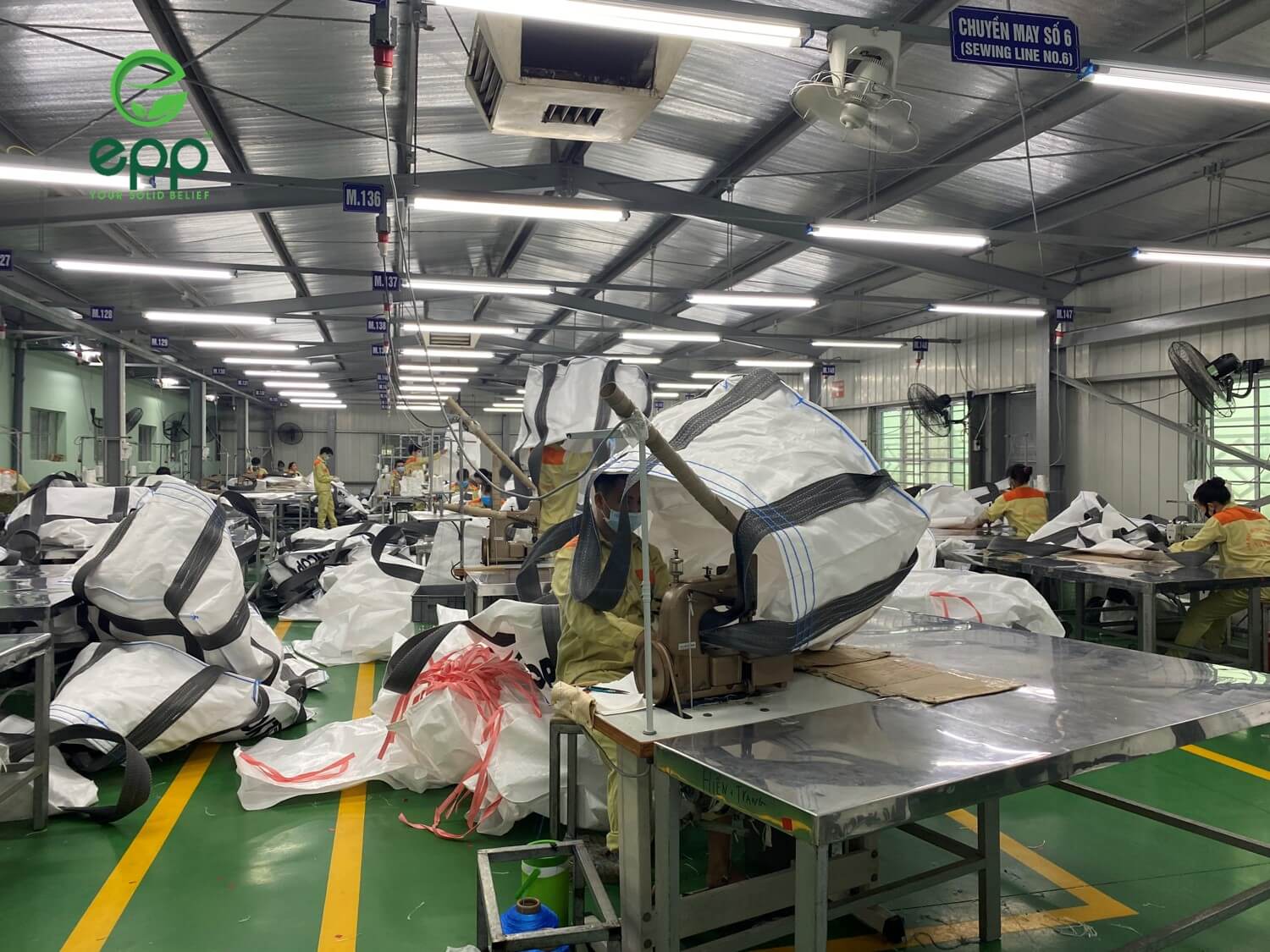
Companies like EPP Vietnam that manufacture food-grade FIBC bags must treat their production process with the same level of control as a food processor. They specifically adhere to global food safety standards, including HACCP, ISO 22000, and BRCGS (Global Standard for Packaging Materials).
Here is how the first three HACCP principles are applied to FIBC manufacturing:
- Principle 1: Hazard Analysis
- Hazards: Potential physical contamination from loose threads, metal fragments from machinery, chemical contamination from non-virgin plastic resin, or biological contamination from an unhygienic facility.
- Principle 2: Critical Control Point (CCP) Determination
- CCP 1: Raw Material Inspection: Ensuring 100% virgin polypropylene resin (FDA compliant) is used.
- CCP 2: Clean Room Environment: Maintaining a strictly controlled, positive air pressure production area equipped with HEPA filters to prevent airborne contamination.
- CCP 3: Post-Production Inspection: A metal detection and light table inspection step to check for physical contaminants like needles or stray threads before packaging.
- Principle 3: Critical Limits
- For CCP 1 (Resin): Resin must have a Certificate of Analysis (COA) guaranteeing 100% virgin, food-grade material.
- For CCP 2 (Clean Room): Air particle count must remain below the specified limit (e.g., ISO Class 8) and air pressure must be positively maintained to push contaminants out.
- For CCP 3 (Inspection): Zero Tolerance for metal fragments or foreign physical objects.

By embedding HACCP into their process, manufacturers like EPP Vietnam ensure that their FIBC bags are a protective layer, not a source of contamination, thereby protecting your business from a critical hazard in the supply chain.
The Business Benefits of a Strong HACCP Program
Implementing and maintaining the 7 HACCP Principles is a comprehensive investment that delivers tangible business advantages:
- Regulatory Compliance: It is mandated or strongly recommended by most global regulatory bodies (like the FDA, USDA, and EU), allowing for smoother international trade.
- Cost Reduction: By preventing product recalls, legal fees, and waste from spoilage, HACCP offers a significant return on investment.
- Increased Customer Trust: HACCP and related certifications (like BRC or FSSC 22000) demonstrate a proactive commitment to food safety, which is essential for securing contracts with major retailers and distributors.
- Enhanced Operational Efficiency: The system requires detailed process mapping and monitoring, which often exposes and resolves inefficiencies beyond just safety hazards.
HACCP is Not Optional, It’s an Investment
HACCP is more than just a regulatory checklist; it is the cornerstone of a proactive, robust food safety culture. By meticulously working through the 7 Principles—from conducting the initial Hazard Analysis to setting and monitoring Critical Control Points—food businesses establish a failsafe system designed to catch hazards before they ever reach the customer.
As demonstrated by the rigorous standards applied to packaging components like food-grade FIBC bags from EPP Vietnam, the system’s power lies in its ability to manage risk across the entire supply chain, down to the smallest detail.
Ultimately, by prioritizing HACCP, you are not simply avoiding fines or recalls; you are making a vital investment in your brand’s integrity, your customers’ health, and the long-term stability and growth of your business. In the food industry, prevention is the only truly sustainable strategy.