
In international logistics, agriculture, chemical processing, and mining, Flexible Intermediate Bulk Containers (FIBCs or jumbo bags) serve as the backbone of bulk material transport. While procurement teams often focus heavily on fabric weight, coating thickness, or bag dimensions, the safety and efficiency of the entire packaging system frequently hinge on a single, critical component: the lifting loops.
Understanding the engineering behind FIBC lifting loops—including material composition, structural stress distribution, and equipment compatibility—is essential for optimizing your logistics operations. This guide explores the technical mechanisms of lifting loops, the most common designs and materials, and how specifying the right loop configuration protects your workforce and cargo across global supply chains.
The Engineering Behind FIBC Lifting Loops
Lifting loops serve as the primary structural interface between an FIBC and material handling machinery. Supporting payload capacities ranging from 500 kg to over 2,000 kg, lifting loops endure immense force during transport, loading, and discharge. A failure at these attachment points risks catastrophic dropped loads, facility hazards, and severe supply chain delays.
Engineering reliable lifting loops involves balancing polymer chemistry, weave architecture, and dynamic strain mitigation. Standard loops are manufactured from high-tenacity polypropylene (PP) polymers extruded into flat tapes or multifilament yarns, then woven on narrow-fabric needle looms to achieve high tensile strength relative to weight.
The core challenge in loop design lies in managing static loads versus dynamic forces. While an FIBC may be rated for a specific static Safe Working Load (SWL), lifting and moving the bag creates dynamic stress spikes. Accelerating a forklift, navigating uneven warehouse floors, or hoisting via crane introduces shock loads up to 2.5 times the static weight. Premium lifting loops are engineered with targeted elongation thresholds, allowing the webbing to absorb sudden kinetic shocks without snapping or tearing the bag’s main body fabric.
Popular Types of Lifting Loops Material for FIBC Bags
The material composition and weave pattern of the webbing determine its strength, flexibility, and resistance to environmental stress.
- Polypropylene (PP) Multifilament Webbing: The industry standard for bulk bag lifting loops. Made by twisting hundreds of fine PP fibers into a single yarn, this material offers high tensile strength, excellent resistance to moisture and chemicals, and a flexible texture that reduces wear on crane hooks. UV-stabilizing additives are added during extrusion to prevent degradation from sun exposure.
- PP Monofilament Webbing: Constructed from single, thicker strands of synthetic fiber, monofilament webbing provides high structural rigidity. This firmness allows loops to stand upright automatically without slumping, making it ideal for automated filling lines and single-operator forklift setups.
- Polyester (PET) Webbing: Chosen for high-precision environments where minimal stretch is required. Polyester exhibits lower elongation under load compared to polypropylene, ensuring predictable bag clearance during crane hoists. It also offers superior UV resistance and higher temperature thresholds, though at a higher material cost.

High-tensile PP lifting loops are engineered to withstand dynamic working loads
Popular FIBC Bag Lifting Loop Options
Cross-Corner Loops
Cross-corner loops are one of the most widely used lifting loop designs in FIBC bags. These loops are attached diagonally across the corners of the bag, which helps to distribute the weight evenly. This design enhances stability during lifting, making it ideal for heavy loads. Cross-corner loops are particularly beneficial when bags need to be lifted from various angles, as they allow for better maneuverability.
Side-Seam Loops (Corner Loops)
Side-seam loops, often referred to as corner loops, are another popular option. These loops are integrated into the side seams of the bag, offering a different lifting mechanism compared to cross-corner loops.
Side-seam loops provide excellent strength and are less prone to tearing, making them a reliable choice for heavy-duty applications. However, they may not offer the same level of maneuverability as cross-corner loops.To understand how loop geometry alters stress pathways, read our technical breakdown on corner loop or cross-corner loop configurations.
Single / Double Loops
Single and double loops are designed based on the specific lifting needs of the FIBC bag. Single loops are sufficient for lighter loads, whereas double loops provide additional strength and stability for heavier materials. The choice between single and double loops should be based on the weight of the contents and the lifting method used. For example, double loops can be advantageous when using cranes or hoists that require extra security.
Sleeve Loops (Tunnel Loops)
Sleeve loops, also known as tunnel loops, are a more innovative option for FIBC bags. These loops are created by sewing a sleeve into the fabric, allowing for a more streamlined design. Sleeve loops can offer enhanced durability and flexibility, as they can be adjusted or replaced easily. This type of loop is particularly useful when bags need to be lifted frequently or when they are used in varying lifting conditions.
Fully Belted Loops
Webbing extends down the full vertical length of the bag walls and loops under the bottom base. For extreme payloads or maximum safety margins, see how FIBC bulk bags with fully belted loops distribute heavy cargo weight across the entire bag structure.
Stevedore Straps
Stevedore straps are specialized lifting loops that offer a robust solution for heavy-duty applications. These straps are typically wider and made from tougher materials, providing additional strength and support. Stevedore straps are often used in industries where bags are lifted frequently or where heavy materials are involved. Their design ensures minimal wear and tear, making them a reliable option for transporting bulk materials.
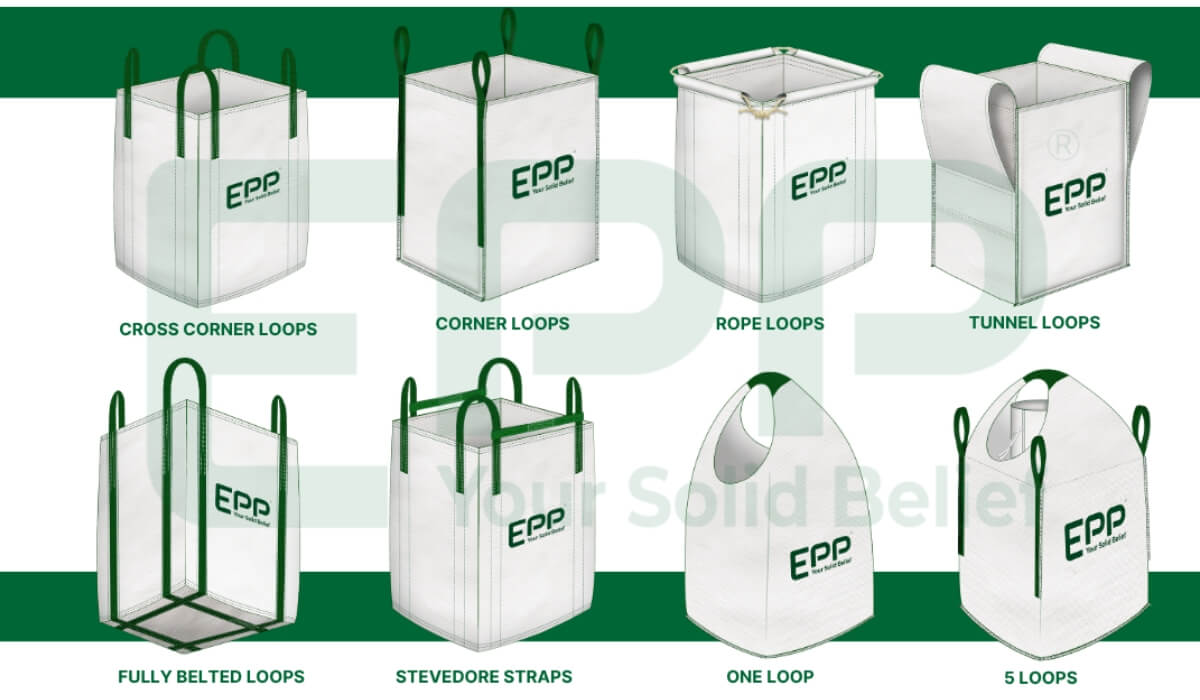
Common Types lifting loops for bulk bags
Safety and Design Considerations for FIBC Lifting Loops
Ensuring the operational safety of an FIBC requires precise design parameters at every attachment point:
- Load Capacity & Safety Factor (SF): Loops must be engineered to comply with ISO 21898 standards. Single-trip bulk bags typically mandate a 5:1 Safety Factor (meaning a loop assembly rated for 1,000 kg must withstand a 5,000 kg cyclic load before failing), while reusable multi-trip bags require a 6:1 SF.
- Stitch Patterns & Anchor Mechanics: The junction where the loop attaches to the bag body is subject to intense shear force. Manufacturers use automated, computer-controlled sewing machines to apply reinforced stitch patterns like cross-box, double-W, or heavy-duty bar-tacking. These patterns distribute stress across a wider fabric surface area, preventing seam pull-out under strain.
- Equipment Matching: Loop style must align with local handling machinery. For instance, narrow forklift tines require wider loop openings to prevent side-chafing, while crane systems benefit from stevedore straps or single-point lift systems.
How Lifting Loops Impact Operational Efficiency?
Lifting loops influence processing speed, labor requirements, and overall throughput during loading and discharging operations.
In high-speed, automated filling plants, super sacks are suspended from overhead support arms by their loops. If loops are limp or improperly sized, line operators must manually stretch and hook each loop, creating production bottlenecks. Utilizing stiffened monofilament or cross-corner loops allows automated equipment or single operators to mount jumbo bags in seconds.
During discharge, balanced loop tension ensures the bag hangs perfectly plumb over receiving hoppers. Correct alignment prevents tilting, promotes consistent gravity-driven flow, and eliminates product retention in bottom folds. To optimize integration with your facility’s machinery, match your loop selection with the top 5 FIBC bag top designs for every filling system.
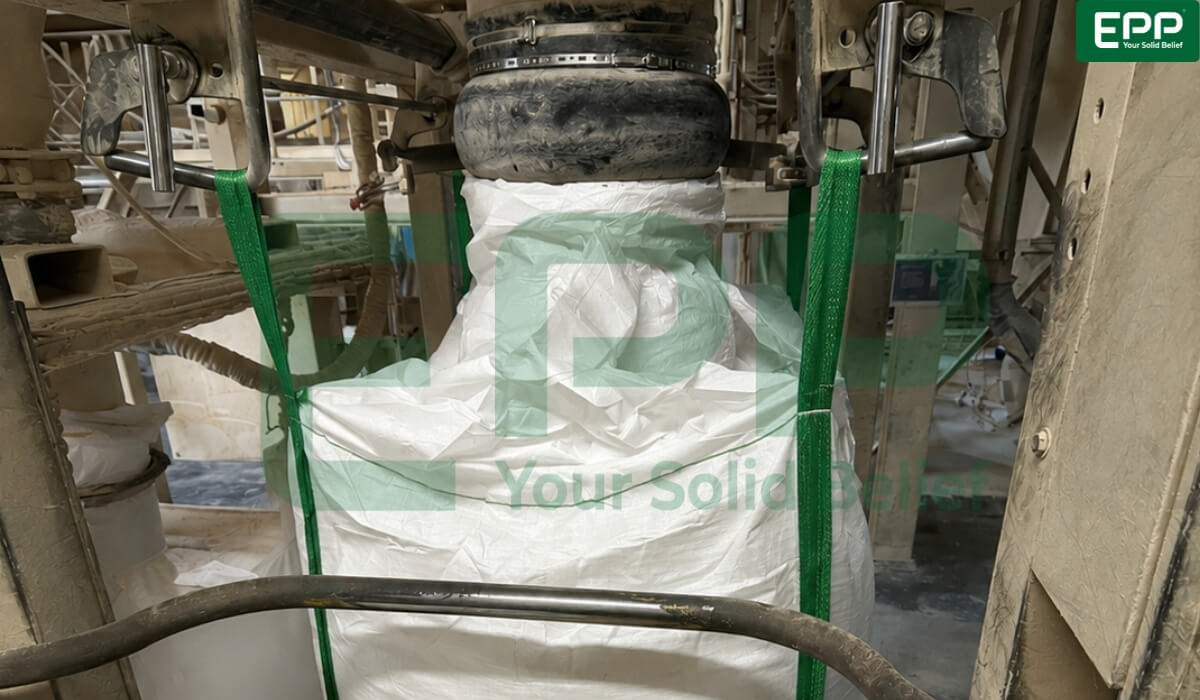
Properly specified lifting loops align perfectly with automated filling hooks
Choosing the Right Lifting Loop for FIBC Bags

No single loop design fits every international logistics network. A chemical manufacturer moving powder via automated conveyors requires different specifications than a mining operation hoisting bulk ore onto cargo ships.
Key variables when customizing lifting loops include:
- Forklift Tine Dimensions: Customizing free-loop height to match tine thickness prevents friction tearing.
- Container Overhead Space: Adjusting loop length to maximize vertical stacking height inside standard ocean freight containers.
- Color Coding: Using custom-dyed loop webbing to enable rapid visual identification of material grades or batch lots in large distribution centers.
Navigating these technical specifications requires an experienced supply chain partner. As a leading FIBC supplier in Vietnam with over two decades of technical expertise, EPP Vietnam connects international enterprise buyers with an audited network of top-tier manufacturing facilities across Southeast Asia. Rather than offering one-size-fits-all factory options, EPP Vietnam provides independent technical consultation to ensure your bags meet strict safety, regulatory, and mechanical criteria. Explore our complete range of engineered custom bulk bags to optimize your bulk packaging performance today.
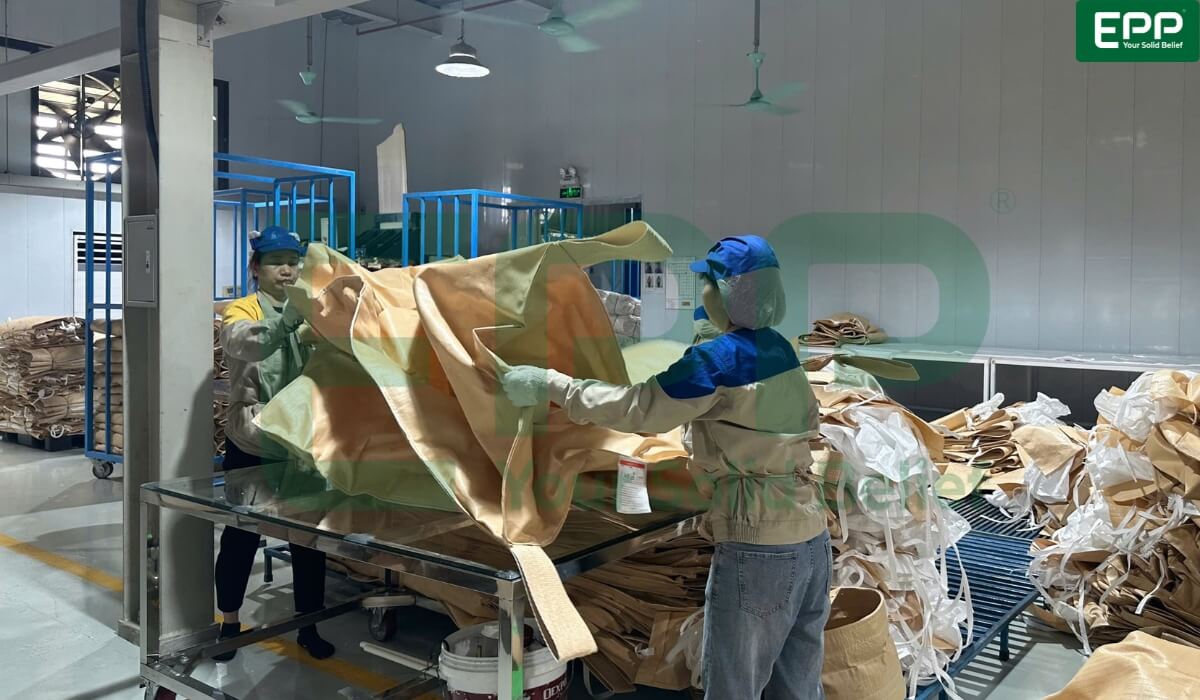
EPP Vietnam enforces strict pre-shipment inspections on all custom bulk bag
Securing Your Global Cargo with Precision Engineering
Lifting loops are far more than mere fabric handles; they are the fundamental safety and operational bridge in your bulk handling system. Selecting the proper material, loop configuration, and stitch engineering prevents costly load failures, protects warehouse personnel, and maximizes throughput across automated filling and discharging systems.
Whether your supply chain requires standard four-point corner loops, rigid cross-corner designs for single-operator forklifts, or fully belted loops for extreme payloads, precision specification is paramount. Partnering with EPP Vietnam gives you direct access to expert technical guidance and an audited network of certified manufacturing facilities. Contact EPP Vietnam today to analyze your material handling setup and engineer the ideal bulk bag solution for your international operations.
Website: epp.vn
Alibaba website: https://eppvietnam.trustpass.alibaba.com/
Email: [email protected] Hotline/ Whatsapps: +84 986 002 888