Where to buy quality cheap pp super sacks is the single most frequent question I have encountered in my 20 years of manufacturing and exporting industrial packaging. Every procurement manager wants to cut costs, but in the heavy-duty logistics world, the word “cheap” carries a hidden weight. If you buy a cheap pen and it breaks, you throw it away. If you buy a cheap 1-ton bulk bag and it breaks, you face product loss, facility downtime, and potentially catastrophic safety liabilities.
The goal isn’t to find the cheapest bag; it’s to find the most cost-effective bag that still performs safely. In this guide, I will share the sourcing secrets I’ve learned over two decades to help you secure high-quality Flexible Intermediate Bulk Containers (FIBCs) at wholesale rates that protect your bottom line.
Defining Quality Cheap PP Super Sacks
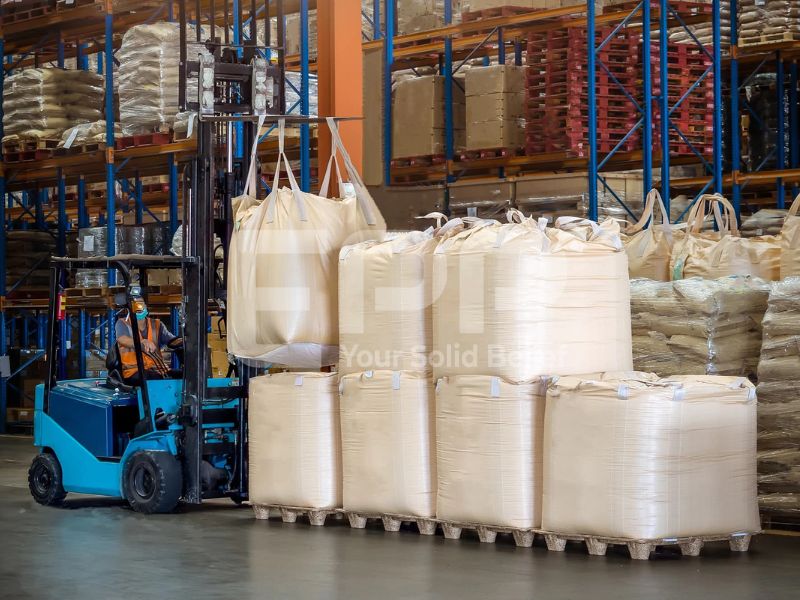
Before we talk about where to buy, we must define what we are buying. In my factory, we often say that “quality is free, but failure is expensive.” To get a “quality cheap” bag, you are looking for a product that strips away unnecessary features but strictly adheres to the non-negotiable engineering standards.
A true “value” bag must still possess:
- 100% Virgin Polypropylene Resin: Never accept PP super sacks made from recycled material for heavy loads. Recycled plastic lacks the tensile strength and consistency required for a 1-ton lift. Cheap bags often hide recycled fillers that weaken the fabric.
- Certified 5:1 Safety Factor (SF): This means the bag has been tested to hold five times its rated capacity (e.g., 5,000 kg for a 1,000 kg bag) without failing. A “cheap” bag with a 3:1 safety factor is not a bargain; it is a liability.
- Correct Fabric Weight (GSM): Unscrupulous suppliers cut costs by using thinner fabric (e.g., 140 GSM instead of the required 160 GSM). Always verify the fabric weight matches the Safe Working Load (SWL).
The Top 3 Sources for Cheap PP Super Sacks
When sourcing, you typically have three channels. The right choice depends entirely on your volume and patience.
1. Direct from Global Manufacturers (Best for High Volume)
This is where the real savings are. By going straight to the factory source, you eliminate the importer, the wholesaler, and the local distributor markups.
- The Price: Lowest possible unit price (Factory Gate Price).
- The Trade-off: You need to buy in Full Container Loads (FCL)—usually 10,000+ bags—and plan for 30-45 day shipping times.
2. Domestic Distributors/Importers (Best for Speed)
These companies buy from the manufacturers listed above and stock them in local warehouses.
- The Price: Higher unit price (often 20-30% markup) to cover warehousing, duties, and shipping.
- The Trade-off: You get instant availability and can buy smaller quantities (pallets instead of containers).
3. B2B Online Marketplaces
Platforms like Alibaba or Indiamart offer transparent pricing comparisons but come with high risk. Without a pre-existing relationship or a third-party audit, quality consistency can be a gamble.
Which Country Offers the Best Price?
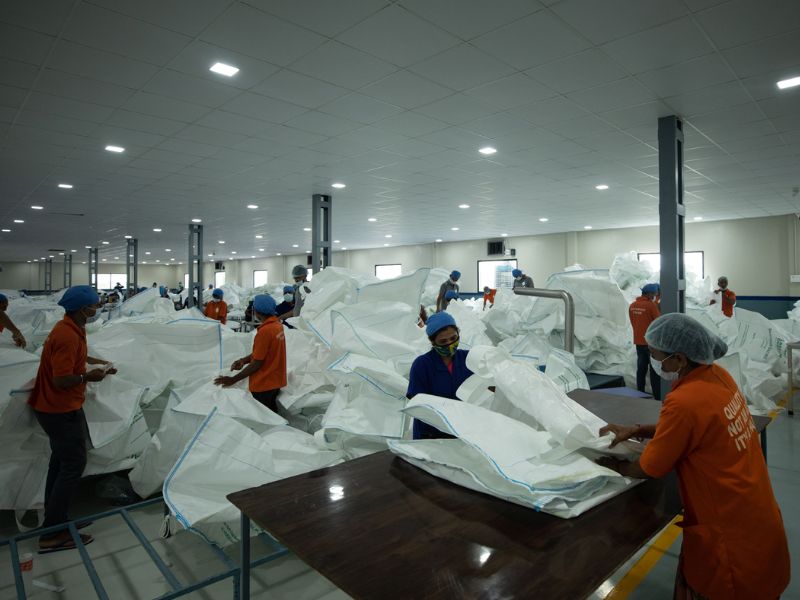
The geography of manufacturing has shifted significantly in the last five years. As an exporter, I analyze labor rates, resin availability, and trade tariffs daily. Here is the current landscape for 2026:
| Country | Primary Advantage | Best For | Trade-offs / Notes |
|---|---|---|---|
| Vietnam | Price & Tariff Leader | Global buyers (US/EU) prioritizing cost-efficiency and safety standards. | Labor costs are highly competitive (~$3.00/hour). Favorable tariff status often avoids anti-dumping duties, lowering the Total Landed Cost. |
| India | Volume Giant | Buyers needing massive scale and high volumes of standard, commodity-grade bags. | Excellent unit pricing driven by sheer production volume, but shipping times anf quality can vary. |
| China | Specialized Bags | Buyers needing highly complex, technical bags (e.g., Type C/D anti-static, complex baffle bags). | Rising labor costs and significant anti-dumping duties (especially in the US) increase final cost for standard PP super sacks. |
Strategies to Lower Your “Total Landed Cost”
If you are already buying from the right country, how do you get the price lower? You stop looking at the price per bag and start looking at the price per shipment.
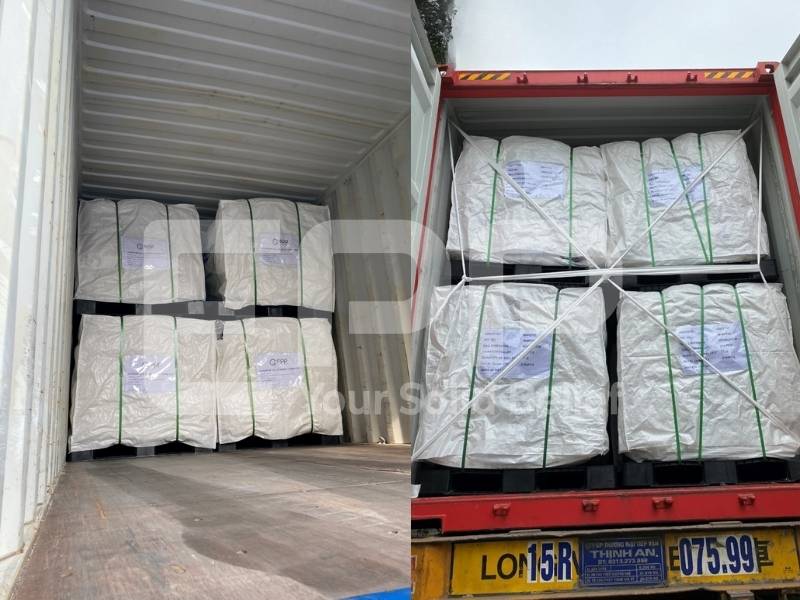
- Maximize Container Loads: Shipping “air” is expensive. Use a supplier who has high-tonnage hydraulic baling presses. By compressing the bags tightly, we can fit 20% more units into a 40ft shipping container. This drastically lowers the freight cost per bag.
- Standardize Your Specs: Custom PP super sacks require custom setup times on the looms. If you can switch to a standard size (e.g., 35x35x45 inches), you allow the factory to run continuous production, which lowers their cost—savings they can pass to you.
- Mix-Container Ordering: This is a pro tip. Instead of ordering one container of cement bags and waiting months to need a container of fertilizer bags, find a supplier who allows mixed loading. You can buy 3-4 different bag types in one shipment to meet the MOQ threshold without overstocking your warehouse.
When a Price is Too Good to Be True
In my years of auditing factories, I’ve seen exactly how some suppliers achieve “miracle” low prices. Beware of these red flags:
- No UV Stabilization: If your PP super sacks start disintegrating after two weeks in the sun, the supplier skipped the UV inhibitor additive. It saves them pennies but costs you your inventory.
- Inconsistent Weights: Weigh a sample of 10 jumbo bags. If the weight fluctuates by more than 5%, their quality control is non-existent.
- The “Recycled” Trap: If the fabric looks dull, greyish, or smells burnt, it contains recycled pellets. Do not use this for heavy lifting.
EPP Vietnam Advantage for Quality and Cheap PP Super Sacks
If you are looking for that intersection of low cost and high reliability, EPP Vietnam has positioned itself as the strategic partner for global buyers.
What makes EPP advantage distinct is vertical integration. EPP leverages the strategic advantages of the Vietnamese market—low labor costs and favorable export tariffs—while maintaining a management team obsessed with international quality standards (ISO 9001, ISO 21898). We offer the ability to handle massive MOQs for rock-bottom pricing, but we also retain the agility to manage mixed-container orders for diverse product lines.

When you source from EPP Vietnam, you aren’t just buying a “cheap bag.” You are securing a 5:1 Safety Factor, 100% Virgin PP product at a factory-direct price point that domestic distributors simply cannot match. That is the definition of “Quality Cheap.”
Conclusion
After two decades in the FIBC industry, the single most valuable lesson I can share is this: The cheapest unit price is rarely the best deal. Strategic sourcing for quality cheap PP super sacks is about securing a partnership that guarantees performance and minimizes risk. You now know to insist on 100% Virgin PP and a certified 5:1 Safety Factor—these are the non-negotiables that protect your inventory and your people.
By shifting your focus from the unit price to the Total Landed Cost—and leveraging geographic advantages like those found in Vietnam—you can achieve significant long-term savings. The best wholesale rate is not a low number on an invoice; it’s the cost of a bag that never fails.
Consult with a certified manufacturer like EPP Vietnam to assess your Total Landed Cost today. Stop buying cheap PP super sacks; start investing in value.