
Modern logistics centers depend heavily on the frontline execution of floor personnel. Equipping warehouse workers with specialized operational competencies directly dictates facility safety, order accuracy, and overall supply chain profitability. Inefficient handling practices lead to cargo damage, severe workplace injuries, and costly fulfillment delays.

Essential Skills for Warehouse Workers in Modern Logistics
As a global bulk packaging manufacturer supplying major logistics hubs, EPP Vietnam observes how trained labor transforms warehouse productivity. This guide details the core technical, safety, and inventory management capabilities required across general warehouse operations.
To understand how facility design impacts daily workflow execution, logistics managers can review our guide on how a public warehouse streamlines logistics to optimize layout efficiency.
Understanding the Role of Warehouse Workers
The modern warehouse worker is far more than a manual laborer. Within automated supply chains, floor personnel act as active data managers, safety stewards, and quality control inspectors who directly protect company bottom lines.
Frontline staff process receiving shipments, execute high-bay putaways, conduct perpetual cycle counts, and stage outbound trailers under strict delivery schedules. When personnel lack proper training, facilities experience inventory variance, high product write-offs, and increased insurance premiums.
Essential Skills for Warehouse Workers
Building a resilient workforce requires balancing hard technical capabilities with critical safety protocols and soft skills. Organizations that systematically train workers across these core competencies experience higher throughput and lower employee turnover.
Technical & Equipment Operation Skills
Industrial storage facilities rely on heavy mechanical equipment and real-time digital tracking tools. Warehouse workers must demonstrate technical literacy to move inventory safely while keeping WMS records accurate.
Material Handling Equipment (MHE) Mastery
Safe operation of material handling machinery remains a fundamental requirement for warehouse staff. Personnel must hold valid operational certifications for sit-down forklifts, reach trucks, order pickers, and motorized pallet jacks.
Daily equipment pre-checks prevent sudden mechanical failures during busy shifts. Operators must inspect hydraulic lines, brake responsiveness, tire wear, and battery charge levels before starting any operational work.
Warehouse Management System (WMS) & Technology Literacy
Digital platforms govern modern inventory control. Warehouse workers must fluently operate handheld RF barcode scanners, wearable RFID readers, and voice-directed picking devices.
Every item movement—from receiving docks to putaway locations—requires immediate entry into the WMS. This real-time data capture maintains 100% stock visibility across complex global distribution networks.
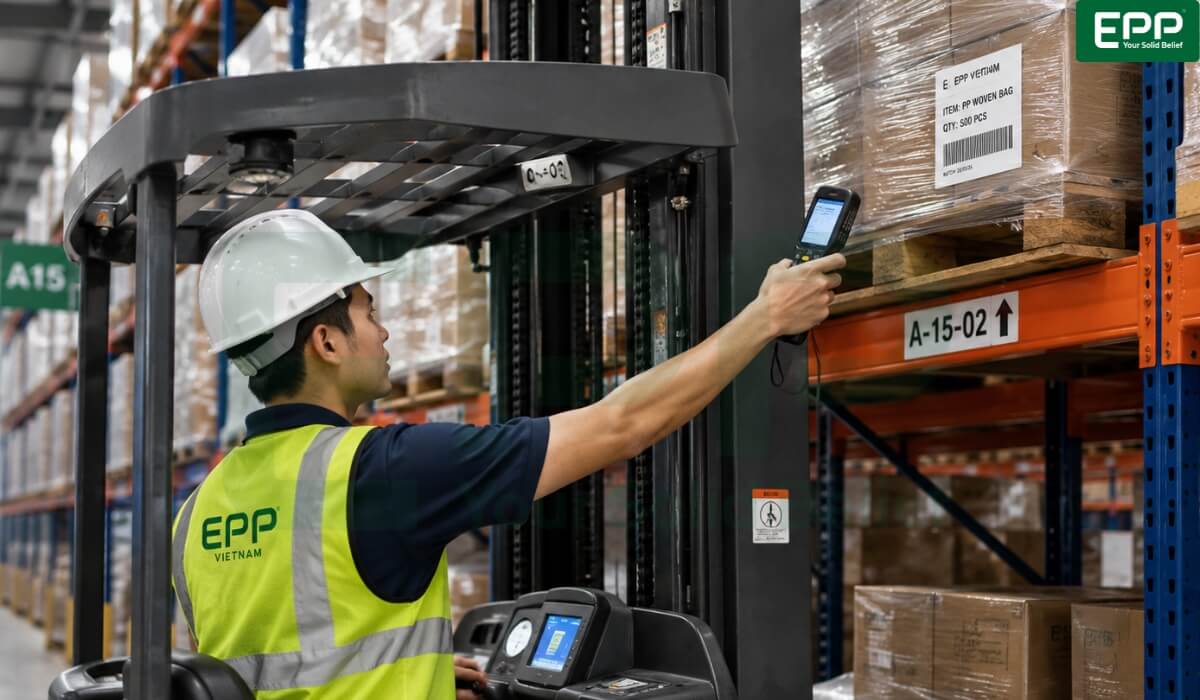
Equipping warehouse workers with MHE mastery and WMS literacy secures operational data accuracy
Inventory Control & Order Fulfillment Skills
Accurate inventory management forms the backbone of successful supply chain execution. Warehouse personnel must execute systematic stock handling procedures to minimize picking errors and prevent product expiration.
Picking, Packing, and Sorting Accuracy
Order fulfillment demands strict adherence to picking methodologies such as Discrete, Zone, Batch, and Wave picking. Workers must cross-reference item SKUs, descriptions, and quantities against physical pick lists or scanner prompts.
Before staging orders for outbound transit, staff must verify secondary packaging stability. Proper stretch-wrapping, banding, and strapping prevent cargo shifting inside shipping containers.
Stock Auditing & Cycle Counting
Maintaining high inventory accuracy requires perpetual auditing routines. Warehouse workers conduct regular cycle counts to identify stock discrepancies without shutting down entire facilities for physical inventories.
Workers must strictly enforce First-In, First-Out (FIFO) and Last-In, First-Out (LIFO) inventory rotation rules. Proper rotation protects perishable goods and industrial raw materials from shelf-life degradation.

Perpetual cycle counts executed by skilled personnel eliminate stockout discrepancies
5. Health, Safety, and Ergonomic Competencies
Warehouse environments present inherent physical hazards. Equipping personnel with strong safety awareness and ergonomic habits protects worker health, reduces absenteeism, and ensures compliance with OSHA standards.
Physical Ergonomics & Injury Prevention
Repetitive manual lifting causes severe musculoskeletal disorders if executed incorrectly. Warehouse workers must master neutral-spine lifting techniques, bending at the knees rather than flexing the lower back.
Personnel should recognize personal physical limits. Staff must utilize mechanical lifting aids or request team lifts whenever handling individual loads exceeding 25 kg (55 lbs).
Workplace Safety Compliance & Hazard Identification
Maintaining a safe workplace requires continuous hazard monitoring. Workers must keep main travel aisles free of debris, discarded pallets, and stray stretch film to eliminate slip, trip, and fall risks.
Staff handling hazardous materials (Hazmat) must wear appropriate Personal Protective Equipment (PPE). Personnel need immediate familiarity with Safety Data Sheets (SDS) and chemical spill containment protocols.
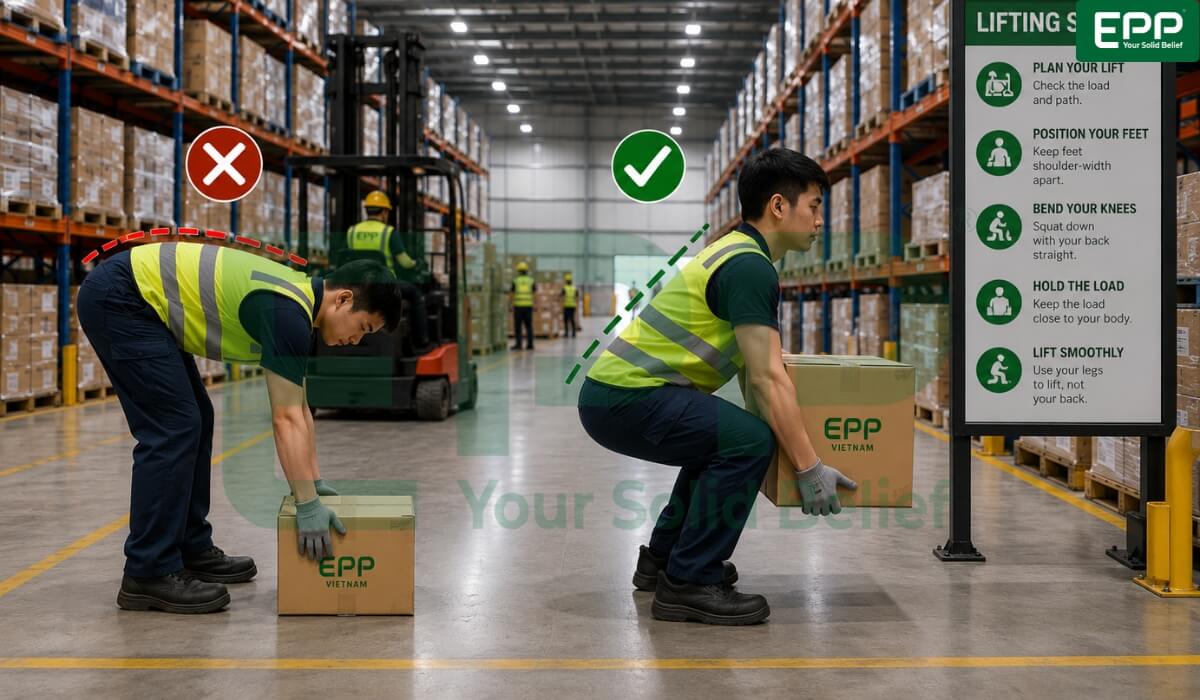
nforcing ergonomic lifting techniques and PPE compliance drastically reduces workplace injuries
6. Optimizing Warehouse Logistics & Material Quality
Frontline staff directly influence spatial efficiency and cargo protection within the facility. Selecting and inspecting durable packaging materials prevents product loss during handling and long-term storage.
Space Utilization & Cargo Staging
Efficient space utilization depends on structured palletization practices. Workers must apply interlocking block patterns or aligned column stacking based on carton compression ratings and pallet weight limits.
Staging outbound loads requires strategic weight distribution across trailer floors. Proper cargo placement prevents vehicle axle overload and minimizes transit damage during road or ocean transport.
Packaging Material Inspection
Warehouse workers must inspect incoming and outgoing packaging units for structural integrity. Damaged pallets, torn stretch film, or compromised sacks must be re-packaged before rack storage.
Utilizing premium packaging like heavy-duty Vietnam woven sacks prevents bag ruptures and eliminates fine powder leaks on facility floors. Warehouse leaders seeking deeper operational insights can explore our 5 expert tips for effective warehouse management to improve overall plant throughput.

Inspect packaging integrity during staging to ensure cargo remains secure throughout transit
7. Soft Skills & Operational Adaptability
Technical knowledge must be paired with effective interpersonal abilities. Modern warehouse operations require clear communication and rapid adaptability to evolving automated technologies.
Communication & Team Coordination
Clear communication prevents accidents in busy warehouse environments. Workers must use standardized radio protocols and hand signals during multi-person loading, crane rigging, or blind-corner maneuvering.
Staff must report safety near-misses, equipment flaws, and inventory errors immediately to supervisors. Early reporting prevents minor operational issues from escalating into costly disruptions.
Adaptability to Warehouse Automation
Modern distribution facilities increasingly deploy Automated Guided Vehicles (AGVs), Autonomous Mobile Robots (AMRs), and automated sorting conveyors. Warehouse workers must adapt quickly to working alongside robotic systems.
Flexibility allows personnel to manage sudden seasonal order spikes smoothly. Adaptable workers quickly master new digital tools and adjusted picking workflows.
Frequently Asked Questions (FAQs)
What qualifications do I need to become a warehouse worker?
Most warehouse positions do not require formal education beyond a high school diploma. However, having relevant experience or certifications, such as forklift operation, can enhance your employability.
Is warehouse work physically demanding?
Yes, warehouse work can be physically demanding. Workers often lift heavy items, stand for long periods, and perform repetitive tasks. Physical endurance is an important skill for this job.
What are the typical working hours for warehouse workers?
Warehouse workers may work various shifts, including nights, weekends, and holidays. The hours can vary depending on the employer and the specific needs of the warehouse.
Are there opportunities for advancement in warehouse jobs?
Yes, there are opportunities for advancement in warehouse jobs. With experience and additional training, workers can move into supervisory roles or specialized positions, such as inventory management or logistics coordination.
How can I improve my chances of getting hired as a warehouse worker?
To improve your chances of getting hired, focus on developing essential skills, gaining relevant experience, and obtaining certifications. Tailoring your resume to highlight these qualifications can also help attract potential employers.
Conclusion
Warehouse workers are essential to the logistics industry, and their skills are in high demand. By developing the necessary skills and pursuing ongoing training, you can enhance your career prospects and contribute to the efficiency of supply chains.
Optimizing warehouse performance requires a skilled workforce paired with high-quality material handling solutions. Protect your inventory, eliminate spills, and streamline facility operations with industry-grade bulk packaging from EPP Vietnam.
Contact our technical logistics team today to request high-tensile packaging samples, custom specification audits, and direct factory quotes!