Builder bags for sand, also known globally as FIBCs or bulk bags, are the backbone of modern construction logistics. When you are moving metric tons of abrasive materials like river sand, silica, or aggregates, the structural integrity of your packaging isn’t just a matter of convenience—it is a matter of site safety and operational profit.
Selecting the right supply partner is a critical risk-management decision for your supply chain. In this guide, we explore the top three global powerhouses: India, Turkey, and Vietnam.
Criteria for “High-Quality” Builder bags for sand
Before we look at where to buy, we must define what to buy. Sand is deceptively heavy and “fluid” under pressure.
High-quality builder bags for sand must withstand heavy
dynamic loads and harsh environment exposures. Sand typically exhibits a bulk density ranging between 1,400 kg/m³ and 1,600 kg/m³. This heavy-weight concentrated in a small volume exerts intense lateral pressure against the container walls during transit and hoisting.

-
Fabric Weight and Tensile Strength: Premium builder bags utilize 100% virgin Polypropylene (PP) resin, woven to a heavy fabric weight—typically between 140 GSM and 210 GSM. Virgin resin maintains structural elasticity and tensile resistance, preventing fabric tearing under stress.
-
Safety Factor (SF) & Load Rating: Heavy-duty applications require a minimum Safe Working Load (SWL) of 1,000 kg to 1,500 kg. Bags manufactured under ISO 21898:2024 compliance must pass a 5:1 SF rating for single-trip use or 6:1 SF for multi-trip applications.
-
UV Stabilization: Aggregates are frequently stored in open-air yards. Premium bags feature UV inhibitor additives rated to withstand at least 1,600 hours of direct sunlight exposure (ASTM G154 standards), preventing fabric degradation and sudden collapse.

Understanding these material requirements helps procurement teams evaluate whether are 1 ton sand bags cheap or expensive relative to their total operational value and failure prevention.
Top 3 Sourcing Hubs for Builder Bags for Sand
Evaluating international sourcing hubs requires analyzing production technology, raw material access, and export logistics.
#1: India – The Scale & Standards Leader
India represents one of the largest global manufacturing bases for woven polypropylene products. Its extensive raw material infrastructure and integrated spinning mills support massive volume demands. However, quality variance can exist across different tier suppliers. Procurement managers must maintain strict oversight over fabric GSM consistency and UV additive ratios.
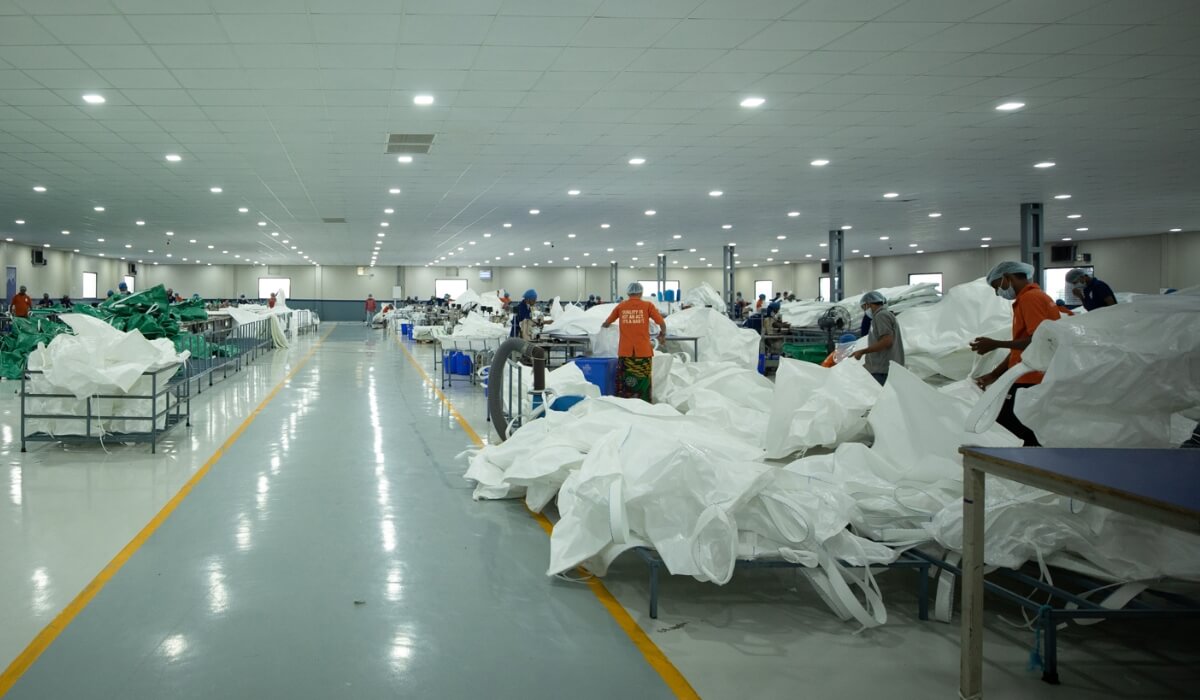
Industrial workforce inspecting woven polypropylene bulk bags inside a manufacturer in India
#2: Turkey – The Premium European Bridge
Turkey serves as a primary supplier to the European market. Its geographic proximity offers shorter ocean freight transit times to EU ports. Turkish manufacturers utilize high-speed extrusion lines and automated sewing. The primary trade-off is higher unit costs compared to Asian manufacturing hubs, which impacts large-scale budget planning.
#3: Vietnam – The Modern Industrial Challenger
Vietnam has emerged as a preferred destination for international buyers seeking advanced technology and competitive landed costs. Modern facilities in Vietnam utilize European extrusion and weaving machinery, such as Starlinger systems, to produce high-tensile fabric with tight dimensional tolerances.

Morden circular weaving loom producing high-tensile woven fabric for FIBC super sacks in Vietnam
Vietnam-based supply chain partners, such as EPP Vietnam, leverage this manufacturing infrastructure to deliver fully certified fibc super sacks that meet international BRCGS, ISO, and UN packaging standards. This combination of advanced technology and rigorous quality assurance makes Vietnam an optimal balance between cost and performance.
To help you decide which region aligns with your procurement strategy, here is a breakdown of the three major hubs:
| Feature | India | Turkey | Vietnam |
|---|---|---|---|
| Primary Strength | Massive Scale & Vertical Integration | Technical Innovation & Proximity to EU | Modern Machinery & Duty Advantages |
| Ideal Order Size | Extremely Large (Full Shiploads) | Mid to Large (Premium niche) | Mid to Large (High-precision) |
| Lead Times | Moderate (Long sea freight) | Fast (Short sea/Road for Europe) | Moderate (Efficient port logistics) |
| Best For… | Commodity Construction Projects | High-End Mineral & Chemical Sands | Value-Driven “High-Class” Quality |
| Key Advantage | Lowest Unit Cost at Scale | Highest Technical Specifications | Favorable Tariffs (EVFTA/CPTPP) |
Critical Sourcing Criteria for International Procurement Officers
Evaluating global suppliers requires looking beyond basic price quotes. International buyers should evaluate four core performance criteria before issuing purchase orders:
- Certified Testing Protocols: Demand certified test reports from accredited third-party laboratories. Key tests include Top-Lift Cyclic Testing (verifying loop integrity under repeated hoist cycles) and Burst Testing.
- Fabric Composition Transparency: Ensure the supplier guarantees 100% virgin PP resin without excessive calcium carbonate (CaCO3) filler. Excessive fillers reduce production costs but severely compromise fabric flexibility and UV longevity.
- Freight and Packaging Optimization: Shipping heavy packaging materials internationally requires efficient container loading. High-compression hydraulic baling allows suppliers to fit 20 to 22metric tons of bulk bags into a single 40ft High Cube container, significantly lowering ocean freight costs per unit.
- Supply Chain Continuity: Partnering with an established supply chain specialist prevents production delays. Dedicated procurement hubs mitigate risk by managing quality control across multiple production lines, ensuring order fulfillment even during regional factory maintenance windows.
Operational efficiency also depends on accurately estimating material quantities on-site. Procurement planners often evaluate site requirements by calculating how many bags of cement to a bulk bag of sand to streamline their bulk ordering schedules.
Which Hub Fits Your Needs for Builder Bags for Sand?
Choosing the optimal manufacturing hub depends on your business priorities, delivery windows, and margin targets.
- Choose India if your business requires massive, standardized commodity volumes and your logistics schedule can absorb longer transit windows and potential quality control overhead.
- Choose Turkey if your job sites are located within Europe and require rapid replenishment cycles where higher unit costs do not compromise project viability.
- Choose Vietnam if your procurement strategy targets rigorous quality compliance, advanced Starlinger-grade fabric technology, and the best overall value-to-cost ratio for large-scale international shipping.
When budgeting for multi-material construction projects, comparing these packaging costs alongside other aggregate materials helps maintain healthy margins. You can benchmark aggregate pricing trends by reviewing how much do bulk bags gravel cost across commercial suppliers.

Expert Tips for Vetting International Suppliers
Managing offshore procurement requires structured verification to protect your operations from quality defects and delayed shipments.
- Audit Factory Quality Systems: Verify whether the production facility operates under certified ISO 9001:2015 quality management systems. Ensure that raw resin receiving, fabric weaving, and final sewing stages undergo documented batch testing.
- Request Video-Recorded Stress Tests: Instead of relying solely on static paper certificates, request live or unedited video documentation of the supplier’s lab performing a Top-Lift test on your specific production batch.
- Inspect Loop Construction: Inspect loop attachment points. For heavy builder bags for sand, cross-corner loops or fully belt-reinforced seams distribute lifting stress more evenly than standard side-seam loops.
- Work with Experienced Supply Network Partners: Partnering with a dedicated supply chain specialist like EPP Vietnam streamlines cross-border sourcing. EPP Vietnam enforces strict 5-step QA/QC inspections, verifies technical compliance, and manages international shipping logistics to deliver fully compliant packaging directly to your port.
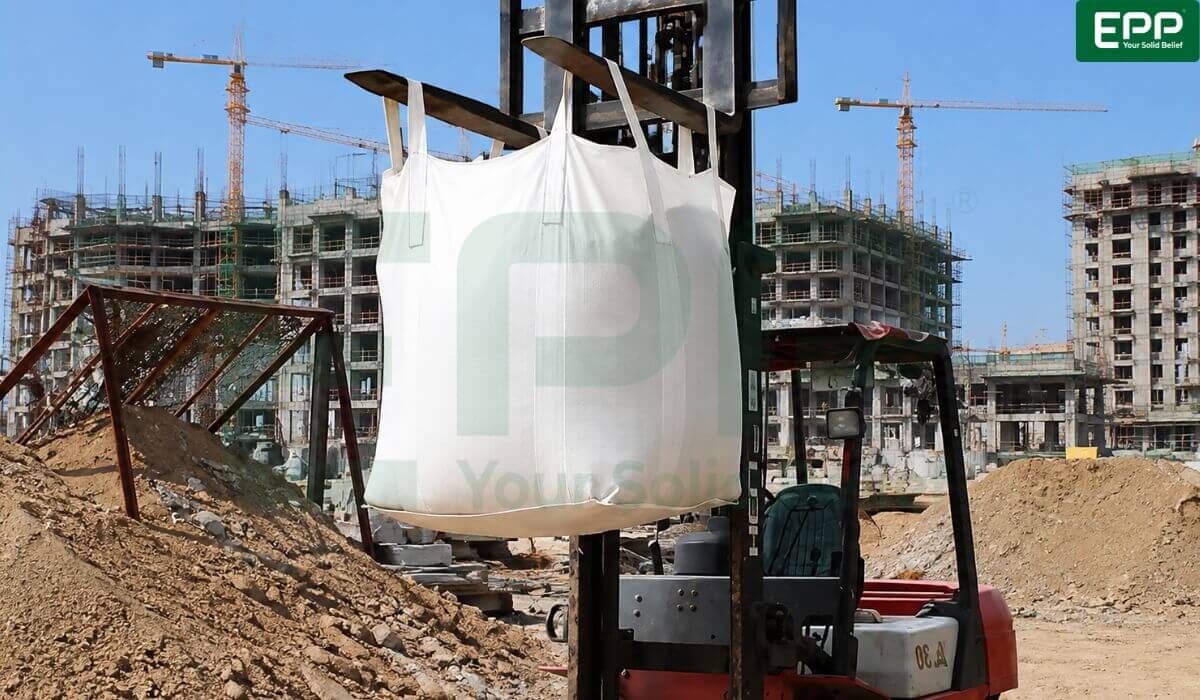
High-capacity builder bag with reinforced lifting loops suspended for heavy aggregate transport
Final Thoughts
The global market for builder bags for sand is shifting. While India and Turkey remain formidable, Vietnam’s rise as a high-precision manufacturing hub offers a new path for construction firms seeking quality without the “premium” price tag. By understanding the GSM, Safety Factors, and regional strengths, you can ensure your sand stays on solid ground.
As a leading Vietnamese supplier of high-class FIBC solutions, EPP Vietnam pride ourselves on engineering bags that withstand the toughest environments.
Website: epp.vn
Alibaba website: https://eppvietnam.trustpass.alibaba.com/
Email: [email protected] Hotline/ Whatsapps: +84 986 002 888