
The modern world is encapsulated, protected, and enhanced by plastic films, and among them, Low-Density Polyethylene (LDPE) film stands as a perennial workhorse. From its ubiquitous use in food packaging and stretch wrap to critical applications in construction vapor barriers and agricultural mulch, the demand for high-quality LDPE film is robust and growing. For purchasing managers and supply chain directors, a deep understanding of the LDPE film manufacturing process is essential for sourcing products that meet stringent quality and performance requirements.
This article delves into the science and engineering behind the creation of LDPE film, explores the critical certifications that govern its specialized applications, and identifies a key global supplier committed to quality and sustainability.
What is LDPE Film?

LDPE film is a flexible thermoplastic material derived from Low-Density Polyethylene resin. This resin is produced through the high-pressure polymerization of ethylene gas. The resultant polymer chains are characterized by significant long and short-chain branching. This structure prevents the molecular chains from packing tightly together, leading to its defining features:
- High Flexibility and Toughness: It remains pliable even at low temperatures and offers good resistance to impact and tear.
- Excellent Moisture Barrier: It effectively blocks water and moisture transmission, making it ideal for weatherproofing and packaging applications.
- Good Clarity and Heat-Sealability: It is translucent, with varying degrees of clarity depending on the manufacturing method, and seals easily to form effective barriers.
The intrinsic versatility of LDPE film allows it to be formulated with various additives—such as UV stabilizers, slip agents, and anti-block components—to tailor its performance for highly specific end-uses.
The Multi-Stage LDPE Film Manufacturing Process

The production of high-performance LDPE film is a highly controlled, multi-step operation that begins at the molecular level and ends with tightly wound commercial rolls.
1. Resin Preparation
The process starts with the raw material: LDPE resin pellets. These pellets are often blended with specific masterbatches and additives. Masterbatches introduce essential color pigments or performance enhancers (e.g., UV inhibitors to prevent sun degradation in greenhouse films, or antioxidants to protect the film during processing and in its lifetime). Precise control over this blending stage is the first critical quality checkpoint in the LDPE film manufacturing process.
2. Extrusion
Extrusion is the heart of the LDPE Film Manufacturing Process, where the solid resin is transformed into a continuous molten layer.
- Melting: The blended pellets are fed into a screw extruder, where they are conveyed forward by a rotating screw. Intense friction and external heaters melt the polymer into a homogenous fluid state (typically between 150oC -250oC).
- Filtering: The molten polymer is often passed through a fine screen changer to remove any impurities or unmelted particles, ensuring film integrity.
- Forming (Die System): The molten polymer is forced through a die to shape the film.
3. Cooling and Solidification
This step immediately follows the extrusion and forming of the molten polymer and is critical for setting the film’s final structure and stability.
The extruded polymer “bubble” is cooled gradually by passing it through a high-volume air-ring. This slower, controlled cooling process helps to maintain the film’s desired orientation and physical properties (toughness, tear strength).
4. Winding and Finishing
Once the film is solid, it is prepared for storage, transportation, and subsequent processing operations.
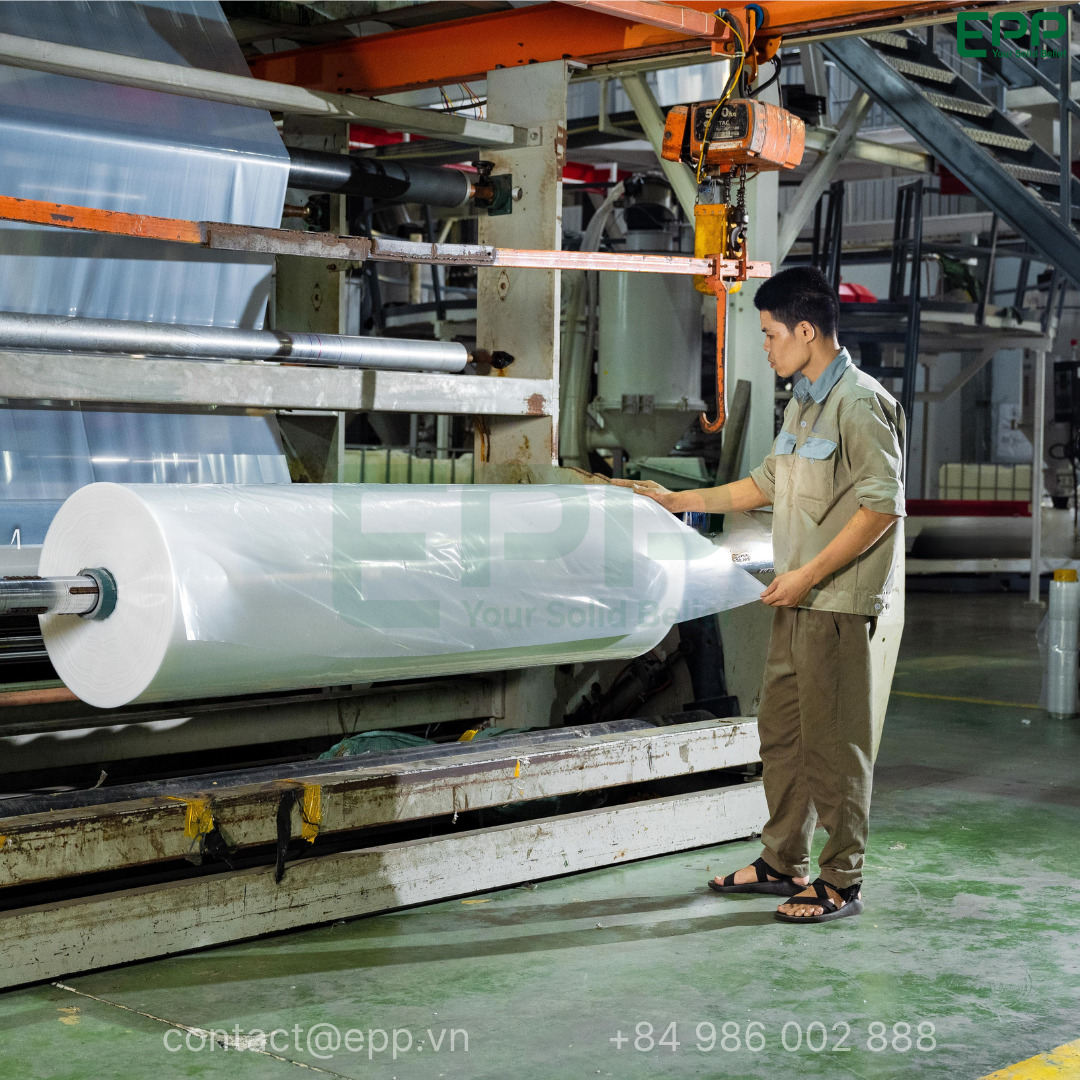
- Flattening and Trimming: The film is flattened (if it was a blown film bubble) and its edges are trimmed.
- Winding: The film is meticulously wound onto large jumbo rolls. This process must be done under controlled tension to ensure the film is crease-free and uniform, making it ready for converters.
- Finishing: Before winding, many films undergo a surface modification process, such as corona treatment. This high-frequency electrical discharge increases the film’s surface energy, which is essential for maximizing ink adhesion during printing or improving the bond strength during lamination.
Certifications for Agricultural Film Manufacturers
For high-stakes applications like agricultural films (greenhouse covers, mulch films), regulatory compliance and performance certification are non-negotiable, given the materials’ direct impact on food production and the environment. Key certifications include:
- ISO 9001 (Quality Management): This certification is a fundamental requirement, confirming that the manufacturer operates a consistent and reliable quality management system, guaranteeing uniform product properties essential for crop success.
- ASTM Standards: Adherence to American Society for Testing and Materials standards (e.g., those defining tensile strength, elongation, and UV stability) ensures the film meets specific performance criteria required to withstand the harsh conditions of agricultural use.
- Biodegradable Certifications (e.g., ASTMD6400, EN 17033, or EN 13432): With the rise of sustainable farming, certifications for films designed to biodegrade in the soil are critical. EN 17033 is particularly relevant for biodegradable mulch films, requiring a high degree of degradation within a specified timeframe (typically two years) to prevent plastic residue buildup in the soil. These validate the film’s environmental safety post-harvest.
Where Should You Buy LDPE Film?
Selecting a manufacturing partner involves assessing technical capability, quality control, and global logistics. Purchase managers and directors must prioritize suppliers with a proven track record of consistency and compliance.For a supplier that combines world-class technical production with a strategic geographic advantage and stringent quality control, EPP Vietnam stands out as a leading supplier for LDPE films.
EPP Vietnam offers a wide range of polyethylene products, including specialized agricultural films, construction sheeting, and PE liners. Their commitment to international standards is underscored by multiple certifications, which typically include ISO 9001, ISO 14001, and FSSC 22000/HACCP (for food-contact materials), ensuring their products meet the diverse and exacting demands of export markets like North America, Europe, and Australia.
By partnering with a large-scale company like EPP Vietnam, businesses can secure a stable supply of films produced through a strictly controlled LDPE film manufacturing process, guaranteeing the quality and compliance necessary for global operations.
Conclusion
The LDPE film manufacturing process is a testament to polymer engineering, delivering a high-performance material that drives efficiency and protection across global industries. As market demands evolve toward greater sustainability and specialization, manufacturers must continue to invest in advanced extrusion technology, robust quality assurance, and compliance with specialized standards. Choosing a certified, globally experienced supplier is the definitive factor in ensuring that your business receives LDPE film that is not only cost-effective but also reliable and environmentally responsible.
