In an era governed by stringent global Environmental, Social, and Governance (ESG) mandates and strict international trade regulations, sustainable supply chains are no longer a corporate preference—they are an enterprise requirement. For global procurement officers, supply chain directors selecting the right industrial packaging partner directly dictates operational risk, brand reputation, and regulatory compliance.
Among international manufacturing standards, ISO 14001:2015 certification in manufacturing big bags stands out as the definitive mark of environmental excellence and process control.
As a leading Vietnam-based global FIBC supplier, EPP Vietnam integrates ISO 14001:2015 directly into every stage of our bulk packaging production lines. In this comprehensive guide, we examine how ISO 14001:2015 transforms the manufacturing of big bags, why global buyers demand certified suppliers, and how our multi-certification framework provides zero-defect, eco-conscious bulk packaging solutions tailored for global supply chains.
What Is ISO 14001:2015 Certification in Manufacturing Big Bags?
Core Framework of the Environmental Management System (EMS)
ISO 14001:2015 sets the global criteria for an effective EMS. In the context of manufacturing big bags—commonly known as Flexible Intermediate Bulk Containers (FIBCs) or jumbo bags—this certification establishes a structured framework to map, measure, and continuously reduce the environmental footprint of the entire production line.
The framework applies a Life Cycle Assessment (LCA) approach to raw material processing and fabrication. From the thermal extrusion of virgin polypropylene (PP) resins to circular weaving, lamination, and heavy-duty stitching, ISO 14001:2015 mandates that every manufacturing stage operates under strict environmental controls.
The Shift from Voluntary Compliance to Mandatory Procurement Criteria
Environmental management in bulk packaging is no longer a marketing option; it is a core commercial requirement. Global supply chains face increasing regulatory oversight, including strict packaging waste directives, carbon border adjustments, and mandatory corporate sustainability reporting standards. Understanding standards for FIBC bags in the international market is essential for maintaining seamless global logistics.
Procurement directors across chemical, agricultural, mining, and food processing industries now incorporate ISO 14001:2015 into their mandatory supplier audit checklists. Partnering with an ISO 14001 certified manufacturer guarantees that your bulk packaging supply chain aligns with international environmental compliance frameworks, eliminating the operational and reputational risks associated with uncertified suppliers.
Sustaining a sustainable supply chain requires a comprehensive environmental management system that tracks energy usage, mitigates hazardous chemical releases, and prevents material waste across the entire plant floor. By embedding these controls directly into daily operations, certified facilities maintain consistent production quality while systematically lowering resource consumption.
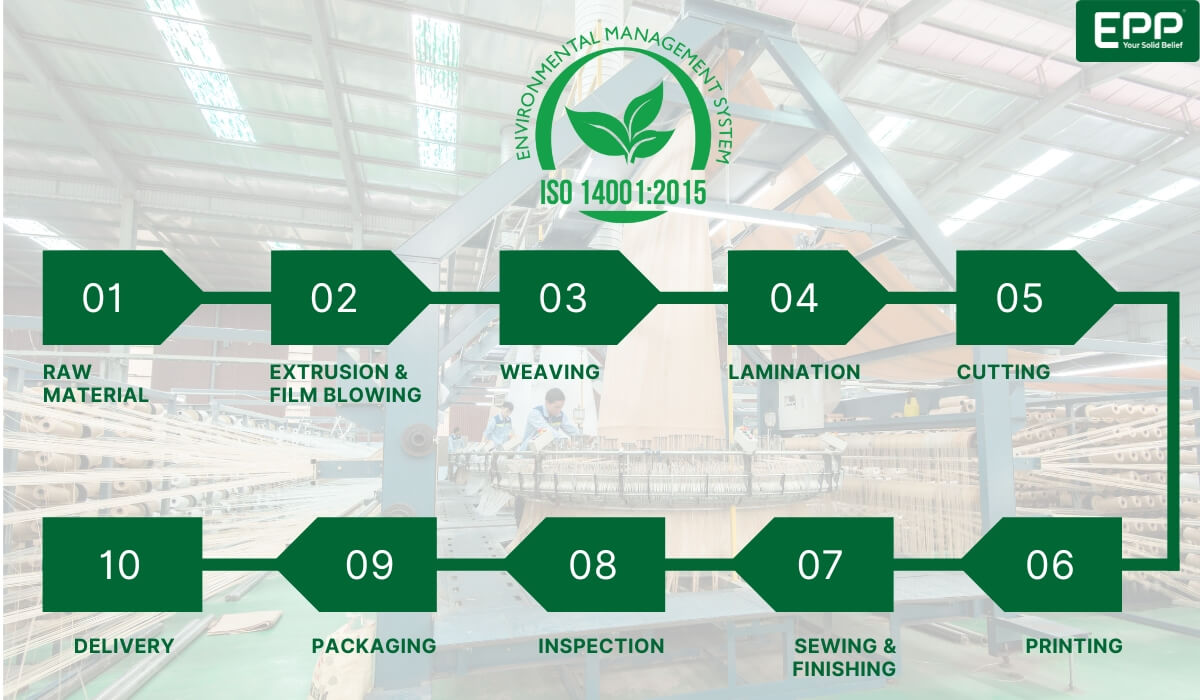
Integrated ISO 14001:2015 Environmental Management System across EPP Vietnam’s FIBC production line
Why Global Buyers Demand ISO 14001:2015 Certified FIBC Manufacturers?
Mitigation of Environmental & Legal Supply Chain Risks
International trade regulations impose strict penalties on companies operating within opaque, environmentally hazardous supply chains. Sourcing industrial packaging from non-compliant facilities exposes buyers to sudden production halts, regulatory fines, and shipment rejections at import ports.
ISO 14001:2015 certification verifies that a manufacturer adheres to chemical handling protocols, including REACH and RoHS compliance. This prevents harmful additives, heavy metals, or substandard UV stabilizers from contaminating your bulk goods.
Carbon Footprint Reduction & Material Efficiency
Polypropylene conversion is an energy-intensive process. Uncertified manufacturing facilities frequently experience high rates of material scrap—up to 8% in fabric cutting and loom setup—which inflates both cost and carbon emissions per unit.
An ISO 14001 certified manufacturer utilizes closed-loop material recovery. Off-cuts and edge trims are reclaimed in-house, re-granulated, and repurposed for non-structural bag components (such as tie strings or document pockets), keeping raw material utilization near 100% without compromising structural integrity.
Compliance with Global Packaging Regulations
| Sustainability Metric | Non-Certified FIBC Manufacturer | EPP Vietnam (ISO 14001:2015 Certified) |
| Scope 3 Carbon Tracking | Unmonitored energy usage and untracked emissions | Documented energy monitoring per ton of PP processed |
| Microplastic Contamination | Uncontrolled fabric fraying and waste run-off | Closed-loop air/water filtration and edge-sealing systems |
| Material Circularity | Mixed polymer waste sent to local landfills | 100% recyclable mono-material PP design |
A core requirement of modern environmental management is eliminating microplastic emissions during extrusion and weaving. High-velocity air-extraction systems capture loose PP fibers at the loom, preventing microplastics from escaping into local municipal waterways or industrial drainage networks.
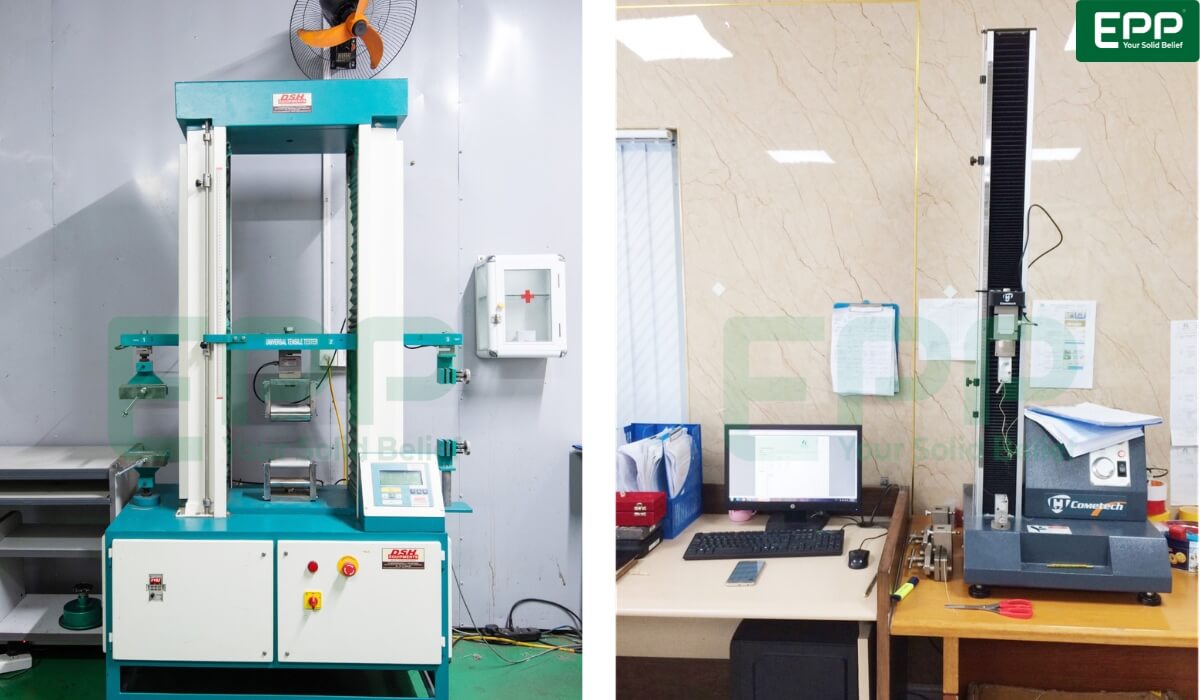
Rigorous raw material testing ensures structural strength while maintaining ISO 14001 environmental standards
Beyond waste reduction, ISO 14001:2015 compliance drives energy efficiency. By utilizing variable-frequency drives on heavy extrusion lines and optimizing thermal settings during fabric lamination, certified facilities reduce kilowatt-hour consumption per bag, directly lowering Scope 3 embodied carbon for the end buyer.
Step-by-Step Implementation of ISO 14001:2015 in Manufacturing Big Bags
Step 1: Sustainable Virgin PP Resin Sourcing & Energy Optimization
EPP Vietnam exclusively sources 100% high-grade virgin polypropylene resin from accredited global producers. This eliminates the structural unpredictability of unverified recycled fillers while maximizing fabric tensile strength. Our extrusion lines utilize smart temperature sensors to maintain optimal melt flow indexes (MFI), reducing thermal energy loss during tape stretching. For organizations interested in auditing workflows, see our guide on how to get ISO certification in 5 simple steps.
Step 2: Zero-Waste Circular Weaving & Dust Extraction
During fabric weaving, high-speed circular looms can generate micro-dust and fiber debris. EPP Vietnam equips all weaving bays with centralized vacuum extraction units that filter ambient air and capture 100% of airborne PP dust, protecting both workplace health and external air quality.
Step 3: Eco-Friendly Lamination & Solvent-Free Printing
To protect hygroscopic materials (such as sugar, flour, or fine chemicals), FIBCs often require an external moisture barrier. EPP Vietnam utilizes solvent-free, extrusion-coated PP lamination and water-based inks for custom logo printing, completely eliminating Volatile Organic Compounds (VOCs) from our emissions profile.
Step 4: Cleanroom Sewing & Waste Segregation
In our assembly units, skilled operators construct specialized configurations, such as form-stable baffle bags (Q-Bags) and sift-proof seam designs. All fabric trimmings, thread ends, and PE liner scraps are segregated at individual workstations into color-coded bins for immediate internal reprocessing.
Palletizing and load consolidation form another critical phase of ISO 14001 environmental management. By utilizing high-compression hydraulic baling presses, EPP Vietnam maximizes the quantity of FIBCs loaded per shipping container, significantly lowering freight emissions per unit delivered.
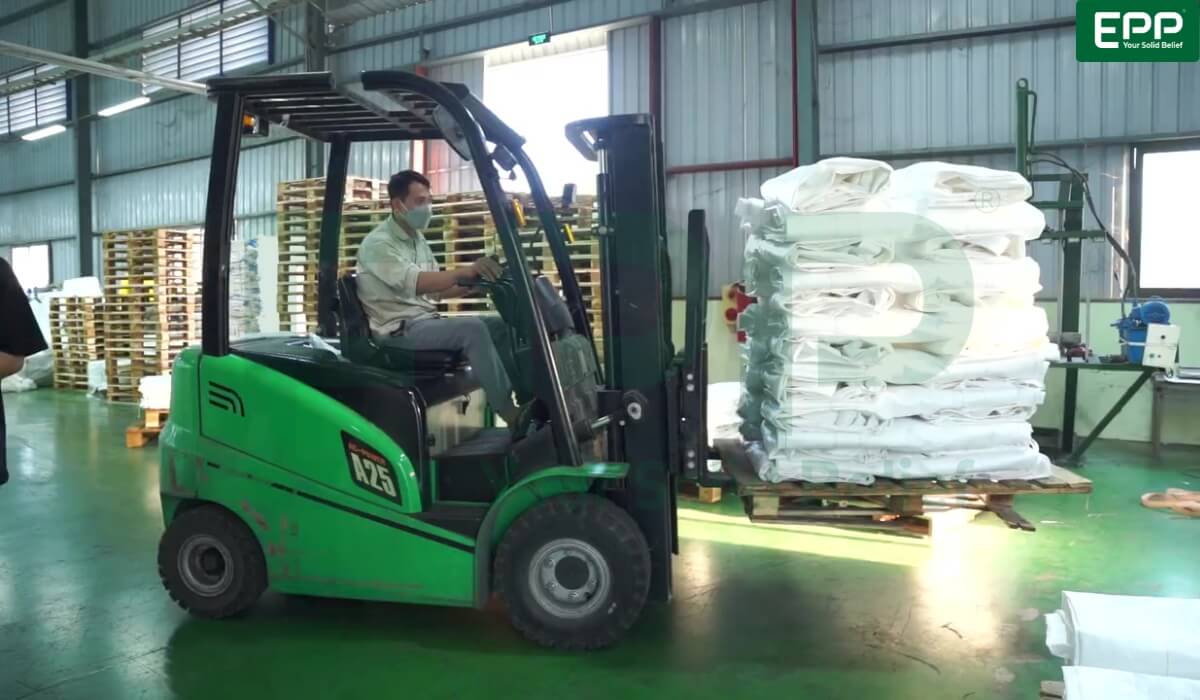
High-density hydraulic baling optimizes container space, significantly reducing shipping carbon footprint per ton
How ISO 14001 Synergy Amplifies EPP Vietnam’s Quality
Combining ISO 14001:2015 with ISO 9001:2015 & BRCGS Cleanroom Standards
Environmental management operates best when integrated with rigorous quality control. At EPP Vietnam, ISO 14001:2015 functions alongside our ISO 9001:2015 Quality Management System and BRCGS Global Standard for Packaging Materials. There are key reasons to choose FIBC bags with ISO 9001:2015, as structured quality frameworks directly prevent costly load failures.
While ISO 9001 guarantees that every batch meets physical load tolerances (Safe Working Load ratings from 500 kg to 2,000 kg), ISO 14001 ensures that this performance is achieved with minimal environmental waste. Furthermore, for agricultural and food-grade clients, our BRCGS-certified cleanroom environments ensure that bags remain free from physical, chemical, or biological contaminants.
UN Dangerous Goods & IEC 61340 Anti-Static Compliance
For industries transporting hazardous materials or combustible powders, EPP Vietnam produces specialized UN-certified bags and Type C/Type D anti-static FIBCs complying with IEC 61340-4-4 standards.
Our environmental controls ensure that specialized conductive yarns and anti-static additives are handled without environmental leakage, providing safe containment for volatile substances while preserving the surrounding ecosystem.
Drop-testing, top-lift testing, and pressure-discharge evaluations are regularly conducted in our certified testing facilities. These procedures verify that every bag design resists tearing or bursting during heavy industrial handling, eliminating accidental chemical spills in transit.
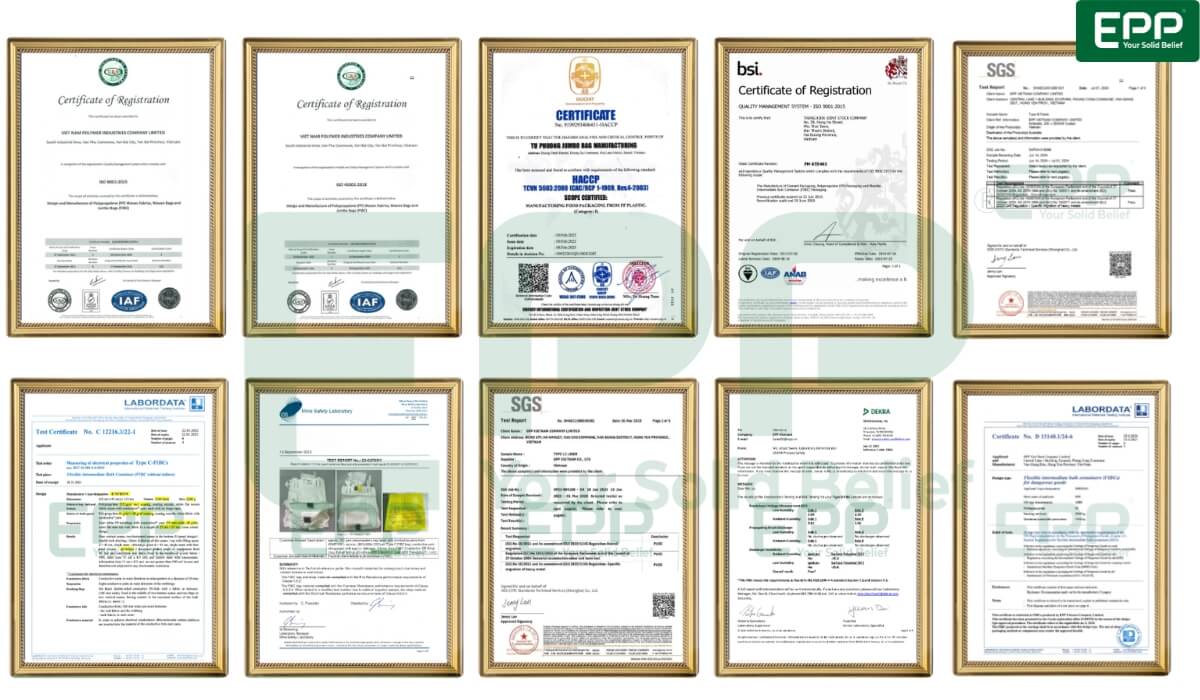
EPP Vietnam’s multi-certification framework ensures global compliance for demanding industrial applications
Frequently Asked Questions
Why is ISO 14001:2015 crucial when sourcing big bags from Vietnam?
Sourcing from Vietnam offers distinct tariff and supply chain advantages. An ISO 14001:2015 certification verifies that the Vietnamese manufacturer meets international environmental, safety, and operational standards, ensuring seamless importation into strict markets like Europe, North America, and Japan.
Does ISO 14001:2015 certification affect the strength or SWL of FIBC big bags?
No. ISO 14001 focuses on manufacturing efficiency, waste reduction, and process control. By enforcing strict virgin resin quality standards and eliminating contaminated scrap, ISO 14001 manufacturing practices actually improve fabric consistency, tensile strength, and Safe Working Load (SWL) reliability.
How can I verify the authenticity of an FIBC manufacturer’s ISO 14001:2015 certificate?
Authentic certificates are issued by accredited third-party auditing bodies (such as SGS, TUV, Intertek, or Bureau Veritas). You can verify a certificate by checking the unique registration number directly on the issuing body’s official online database or requesting audit summary reports from the supplier.
Partner with EPP Vietnam for Sustainable, ISO-Certified FIBC Solutions
Maintaining an efficient, eco-conscious supply chain requires dependable packaging partners who prioritize environmental compliance alongside structural performance. EPP Vietnam delivers factory-direct, highly certified bulk packaging engineered to withstand demanding global transport conditions.
To explore fibc bag vietnam options for your operational needs, view our complete inventory or contact our engineering team to review technical specifications, request custom design audits, and order free test samples today!
Website: epp.vn
Alibaba website: https://eppvietnam.trustpass.alibaba.com/
Email: [email protected] Hotline/ Whatsapps: +84 986 002 888