
Using a weed mat in vegetable garden beds is one of the most effective strategies for maintaining healthy, high-yielding crops while drastically reducing the labor required for manual weeding. By blocking sunlight and suppressing unwanted weed growth, ground cover fabrics allow gardeners to focus on nurturing their plants.
However, maximizing the benefits of a weed barrier requires selecting the correct material, understanding its operational tradeoffs, and mastering proper installation techniques.
How to Use Weed Mat in Vegetable Garden
Using a weed mat in vegetable garden is straightforward. Here’s a step-by-step guide:
Step 1: Prepare the Ground
- Till and Level: Till the soil and ensure the ground is smooth and level. This prevents water pooling and pockets where weeds can grow.
- Measure and Cut: Measure and cut the fabric to fully cover the planting area. Allow for 10 -15 cm overlap if using multiple pieces, or ensure it goes up the sides if you have raised beds.
To select the ideal fabric structure for your soil type and drainage needs before laying out your rows, review our structural comparison guide on woven weed mat vs non-woven weed barrier options.
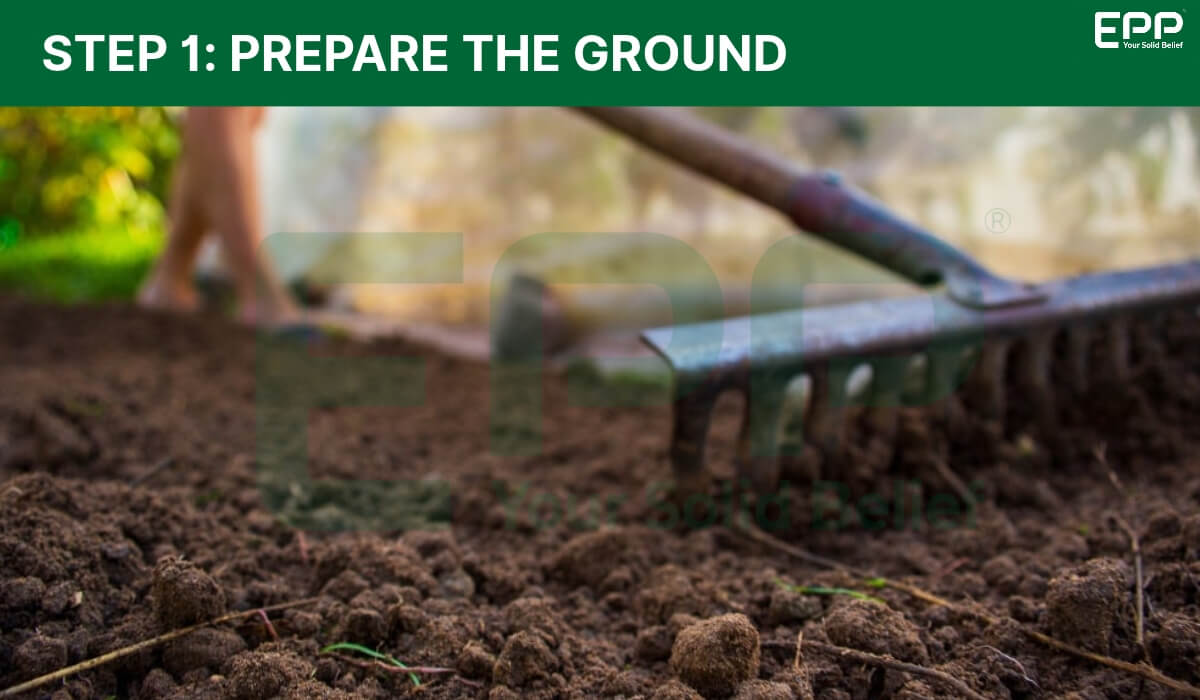
Laying your weed mat smoothly over tilled, level soil prevents water pooling and eliminates air pockets where weeds can sprout.
Step 2: Secure the weed mat
- Lay Taut: Unroll the fabric smoothly across the soil surface without over-stretching the polypropylene threads.
- Fasten Firmly: Secure the material every 50 cm to 100 cm along the edges and center seams using heavy-duty landscape staples or anchoring pegs.
Selecting the proper peg length, steel gauge, and head shape ensures your fabric stays anchored against high winds. Read our technical walkthrough on choosing and installing weed mat pins.
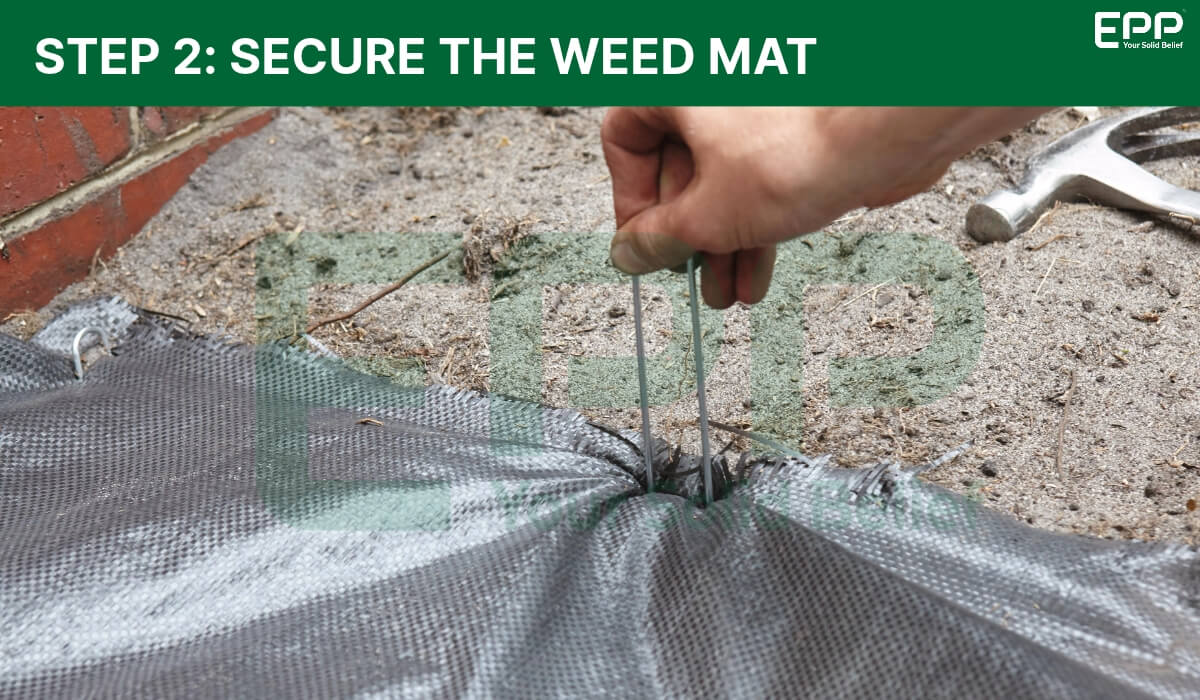
Properly anchoring landscape fabric with steel U-staples ensures long-lasting weed suppression and prevents wind damage.
Step 3: Plant Your Seedlings
- Mark Layout: Measure spacing according to crop requirements.
- Cut Plant Openings: Use a sharp utility knife or a handheld propane torch to cut “X” or “T” slits. Burning the edges melts the synthetic threads, preventing unraveling over time.
- Plant and Seal: Fold back the fabric flaps, excavate the soil, place the seedling, and fold the flaps snugly around the stem base.
Commercial growers evaluating factory-perforated planting grids to save labor costs can explore our detailed analysis on pre-punched weed barrier pros and cons for gardening.
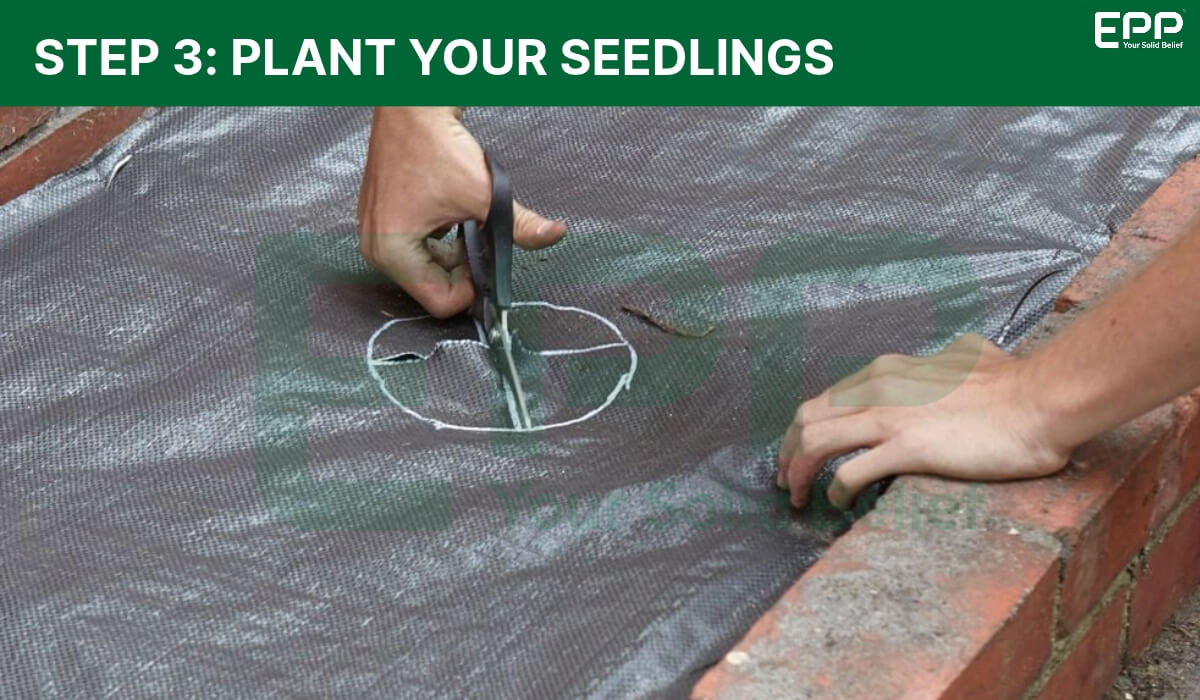
Cutting precision openings and flame-sealing fabric edges prevents synthetic threads from unraveling around seedling stems.
Step 4: Water and Maintain
- Watering: Water thoroughly; the fabric is permeable, allowing water to reach the roots. Consider installing a drip irrigation system or soaker hose underneath the fabric for efficient, deep watering.
- Maintenance: Periodically check the planting holes and edges, removing any weeds that attempt to sprout through. The fabric can be cleaned and rolled up for reuse at the end of the season.
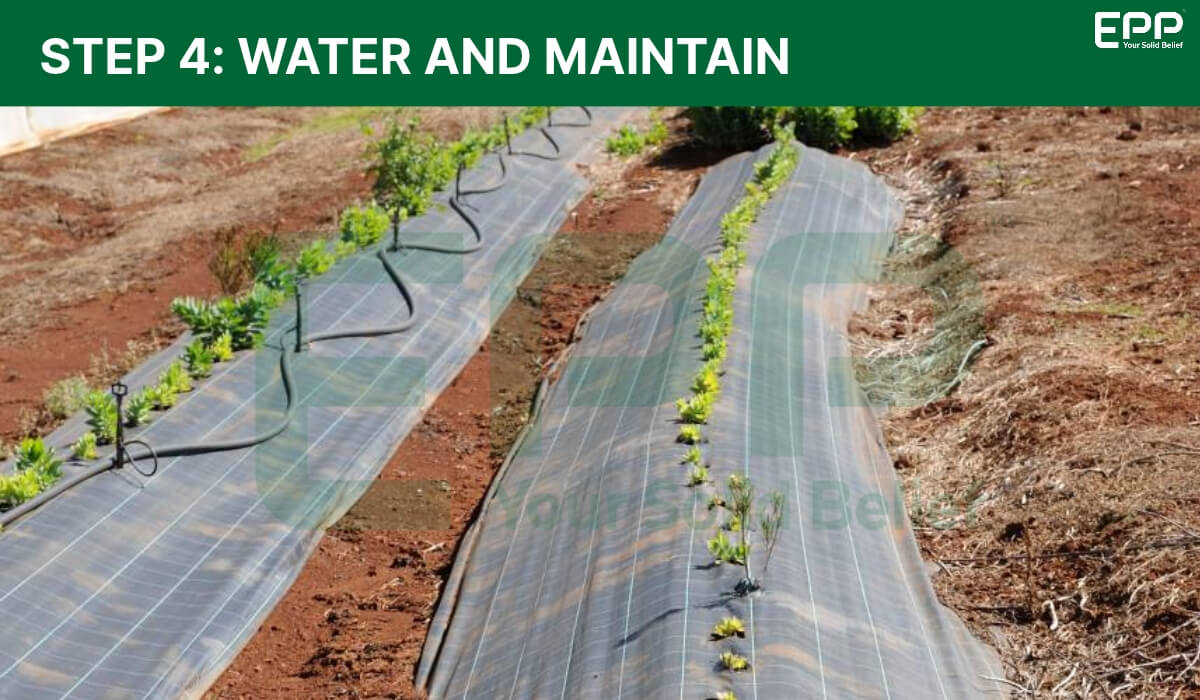
Installing drip irrigation lines underneath permeable woven fabric delivers deep, efficient watering directly to crop roots.
Pros and Cons of Using a Weed Mat in Vegetable Garden
While ground cover fabric offers clear agricultural benefits, weighing its advantages against potential limitations helps determine whether it fits your specific garden setup.
Pros
- Superior Weed Suppression: By blocking solar radiation, weed barriers prevent dormant weed seeds from germinating. This eliminates competition for soil nutrients and groundwater, leading to stronger root development.
- Soil Moisture Retention: Fabric covers reduce surface evaporation caused by direct sunlight and wind, lowering irrigation frequency—a critical advantage during dry summer months.
- Soil Temperature Regulation: Weed mats insulate the root zone, keeping soil cooler during heatwaves and trapping residual warmth during early spring or late autumn frosts.
- Erosion & Soil Integrity Control: Covering bare soil prevents wind displacement and stops heavy rain from washing away fertile topsoil, particularly on sloped beds.
Cons
- Initial Capital Investment: Premium woven ground covers represent a higher upfront cost than basic organic mulches. However, their multi-year durability delivers superior long-term ROI.
- Installation Precision Required: Improper installation can result in wind lifting, fabric bunching, or gaps where weeds can establish roots.
- Material Degradation Risks: Substandard non-woven plastics degrade quickly under UV exposure. Investing in UV-stabilized woven polypropylene prevents premature tearing.
- Moisture Management Needs: Excess watering on poorly drained soil can trap moisture underneath, increasing the risk of root rot if soil aeration is neglected.
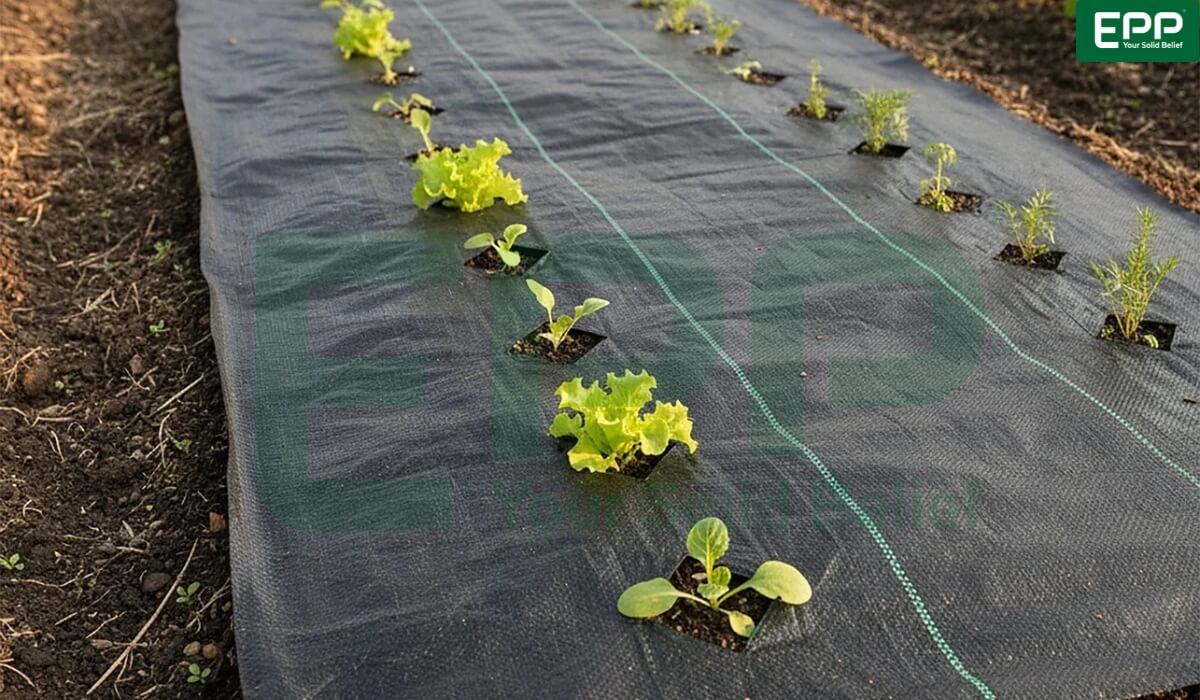
Polypropylene woven ground covers feature micro-gaps for water and gas permeability
What is the Best Weed Barrier for Organic Vegetable Gardens?
When cultivating organic crops, selecting the right weed barrier is essential to maintain soil biology and adhere to non-toxic growing standards.
For commercial growers and home gardeners seeking long-term performance, fabric weed barriers made from heavy-duty high-tensile polypropylene woven fabric offer the ideal combination of breathability, water permeability, and durability.
Key Considerations When Selecting Ground Cover Plastic Rolls
Before purchasing ground cover, evaluate these essential factors:
- GSM & Fabric Density: Higher Grams per Square Meter (GSM) values (e.g., 90–120 GSM) provide superior tear resistance and longer UV resistance.
- UV Stabilization: Ensure the polymer masterbatch contains UV additive to prevent solar degradation.
- Roll Dimensions: Choose width and length profiles that match your row geometry to minimize waste seams.

Frequently Asked Questions About Weed Mats in Vegetable Gardens
Does water go through a woven weed mat?
Yes. High-quality woven polypropylene weed mats feature micro-interstices between woven tapes, allowing water and liquid fertilizers to filter through to the soil while preventing water pooling.
Can I place organic mulch on top of a weed mat?
Yes. Adding a thin layer of straw, bark chips, or compost over a weed mat improves garden aesthetics, reduces surface heat buildup, and provides additional UV protection for the synthetic fabric beneath.
How long does a PP woven weed mat last in the garden?
With proper UV stabilization and careful seasonal storage, commercial-grade PP woven ground covers typically last 3 to 5 years under direct sunlight.
Partner with EPP Vietnam for Premium Agricultural Fabric Solutions
Integrating a high-performance weed mat in vegetable garden management enhances crop yields, reduces water consumption, and eliminates hours of manual labor. Matching fabric specifications to your garden’s climate and crop needs ensures optimal long-term results.
As a leading industrial exporter in Vietnam, EPP Vietnam manufactures ISO-certified, UV-stabilized woven polypropylene ground covers and agricultural fabrics for commercial growers worldwide. Contact our export specialists today to request product samples, custom roll dimensions, and factory-direct B2B quotations.
🌐 Website: https://epp.vn – https://eppvietnam.trustpass.alibaba.com
📲 +84 986 002 888 – [email protected]