
Installing landscape fabric is only half the battle when suppressing weeds in commercial farms or residential landscapes. Without proper anchoring, high winds, heavy rain, and foot traffic can quickly dislodge the fabric, allowing aggressive weeds to breach the barrier.
As a leading master supplier of technical textiles and agricultural accessories in Vietnam, EPP Vietnam provides international procurement teams and farm operators with high-tenacity ground covers and heavy-duty anchoring systems. This beginners guide to weed mat pins, pegs, and garden stakes covers everything you need to select, space, and install ground anchors for maximum fabric performance.
Understanding the Differences: Pins, Pegs, Staples, and Stakes
Navigating landscape terminology can be confusing. While these terms are often used interchangeably, each fastener type features distinct structural attributes engineered for specific soil conditions and fabric grades:
1. U-Shaped Metal Staples (Galvanized Steel Pins)
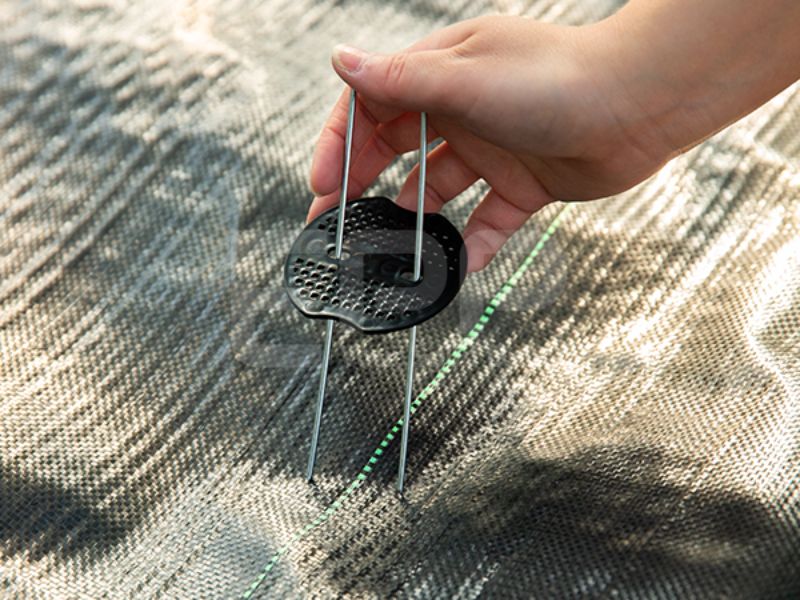
Commonly referred to as weed barrier staples or weed control staples, these are manufactured from 11-gauge (3.0mm) or heavy-duty 9-gauge (3.8mm) steel wire bent into a U-shape. Standard lengths range from 4 inches to 8 inches (10cm to 20cm). Premium versions feature hot-dipped galvanization to resist subterranean rust for 5 to 10 years, making them ideal for piercing tough, high-density fabrics like commercial-grade woven fabric weed barrier rolls.
2. Plastic Barbed Pegs (Plastic Anchors)
Made from recycled UV-stabilized polypropylene, weed membrane pegs and weed mat pegs feature a flat driving head and a sharp shaft lined with angled barbs. When driven into soft earth, these barbs flare out, anchoring firmly into loose soil.
3. Round-Top Pins with Buffer Washers
These consist of a straight steel nail driven through a 50mm plastic washer. The washer increases the surface contact area, preventing high winds from tearing the fabric around the pinhead.
4. Heavy-Duty Garden Stakes
Ranging from 8 to 12 inches, stakes for weed barrier applications are used in high-exposure areas, steep embankments, or sandy conditions where shorter staples fail to achieve sufficient hold.
How to Choose the Right Weed Mat Pins, Pegs, or Stakes for Your Soil Type?
Selecting the correct fastener depends primarily on your field’s soil composition and topography:
- Hard, Clay, or Rocky Soil: Use 11-gauge 6-inch galvanized steel U-staples with sharp chisel points. Their narrow profile cuts through compacted clay and stony ground without bending under hammer impact.
- Loose, Sandy, or Soft Topsoil: Use 8-inch plastic barbed pegs or steel staples fitted with plastic buffer washers. The barbs and extended length prevent the anchor from pulling out during wind gusts.
- Steep Slopes and Embankments: Use 8-inch or 10-inch heavy-duty steel stakes to hold down weed barrier installations. Slopes experience downward tension, requiring deeper penetration to hold the fabric taut.
When working with heavy high-tensile polypropylene woven fabrics, sharp steel chisel-point pins penetrate between the woven strands without fracturing the structural weave.
Step-by-Step Installation & Spacing Guide for Beginners
Follow this systematic installation process to ensure your ground cover remains secure season after season:
Step 1: Site Preparation & Clearing
Clear rocks, persistent weed stalks, and debris. Level the soil surface so the weed mat lies completely flat against the earth, eliminating air pockets that encourage weed growth beneath the fabric.
Step 2: Fabric Placement & Overlapping
Roll out the fabric and overlap adjacent seams by a minimum of 4 to 6 inches (10cm to 15cm) on flat ground, or 8 inches (20cm) on sloped terrain. Drive pins for garden membrane directly through both overlapping layers to seal the join against light penetration.
Step 3: Following Recommended Pin Spacing Guidelines
Refer to this baseline spacing matrix when planning your anchor requirements:
| Field Condition / Terrain | Perimeter Edge Spacing | Center Grid Spacing | Recommended Density |
| Indoor Greenhouses / Flat Terrain | 50 cm – 80 cm (20″ – 30″) | 1.0 m – 1.5 m (3′ – 5′) | 1.5 – 2 pins/m² |
| Outdoor Vegetable Beds / Moderate Wind | 30 cm – 50 cm (12″ – 20″) | 0.8 m – 1.0 m (2.5′ – 3′) | 2.5 – 3 pins/m² |
| Sloped Hillsides / High Wind Exposure | 20 cm – 30 cm (8″ – 12″) | 0.5 m – 0.8 m (1.5′ – 2.5′) | 4 – 5 pins/m² |
(Note: Commercial growers should review guidelines on proper application of weed mats in vegetable production to align pin placement with irrigation lines.)
Plant Hole Cutting and Special Application Techniques
The X-Cut Method: Cut an “X” into the fabric just large enough for the root ball. Fold the four flaps inward and drive weed control fabric stakes into the corners to prevent weeds from sprouting around the base of the plant.
Pre-Perforated Fabric Liners: When using pre-cut crop rows, review our guide on pre-perforated weed barrier fabrics for crop rows to coordinate pin placement along planting lines.

Cost Comparison vs. Disposable Films: When comparing woven weed barriers against agricultural mulch films, securing long-lasting woven fabrics with reusable galvanized steel staples reduces seasonal material replacement costs by up to 40%.
Common DIY Installation Mistakes and How to Avoid Them
- Inadequate Pin Density: Underestimating pin quantities leaves loose fabric sections that catch the wind, creating a “sail effect” that tears the edges.
- Incorrect Driving Angle: Driving pins straight down at 90° is standard, but in loose soil, driving them at a slight 10° angle against the pulling force provides greater resistance.
- Using Non-Galvanized Steel Pins: Plain black iron staples rust rapidly in moist or acidic soils, snapping within 6 to 12 months and contaminating the surrounding soil.
FAQs About Weed Mat Pins, Pegs and Garden Stakes
How many weed mat pins do I need per roll of landscape fabric?
For a standard 2m x 100m (200m²) fabric roll, flat terrain installations require approximately 300 to 400 pins. For sloped terrain or windy outdoor areas, plan for 600 to 800 pins to ensure adequate perimeter securing.

Are steel staples better than plastic pegs for securing weed control fabric?
Steel staples are superior for hard clay, stony soils, and heavy woven fabrics due to their sharp penetration profile. Plastic barbed pegs perform better in soft, loose, or sandy soils where their side barbs can grip the earth effectively.
How far apart should I space pins along the overlapping seams?
Space your pins 12 to 18 inches (30cm to 50cm) apart along overlapping seams. This holds the two fabric layers flat together, preventing wind from getting underneath and blocking light penetration along the seam.
Do I Need Pins Under Gravel or Mulch?
Yes. Even if you plan to cover the landscape fabric with 2 to 3 inches of gravel, decorative stone, or bark mulch, you must pin the fabric down first. Without pins, the fabric will shift, wrinkle, and slide underneath the aggregate during installation, exposing bare soil along the perimeter.
Conclusion
Following this beginners guide to weed mat pins, pegs, and garden stakes ensures your landscape investment remains secure, taut, and effective against weed intrusion. Choosing the right anchor material and maintaining correct spacing prevents costly wind damage and extends fabric service life.
Contact the agricultural supply team at EPP Vietnam today to request product specifications, bulk wholesale quotes, or custom packaging options for premium weed barriers and accessories!
Website: epp.vn
Alibaba website: https://eppvietnam.trustpass.alibaba.com/
Email: [email protected] Hotline/ Whatsapps: +84 986 002 888