
Jumbo bags for building materials, commonly known as FIBCs (Flexible Intermediate Bulk Containers), are the most critical component in the modern construction supply chain. Having spent two decades in the manufacturing and exporting of plastic packaging, I’ve seen projects succeed or fail based solely on the quality of their bulk bags. In an industry where a single bag failure can lead to expensive downtime or, worse, safety hazards on-site, selecting the correct specification is not just a procurement task—it is a safety requirement.
Why Should You Choose Jumbo Bags for Building Materials?

The shift toward jumbo bags for building materials over traditional loose bulk or small 25kg sacks is driven by three primary factors: efficiency, environmental protection, and site safety.
- Logistical Efficiency: Moving one ton of material in a single lift is far superior to handling 40 individual small bags. Jumbo bags allow for rapid loading and unloading, significantly reducing the “turnaround time” for trucks on a busy construction site.
- Waste Mitigation: In loose bulk deliveries, “shrinkage” (material lost to wind, rain, or being trampled into the mud) can account for up to 10-15% of your inventory. Jumbo bags keep your sand, gravel, or cement contained and protected from the elements.
- Space Optimization: Urban construction sites are notoriously cramped. Jumbo bags offer a “vertical” storage solution. Unlike loose piles that spread out, FIBCs can be stacked (when specified correctly), freeing up valuable square footage for machinery and movement.
Key Factors to Consider When Selecting Jumbo Bags for building materials
Selecting the right bag requires a deep understanding of your material’s physical properties. As an exporter, I always walk my clients through these four pillars of bag selection:
1. Safe Working Load (SWL) and Safety Factor (SF)
You must match the bag’s weight capacity to the density of your building material. For heavy aggregates like gravel or crushed stone, you typically need an SWL of 3,000 lbs (1,500 kg).
- 5:1 SF (Single-Trip): Standard for one-way export or construction use.
- 6:1 SF (Multi-Trip): Required if you intend to refill the bags. Using a 5:1 bag multiple times is a major safety violation.
2. Material Density vs. Dimensions
A bag that holds a ton of sawdust is much larger than a bag that holds a ton of sand. We often see procurement errors where bags are too large for the weight they carry, leading to “leaning” and instability when stacked.
3. Moisture and Dust Protection
If you are transporting fine powders like cement or lime, you must consider laminated (coated) fabric or internal polyethylene (PE) liners. Without these, moisture ingress will ruin your product, and fine dust will sift through the needle holes during transit.
4. Specialized Material Properties
If you are handling flammable materials or working in an environment with combustible dust, you must specify Antistatic Bags (Type C or D) to prevent static discharge from igniting a fire.
Special Features and Customization Options

The “magic” of a jumbo bag is in its customization. For building materials, several specialized features can drastically improve your workflow.
High-Strength Loops
The loops are the “muscles” of the Jumbo bags for building materials. For construction, we recommend:
- Cross-Corner Loops: These are sewn into the side seams in a way that allows them to stand upright. This is a favorite for forklift operators because it allows them to pick up the bag without a second person needing to guide the tines into the loops.
- Stevedore Straps: Often used in shipping ports, these are extra loops that connect the main four loops, allowing for a single-point lift by a crane.
Sift-Proof Seams
When transporting fine masonry sand or powdered additives, the needle holes created during the sewing process are potential leak points. Sift-proof piping (often made of felt or twisted yarn) is sewn into the seams to block these holes. This ensures that your truck stays clean and your material weight remains consistent.
High-Strength Fabric (GSM)
The weight of the woven polypropylene fabric—measured in Grams per Square Meter (GSM)—is the foundation of the bag’s integrity. For heavy construction materials, we never recommend anything less than 180-220 GSM. High-strength fabric prevents “bowing” and ensures the bag maintains its shape under extreme pressure.
Top and Discharge Types
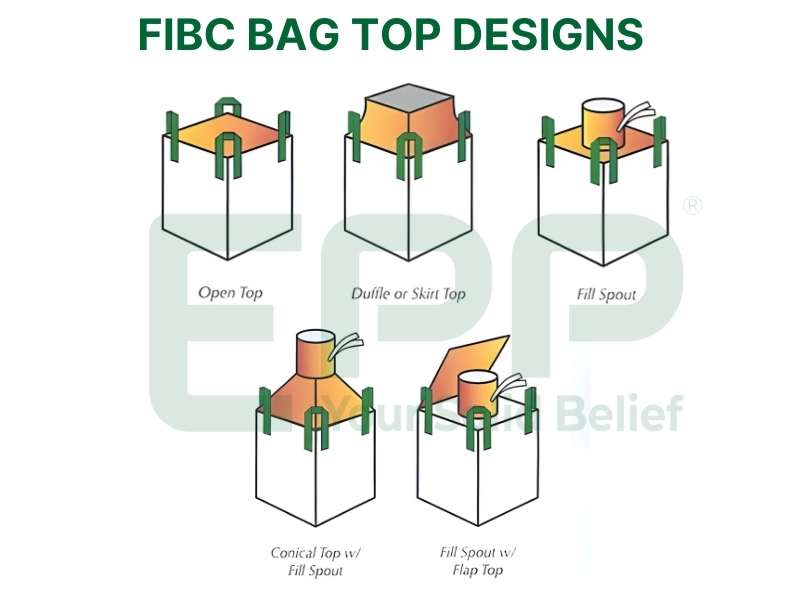
How you fill and empty the Jumbo bags for building materials dictates their top and bottom design:
- Top Types:
- Open Top: Best for loading with a tractor bucket or shovel.
- Duffle Top (Skirt): Provides a fabric cover that can be tied shut to protect materials from wind and rain.
- Spout Top: Best for automated filling systems to minimize dust.
- Discharge Types:
- Flat Bottom: The bag must be cut to be emptied. This is common on sites where the bag won’t be reused.
- Discharge Spout: Features a “petal” or “iris” closure at the bottom, allowing for a controlled, measured release of sand or cement into a mixer.
Choosing jumbo bags for building materials is about more than just finding a container; it’s about engineering a solution that protects your material, your workers, and your margins. By focusing on the correct Safety Factor, fabric strength, and specialized features like sift-proof seams and cross-corner loops, you turn a simple plastic bag into a high-performance industrial tool.
Navigating the complexities of FIBC specifications requires a partner who understands the manufacturing process from resin to finished bag. At EPP Vietnam, we specialize in high-quality, export-grade jumbo bags tailored for the global construction industry. Contact the EPP Vietnam team today for a professional consultation and a customized quotation. Let us help you select the perfect jumbo bag that ensures your materials arrive safely, dry, and ready for work.