The Environmental Urgency to Recycle Polypropylene
Despite its widespread utility, Polypropylene accounts for a significant portion of global plastic waste. Millions of tons of industrial packaging, bulk bags, and consumer goods are discarded every year. When landfilled, PP takes decades to degrade, fragmenting into microplastics that contaminate soil and aquatic ecosystems. Incinerating PP waste releases greenhouse gases (CO2) directly into the atmosphere, aggravating global warming.
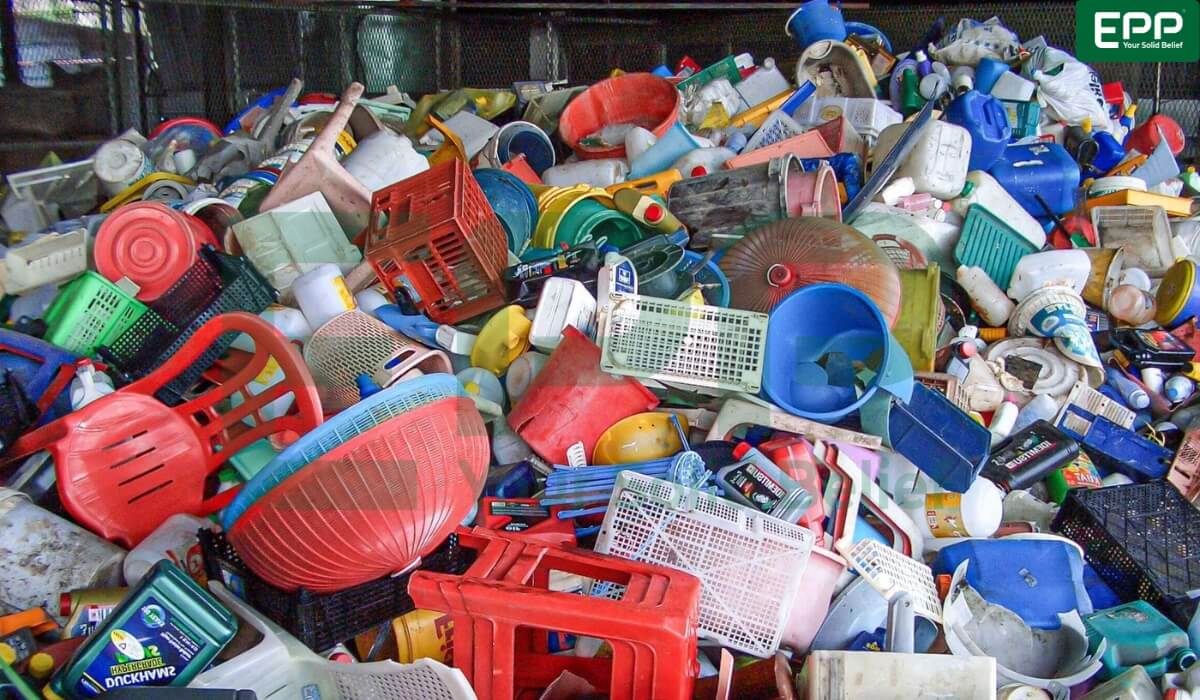
Recycling PP reduces plastic waste and supports more sustainable supply chains.
By choosing to recycle Polypropylene, companies divert massive volumes of plastic waste from land and ocean environments. Transitioning toward recycled polypropylene (rPP) lowers primary fossil fuel extraction, reduces Scope 3 carbon emissions, and ensures compliance with international packaging regulations. At EPP Vietnam, where we coordinate global bulk packaging solutions, we recognize that adopting rPP materials is essential for building resilient, future-proof supply chains.
The Step-by-Step Polypropylene Recycling Process
Processing industrial and post-consumer PP into high-grade reusable resin requires a multi-stage technical workflow. Understanding the polypropylene recycling process helps B2B buyers evaluate the quality and purity of the resulting recycled resin.
Step 1: Collection and Automated Sorting
Waste stream items—such as discarded Flexible Intermediate Bulk Containers (FIBCs), Polypropylene woven sacks, pallets, and containers—are collected and sorted. Industrial recycling plants utilize Near-Infrared (NIR) optical sorting technology to identify the specific molecular spectrum of PP plastic, separating it from PET, PE, and PVC polymers with high precision.
Step 2: Industrial Shredding and Washing
Sorted PP components are fed into heavy-duty granulators that shred the plastic into small, uniform PP flakes. These flakes undergo multi-stage hot washing with specialized detergents to strip away surface oils, chemical residues, adhesives, and organic contaminants.
Step 3: Melt Extrusion and Compounding
Clean PP flakes are transferred to twin-screw melt extruders. The material is heated to its melting window between 200°C and 240°C, passed through high-mesh melt filters to catch microscopic non-melting impurities, and extruded into continuous strands. These strands are water-cooled and pelletized into uniform recycled polypropylene (rPP) pellets. Fluctuations in raw material and recycling processing costs significantly affect final market rates; to better understand these economic drivers, review our breakdown on resin price things you should know.
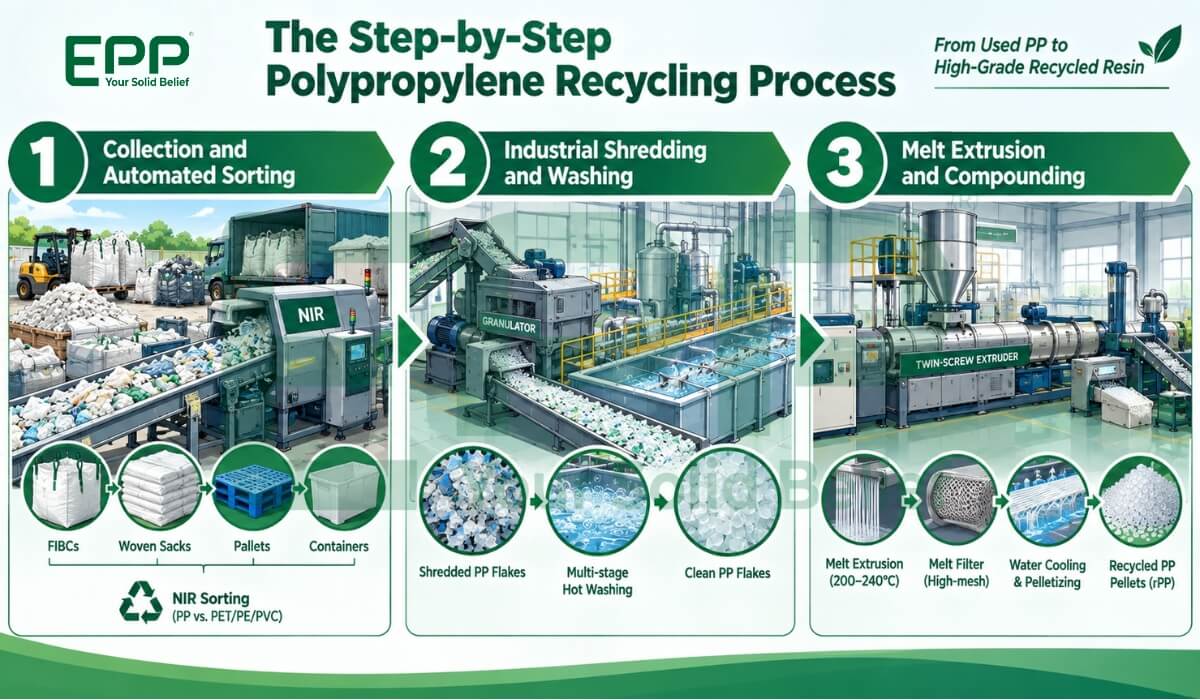
The PP recycling process turns sorted plastic waste into reusable recycled resin.
Mechanical vs. Chemical Recycling for Polypropylene
Different recycling technologies offer distinct operational trade-offs depending on input waste quality and end-use application requirements.
| Key Feature / Attribute | Mechanical Recycling | Chemical Recycling (Pyrolysis / Depolymerization) |
| Primary Process | Shredding, washing, re-melting, and pelletizing without altering polymer chemistry. | Thermal or catalytic breakdown of PP chains into basic hydrocarbon monomers or oil. |
| Output Quality | Minor degradation in tensile strength over repeated processing loops. | Virgin-equivalent purity and mechanical properties. |
| Food-Contact Approval | Restricted for direct food contact unless using specialized, certified decontamination lines. | Approved for food-grade applications due to complete molecular purification. |
| Energy Consumption & $CO_2$ | Extremely low carbon footprint and low energy input. | Higher energy requirement and capital costs compared to mechanical processing. |
| Ideal Input Waste | Clean, well-sorted industrial PP scrap, un-laminated woven fabrics, and rigid containers. | Highly contaminated, multi-layer, or mixed plastic waste streams difficult to sort mechanically. |
Mechanical Recycling
Mechanical recycling is the most common method for processing recycled polypropylene (rPP). The material is sorted, washed, melted, and re-pelletized without altering its fundamental chemical structure. It provides a highly cost-effective, low-carbon solution for industrial applications, though thermal processing gradually shortens polymer chains over repeated recycling loops.
Chemical Recycling (Pyrolysis)
Chemical recycling uses thermal depolymerization or pyrolysis to break the chemical bonds of PP waste back down into basic hydrocarbon monomers or pyrolysis oil. Re-synthesized PP resin matches the purity and mechanical performance of virgin material, making it suitable for delicate or food-contact applications, though it requires higher capital investment and energy input. For details on regulatory criteria for direct contact materials, read our guide on food grade plastics.
What Can Recycled Polypropylene Be Used For?
Advancements in polymer compounding allow recycled PP to replace virgin resin in numerous structural and commercial applications.
- Heavy-Duty Industrial Bulk Packaging: High-grade rPP blended with virgin resin (typically a 30% rPP to 70% virgin PP blend) is used to manufacture woven fabric for bulk bags, maintaining necessary Safe Working Load (SWL) safety factors. Procurement managers can explore standard and custom bulk options before buying bulka bags for industrial transport.
- Reusable Shopping & Retail Bags: As single-use plastic bans expand worldwide, demand has skyrocketed for non-woven and woven rPP tote bags, grocery shopping bags, and promotional sacks that offer exceptional strength, tear resistance, and multi-year reusability.
- Automotive Parts: Bumper fascias, wheel arch liners, battery cases, and interior dashboard trim.
- Construction and Infrastructure: Storage crates, plastic pallets, drainage pipes, and synthetic composite lumber.
- Consumer Goods: Storage bins, garden furniture, outdoor carpets, and utility buckets. To learn more about the intrinsic chemical properties and versatile industrial uses of PP, read our technical article on Polypropylene and its applications.
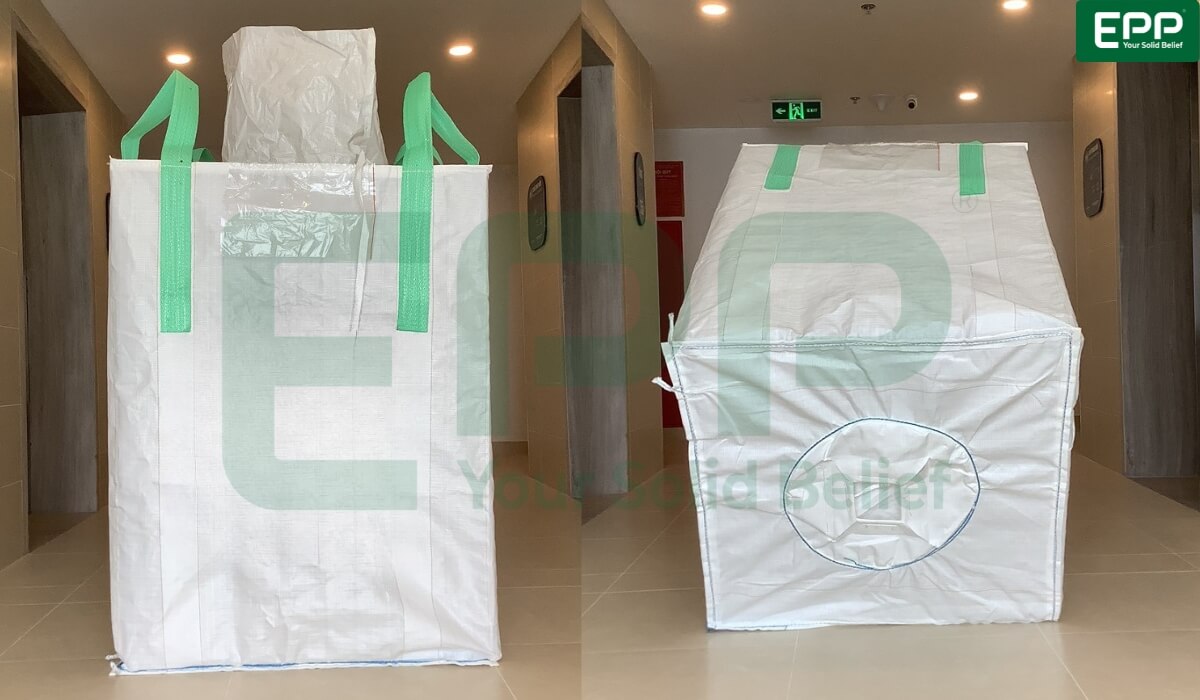
30% rPP blended bulk bag from EPP Vietnam.
How Can PP Packaging Be Designed for Recycling?
Achieving true circularity requires designing products for easy end-of-life processing right from the start. “Design for Recycling” principles include:
- Mono-Material Construction: Manufacturing every part of a package from Polypropylene. In bulk bags, using 100% PP for the body fabric, lifting loops, sewing thread, and document pockets eliminates the need to separate components before shredding.
- Easy-to-Remove Liners and Labels: Using compatible PP liners or un-laminated constructions reduces contamination during industrial washing.
- Pigment Selection: Avoiding heavy black carbon pigments that hide plastic from NIR optical sorters, opting instead for natural, unpigmented, or light-colored resins that yield high-value rPP.
Expert FAQ: Polypropylene Recycling in Practice
Does Recycling Polypropylene Help the Environment?
Yes. Processing recycled polypropylene consumes up to 88% less energy and generates up to 65% fewer greenhouse gas emissions compared to synthesizing new PP resin from virgin crude oil. It also diverts plastic waste from landfills and oceans.
Is recycled polypropylene safe?
Recycled polypropylene is safe for structural, industrial, automotive, and general consumer packaging. However, mechanically recycled PP is restricted from direct food-contact packaging unless processed via specialized, FDA/EFSA-cleared decontamination technologies.
Are rPP FIBC bags safe for heavy-duty industrial transport?
Yes, when engineered properly. By utilizing controlled blend ratios (such as 30% rPP with 70% virgin PP) and adding high-performance tensile modifiers, rPP bulk bags meet rigorous ISO 21898 testing requirements for burst strength and safe working loads (e.g., 1000kg–2000kg with a 5:1 or 6:1 Safety Factor).

Why is the recycling rate of PP lower than PET?
Polypropylene is frequently used in complex, non-bottle applications like multi-layer films, food containers, and woven fabrics, which are harder to collect and clean than clear PET beverage bottles. Additionally, black or heavily pigmented PP often bypasses traditional optical sorters. However, advances in NIR technology and mono-material design are rapidly closing this gap.
Building a Circular Supply Chain
Learning how to recycle Polypropylene and integrating rPP products into your operations strengthens your corporate sustainability profile while maintaining logistics efficiency. Partnering with an experienced vendor ensures that eco-friendly packaging meets all required mechanical and regulatory standards.
Partnering with EPP Vietnam grants you direct access to an extensive network of certified manufacturing facilities, offering competitive pricing, flexible container consolidation, and strict batch-by-batch quality control. Contact EPP Vietnam today to learn more about our rPP solutions, custom technical evaluations, and B2B sourcing for recycled or virgin FIBC bulk bags, heavy-duty PP woven bags, and reusable shopping bags.
🌐Website:https://epp.vn – https://eppvietnam.trustpass.alibaba.com
📲+84 986 002 888 – [email protected]