Selecting the right flour bag packaging is a strategic decision that directly impacts profitability, product safety, and brand reputation across the global food supply chain. As industrial mills expand their export capacity and automation transforms modern food processing, standard packaging solutions fall short.
This comprehensive B2B sourcing guide explores the technical, operational, and regulatory aspects of industrial flour packaging, comparing mainstream materials, breaking down advanced engineering standards, and providing actionable procurement recommendations.
The Critical Role of Specialized Flour Bag Packaging
Industrial flour handling presents unique physical, chemical, and environmental challenges. Unlike granular commodities like grain or plastic pellets, flour is a finely milled powder requiring specialized packaging engineered for structural integrity, barrier protection, and operational safety.

Flour’s fine, lightweight consistency requires specialized moisture-barrier
A breakdown in packaging integrity risks lost inventory, cross-contamination, insect infestation, and explosive dust build-up during high-speed filling. Sourcing specialized, food-grade flour packaging prevents product loss, ensures international regulatory compliance, and optimizes container volume for global shipment.
Common Types of Flour Bag Packaging: A Detailed Comparison
Choosing the correct packaging format depends on the target market, distribution scale, and handling infrastructure. The table below compares the primary packaging options used across industrial supply chains and commercial retail networks.
Flour Bag Packaging Formats Comparison
| Packaging Type | Typical Capacity & Sizes | Primary Material Construction | Key Advantages | Operational Limitations | Target Use Case |
| Industrial FIBC Bulk Bags |
500 kg – 1,500 kg (e.g., 90x90x120 cm to 105x105x200 cm) |
Virgin Polypropylene (PP) Woven Fabric with PE Liner | Maximum volume efficiency, reduced labor costs, customizable anti-sift seams. | Requires heavy lifting machinery (forklifts/cranes) for handling. | B2B industrial bakeries, commercial flour mills, export shipments. |
| Multiwall Kraft Paper Bags/ Kraft paper laminated woven bags |
10 kg – 25 kg (e.g., 40x10x65 cm to 50x12x80 cm) |
2 to 4 plies of natural Kraft paper or Kraft paper and pp woven bags, optional PE film inner layer | Excellent printability, eco-friendly perception, flat stackability. | Vulnerable to tearing, high moisture sensitivity if unlined. | Commercial food service, artisanal bakeries, wholesale distribution. |
| Polypropylene (PP) Woven Bags |
5 kg – 50 kg (e.g., 30×60 cm to 60×100 cm) |
Woven PP tape, optional BOPP laminated film coating | Exceptional tensile strength, tear resistance, cost-effective, moisture resistant. | Uncoated woven fabric permits fine particle sifting without inner liners. | Agricultural distribution, regional markets, bulk commercial sales. |
| Flexible Plastic Pouches |
500 g – 5 kg (e.g., 15×22 cm to 30×45 cm) |
Multi-layer laminates (PET/PE, PET/AL/PE, Stand-up/Side Gusset) | High barrier against oxygen/moisture, premium shelf presence, resealable. | Higher per-unit cost, unsuitable for bulk industrial transport. | Retail consumer sales, specialty organic flours, direct-to-consumer. |
| Textile / Cotton Sacks |
1 kg – 10 kg (e.g., 20×30 cm to 35×55 cm) |
100% natural woven cotton or linen | Reusable, traditional aesthetic, highly breathable. | Poor moisture barrier, high unit cost, prone to pest penetration. | Niche specialty markets, organic branding, traditional artisanal retail. |
Deep-Dive: Industrial Packaging Formats
Industrial FIBC Bulk Bags
FIBCs, also known as super sacks or Jumbo bags, dominate B2B industrial flour supply chains. Engineered to hold up to 1,500 kg, these heavy-duty containers streamline bulk loading and unloading operations. Exploring popular types of FIBC bags for flour helps buyers identify ideal configurations—such as spout-top or baffle designs—that maximize payload capacity inside 20ft and 40ft shipping containers.
Multiwall Kraft Paper Bags
Multiwall paper sacks remain a popular choice for 10 kg to 25 kg commercial Flour Bag Packaging. Constructed from multiple layers of extensible Kraft paper or in combination with PP/ PE woven fabric, they provide structural rigidity and clean stacking. Incorporating a polyethylene inner ply creates a moisture barrier that extends product shelf life while maintaining a clean aesthetic for commercial bakeries.
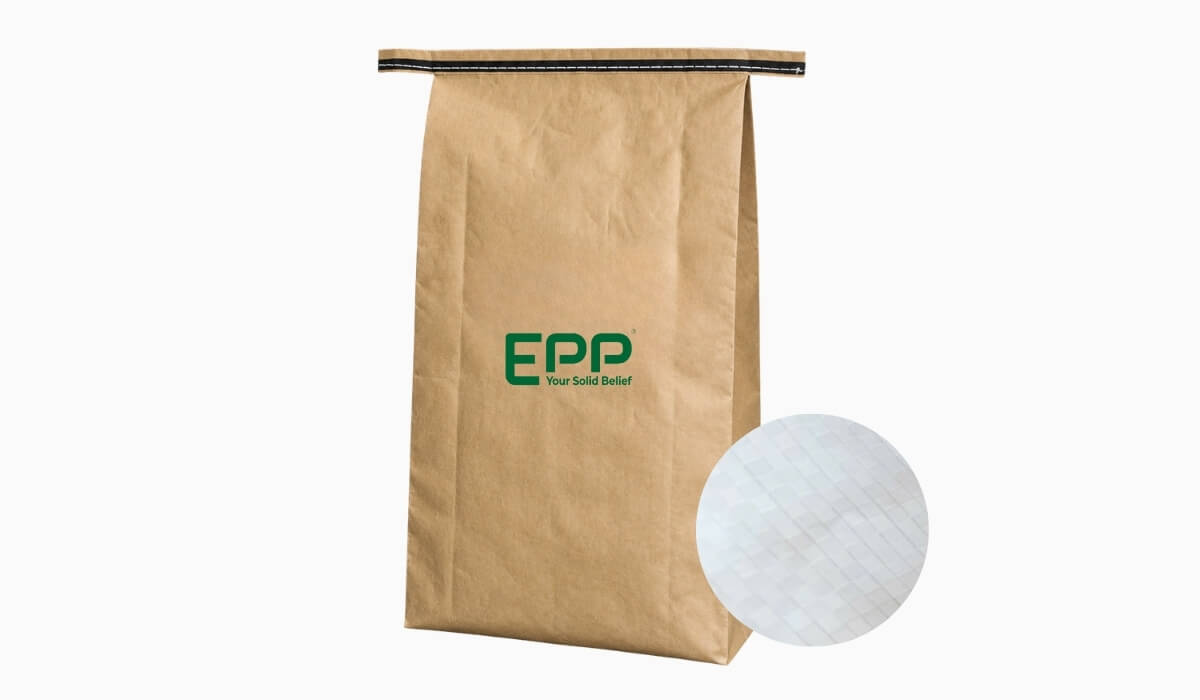
Laminated Kraft paper bag from EPP Vietnam for commercial distribution
Polypropylene (PP) Woven Bags
PP woven sacks offer high tear strength and durability for medium-capacity transport (25 kg to 50 kg). Available with biaxially oriented polypropylene (BOPP) laminated films, these bags feature high-definition photographic printing alongside complete moisture protection, making them ideal for regional distribution across demanding transport environments.
Flexible Plastic Pouches
Used primarily in consumer retail markets (500 g to 5 kg), flexible pouches—such as stand-up pouches (SUP) and side-gusseted bags—deliver high barrier protection against humidity and oxygen. Advanced multi-layer laminates preserve flour quality while providing premium branding opportunities on retail shelves.
Textile / Cotton Sacks
Cotton and textile bags serve high-end, organic, and heritage flour brands. While offering excellent breathability for specialty grains, their porous nature requires secondary protective lining during long-distance transit to prevent moisture absorption and insect infestation.
Essential Features of Flour Bag Packaging
To ensure high operational efficiency and product integrity throughout transcontinental logistics, high-quality flour packaging must integrate several core features:
- Dust-Tight & Anti-Sift Seals: Micro-fine flour particles easily escape through standard sewn seams. Effective packaging must incorporate filler cord stitching, laminated coatings, or welded inner liners to eliminate sifting.
- Moisture & Oxygen Barrier Protection: Flour is highly hygroscopic; exposure to humidity leads to caking, microbial growth, and shortened shelf life. High-barrier films (PE/EVOH or aluminum foil laminates) insulate the contents from moisture and atmospheric oxygen.
- Electrostatic Hazard Dissipation: Fast-flowing organic dust particles generate static charges during high-speed filling. Comparing antistatic bulk bags vs standard FIBCs highlights why Type B or grounded Type C constructions are critical for mitigating dust explosion hazards in automated facilities.
- Structural Rigidity & Stackability:Flour Bag Packaging must maintain dimensional stability when stacked on pallets. Baffle inserts in bulk bags or gusseted designs in smaller sacks prevent bulging and tipping during transit.
- High-Definition Printability & Food-Contact Compliance: Custom branding transforms standard industrial packaging into a silent marketing ambassador. Sourcing bulk bags with logo enables commercial brand recognition on retail and wholesale floors using non-toxic, food-safe inks, while inner contact layers meet strict international regulations.
Advanced Engineering for Flour bag Packaging from EPP Vietnam
At EPP Vietnam, industrial packaging design goes beyond standard bag assembly. Engineering high-performance flour packaging requires addressing the micro-physical properties of powdered products through specialized manufacturing processes.
1. Sift-proof Seam Technology
Flour particles measure between 5 to 100 microns, making them prone to leaking through standard needle punctures along sewn seams. EPP Vietnam utilizes specialized Sift-proof Technology, embedding polypropylene felt cords and double-seal stitching along every seam. This prevents product leakage, keeps transport containers clean, and eliminates dust contamination.
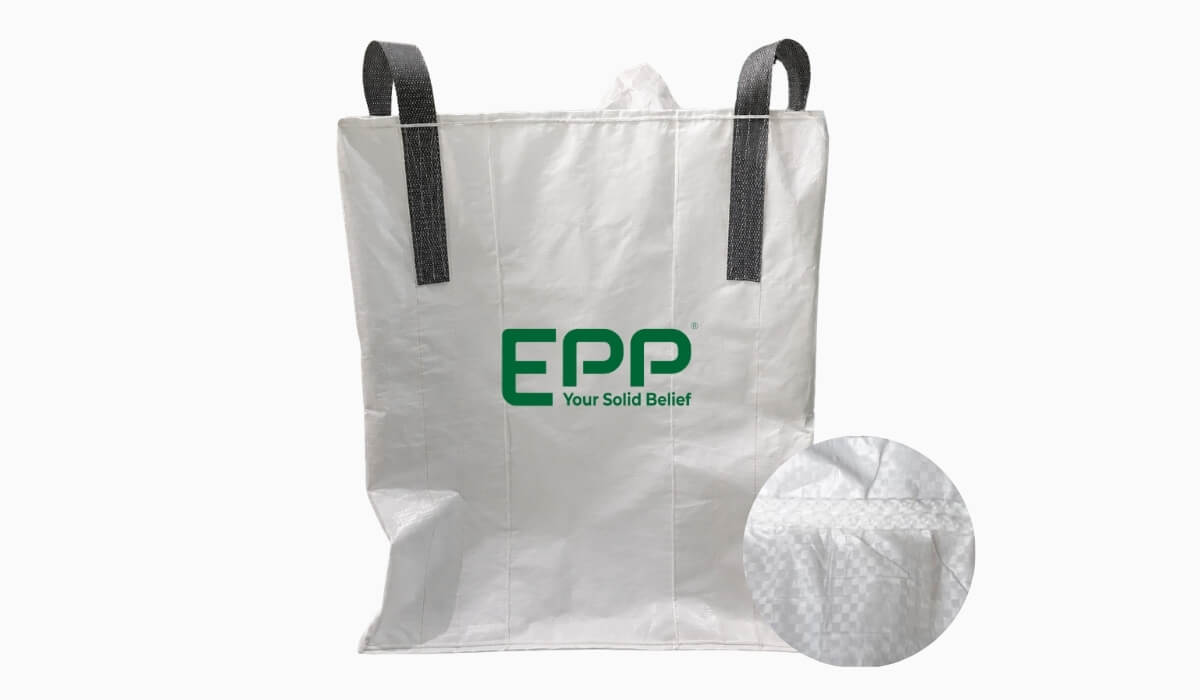
Baffle FIBC structure with anti-sift cord stitching
2. Electrostatic Protection (Type B & Type C Anti-Static FIBCs)
High-speed pneumatic filling of dry flour generates significant electrostatic charges. In ungrounded environments, static discharge can ignite airborne flour dust, creating severe explosion risks. EPP Vietnam manufactures certified Type B (spark-breakdown prevention) and Type C (conductive grounding threads) FIBC bulk bags compliant with IEC 61340-4-4 standards, protecting personnel and processing facilities.
3. Food-Grade Cleanroom Manufacturing
Preventing chemical and biological contamination is essential for food-contact packaging. EPP Vietnam’s production facilities operate under strict cleanroom conditions certified to BRCGS, ISO 22000, FSSC 22000 and HACCP standards for food grade bulk bags. All flour packaging is extruded using 100% virgin polypropylene resin compliant with US FDA and EU food-contact regulations.
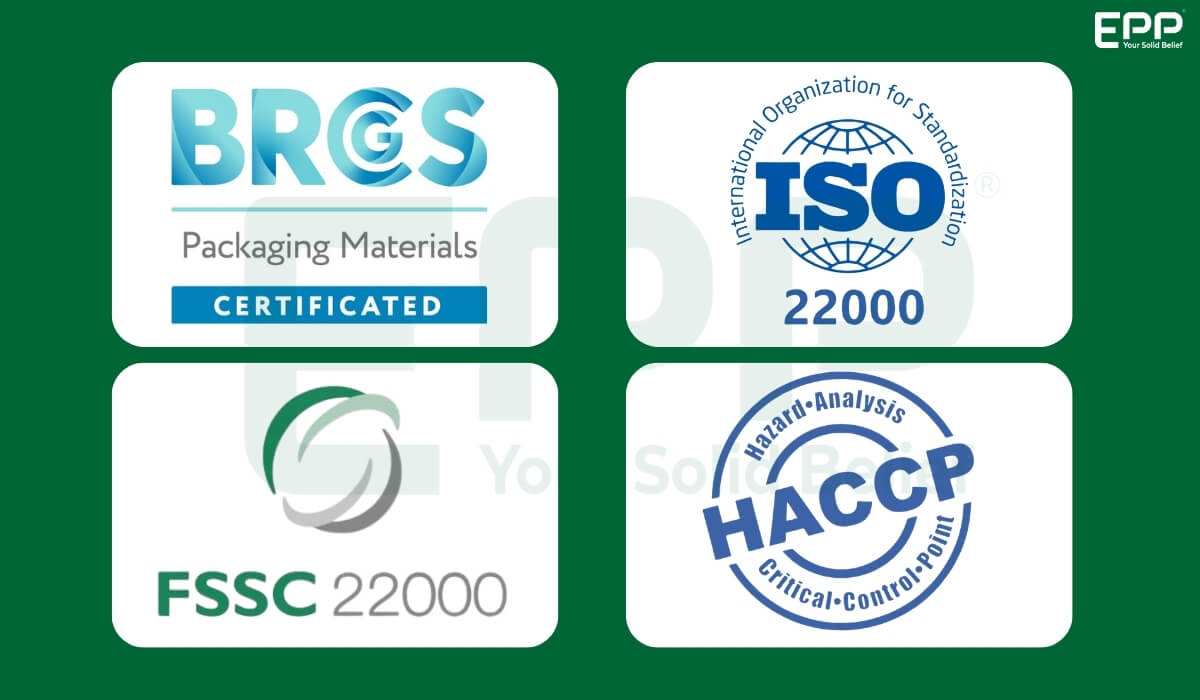
List of certification for food-safe packaging
4. Custom Moisture Barrier & Form-Fit Liners
To protect flour against tropical humidity during sea freight, EPP Vietnam integrates advanced low-density polyethylene (LDPE), linear low-density polyethylene (LLDPE), and aluminum barrier liners. These form-fit liners conform to the bag’s outer dimensions, preventing twisting, trapping air, and isolating the contents from moisture, oxygen, and foreign odors.
Selecting the right flour bag packaging requires balancing structural performance, regulatory compliance, and cost efficiency. For high-volume industrial exporters and commercial mills, partnering with an experienced manufacturer ensures your supply chain remains safe, clean, and profitable.
Ready to optimize your industrial flour packaging supply chain? Contact EPP Vietnam’s technical packaging specialists today to request technical specifications, order custom samples, and receive a competitive quotation tailored to your global export requirements.
Website: epp.vn
Alibaba website: https://eppvietnam.trustpass.alibaba.com/
Email: [email protected] Hotline/ Whatsapps: +84 986 002 888