
The transport, storage, and handling of dry, flowable chemicals—from fertilizers and catalysts to pigments and pharmaceuticals—are inherently high-risk operations. To mitigate the danger of spills, contamination, and explosion, the industry relies on highly specialized packaging: chemical bulk bags (Flexible Intermediate Bulk Containers, or FIBCs). These containers are engineered far beyond standard bulk sacks, incorporating specific safety features and adhering to stringent international protocols.
For logistics managers and safety officers, understanding the technical specifications and mandatory safety standards associated with these bulk bags for the chemical industry is non-negotiable for ensuring regulatory compliance and worker protection.
What are Chemical Bulk Bags?

Chemical bulk bags are FIBCs specifically designed and constructed to safely contain and transport chemical products, which may be hazardous (corrosive, toxic, or flammable) or highly sensitive (food-grade additives, moisture-reactive powders). Unlike generic bulk bags, chemical-grade FIBCs feature enhanced protection against leakage, sifting, static discharge, and environmental degradation, often being UN Certified for compliance with international regulations on dangerous goods.
Key Features and Considerations
The selection process for a chemical bulk bag starts with matching the bag’s features to the product’s physical and chemical properties:
Material:
Typically made from heavy-duty woven polypropylene (PP). This thermoplastic resin is chosen for its excellent strength-to-weight ratio and its inherent resistance to most non-aggressive chemical reactions and tearing. UV stabilizers are compounded into the PP resin to prevent material degradation when the bags are stored outdoors.
Liners:
The purity and safety of chemicals often depend on an airtight seal. Chemical storage fibc frequently include specialized inner liners (e.g., polyethylene, co-extruded films, or aluminum foil barriers). These liners provide an extra layer of protection against moisture ingress, oxygen exposure, and chemical permeation, especially critical for hygroscopic or sensitive powders.
Capacity:
Designed for heavy-duty industrial use, chemical bulk bags have typical Safe Working Loads (SWL) ranging from 2,000 lbs to over 4,000 lbs (1,000 kg to 2,000 kg).
Design:
Feature various top and bottom closures (e.g., duffel tops, filling spouts, or discharge spout bottoms) for efficient, dust-free filling and controlled discharging directly into processing equipment.
Safety Factor (SF):
Standard, non-hazardous-use FIBC bags have a 5:1 safety factor (meaning they are tested to withstand five times their SWL before failure). Bags used for hazardous or dangerous goods must meet a stricter 6:1 safety factor ratio, meaning they are rigorously tested to withstand six times their SWL during testing procedures (e.g., top lift, stacking, and drop tests).
Types and Safety Standards for Chemical Bulk Bags

The most crucial selection criterion for chemical bulk bags is determining the appropriate type based on the material’s flammability and the risk posed by static electricity. The four main types (A, B, C, and D) govern static control, while UN certification governs overall structural integrity for hazardous goods.
Static Control FIBC Types (Types A, B, C, D)
| Bag Type | Static Control Feature | Application | Safety Requirement |
| Standard (Type A) | No special static features. | Non-hazardous materials in non-flammable environments. | Never use with flammable materials or in explosive atmospheres. |
| Type C (Conductive) | Interwoven conductive threads. | Flammable powders in environments with flammable gases/dust. | Must be electrically grounded during filling and emptying operations. |
| Type D (Static Dissipative) | Specialized fabric dissipates charge. | Flammable powders in explosive atmospheres where grounding is impractical. | Does not require grounding, as it dissipates static into the atmosphere. |
UN Certified Bulk Bags (Hazardous Goods)
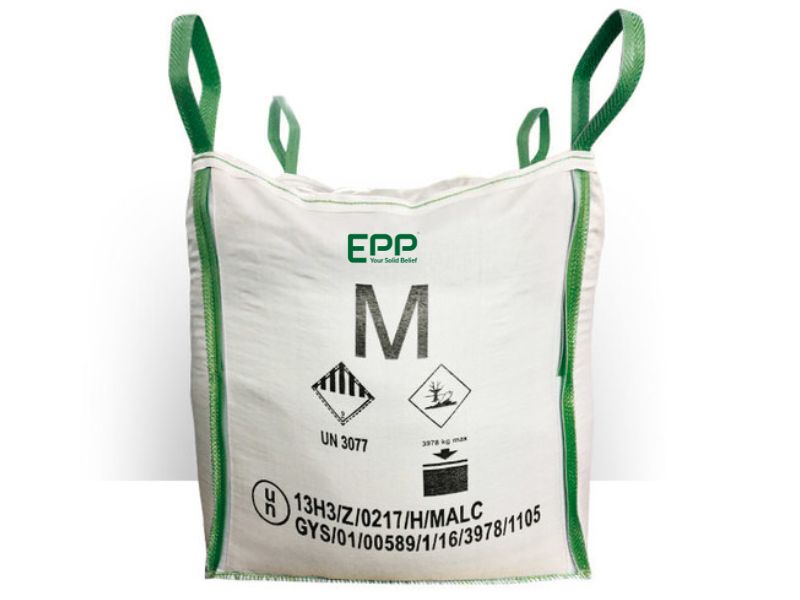
UN Certified FIBCs are the highest standard of chemical bulk bags. They are rigorously tested and approved by the United Nations for the safe transport and storage of materials classified as hazardous (e.g., flammable solids, oxidizers, corrosives, or toxic powders).
-
Regulations: They are mandatory for compliance with global regulations, including the U.S. Department of Transportation (USDOT) Hazardous Materials Regulations (HMR).
-
Testing: To receive a UN code (e.g., 13H3/Y), the bag must pass a battery of performance tests, including: Drop, Topple, Righting, Tear, and Stacking Tests, all performed at a $6:1$ safety factor.
-
Classification: The UN marking indicates the bag’s construction type and the Packing Group it is certified for (Group I, II, or III), which corresponds to the degree of danger of the material.
Essential Tips for Safely Using Chemical Bulk Bags
Adherence to strict protocols during handling ensures the integrity of the bag and the safety of personnel.
-
Select the Correct Static Type: Always verify the material’s Minimum Ignition Energy (MIE). If the powder is combustible or the environment contains flammable vapors, Type C or Type D FIBCs are mandatory.
-
Ensure Proper Grounding (Type C Bags): If using Type C bags, confirm that the conductive threads are properly connected to a certified ground point throughout the entire filling and discharging process. Failure to ground a Type C bag renders it highly dangerous.
-
Inspect Thoroughly Before Use: Before every use, inspect the entire bag, focusing on lift loops, seams, and the fabric for cuts, tears, or previous chemical staining that could compromise its integrity. Never use a damaged bag for hazardous materials.
-
Adhere to SWL and Stacking Limits: Never exceed the bag’s Safe Working Load (SWL). Stack bags only according to the manufacturer’s specified stacking factor, ensuring the bottom bags are not crushed.
-
Protect from UV Exposure: Prolonged exposure to sunlight degrades the polypropylene fabric, significantly weakening the bag’s tensile strength. Store chemical bulk bags under cover when possible.
FAQ about Chemical Bulk Bags
What is the difference between a Type C and a Type D bulk bag?
Type C bags must be grounded by the user to safely dissipate static charge via conductive threads. Type D bags are designed with specialized fabric to dissipate static charge safely without requiring a physical connection to the ground, eliminating the human error associated with grounding.
Are all chemical bulk bags UN Certified?
No. Only bags designed and tested to carry materials classified as Dangerous Goods (Hazardous Materials) require and receive UN certification. Bags for non-hazardous materials, such as common salts or non-toxic pigments, only require standard industry safety factors (5:1).
How do I know the correct UN code for my material?
You must consult the manufacturer’s documentation and the UN Recommendations on the Transport of Dangerous Goods (“The Orange Book”). The UN code is determined by the specific hazard class, physical properties, and Packing Group (I, II, or III) of the product being shipped.
Can I reuse a chemical bulk bag?
Only bags explicitly designed and marked for multiple trips (typically 6:1 SF bags) can be reused. Bags for hazardous goods must adhere to strict reuse criteria, which often mandate re-testing and specialized inspection to maintain certification integrity.
The safe and compliant management of hazardous and sensitive materials relies heavily on the correct selection and use of chemical bulk bags. These specialized FIBCs are engineered to mitigate the risks associated with static electricity (Types C and D), structural failure (6:1 Safety Factor), and contamination (Liners and UN Certification).
For procurement and safety teams, treating the FIBC as a critical component of safety infrastructure—not just as packaging—is essential. By meticulously choosing the appropriate static-control type and ensuring compliance with stringent standards like UN Certification, companies protect their valuable products, prevent catastrophic workplace accidents, and maintain adherence to global hazardous material regulations. Investing in the right chemical bulk bags is an investment in safety, compliance, and supply chain integrity.