
1 ton jumbo bag price considerations are at the heart of industrial procurement strategies. For global businesses the question isn’t simply “how much does it cost,” but rather “what is the cost of the bag failing?” As a specialized Vietnam supplier of FIBCs, we see daily how the quest for the lowest price can either save a company thousands or cost them a fortune in lost product and safety fines.
The 1 ton (1000kg) capacity is the global standard for bulk logistics. However, the price gap between a “budget” bag and a “premium” bag can be as wide as 40%. Understanding the structural engineering behind these prices is the first step toward making a suitable, cost-effective purchase.
Anatomy of a 1 Ton Jumbo Bag Structure

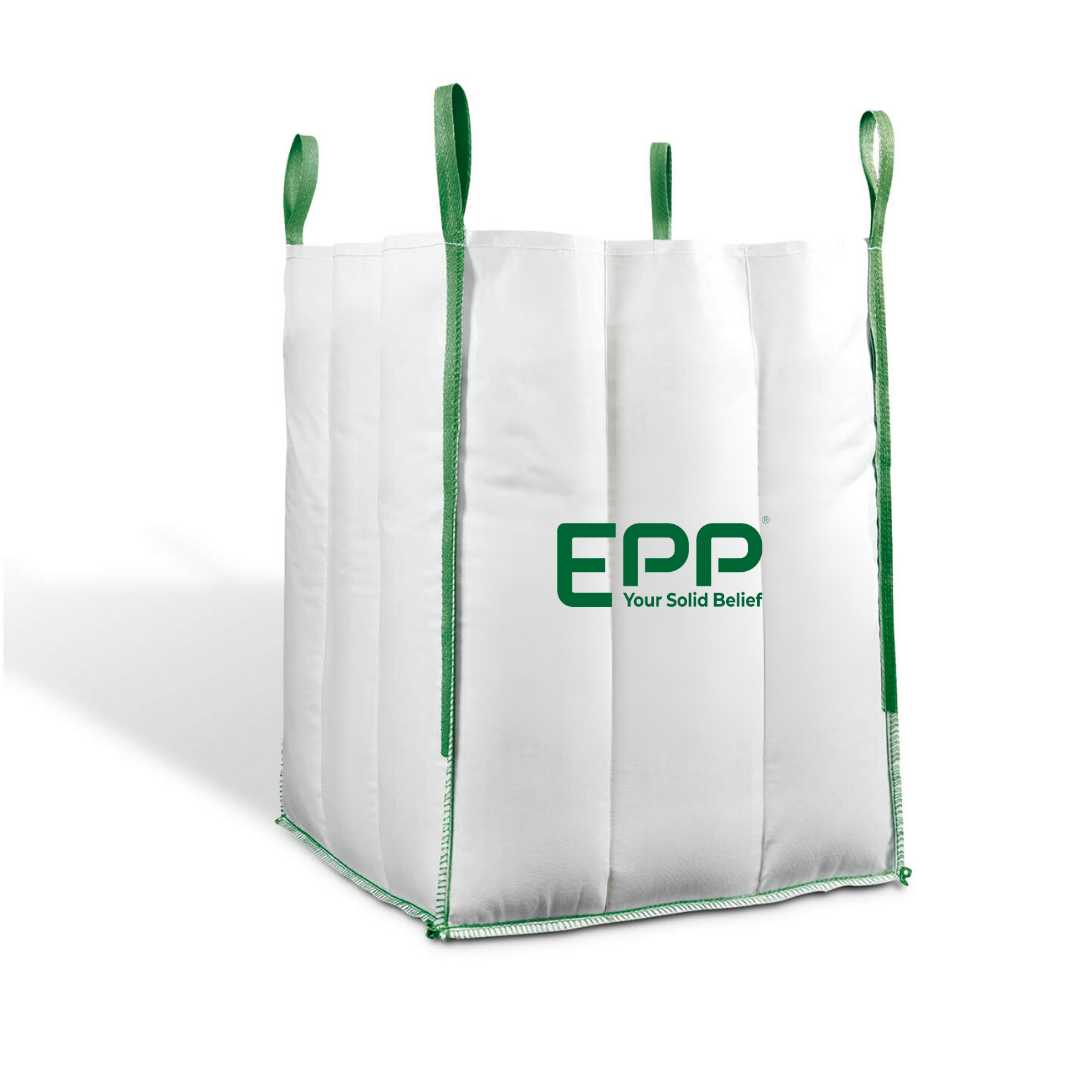
To understand why a 1 ton jumbo bag price varies so significantly, we must look at the anatomy of the container. A 1000kg bag is not a commodity; it is a structural lifting device engineered to handle a literal ton of pressure.
- The Body Fabric: The most critical component is the woven Polypropylene (PP) fabric. Its strength is measured by GSM (grams per square meter). A standard 1-ton bag requires a GSM between 160 and 220 to ensure the fabric doesn’t stretch or tear under load.
- Lifting Loops: These are the primary safety points. High quality bulk bags use high-tenacity yarn for loops, often with a “herringbone” stitch pattern to ensure the Safe Working Load (SWL) is met.
- Seams and Stitching: The “lines of defense.” High-spec bags utilize safety seams or dust-proof piping to prevent fine powders from leaking through needle holes.
- Specialized Components: This includes filling spouts, discharge valves, and internal baffles (in Q-bags) that maintain the bag’s square shape for container optimization.
The Anatomy of Low 1 Ton Jumbo Bag Price

What exactly are you buying when you choose a low 1 ton jumbo bag price? In many cases, these bags are designed for “low-risk, single-trip” applications.
Manufacturers achieve these lower price points through:
- Recycled Resin Blends: By mixing a percentage of recycled PP with virgin resin, material costs drop. However, this often makes the bag more brittle and less resistant to UV sunlight.
- Minimalist GSM: A budget bag may use 140g or 150g fabric. While it can technically hold 1000kg, it leaves zero margin for error during a sudden forklift jerk or high-stacking pressure.
- Standardized Production: These FIBC bags usually lack customization. They are produced in “mass-runs” with standard dimensions (e.g., 90x90x110cm) and simple open-top designs.
- Reduced UV Stabilization: UV inhibitors are expensive chemical additives. Low-cost bags often skimp on these, meaning the bag can lose 50% of its strength after just 48 hours of exposure to the intense sun at a shipping port.
The Value Proposition of High 1 Ton Jumbo Bag Price
A high 1 ton jumbo bag price is not a markup for a brand name; it is a premium for performance. For manufacturers, a premium price reflects:
- 100% Virgin Resin: We use only virgin polypropylene, which offers superior tensile strength and elasticity. This ensures the FIBC bag can withstand a 5:1 or even 6:1 Safety Factor (SF).
- Precision Engineering (Baffled Bags): Premium “Q-Bags” contain internal fabric walls. While they cost more to sew, they stay perfectly square when filled. This allows you to fit 20% more product into a 40ft shipping container, effectively making the “expensive” bag cheaper in terms of total freight cost.
- Safety Certifications: High-priced bags often come with Certifications, UN-Certification for hazardous materials or BRCGS/ISO 22000 for food and pharmaceutical purity.
- Longevity (Multi-Trip): A 6:1 rated bag is designed for multiple uses. Buying one “expensive” bag that lasts two trips is significantly cheaper than buying two “cheap” bags.
The Hidden Costs of Low Prices

The danger of a low 1 ton jumbo bag price is that the “savings” are often eaten up by operational failures.
- The Cost of Failure: If a $5.00 bag bursts, the cost isn’t $5.00. It is the cost of the 1000kg of spilled material, the 4 hours of labor to clean the warehouse, and the potential injury to a worker.
- In-Transit Damage: Lower GSM fabric is prone to “micro-tears” during sea transit. By the time the bag reaches your customer, the product has leaked, damaging your brand’s reputation for quality.
- Logistical Waste: “Bulging” cheap super sacks don’t stack well. They tilt, create safety hazards in the warehouse, and prevent you from maximizing your truck or container space.
When to Buy Which? Selecting the Suitable Bag
The “suitable” bag is the one that balances risk with cost.
- Choose the Low-Price Option if: You are moving low-value, non-hazardous waste (like construction debris or scrap metal), the big bags are stored indoors, and they are strictly for one-way transport.
- Choose the High-Price Option if: You are exporting via sea containers, handling high-value materials (food ingredients, chemicals, minerals), stacking bags 3-high, or operating in environments with significant sunlight or moisture exposure.
Questions to Ask Your Supplier for 1 Ton Jumbo Bag Price

To ensure you are getting a fair 1 ton jumbo bag price for the quality you need, ask your Vietnam supplier these targeted questions:
- “What is the virgin-to-recycled resin ratio?” (Insist on 100% virgin for heavy-duty or food-safe needs).
- “What is the actual GSM of the fabric?” (Compare this across quotes; a lighter bag should always be cheaper).
- “What is the Safety Factor (SF) and can you provide a lab test certificate?” (Do not accept a 1-ton bag without a verified 5:1 or 6:1 test).
- “How many hours of UV protection are included?” (Crucial if bags are stored outside or in tropical climates).
As a leading Vietnam manufacturer, EPP Vietnam’s goal is to help you move away from “price shopping” and toward “strategic sourcing.” The 1 ton jumbo bag price is a reflection of reliability. By understanding the anatomy of your bags and asking the right technical questions, you can identify where to save money and where to invest in quality.
In the long run, the most suitable bag—the one that delivers your product safely, maximizes your container space, and protects your workers—is the only one that truly lowers your total cost of operation.