Jumbo bags 500kg—often referred to in the industry as half-ton FIBCs —are becoming the gold standard for businesses looking to balance manual handling capabilities with industrial-scale efficiency. As a leading Vietnam supplier of high-class jumbo bags, we have seen first-hand how companies overspend on packaging. If you are looking to optimize your supply chain, reduce overhead, and maintain peak safety standards, you need more than just a low price point; you need a strategic approach to procurement.
In this deep dive, we reveal the industry secrets that will help you slash costs without sacrificing the integrity of your bulk packaging.
The Half-Ton Advantage of Jumbo Bags 500kg

Why choose a jumbo bag 500kg over the standard 1000kg or 2000kg versions? The answer lies in versatility and the “sweet spot” of logistics. While larger FIBC maximize volume, the half-ton capacity is uniquely suited for high-density materials like minerals, chemicals, specialty sands, and agricultural seeds.
The primary advantage is maneuverability. A 500kg load can be moved by smaller forklifts and electric pallet jacks, which are common in smaller warehouses and retail distribution centers. By adopting the 500kg format, you reduce the need for heavy-duty infrastructure, lowering your operational entry barrier. Furthermore, for high-value products, the 500kg limit minimizes the risk of product “caking” or pressure damage that often occurs in taller, heavier bags.
1. Optimize Design and Minimize Features
One of the biggest “hidden” costs in FIBC procurement is over-specification. Many buyers purchase a “one-size-fits-all” bag that includes features their specific product never utilizes. To save big, you must audit your Jumbo Bags 500kg design.
- Fabric Weight (GMS): Do you really need 160g/m² fabric for a 500kg load? Often, a 120g/m² or 140g/m² high-tenacity circular woven polypropylene fabric is more than sufficient for a 5:1 Safety Factor (SF).
- The Bottom Choice: A flat bottom bag is significantly cheaper than one with a complex discharge spout. If your end-users typically slit the bottom of the bag to empty it, stop paying for the spout assembly.
- Coating vs. Liners: If you are moisture-proofing, is an internal PE liner necessary, or can a simple laminate (coating) suffice? Deconstructing these components with your Vietnam manufacturer can result in a 10-15% reduction in unit price.
2. The “Bulk-Direct” Sourcing Model

The traditional supply chain involves multiple middlemen—distributors, wholesalers, and local agents—each adding a markup. The “Bulk-Direct” secret involves sourcing directly from Vietnam jumbo bag suppliers or manufacturers.
Vietnam has emerged as a global hub for high-quality polypropylene products due to advanced manufacturing technology and competitive labor costs. By establishing a direct relationship with a specialized supplier or a factory, you gain:
- Customization: Tailoring the jumbo bags 500kg with the GSM, loop height, and UV stabilization to your exact climate and transit route.
- Transparency: Real-time quality control (QC) reports and direct communication regarding production timelines.
3. Reuse & Recycling
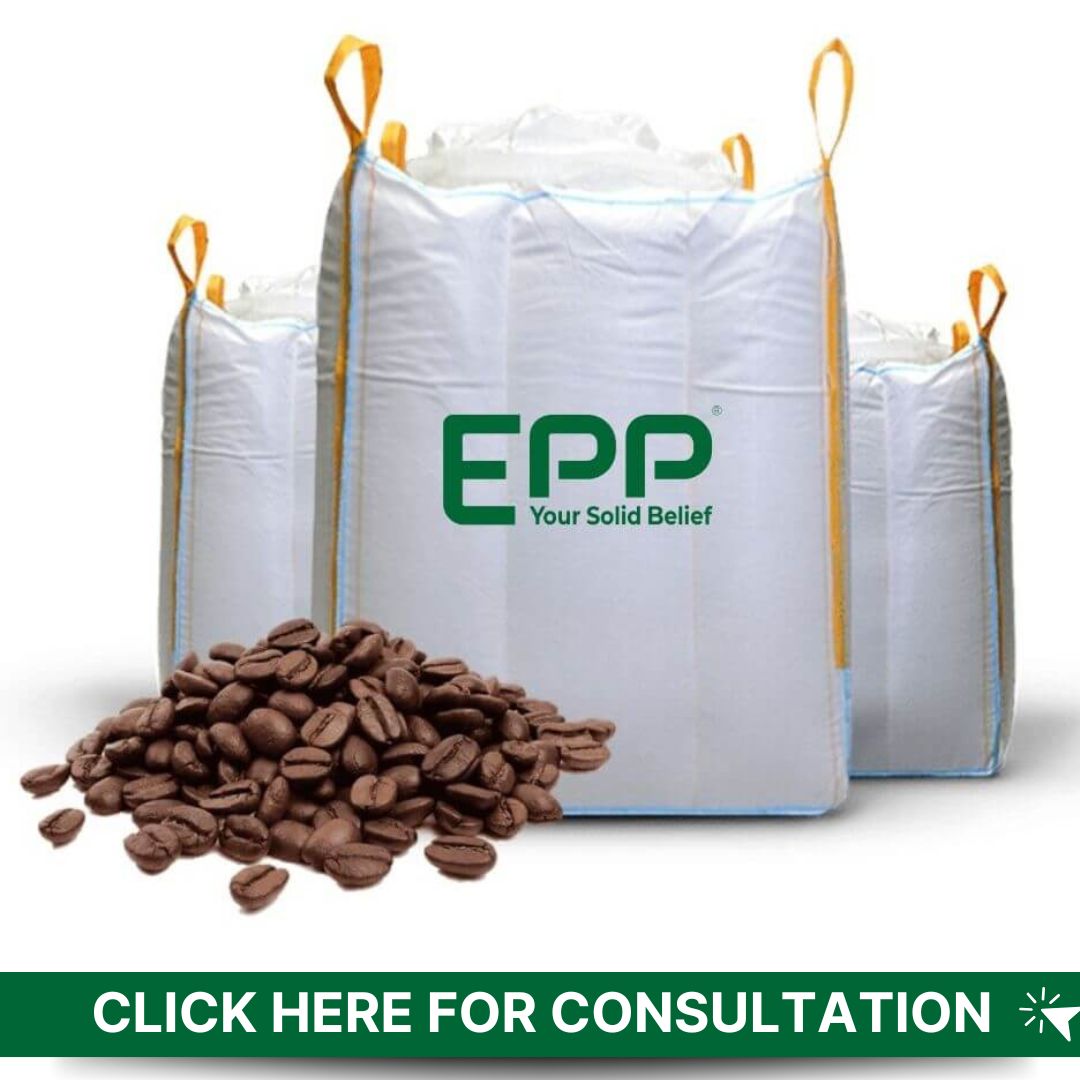
In today’s market, “Green” isn’t just a buzzword; it’s a cost-saving strategy. There are two ways to play this:
The Multi-Trip Strategy (6:1 SF): Instead of buying a cheap, single-use 5:1 bag, invest slightly more in a heavy-duty jumbo bags 500kg with a 6:1 Safety Factor. These are designed for multiple uses. If you operate a closed-loop supply chain (shipping between your own facilities), a bag that costs 20% more but lasts for 2 to 3 trips reduces your packaging cost per ton.
Recycled Content: Ask your supplier about bags made with a percentage of recycled PP resin. With improvements in polymer science, bags containing high-quality “re-pro” resin offer excellent durability at a lower price point, while also helping your company meet ESG (Environmental, Social, and Governance) targets.
4. Smart Storage & Handling to Prevent Loss
You can buy the best jumbo bags 500kg in the world, but if they are stored incorrectly, you are throwing money away. Polypropylene is sensitive to UV degradation and extreme temperature fluctuations.
- Indoor Storage: Always store your empty bags in a cool, dry place. Even UV-treated bags will eventually degrade if left under the harsh Southeast Asian or Australian sun for months. A degraded bag is a safety hazard and a total loss of investment.
- Pallet Management: Ensure your pallets are free of nails or splinters. For 500kg bags, a small puncture can lead to significant product leakage during transit. By implementing a “clean pallet” policy, you reduce the “damage rate” from 3% to near zero.
5. Consolidate Shipments to Lower Freight
The final secret isn’t about the bag itself, but how it gets to you. Because jumbo bags 500kg are lightweight but bulky, shipping “air” is your enemy.
- Bale Compression: Work with your Vietnam supplier to maximize bale compression. High-power hydraulic presses can fit more bags into a 40HQ container, significantly lowering the “landed cost” per bag.
- Inventory Synchronization: Instead of ordering 2,000 Jumbo Bags 500kg every month, consider ordering 12,000 bags every six months. The freight savings on a Full Container Load (FCL) versus a Less than Container Load (LCL) can be as high as 40%. In the world of high-volume industrial packaging, logistics optimization is often where the biggest margins are found.
As a dedicated Vietnam jumbo bag supplier, we understand that your goal is a balance of price, performance, and reliability. The 500kg capacity offers the perfect modularity for modern global trade. By optimizing your design, sourcing direct, and mastering your logistics, you can turn your jumbo bags 500kg from a “cost center” into a competitive advantage.