Determining accurate budgeting for High-Density Polyethylene (HDPE) liners requires a deep understanding of polymer economics, film extrusion mechanics, and application-specific engineering. Whether you are sourcing inner liners for Flexible Intermediate Bulk Containers (FIBCs) to protect hygroscopic chemical powders or heavy-duty geomembranes for agricultural containment, pricing extends far beyond basic square-meter or per-piece calculations.
In this technical guide, drawing on over 20 years of plastic extrusion and industrial packaging expertise at EPP Vietnam, we analyze the top 5 factors affecting the HDPE liner cost to help procurement officers and supply chain managers optimize costs without compromising structural barrier integrity.
1. Raw Material Quality and Polymer Grade
The foundational driver of any HDPE liner cost is the underlying resin chemistry, purity, and grade selection. High-Density Polyethylene is characterized by its dense crystalline structure (density >= 0.941 g/cm³), providing superior tensile strength, chemical resistance, and moisture vapor barrier properties.
- 100% Virgin Food-Grade HDPE Resin: Formulated from prime petrochemical feedstocks (such as C6 hexene or C8 octene co-monomers), virgin HDPE guarantees uniform Melt Flow Index (MFI) and zero risk of cross-contamination. It is mandatory for food-grade (FDA / BRCGS compliant), pharmaceutical, and high-purity chemical packaging. Virgin resin prices fluctuate directly with global petrochemical benchmarks (ICIS and Platts).
- Post-Industrial Recycled (PIR) & Post-Consumer Recycled (PCR) Blends: Incorporating 20% to 50% recycled HDPE can lower raw material unit costs by 10% to 20%. However, recycled resins introduce variable melt strength, potential micro-gel impurities, and reduced Environmental Stress Crack Resistance (ESCR).
Evaluating reliable raw material sources is essential for quality consistency. To explore leading global suppliers and production capabilities, consult our comprehensive industry directory on top HDPE liner manufacturers.
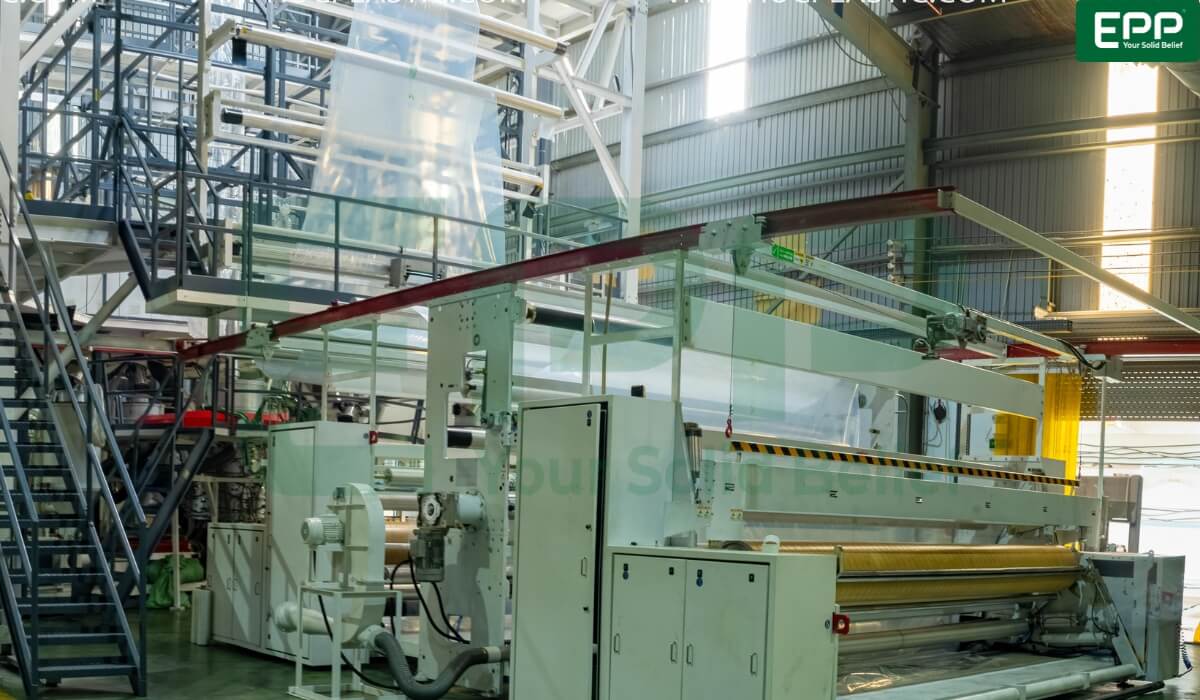
Multi-layer blown film extrusion machinery processing 100% virgin PE resin for high-barrier liners.
2. Liner Thickness and Size Specifications
In plastic film extrusion, material cost is directly tied to total polymer mass. Because HDPE liners are priced based on weight (metric tons) or calculated material throughput, film thickness—measured in microns for FIBC liners or mils/millimeters for heavy sheets—is a direct cost multiplier.
- FIBC Bulk Bag Liners (40 to 150 microns / 1.5 to 6 mil): Thinner 40–50 micron liners provide lightweight dust protection at a low unit cost. Upgrading to heavy-duty 100–150 micron liners increases resin mass per bag, raising unit costs proportionately while providing essential puncture resistance against sharp crystalline commodities.
- Agricultural & Industrial Containment (0.5 mm to 2.5 mm): Heavy agricultural sheets require substantially more polymer mass per square meter, increasing raw material consumption and freight weight. Explore our specialized agricultural film solutions designed for environmental and farming applications.
Understanding when your cargo requires protective inner barrier films is vital for cost-efficiency. Learn more about operational selection criteria in our guide on when should we use PE liners.
3. Manufacturing Process and Customization
The structural geometry, converting labor, and machinery precision required to process tubular film into functional inner liners significantly impact the total manufacturing cost.
- Standard Lay-Flat (Gusseted) Liners: Produced on continuous blown film lines and cut to length, lay-flat liners require minimal conversion labor, representing the most economical option.
- Form-Fit & Bottle-Shaped Liners: Custom 3D-shaped liners match the exact interior dimensions of an FIBC, featuring pre-formed top spouts and bottom discharge chutes. Manufacturing these requires automated heat-sealing, precision die-cutting, or manual assembly, adding 15% to 35% in converting labor and scrap loss.
- Attachment Methods (Tabbed, Glued, or Sewn): Fixing the liner to the outer FIBC bag—using glued walls, welded tab points, or perimeter stitching—prevents liner twisting and discharge blockages. Each added attachment step increases production cycle time and unit cost.
To explore our full range of custom inner barrier options, review our dedicated PE liner solutions engineered for industrial FIBC integration.
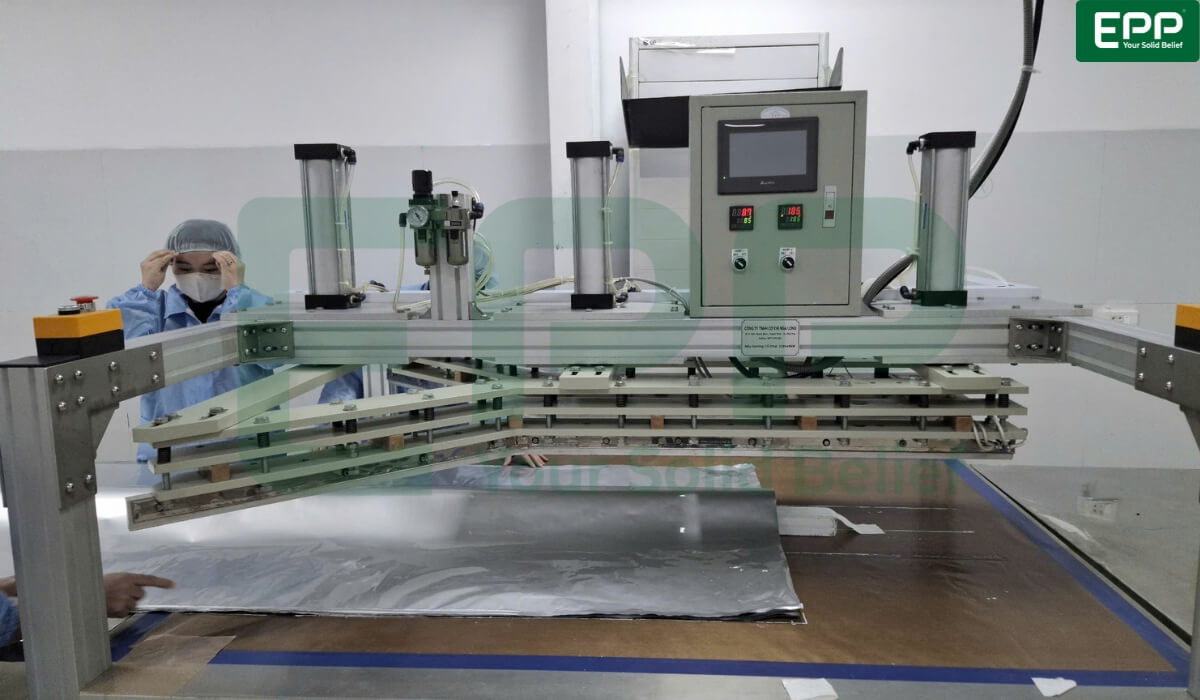
Precision heat-sealing and tab-welding for 3D form-fit liners add custom structural stability for high-value dry bulk handling.
4. Additives and Special Coatings
Unmodified HDPE resin degrades under prolonged solar radiation and lacks specialized anti-static or gas-barrier properties. Incorporating functional additives via masterbatches increases the final material price per kilogram.
- UV Stabilizers & Carbon Black (2% to 3% Loading): Essential for outdoor staging and geomembrane applications to block UV degradation. High-grade Carbon Black adds weathering longevity but increases compound costs.
- Anti-Static & Conductive Masterbatches: Standard HDPE accumulates electrostatic charges during dry powder filling. Incorporating permanent anti-static additives or conductive compounds for Type C/D static-protective bags increases resin costs by 15% to 40%.
- Multi-Layer EVOH / PA Co-Extrusion: Multi-layer blown films incorporating EVOH (Ethylene Vinyl Alcohol) or Polyamide (Nylon) barrier layers provide oxygen and aroma resistance but require complex 5-layer or 7-layer co-extrusion technology, raising costs over mono-layer HDPE.
5. Order Volume and Logistics Costs
Order volume and freight logistics directly dictate the overall HDPE liner cost in large-scale sourcing. Economies of scale play a critical role in industrial plastic extrusion because fixed setup costs—including extruder purging, die calibration, and temperature stabilization—are amortized across the total order quantity.
- Minimum Order Quantities (MOQs): Ordering below factory MOQs (typically 1 to 3 metric tons of extruded film) incurs high setup surcharges per unit. Reaching full container load (FCL) volumes optimizes extrusion efficiency and lowers per-unit overhead.
- Packaging Density & Ocean Shipping: Form-fit and pre-inserted bulk bag liners occupy more shipping volume than compactly baled lay-flat liners. Optimizing packaging density directly reduces ocean freight rates per unit.
For proper installation, welding techniques, and quality control protocols on-site, review our step-by-step ultimate guide to HDPE liner installation.
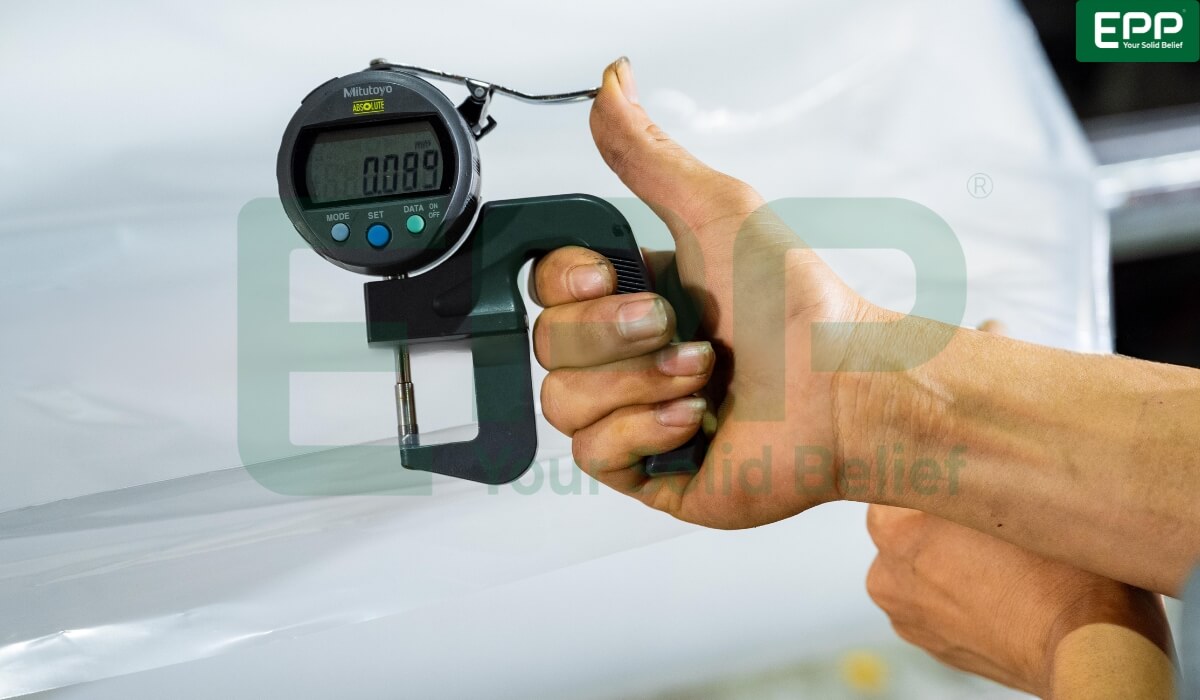
Strict quality control testing verifies micron thickness and tensile barrier strength to prevent chemical and moisture leakage.