
In today’s rapidly shifting global trade landscape, operational excellence and cost management are top priorities for procurement executives. Rising shipping fees, changing trade policies, and fluctuating production costs demand speed, accuracy, and rigorous compliance. Navigating the Vietnam Tariff framework effectively is essential for foreign enterprises seeking to minimize landed costs and build a resilient supply chain.
As a leading FIBC supplier in Vietnam, EPP Vietnam works closely with international buyers, logistics directors, and industrial distributors. By combining certified packaging solutions with deep expertise in customs clearance and international trade compliance, EPP Vietnam helps global businesses optimize their sourcing strategies from Southeast Asia.
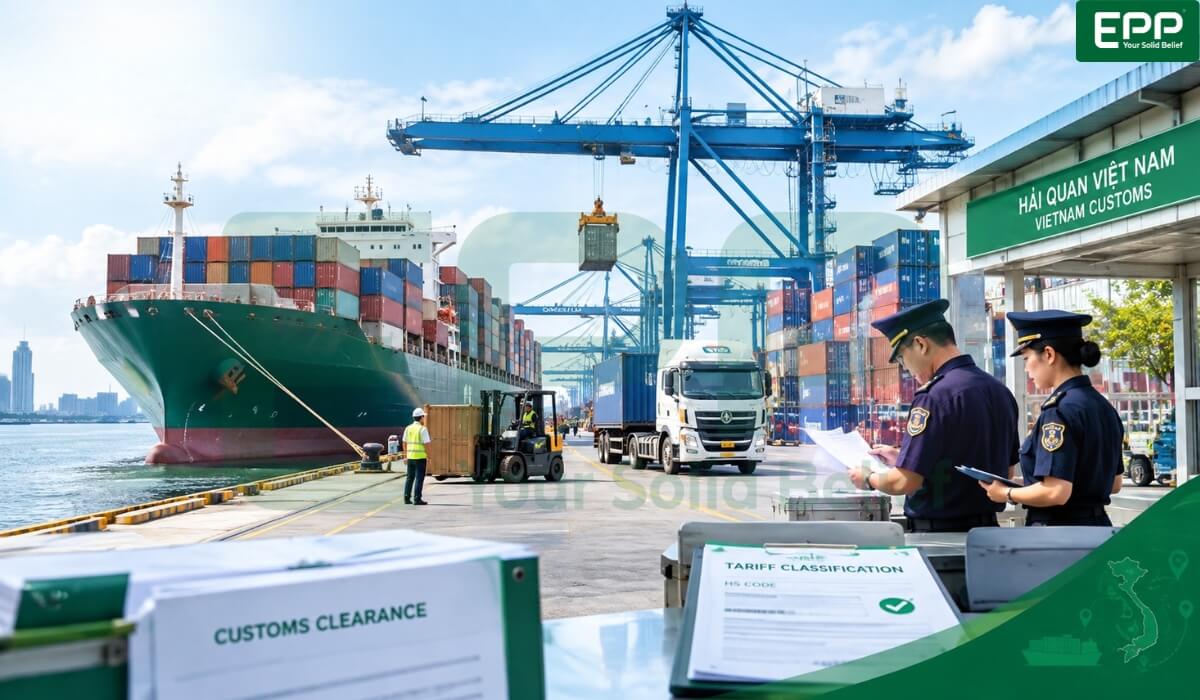
Understanding the intricacies of the Vietnam Tariff structure is essential for global buyers
Understanding the Core Framework of Vietnam Tariff Regulations
The regulatory framework governing the Vietnam Tariff is established by the Ministry of Finance and General Department of Vietnam Customs under the Law on Export and Import Duties. For any enterprise engaged in sourcing from Vietnam or delivering raw materials into the country, understanding these duty structures is critical for accurate financial forecasting.
Vietnam applies three main categories of tariff rates on imported goods:
- Special Preferential Tariff Rates: Applicable to goods originating from countries that have signed bilateral or multilateral Free Trade Agreements (FTAs) with Vietnam, provided they satisfy specific origin criteria.
- Preferential Tariff Rates (MFN Tariff): Applied to imports from member countries of the World Trade Organization (WTO) under Most Favoured Nation status.
- Ordinary Tariff Rates: Applied to goods originating from non-MFN countries, typically set higher than the MFN rate.
Developing a clear understanding of these categories prevents unexpected financial penalties during Vietnam customs clearance and ensures seamless import from Vietnam operations.
Key Components of Vietnam Tariff for Import and Export
Evaluating the total cost of ownership when working with a Vietnam supplier requires a granular breakdown of both inbound and outbound fiscal obligations.
Vietnam Export Tariffs and Exempted Commodity List
To encourage domestic manufacturing and export-oriented industrial growth, Vietnam export regulations enforce a 0% Vietnam export tax on the vast majority of manufactured goods, processed agricultural items, and industrial packaging products. Vietnam export duty charges (ranging from 1% to 40%) are strictly reserved for raw natural resources, unprocessed minerals, and scrap metals to preserve domestic reserves. Consequently, foreign buyers sourcing finished industrial products encounter no domestic Vietnam export tariff burden.
Vietnam Import Duty Rates and Valuation Methods
When importing equipment, raw materials, or components into the country, calculating Vietnam import tax depends on the Customs Valuation method. In alignment with WTO agreements, Vietnam customs duties are assessed on the CIF (Cost, Insurance, and Freight) value.
- Calculations: Vietnam Import Duty = CIF Value x Vietnam Import Duty Rate.
- Secondary Taxes: Beyond standard Vietnam customs tariff obligations, imported items may be subject to Value Added Tax (VAT – generally 8% or 10%), Special Consumption Tax (SCT), or Environmental Protection Tax depending on the product category.
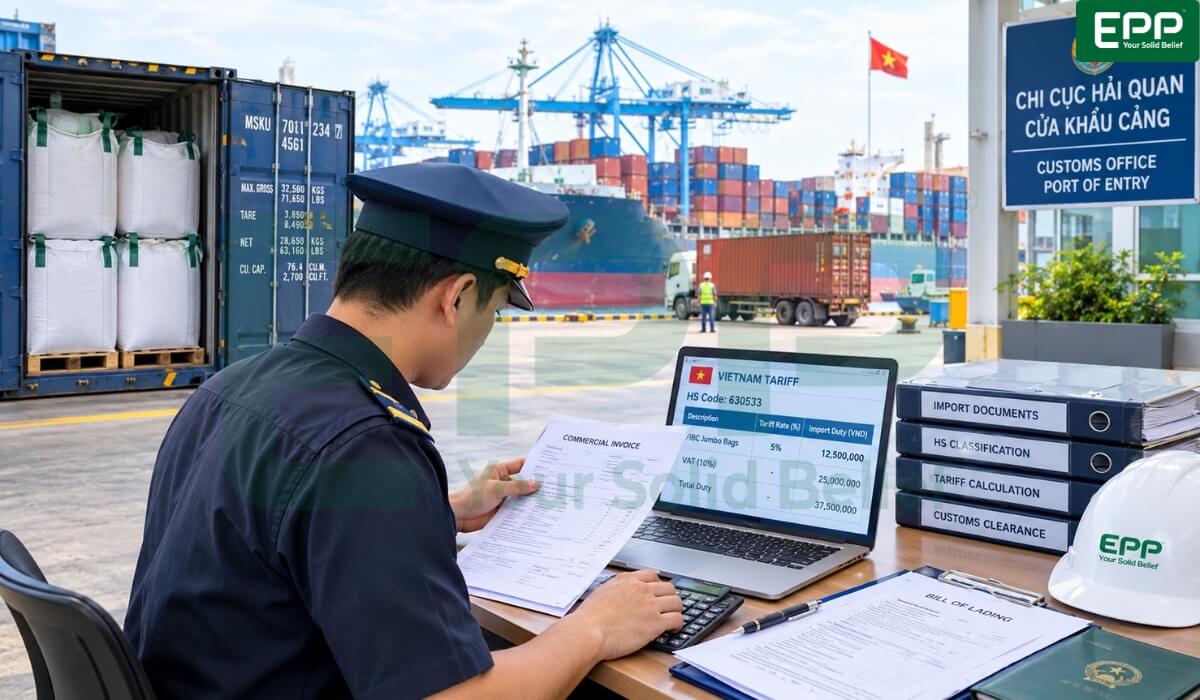
Accurate classification under the HS Code system ensures correct Vietnam Tariff application.
Vietnam Tariff and Free Trade Agreements
Vietnam’s aggressive integration into global commerce has created one of the most competitive trade networks in Asia. Leveraging these Vietnam FTA benefits allows international importers to achieve significant cost savings.
Major FTAs Driving Vietnam’s Export Growth
Vietnam has ratified over 15 regional and bilateral trade agreements to build a highly competitive export ecosystem. To get a complete roadmap of active and upcoming trade frameworks, explore our detailed analysis on Vietnam’s Free Trade Agreements. Key frameworks driving international trade include:
- EVFTA (EU-Vietnam FTA): Phasing out 99% of tariffs, giving European buyers preferential access with zero tariffs on industrial products.
- CPTPP & RCEP: Facilitating seamless trade across Asia-Pacific with standardized origin rules and reduced Vietnam preferential tariff rates.
- VKFTA & AANZFTA: Offering targeted duty reductions for South Korea, Australia, and New Zealand.
Rules of Origin and Certificate of Origin (C/O) Requirements
To claim Vietnam special preferential tariff rates, goods must strictly comply with Vietnam rules of origin. Importers must present an official Vietnam Certificate of Origin (such as Form EUR.1, Form CPTPP, or Form E) issued by authorized Vietnamese agencies.
As a premier FIBC supplier Vietnam, EPP Vietnam manages an end-to-end production process—from virgin PP resin weaving to finished container bags—ensuring full compliance with origin criteria so global customers receive valid documentation to eliminate import duties.
Vietnam Tariff vs. Global Competitors
The realignment of global supply chains has prompted multinational corporations to adopt “China+1” diversification strategies, making Vietnam sourcing an attractive alternative.
High punitive tariffs under US Section 301 on Chinese goods have shifted buyer focus toward Southeast Asian manufacturing hubs. Analyzing the historical context of a deep dive into US-China tariff agreement highlights how shifting trade policies reshape global procurement.
Furthermore, buyers closely monitor evolving trade frameworks, such as potential changes explored in Trump’s new tariffs on Vietnam. Despite shifting political climates, Vietnam remains highly competitive regarding total Vietnam landed cost due to favorable trade relations and competitive manufacturing expenses, as discussed in U.S. reciprocal tariffs and opportunities for Vietnam.
Technical Case Study: Tariff Classification for FIBC Jumbo Bags
Navigating Vietnam tariff classification requires absolute precision during the Vietnam HS code lookup process. Misclassifying goods can lead to customs delays, fines, or overpayment of duties.
Industrial flexible intermediate bulk containers are classified under Vietnam tariff HS code 6305.32.00 (Flexible intermediate bulk containers of man-made textile materials).
- Vietnam Export Tariff: 0% (No Vietnam customs export duties applied).
- EU Import Tariff (EVFTA): 0% with a valid Form EUR.1 (reduced from the standard 7.2% MFN rate).
- US Import Tariff (Updated 2026): Importers entering the US market face a base MFN rate of 8.4%. Under the Section 301 labor and supply-chain regulations, an additional 12.5% tariff applies. This brings the total effective duty for US entry to approximately 20.9%.
- ASEAN / Japan / Korea Tariff: 0% under regional preferential agreements.
To ensure seamless logistics, buyers sourcing jumbo bags fibc must partner with manufacturers whose supply chains meet rigorous international quality certifications, including BRCGS, ISO 9001, ISO 22000, and UN certifications for hazardous goods transport.
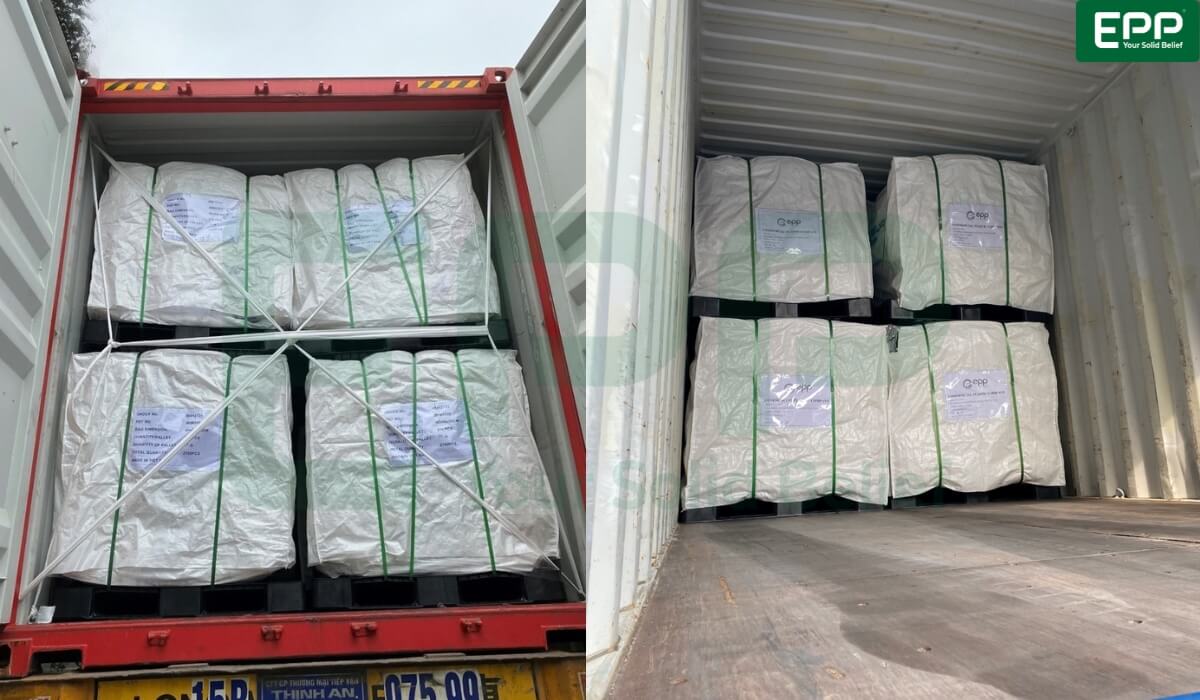
High-quality FIBC bulk bags prepared for export to the Australian market.
Vietnam Tariff Compliance Checklist for International Buyers
To ensure full compliance and maximize tariff benefits when procuring goods from Vietnam, review this operational checklist:
| Compliance Step | Required Action / Vietnam Tariff Strategy | EPP Vietnam Support |
| HS Code Verification | Perform Vietnam customs HS code audit for exact classification | Verifies correct HS code classification on all shipping invoices. |
| FTA Eligibility Audit | Check applicable Vietnam FTA tariff schedules for destination markets. | Identifies eligibility for preferential duty rates under EVFTA, CPTPP, RCEP. |
| C/O Issuance | Request official Vietnam Certificate of Origin prior to shipment departure. | Issues certified C/O documentation (Form EUR.1, Form E, Form CPTPP, etc.). |
| Landed Cost Analysis | Calculate total CIF value including freight, insurance, MFN duties (8.4%), and US Section 301 tariffs (12.5%). | Optimizes packaging dimensions to reduce shipping volume and CIF base. |
| Quality & Safety Compliance | Ensure goods meet international packaging standards (BRCGS, ISO, UN). | Enforces 4-step QA/QC testing for 100% product integrity. |
Frequently Asked Questions (FAQs) About Vietnam Tariff
Does an FTA Automatically Give a Zero Tariff?
No. An FTA does not automatically grant a zero tariff rate. Goods must satisfy specific Vietnam rules of origin criteria and be accompanied by a valid, official Vietnam Certificate of Origin issued by recognized authorities.
What documents are required to claim preferential Vietnam Tariff rates?
To claim preferential duty rates, importers must submit the Commercial Invoice, Packing List, Bill of Lading, Customs Declaration form, and the appropriate Vietnam Certificate of Origin (such as Form EUR.1 or Form CPTPP).
How Do I Check Vietnam Import Tariff Rates?
Importers can conduct a Vietnam tariff HS code lookup using the official General Department of Vietnam Customs portal or consult the national Vietnam customs tariff schedule published annually by the Ministry of Finance.
Does Vietnam Charge Export Duty?
Vietnam imposes zero Vietnam export tax on most manufactured products, industrial goods, and packaging items. Vietnam export duty is only levied on select raw materials and unprocessed natural resources.
Conclusion: Maximize Your Sourcing Efficiency with EPP Vietnam
Understanding the Vietnam Tariff structure and leveraging favorable trade agreements enables international businesses to streamline procurement, eliminate unnecessary duty expenses, and enhance supply chain resilience. Partnering with EPP Vietnam ensures access to world-class jumbo bags Vietnam packaging solutions backed by complete trade compliance and regulatory support.
Website: epp.vn
Alibaba website: https://eppvietnam.trustpass.alibaba.com/
Email: [email protected] Hotline/ Whatsapps: +84 986 002 888