In international trade and procurement, few regulatory shifts carry as much weight as changes in U.S. trade policy and bilateral duty frameworks. The US-China Tariff Agreement—and its evolving landscape of retaliatory duties, Section 301 exclusions, and reciprocal bilateral frameworks—remains a defining force shaping global supply chains.
For procurement directors, importers, and operations executives sourcing industrial packaging—such as Flexible Intermediate Bulk Containers (FIBCs), polypropylene (PP) woven bags, and heavy-duty bulk packaging—understanding the mechanics of this agreement is vital. Navigating these tariff policies effectively can mean the difference between preserving healthy operating margins and absorbing severe landed cost surges.
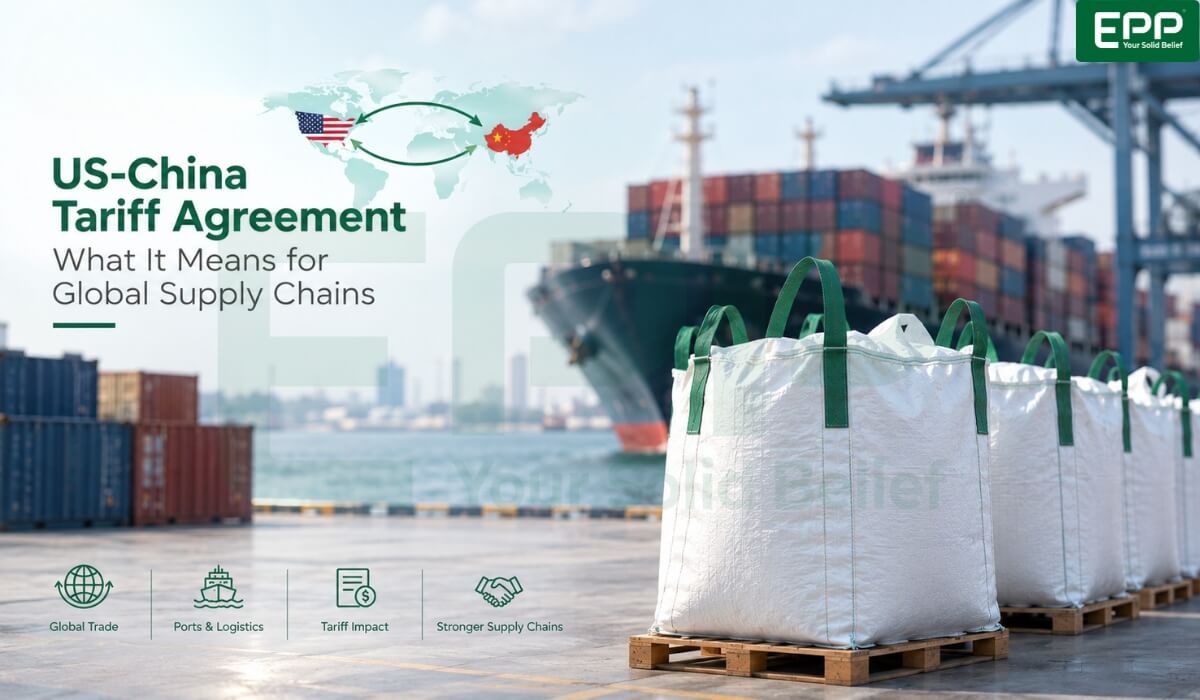
The evolving US-China Tariff Agreement continues to reshape procurement strategies for industrial packaging worldwide.
Understanding the Core Dynamics of the US-China Tariff Agreement
The trade dynamic between the United States and China has undergone multiple cycles of escalation and temporary stabilization. Following high-level bilateral negotiations, trade officials established working procedures designed to manage duties while creating reciprocal mechanisms across specific commodity sectors.
The trade war between the United States and China has been a significant source of economic uncertainty since it began in earnest in early 2018. However, the situation intensified dramatically in early 2025, culminating in unprecedented tariff levels imposed by both nations. In April 2025, the U.S. raised tariffs on various Chinese imports to staggering levels, reaching as high as 145%. In retaliation, China imposed tariffs of up to 125% on U.S. goods. These aggressive moves led to significant disruptions in global supply chains, sparked fears of a recession, and created an atmosphere of instability across financial markets.
The escalating tensions not only affected bilateral trade but also had widespread ramifications for global economies. Supply chain disruptions impacted industries ranging from technology to agriculture, forcing businesses to adapt quickly to new realities. As the stakes continued to rise, the potential for a full-blown trade war loomed large, prompting both nations to seek a workable resolution.
What Changed Under the 2026 US-China Tariff Agreement?
The US-China Tariff Agreement reached on May 12, 2025, represents a temporary truce in this ongoing trade conflict. Under this agreement, both nations committed to slashing tariffs for an initial period of 90 days. Specifically, U.S. tariffs on Chinese goods were reduced from 145% to 30%, while Chinese tariffs on U.S. goods were cut from 125% to 10%. This U.S.-China tariff cut was seen as a crucial step toward de-escalation and aimed to foster an environment conducive to further negotiations.
Both governments recognized the immense economic costs associated with a prolonged trade war. The agreement was designed to alleviate some of the immediate financial pressures on businesses and consumers, establishing a more predictable trading baseline.
However, it is essential to note that this mechanism remains a structured truce rather than a permanent settlement. Recent bilateral developments—such as the reciprocal “30-for-30” tariff reduction list—continue to evolve, yet core tariffs on heavy industrial materials and plastic packaging remain active. The underlying issues that sparked the trade conflict remain unresolved, requiring ongoing risk management from global importers.

The US-China Tariff Agreement marks a key de-escalation step in ongoing trade tensions, reshaping global packaging supply chains.
Global Market Reaction Under the US-China Agreement
Following the announcement of the US-China Tariff Agreement, global markets experienced a significant rally, reflecting investor optimism and relief from trade-related uncertainties:
- S&P 500: Up 3.3%, reaching its highest level since early March.
- Nasdaq Composite: Up 4.4%, largely driven by technology stocks.
- Dow Jones Industrial Average: Increased by approximately 2.8%, gaining over 1,000 points.
This surge in market performance was not exclusive to the U.S. Global markets across Asia and Europe also posted substantial gains as investors shifted their focus away from safe-haven assets. The renewed confidence in riskier investments indicated a collective sigh of relief from the international financial community.
In addition to broader market gains, the FIBC bag industry—which relies heavily on international trade—benefited directly from the agreement. The easing of tariffs reduced input costs for manufacturers and distributors of flexible intermediate bulk containers (FIBC bulk bag), allowing them to operate more competitively in the global market.
Several key factors contributed to this positive market reaction:
- Relief from Escalation: The avoidance of further tariff hikes alleviated fears of severe economic disruption, which had previously caused market volatility.
- Risk-On Sentiment: Investors displayed a risk-on sentiment, gravitating toward equities and manufacturing sectors in anticipation of trade stabilization.
- FIBC Demand Recovery: The FIBC bag industry expected increased demand as global trade flows stabilized, further enhancing market confidence.
Strategic Opportunities for Vietnam Amid the US-China Tariff Agreement
Despite temporary tariff cuts between Washington and Beijing, global procurement directors recognize that relying on single-country sourcing from China carries permanent policy risks. As a result, the China Plus One strategy—maintaining secondary operations while relocating primary volume production to neutral partner nations—has become a mandatory supply chain practice.
Vietnam has established itself as the premier manufacturing hub for industrial packaging across Southeast Asia, offering crucial trade and operational advantages:
- Tariff Optimization: Direct exports from Vietnam enter major Western markets under standard Most-Favored-Nation (MFN) rates, bypassing punitive Section 301 tariffs applied to Chinese goods. To explore complete shipping structures, review our detailed analysis on Vietnam import and export tariffs.
- Integrated Supply Chains: Vietnam features established domestic production networks for high-grade polypropylene (PP) resin, specialized yarn extrusion, and heavy-duty weaving infrastructure.
- Direct Logistics Connectivity: Vietnam’s deep-water ports, particularly Lach Huyen in the North and Cai Mep–Thi Vai in the South, are connected to direct container services serving major U.S. markets on the West and East Coasts. Available routes depend on the carrier and service schedule.
To analyze broader policy impacts on Vietnam exports, read our detailed analysis of Trump’s tariffs on Vietnam.

U.S.–China trade tensions have driven global brands to diversify supply chains toward alternate manufacturing hubs in Southeast Asia.
What Does the US-China Tariff Agreement Mean for FIBC and Woven Bag Buyers?
For procurement managers navigating complex trade policies, taking strategic action is essential to maintaining competitive landed costs.
Key Challenges & Trade Factors to Watch
- The U.S. Trade Deficit: Addressing bilateral imbalances remains a contentious topic, driving continuous policy reviews.
- Non-Tariff Barriers: Market access restrictions, IP enforcement, and regulatory hurdles continue to complicate direct trading relationships.
- Political & Geopolitical Shifts: Domestic policy priorities and broader diplomatic negotiations can trigger sudden tariff revisions at the end of truce windows.
Actionable Buyer Checklist for Tariff Compliance & Sourcing
- Audit HTS Classifications: Verify that your imported FIBC bag and woven bags are correctly categorized under HTS 6305.32.0010 or related subheadings to determine exact duty obligations.
- Calculate Total Landed Costs: Compare unit purchasing prices against actual landed costs (inclusive of tariffs, customs processing, and ocean freight) across Chinese vs. Vietnamese suppliers.
- Verify Country of Origin Documentation: Ensure your supplier provides complete value-added processing and valid Certificates of Origin to guarantee full customs compliance.
- Initiate Sampling & Factory Audit: Validate product specs, tensile strength, SWL safety factors, and cleanroom standards with EPP Vietnam before transitioning high-volume production lines.

FAQs About the US-China Tariff Agreement
Is the US-China Tariff Agreement permanent?
No. The agreement is a temporary truce aimed at de-escalating trade tensions while bilateral negotiations continue. Long-term tariff structures remain subject to ongoing policy reviews and executive adjustments.
Does the agreement eliminate tariffs on Chinese goods?
No. While the agreement slashed peak tariff rates (e.g., U.S. tariffs reduced from 145% to 30%), substantial baseline duties and Section 301 surcharges remain in effect on industrial textiles and plastics.
Does sourcing from Vietnam automatically reduce U.S. tariffs?
Yes, provided that the goods undergo substantial transformation in Vietnam and comply with U.S. Customs rules of origin. Goods manufactured in Vietnam by EPP Vietnam enter the U.S. under standard MFN duty rates without Section 301 penalizing tariffs.
Why is Vietnam a preferred alternative for bulk bag procurement under current tariffs?
Vietnam offers an ideal combination of competitive labor, advanced manufacturing technology, complete international quality certifications (BRCGS, ISO, UN), and a favorable duty profile that bypasses punitive tariffs imposed on Chinese imports.
Partner with EPP Vietnam for Secure, Tariff-Optimized Bulk Packaging
In a changing trade landscape, maintaining an agile supply chain is essential for long-term profitability. While the US-China Tariff Agreement continues to create pricing volatility for Chinese imports, EPP Vietnam provides international buyers with a stable, high-quality, and cost-effective manufacturing alternative.
By leveraging our 20+ years of export experience, advanced cleanroom manufacturing, and full international certification framework, global importers can optimize landed costs while enhancing supply chain resilience.
Website: epp.vn
Alibaba website: https://eppvietnam.trustpass.alibaba.com/
Email: [email protected] Hotline/ Whatsapps: +84 986 002 888