The global packaging industry is undergoing a rapid structural shift across primary, secondary, and tertiary layers. Driven by strict ESG regulations, volatile freight rates, and advanced material engineering, international procurement directors are fundamentally re-evaluating their sourcing strategies.
By understanding the core trends driving modern packaging, B2B buyers can optimize total cost of ownership and ensure global supply chain resilience.
Sustainable & The Circular Economy in the Packaging Industry
Mono-Material Structures Simplifying Mechanical Recycling
For decades, multi-layer flexible films (combining PET, Aluminum, and PE) dominated protective packaging. However, these complex structures are virtually impossible to separate and recycle mechanically. Industry insights highlight a massive transition toward mono-material structures—utilizing 100% polyethylene (PE) or polypropylene (PP). Mono-material solutions maintain essential tensile strength and barrier protection while enabling full mechanical recyclability, aligning seamlessly with extended producer responsibility (EPR) mandates and the EU Packaging and Packaging Waste Regulation (PPWR).
For a deeper dive into eco-friendly packaging alternatives, explore our guide on best quality eco-friendly packaging solutions.
Natural Polymers, Advanced Coatings, and Recycled Resins
- Natural Polymers & Bio-Alternatives: Driven by regional single-use plastic bans, bio-based materials like seaweed-derived films and agricultural byproducts are scaling into functional, compostable options for short-shelf-life goods.
- Advanced Dispersion Coatings: Specialty natural coatings now allow paperboard and molded fiber to block grease, moisture, and oxygen without relying on traditional polyethylene linings, creating true plastic-free barrier layers.
- PCR/PIR Integration: High-performance tertiary packaging—such as stretch hoods and woven industrial fabrics—is increasingly incorporating Post-Consumer Recycled (PCR) and Post-Industrial Recycled (PIR) resins without sacrificing safe working load ratios.

Bagasse Sugarcane Fiber eco friendly food packaging
Regulatory Compliance & High-Purity Export Standards
International Standards for Global Trade
Navigating international trade requires absolute adherence to rigorous regulatory frameworks. Non-compliance risks severe customs holds, cargo rejections, and financial penalties. Key export standards include:
- BRCGS & ISO 22000: Mandatory for primary and secondary packaging intended for direct contact with food, pharmaceuticals, or high-purity polymer resins.
- UN Dangerous Goods Certification: Essential for transporting hazardous chemicals and powders, requiring rigid drop tests, stacking tests, and top-lift certifications.
Cleanroom Production & Damage Prevention
High-end manufacturing relies on Cleanroom facilities utilizing ultrasonic thermal cutting to eliminate loose threads and micro-particulates during production. This ensures zero contamination for sensitive chemical or pharmaceutical payloads.
| Packaging Tier | Primary Objective | Key Export Compliance Standards |
| Primary Packaging | Direct product contact & barrier integrity | BRCGS Grade A, ISO 22000, US FDA |
| Secondary Packaging | Unitizing, structural support & branding | FSC Certified Paperboard, ISTA 3A |
| Tertiary Packaging | Bulk transport, unit load safety & logistics | UN Certified, IEC 61340-4-4, ISO 21898 |
Smart Integration, Automation, and Efficiency in the Packaging Industry
Connected Packaging & Active Preservation
Digital technology is transforming static packaging into intelligent supply chain assets:
- Connected Packaging: Dynamic QR codes, NFC tags, and RFID chips provide real-time batch tracking, brand protection, and compliance with incoming Digital Product Passports (DPP).
- Active Preservation: Embedded freshness indicators, oxygen scavengers, and modified atmosphere packaging (MAP) technologies actively extend food and chemical shelf life while reducing waste.
AI-Driven Production & E-Commerce Optimization
Artificial intelligence now optimizes corrugated carton design, automates web tension on high-speed conversion machinery, and powers automated waste sorting. In logistics, “right-sizing” packaging eliminates excess void fill, reducing shipping volumes and cutting ocean freight costs.
To evaluate how these innovations fit into your broader logistics framework, read our overview of the most common packaging formats on the market today.
The Shift to Master Supply Chain Partners in the Packaging industry
The “China + 1” Strategy & Southeast Asia’s Competitive Edge
Global supply chain disruptions have forced procurement teams away from single-source reliance. Southeast Asia—particularly Vietnam—has emerged as a premier hub for industrial packaging manufacturing, offering high-precision production, modern infrastructure, and competitive tariff structures.
Why Procurement Leaders Choose Master Supply Chain Partners?
Rather than managing individual factory limitations, enterprise buyers increasingly partner with a Master Supply Chain Partner in plastic packaging industry.
EPP Vietnam orchestrates an audited network of tier-1 manufacturing facilities. This model ensures:
- Uninterrupted Supply: Capacity is dynamically allocated across certified plants to handle high-volume surges.
- Independent Quality Assurance: On-site technical engineers inspect raw material purity, seam strength, and safety factors prior to dispatch.
- Custom Engineering: From standard heavy-duty packaging to specialized FIBC jumbo bags, solutions are engineered precisely to your bulk handling systems.
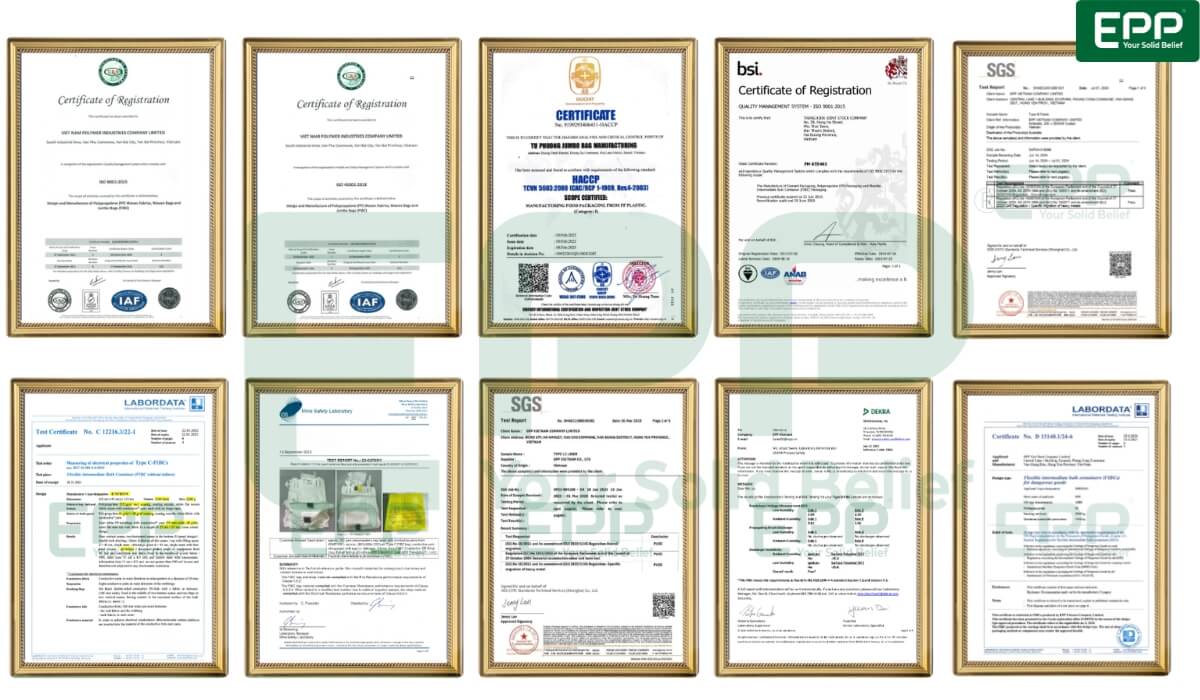
EPP Vietnam’s multi-certification framework ensures global compliance for demanding industrial applications
Frequently Asked Questions about Trends in the Packaging Industry
What is the difference between multi-layer and mono-material packaging?
Multi-layer packaging fuses different materials (such as PET, aluminum, and PE) to achieve protection, making separation and mechanical recycling virtually impossible. Mono-material packaging relies on a single polymer family (like 100% PE or 100% PP), retaining strength and barrier properties while fitting directly into standard recycling streams.
How does the EU Packaging and Packaging Waste Regulation affect global exporters?
The EU PPWR requires all packaging placed on the EU market to be fully recyclable and incorporate minimum levels of recycled content (PCR). Exporters shipping into Europe must transition to audited, fully recyclable primary, secondary, and tertiary packaging formats to avoid customs penalties or market bans.
Why are enterprise buyers adopting a Master Supply Chain Partner model in Southeast Asia?
Working with a single factory presents risks like capacity limits, single-point bottlenecks, or inconsistent quality control. A Master Supply Chain Partner like EPP Vietnam coordinates an audited network of specialized manufacturing facilities, providing centralized quality assurance, capacity allocation, and regulatory compliance.
Vietnam’s manufacturing power and centralized supply chain management for international buyers
How does packaging design directly reduce ocean freight costs?
Custom, right-sized packaging and form-stable structures (such as baffle-designed bulk bags) prevent bulging and maximize floor-to-ceiling space inside containers. Minimizing void space allows companies to load up to 15–20% more product volume per container, directly lowering per-unit transport costs.
Navigating the Future of Global Packaging with EPP Vietnam
The global packaging industry is advancing rapidly toward Sustainability, Compliance, Smart Integration, and Supply Chain Resilience. Aligning your procurement strategy with these trends ensures lower operational costs, zero compliance rejections, and enhanced brand value.
EPP Vietnam stands ready as your strategic supply chain supplier. Contact our packaging engineering team today to review your material specifications, request custom product samples, or obtain a competitive B2B quote for your export packaging needs.
🌐 Website: https://epp.vn – https://eppvietnam.trustpass.alibaba.com
📲 +84 986 002 888 – [email protected]