
Mastering loading super sacks efficiently is essential for workplace safety, preventing material loss, and optimizing storage in bulk material handling. Flexible Intermediate Bulk Containers (FIBCs), or jumbo bags, carry up to 2,000 kg of powders and bulk goods across global supply chains.
As a premier FIBC and bulk packaging supplier in Vietnam, EPP Vietnam partners with top manufacturing facilities to deliver high-performance bulk bags worldwide. This technical guide covers equipment choices and step-by-step loading procedures.
Loading Super Sacks and What You Should Know
Before starting any filling bulk bags operation, operators must understand the structural mechanics of the FIBC and how material properties affect stability:
- Weight Limits: Never exceed the bag’s designated Safe Working Load (SWL), which typically ranges from 500 kg to 2,000 kg. Standard single-use bags feature a 5:1 Safety Factor (SF), whereas heavy-duty reusable bags feature a 6:1 SF.
- Material Bulk Density: Denser products like minerals require compact, square base dimensions, while lighter powders like flour require pre-filling air inflation to maximize cubic volume.
- Electrostatic Control: Evaluate hazards when super sack loading fine flammable powders. Static electricity builds up rapidly during rapid filling, making it critical to match the correct bag construction—such as Type B, Type C with grounding straps, or Type D anti-static bags—to eliminate ignition risks.
To prevent instability issues later in your storage chain, review our operational guide on common mistakes to avoid when stacking bulk bags.
How to Fill Super Sacks Properly Step by Step?
Following a structured workflow ensures uniform material density, straight vertical walls, and zero spillages during jumbo bag loading.
Step 1: Pre-Fill Bag Inspection
Inspect the empty FIBC bulk bags for manufacturing defects, damaged lift loops, or moisture inside the body. Ensure the bottom discharge spout is tied securely using a pyrotechnic or swan-neck tie before initiating fill cycles.
Step 2: Hang and Secure the Lift Loops
Position all four corner lift loops onto the support arms of the bulk bag fillers. Ensure equal tension across all loops so the bag hangs vertically without twisting or leaning.
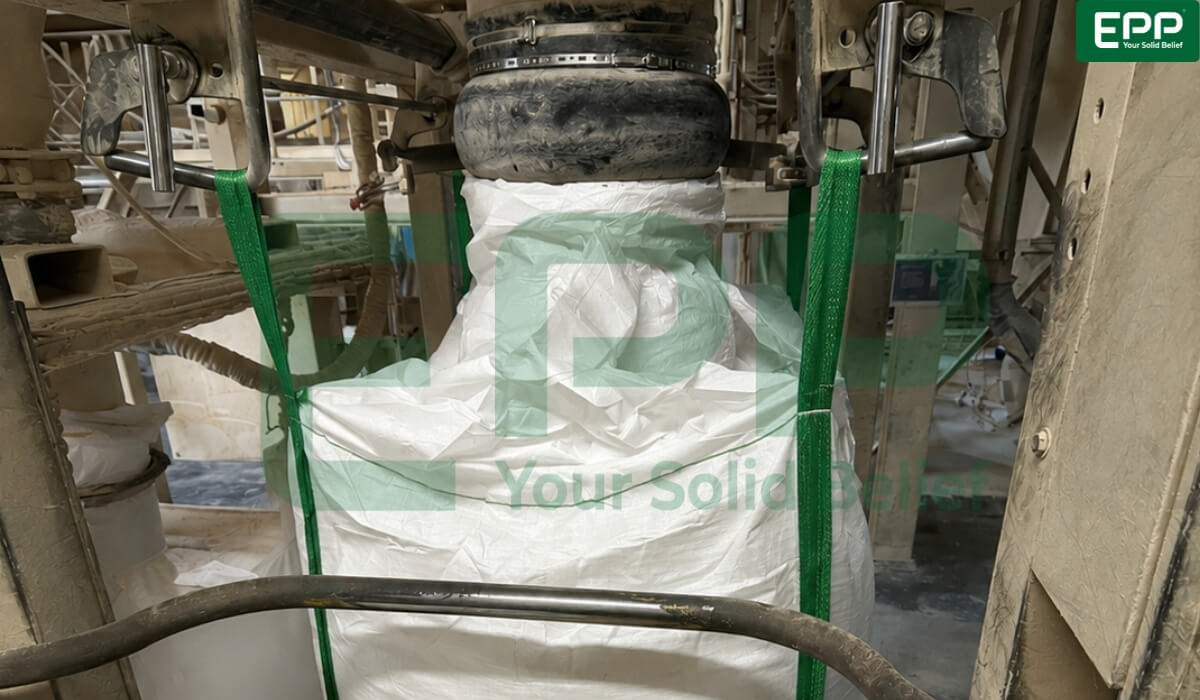
Properly specified lifting loops align perfectly with automated filling hooks
Step 3: Seal the Filling Spout
Attach the top inlet spout to the spout adapter or bulk bag funnel. Clamp the fabric securely or engage an inflatable spout seal on your bulk bag loader to create a dust-tight seal during material drop.
Step 4: Air Inflation (Pre-Forming)
Inject clean, low-pressure air into the bag to expand the liner and body walls fully. Pre-inflating ensures the fabric corners fill evenly, preventing internal air pockets and bag tilting.
Step 5: Material Filling and Compaction
Initiate product flow through the feed chute or super sack feeder. For fine powders, activate a vibration compaction table underneath the pallet at 50% and 90% capacity milestones to settle particles and square the base.
Step 6: Detach and Seal
Once the integrated scale registers the target weight, stop the product flow. Untie the spout clamp, cinch the top inlet drawstring tight, and detach the lift loops carefully.
To review protocols for the opposite end of the material lifecycle, read our detailed guide on unloading bulk bags safely.
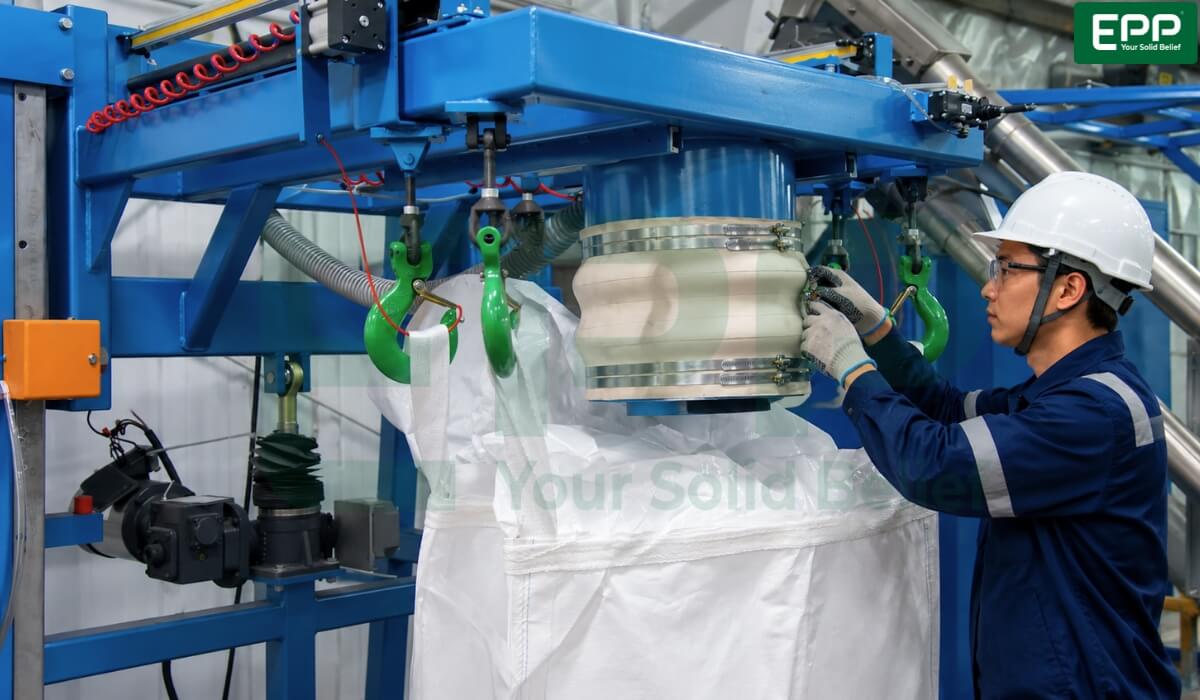
Worker attaching a bulk bag spout to an automated industrial loading spout
Key Equipment Options for Loading Super Sacks
Selecting the correct super sack loading equipment depends on your facility’s daily output goals, material flowability, and dust control standards.
| Equipment Type | Operating Mechanism | Best Commercial Application |
| Basic Loading Hopper / Funnel | Gravity-fed 1 ton bag hopper or 1 ton bulk bag hopper with manual loop hooks | Low-volume, intermittent filling super sacks in agriculture or small workshops |
| Pneumatic Filling Station | Inflatable spout collar with automated loop release and dust port on a super sack filling station | Medium to high-volume chemical, food, and mineral packaging lines |
| Fully Automated Loading System | Integrated weight scale, vibration compaction, and pallet dispenser on a jumbo bag filling machine | High-speed continuous manufacturing with automated conveyor takeoff via a jumbo bag loading system |
| Volumetric Feeder & Hopper | Controlled auger feeding into a sealed fill spout with a Super Sack filling hopper | Fine, non-free-flowing powders requiring precise metering with a bulk bag loading system |
Safety and Handling Best Practices
Maintaining high safety standards prevents injuries and preserves fabric integrity during bulk bag loading:
- Clear Work Area: Operators must never stand directly underneath a suspended bulk bag while loading super sacks.
- Forklift Inspection: When moving filled bags using bulk bag loaders, ensure forklift tines feature smooth, rounded edges to avoid cutting loop webbing during transit.
- Type C Grounding: When handling combustible dusts during bulk bag filling, always ground Type C bags by attaching the grounding clamp before initiating product flow, verifying ground continuity is less than 10 to the 6th power ohms.
- Pallet Base Support: Always rest the bottom of the bag on a sturdy pallet or supporting platform during filling using a Super sack filler rather than letting the entire weight hang freely from the loops alone.
For a full breakdown of international lifting and transport standards, examine our FIBC safe handling guidelines.
Tips for Maximizing Loading Super Sacks
Optimizing your loading process with a bulk bag loading hopper improves shipping container volume utilization and lowers transport costs:
- Intermittent Vibration: Applying short, 5-second vibration cycles at intermediate filling levels settles cohesive powders efficiently, whereas continuous vibration can cause particles to interlock and bridge.
- Baffle Bag Construction: Choosing baffle bulk bags (Q-bags) with internal fabric panels prevents side-bulging, keeping the bag square so it fits neatly into shipping trucks without wasted air gaps.
- Controlled Velocity: Adjusting rotary valves or butterfly dampers on your super sack loading apparatus slows material velocity during the final 5% of filling, allowing operators to achieve highly accurate scale cutoffs.
- Automated Packaging Lines: Utilizing industrial multi-head bulk bag filling machinery equipped with automated conveyor tracks streamlines continuous jumbo bag loading, allowing seamless transit from the fill head to warehouse staging without manual forklift delays.
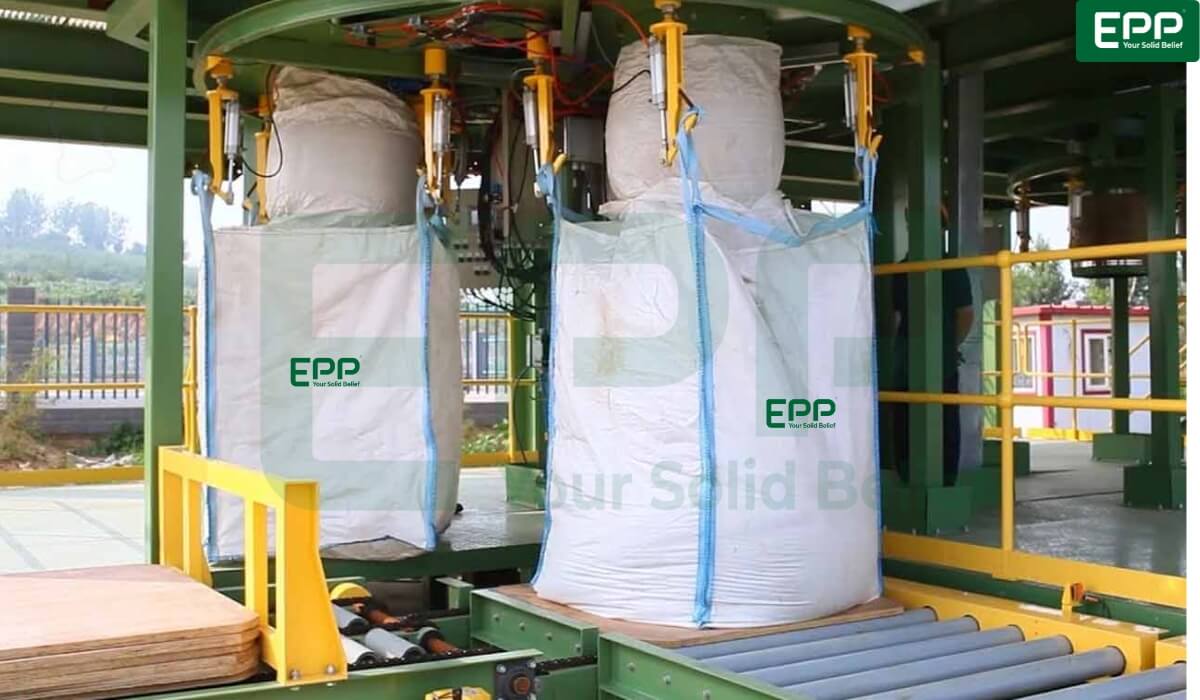
Industrial multi-head bulk bag filling machinery equipped with automated conveyor tracks
Expert FAQ
What is the difference between a gravity-fed hopper and an automated bulk bag filler?
A basic 1 ton bulk bag hopper relies purely on gravity to drop material into the bag, requiring manual operator monitoring. An automated super sack filling station or jumbo bag filling machine integrates pneumatic spout sealing, automated weighing scales, air inflation, and vibration compaction to maximize throughput and eliminate dust.
Why does my super sack lean to one side during loading?
Leaning occurs when lift loops are held at uneven heights, the fill spout is offset from the bulk bag funnel, or the bag was not pre-inflated with air before material loading. Ensuring equal loop tension and using air pre-forming creates a square, stable base during jumbo bag loading.
How do I prevent dust emission when loading super sacks?
Utilize a bulk bag loader or Super sack filler equipped with an inflatable spout seal and an active dust extraction port connected to a baghouse filter system. This maintains negative pressure inside the filling spout, capturing fine airborne particles during filling bulk bags.
Partner with EPP Vietnam for Certified Bulk Packaging Solutions
Optimizing your loading super sacks process starts with sourcing certified, high-tensile bulk bags engineered for your specific product weight and handling equipment. EPP Vietnam supplies custom-engineered FIBCs, baffle bags, Type C/D anti-static sacks, and food-grade bags to international markets worldwide.
We offer tailormade bulk bag specifications:
- Custom Safe Working Loads (SWL) from 500 kg to 2,000 kg.
- BRCGS Grade A, ISO 9001:2015, and UN Danger Goods certified supply.
- Customizable spout designs, baffle structures, and PE liner options compatible with any bulk bag loading system.

Contact our packaging specialists today to request product samples, technical datasheets, and competitive B2B quotations:
Website: epp.vn | eppvietnam.trustpass.alibaba.com
Phone / WhatsApp: +84 986 002 888
Email: [email protected]