When procurement managers ask: are woven polypropylene bags recyclable? The direct technical answer for PP woven sacks (5kg to 50kg capacity) is yes, 100% recyclable. Made from polypropylene resin under Resin Identification Code #5 (RIC #5), these bags are thermoplastic polymers that can be shredded, melted, and extruded into secondary plastic products without complete molecular breakdown.
However, while PP bags are inherently recyclable, post-consumer collection rates remain under 1% worldwide. For agricultural, animal feed, and chemical sacks, multi-layer laminations, internal liners, and residual dust often present processing challenges. Choosing mono-material designs and partnering with a specialized supplier ensures these sacks enter clean recycling streams.
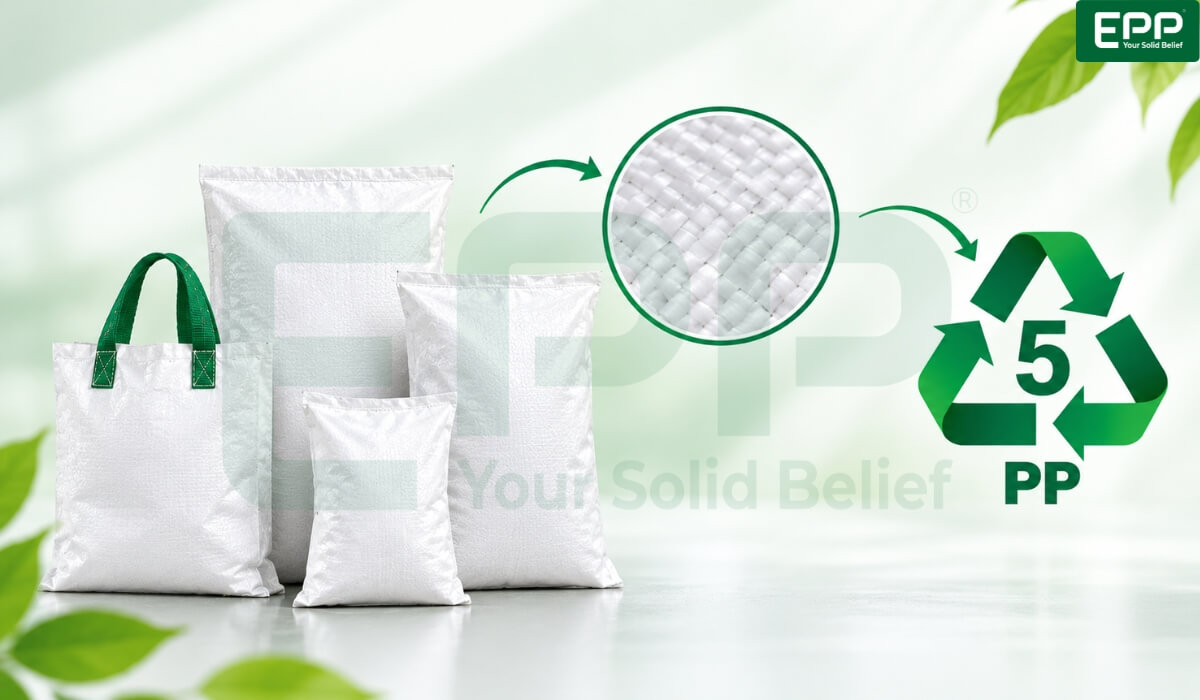
Polypropylene (PP) is classified under Code #5, confirming that woven polypropylene sacks are 100% recyclable.
Understanding PP Woven Material
Chemical Structure & Plastic Resin Code #5
Woven polypropylene bags are fabricated from extruded PP tapes woven together on circular looms. Polypropylene belongs to the polyolefin family, possessing a semi-crystalline structure that provides high tensile strength, tear resistance, and a melting point between 130°C and 171°C. Under RIC #5, is woven polypropylene recyclable across industrial reprocessors? Yes, because heating the material allows it to be remolded continuously.
Is Woven Polypropylene Eco Friendly Compared to Single-Use Packaging?
When analyzing whether woven polypropylene is eco friendly for small-format packaging, Life Cycle Assessments (LCAs) show significant advantages over multi-wall paper sacks or single-use PE bags. woven sacks require significantly less polymer material by weight to hold 25kg or 50kg of cargo, drastically lowering packaging mass and transportation emissions per ton delivered.
Furthermore, when evaluating if are PP woven bags eco friendly, reusability plays a key role. PP sacks are extraordinarily durable, allowing farm hands and warehouse operators to reuse empty bags for secondary storage before sending them to recovery facilities. According to environmental LCAs, substituting single-use paper sacks with reusable PP woven bags cuts carbon emissions by up to 60%. To review material performance differences, read our comparison on are woven PP bags better than jute bags.
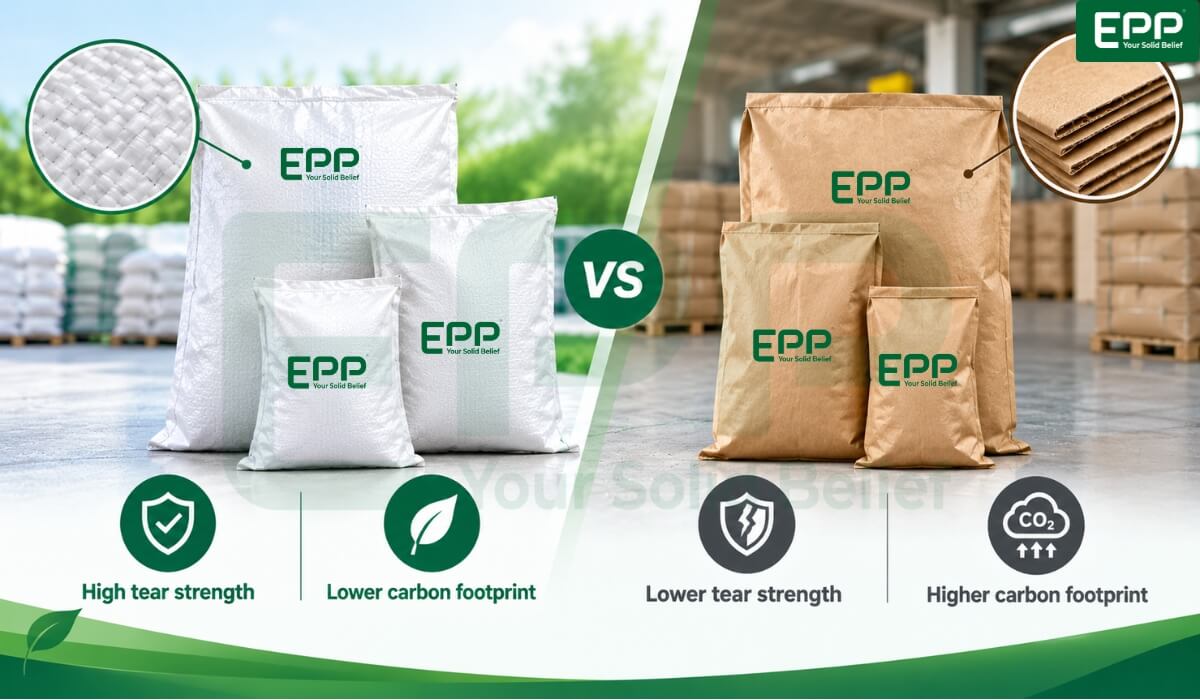
Reusable woven PP sacks offer high tear strength and lower carbon footprints compared to multi-wall paper bags.
The 6-Step Technical Process of Recycling Woven Polypropylene Bags
Establishing clear recycling protocols for sacks requires understanding how PP woven bags recycling functions mechanically. The industrial PP bag recycling process follows six core stages:
Step 1: Collection and Sorting by Contamination Level
The PP waste collection phase organizes incoming material into distinct streams:
- Post-industrial PP recycling: Unprinted factory trims, off-cuts, and scrap from sack production lines.
- Post-consumer PP recycling: Empty 25kg/50kg seed, fertilizer, flour, and grain sacks collected from agricultural farms and commercial bakeries.
Optical sorters or manual teams separate clear PP sacks from bags containing non-PP laminates or foreign polymers.
Step 2: Shredding and Size Reduction
Heavy-duty granulators slice bundled PP sacks into uniform flakes measuring 10 mm to 20 mm. Shredding lightweight woven fabric increases overall surface area, enabling thorough washing in subsequent steps.
Step 3: Washing & Decontamination
Shredded PP flakes pass through high-speed friction washers and float-sink separation tanks. Eco-friendly wash solutions strip away fine flour dust, fertilizer residues, soil, and water-soluble seam adhesives. Because PP has a specific gravity of roughly 0.90 to 0.91 g/cm³, the clean flakes float on water while heavier contaminants like grit and metal sink.
Step 4: Drying & Compaction
Centrifugal spin-dryers remove surface water from the flakes, driving moisture levels below 1%. Thermal dryers then transfer the material to a compactor, where frictional heat pre-densifies the lightweight flakes before feeding them into the extruder hopper.
Step 5: Extrusion & Melt Filtration
The densified PP flakes enter an extruder operating between 180°C and 240°C. Continuous melt filters trap lingering micro-particles, unmelted fibers, and foreign specks down to 100 microns, ensuring clean molten plastic output.
Step 6: Pelletizing & Manufacturing New Products
The filtered molten resin is die-cut underwater into uniform recycled PP packaging granules (rPP pellets). Manufacturers blend these rPP pellets with virgin resin to produce plastic crates, agricultural pipe fittings, strapping bands, or secondary recycled polypropylene bags.
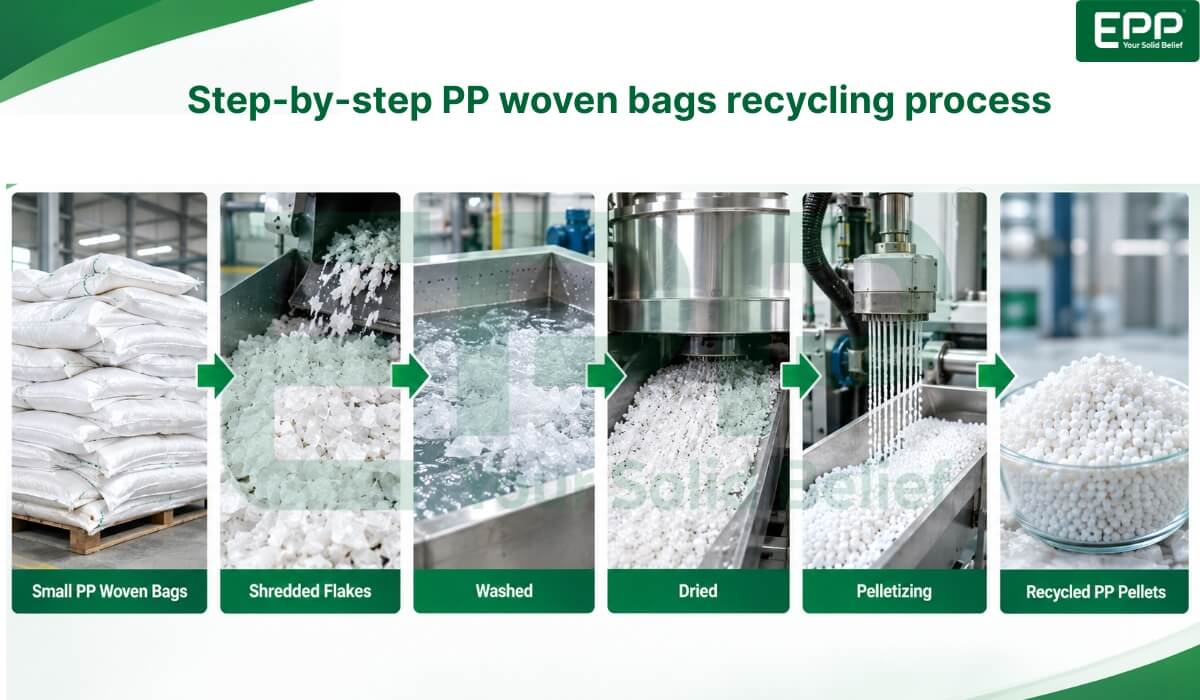
The mechanical recycling process converting clean PP woven sack scrap into high-purity recycled PP granules.
Technical Challenges in PP Woven Sacks Recycling
While standard sacks are easy to reprocess, certain bag constructions complicate commercial recycling streams.
Uncoated vs. Laminated & BOPP Woven Bags
Plain, un-laminated PP sacks reprocess easily. However, many consumer-facing sacks utilize laminated PP woven bags recycling or BOPP (Biaxially Oriented Polypropylene) printing to protect against moisture and enhance retail shelf presence:
- Coated/Laminated Sacks: A thin layer of molten PP/PE (15 to 25 g/m²) is applied onto the woven fabric for water resistance.
- BOPP Laminated Sacks: Reverse-printed BOPP film is laminated directly onto the woven PP fabric using an extrusion adhesive layer.
During processing, multi-layer laminated PP woven bags introduce varying polymer grades and heavy ink loads that can cause melt flow fluctuations during extrusion. Discover more about structural options in our article on coated vs BOPP laminated PP woven bags.
Multi-Material Contamination
Key factors contributing to PP bag contamination in small sacks include:
- PE Liners:Woven bags used for fine powders often feature an internal loose or inserted PE liner. Processing PP woven bags with PE liner without stripping the liner causes polymer incompatibility and brittle rPP pellets.
- Sewing Threads & Easy-Open Tapes: Polyester sewing thread, paper easy-open tapes, or cotton stitch lines clog extrusion melt screens if left intact.
- Heavy Printing Inks:Regarding the printing process, Solvent-based inks on retail sacks can char under extrusion temperatures, leading to dark discoloration and odors in recycled resin.
Chemical and Food Residues
Polypropylene woven bags containing hazardous chemicals, crop protection powders, or animal pharmaceuticals require intensive decontamination. If chemical compounds permeate the polymer matrix, the resulting recycled pellets cannot be repurposed for food-contact applications.

FAQs About Recycling Woven Polypropylene Bags
Can I put woven polypropylene bags in household recycling bins?
No, can woven polypropylene bags be recycled through kerbside domestic bins? Generally, no. Automated municipal sorters rely on equipment where flexible woven sacks wrap around rotating gears, causing machine stoppages. Woven PP bags recycling requires commercial collection streams or industrial recycling drop-off points.
Are BOPP Woven Bags Recyclable?
Yes, BOPP woven bags recyclable options exist, provided reprocessing plants use extruders equipped with degassing zones and fine melt screen changers. Because BOPP film and woven PP fabric belong to the same polymer family, they recycle together when non-PP adhesives remain minimal.
Can printed PP woven bags be recycled?
Yes. Commercial recyclers use continuous melt filtration to clean printed fabric melt. Specifying water-based inks during manufacturing further prevents pellet discoloration during reprocessing.
What is the difference between reusable and recyclable PP woven bags?
- Reusable PP Bags: Small sacks manufactured with heavier GSM fabric and reinforced seams, allowing them to be filled, emptied, and refilled across multiple usage cycles (reusable polypropylene bags).
- Recyclable PP Bags: Refers to the polymer capability of the small sack to be shredded, melted down, and processed into new plastic goods at the end of its service life (recyclable woven bags).
By understanding whether are woven polypropylene bags recyclable under specific supply chain conditions, businesses can build circular packaging programs that meet sustainability targets without sacrificing strength.

Partner with EPP Vietnam for Sustainable PP Woven Bag Packaging
Verifying that are woven polypropylene bags recyclable is a vital step toward sustainable supply chain management. Achieving true PP woven bags sustainability for small packaging formats requires working with a supplier that understands technical specifications, compliance, and design for recycling.
EPP Vietnam combines 20 years of packaging expertise with a reliable factory network to supply custom, eco-friendly, and circular PP packaging solutions designed for global markets.
Contact our packaging specialists today to request technical specifications and a quotation within 24 hours:
Website: epp.vn
Alibaba website: https://eppvietnam.trustpass.alibaba.com/
Email: [email protected] Hotline/ Whatsapps: +84 986 002 888