
Bulk Bags with Handles are rapidly becoming the defining shift in industrial packaging for 2026. While the traditional 4-loop FIBC has been the workhorse of the global supply chain for decades, a new demand for ergonomics, manual maneuverability, and retail-readiness has pushed the industry toward a more versatile hybrid. If you are a procurement manager or a business owner, you’ve likely noticed that the “last mile” of delivery—getting a ton of product from the truck to the exact spot the customer needs it—is where the most time and money are lost.
This is exactly where Bulk Bags with Handles step in. By bridging the gap between heavy-duty mechanical lifting and precise manual control, these bags are no longer just a niche product; they are a strategic upgrade for any company dealing with aggregates, chemicals, or consumer-facing landscaping materials.
What Are Bulk Bags with Handles?
At its core, a Bulk Bags with Handles setup is an evolution of the standard Flexible Intermediate Bulk Container (FIBC). While a typical bulk bag relies solely on four large lifting loops designed for forklift tines, a version “with handles” integrates secondary, reinforced gripping points. These handles are often sewn into the side seams or the base of the bag using high-tenacity polyester or reinforced polypropylene webbing.
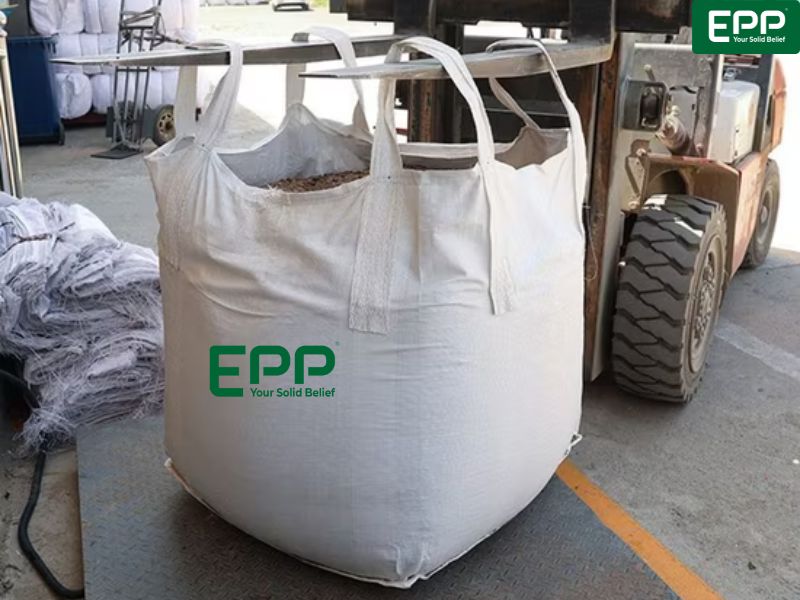
In 2026, the design has become highly sophisticated. These aren’t just flimsy straps; they are engineered “grab points” designed to withstand lateral tension. Manufacturers like EPP Vietnam now produce these bags using 100% virgin polypropylene, ensuring that the addition of handles does not compromise the bag’s Safe Working Load (SWL), which typically ranges from 500kg to 1,500kg. Whether it is a “Two-Man Carry” handle for half-ton bags or “Steering Handles” for 1-ton loads, this design is all about human-centric engineering.
Key Advantages of Bulk Bags with Handles
The transition to Bulk Bags with Handles isn’t just about aesthetics; it is driven by several “outstanding” functional advantages that directly impact a company’s bottom line.
1. Precision Maneuverability
The biggest challenge with a suspended 1-ton load is “sway.” When a forklift or crane is moving a standard bag, the ground crew often has to push the body of the bag to align it. This is a major safety risk. Bulk Bags with Handles provide dedicated, safe “tug points.” Workers can use the handles to steer and position the bag perfectly onto a pallet or into a narrow discharge hopper without putting their hands near the high-tension lifting loops or under the load.
2. Retail and Consumer Appeal
In the “Big Box” retail environment, “Bulk” is moving to the storefront. Landscaping centers and DIY stores are increasingly using Bulk Bags with Handles for premium garden stones, mulch, and soil. These handles make the Big bags appear more “accessible” to the consumer. For smaller 250kg or 500kg “mini-bulk” loads, the handles allow two people to manually shift a bag over short distances, making it a favorite for residential contractors who may not always have a forklift on a driveway.
3. Improved Discharge Control
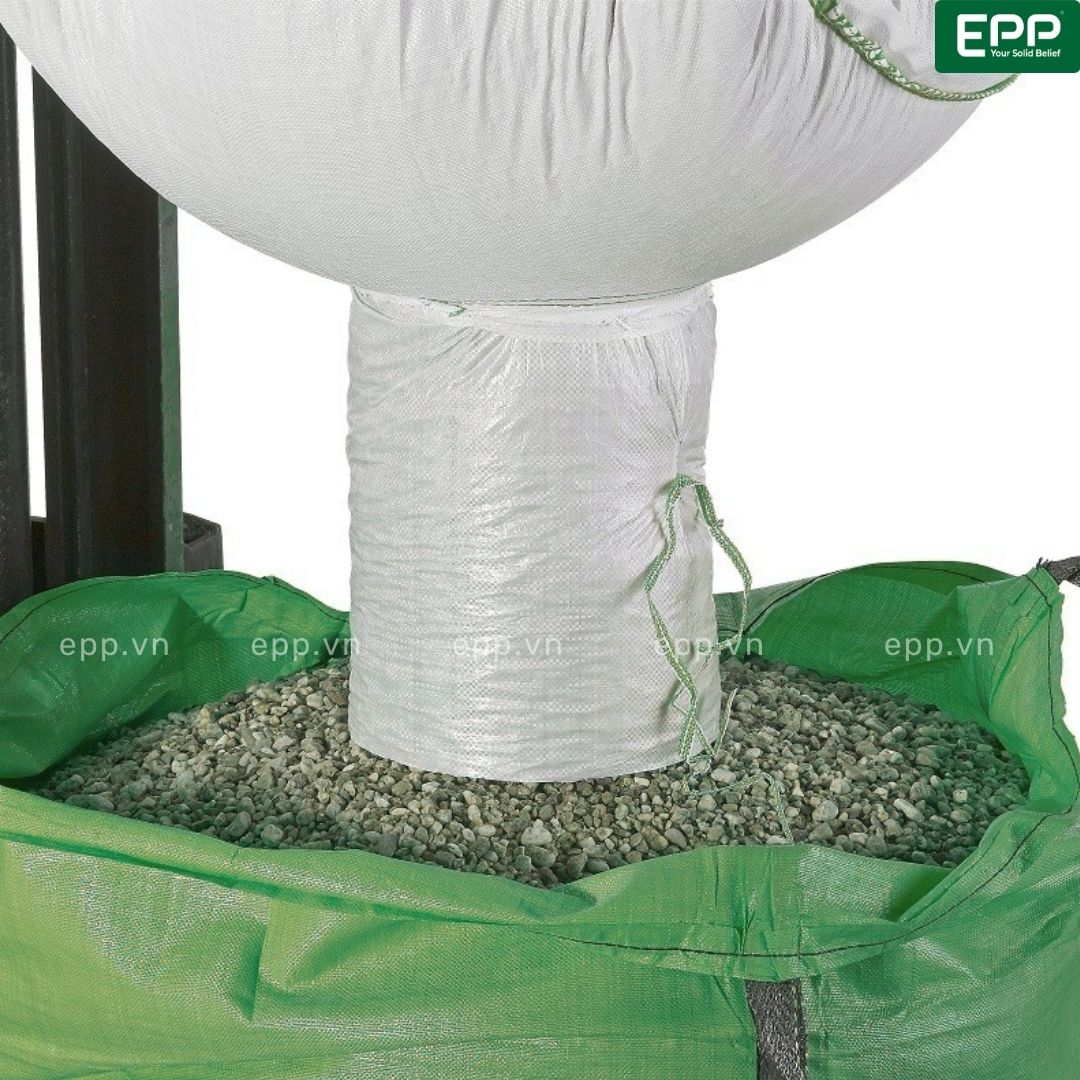
When emptying a bag via a bottom spout, the bag often shifts as the weight leaves the container. By having handles, operators can “steady” the bag during the discharge process. This ensures a clean, centered pour into a mixer or onto a conveyor belt, reducing spillage and material waste.
4. Safety and Ergonomics
International labor standards are stricter than ever regarding worker ergonomics. Bulk Bags with Handles reduce the “awkward reach.” Instead of grabbing the rough fabric of the bag body—which can cause abrasions or lead to a poor grip—workers have a dedicated, ergonomic handle. This reduces the risk of musculoskeletal injuries and improves overall site safety.
Why Handles Are the Future of Bulk Bag Design
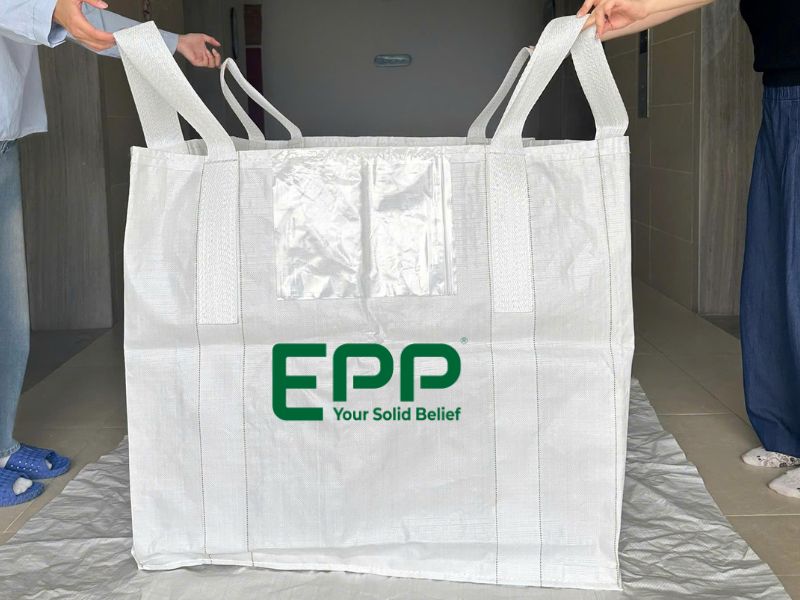
The trend toward FIBC Bags with Handles is a response to the “Micro-Logistics” movement. As e-commerce and direct-to-site deliveries increase, the equipment available at the destination is often smaller. We are seeing a move away from massive 2-ton bags toward 500kg–1,000kg bags that are “multi-modal.”
Furthermore, automation is reaching the “picking” stage. Robotic arms and automated guided vehicles (AGVs) find it significantly easier to identify and hook onto a structured handle than a loose, floppy fabric loop. By choosing Bulk Bags with Handles, companies are future-proofing their packaging for the next generation of automated warehouses.
Sustainability also plays a role. These high-quality bags are almost always designed for “Multi-Trip” use (6:1 Safety Factor). The handles encourage users to treat the bag as a durable tool rather than a disposable sack, supporting the global mandate for a circular economy.
Buyer Tips for Choosing Bulk Bags with Handles
If you are ready to jump on this packaging trend, you need to ensure you aren’t sacrificing strength for convenience. Here is how to vet your Bulk Bags with Handles:
- Check the Stitching Pattern: Look for “X-box” or “Hercules” stitching where the handle meets the bag body. This ensures the weight is distributed across the fabric rather than pulling on a single thread line.
- Fabric Weight (GSM): Because handles imply more “manhandling,” the fabric needs to be tough. Aim for 180 GSM to 220 GSM to prevent the bag from deforming when pulled by the handles.
- UV Stabilization: If these bags are for retail (sitting outside garden centers), ensure the handles are treated with at least 150 KLY of UV protection. Handles are often the first part of a bag to degrade if not treated correctly.
- Source from Vietnam: Procurement managers in 2026 are looking to Vietnam for innovation. Factories like EPP Vietnam offer custom prototyping, allowing you to place handles exactly where your specific workflow requires them, all while benefiting from 0% import duties in many regions.
FAQ
Can I lift the full weight of the bag using only the secondary handles? No. Typically, the secondary handles on Bulk Bags with Handles are designed for positioning, steering, or manual carrying of lighter loads (under 500kg). Always use the primary 4-loops for heavy-duty mechanical lifting unless the bag is specifically rated as a “Single-Point Lift” bag.
Are handles more expensive to produce? There is a slight increase in production cost due to the extra material and labor for reinforced stitching. however, most businesses find this is offset by the reduction in labor time and the decrease in material waste during discharge.
Do handles interfere with forklift operation? Not if designed correctly. Top-tier manufacturers ensure that the handles are positioned “out of the way” of the main loops so that forklift tines can still slide in effortlessly.
What material are the handles made of? Most Bulk Bags with Handles use woven polypropylene webbing, but premium versions may use soft-touch polyester or padded handles to improve comfort for manual handling.
Conclusion
The rise of Bulk Bags with Handles signals a new era where industrial packaging is no longer “dumb.” It is now ergonomic, retail-ready, and optimized for both humans and machines. By adopting this trend, you are giving your brand a competitive edge—showing your customers that you care about their safety and their efficiency.
Would you like me to create a custom technical drawing of a 500kg “Retail-Ready” Bulk Bag with Handles, featuring your company logo and a specific base-handle configuration for easy emptying?
