
Optimizing jumbo bag size is a crucial factor when choosing a jumbo bag. In the logistics context, selecting the correct size for FIBC (jumbo bag) is no longer a matter of guesswork; it’s a technical requirement to ensure safety and cost control.
At EPP Vietnam, as a leading global manufacturer and exporter, we’ve processed data from thousands of shipments to North America, Europe, and Asia. Our experience shows that a precisely designed jumbo bag size can increase container space utilization by up to 15%, directly impacting your business’s profitability.
In this comprehensive guide, we’ll analyze standard jumbo bag sizes, share manufacturing insights from our factory in Vietnam, and help you determine the ideal jumbo bag size for your specific industrial application.
What is the meaning of a jumbo bag?
Before delving into the dimensions, we need to clearly define this useful type of packaging. Jumbo bags—technically known as FIBCs (Flexible Intermediate Bulk Containers)—are a large-scale industrial packaging solution made from woven polypropylene (PP) plastic. At EPP Vietnam, we manufacture these bags to contain dry, flowable materials, from fine pharmaceutical powders to heavy, bulky construction materials.
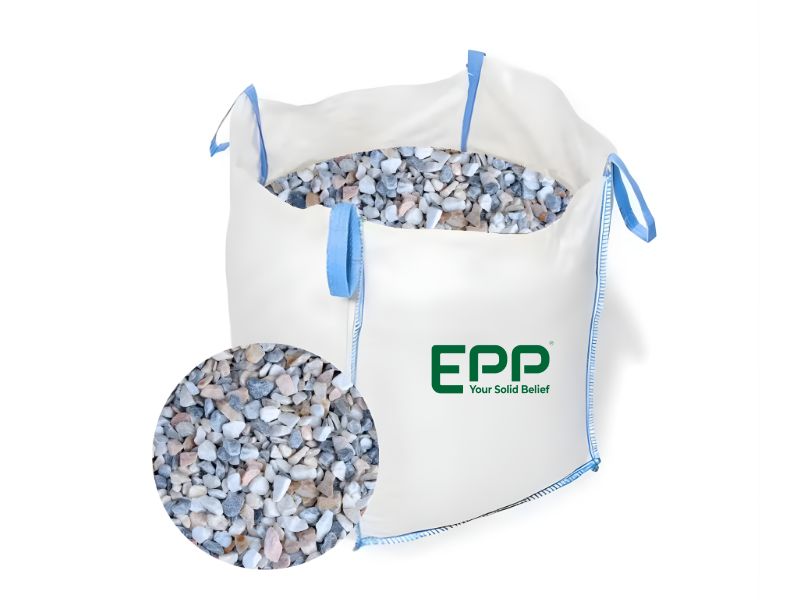
The definition of a Jumbo bag in 2026 has gone beyond a simple bag. It is now a sophisticated logistics unit replacing dozens of smaller 25kg bags, minimizing manual labor and environmental waste. Thanks to its flexibility, Jumbo bag sizes can be customized to precisely match the density (specific gravity) of the product, ensuring the bag remains stable and secure throughout the global supply chain.
What is the Standard Jumbo Bag Size?
While customization is a strength of EPP Vietnam, several standard sizes have been established to fit global shipping container types and pallet sizes. Below is a technical breakdown of the most common Jumbo bag size configurations in key sectors.
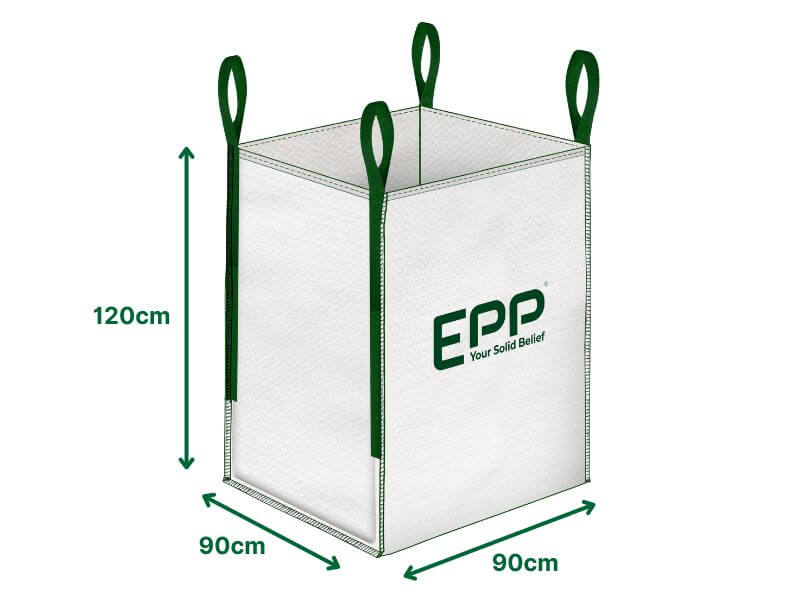
Common Industry Sizing Table (2026 Standards)
| Industry | Size in cm (W x L x H) | Size in Inches (W x L x H) | Typical Payload |
| Construction | 85 x 85 x 85 cm | 33.5 x 33.5 x 33.5″ | 1,000 kg (Sand/Gravel) |
| Agriculture | 90 x 90 x 120 cm | 35.5 x 35.5 x 47″ | 1,000 kg (Grain/Seed) |
| Chemicals | 95 x 95 x 135 cm | 37.5 x 37.5 x 53″ | 1,250 kg (Resins/Powders) |
| Food Industry | 100 x 100 x 150 cm | 39.5 x 39.5 x 59″ | 1,000 kg (Sugar/Flour) |
| Mining/Ores | 90 x 90 x 90 cm | 35.5 x 35.5 x 35.5″ | 1,500 – 2,000 kg (Minerals) |
| High-Volume | 105 x 105 x 200 cm | 41.5 x 41.5 x 79″ | 500 – 750 kg (Light/Fluffy) |
Note: The 90 x 90 cm base is widely considered the “standard” footprint as it fits perfectly on a standard 110 x 110 cm pallet without excessive overhang.
How to Calculate the Right Size for Your Product?
At EPP Vietnam, we recommend that customers use a data-driven method to determine the appropriate Jumbo bag size. You cannot choose a bag based solely on weight; you must calculate based on Bulk Density.
Step 1: Determine Bulk Density
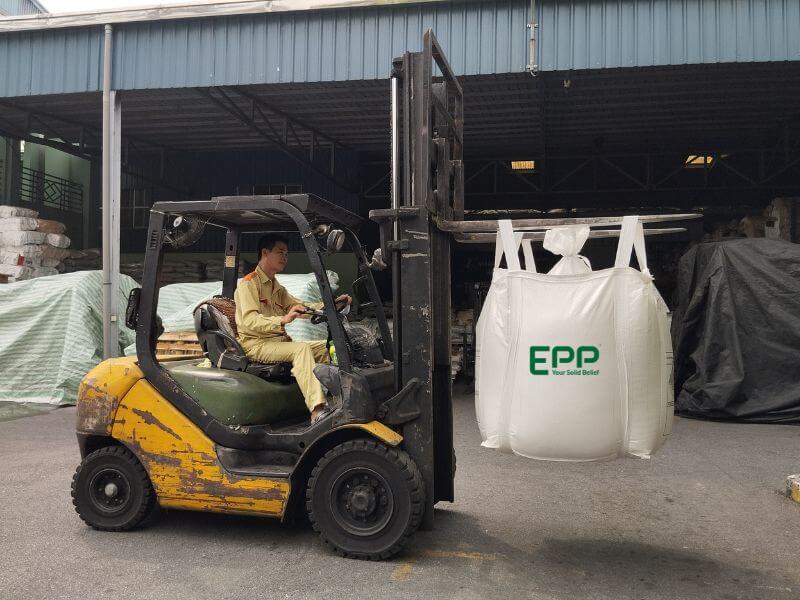
Bulk density is the weight of a material per unit volume (kg/m³). For example, lead ore will be much denser and heavier than coffee beans, even with the same volume.
Step 2: Calculate the Required Volume
Use the following formula:
Total Load (kg) ÷ Bulk Density (kg/m³) = Required Volume (m³)
Step 3: Compare with Bag Size
Once you have the volume, you can adjust the height of the Jumbo bag. We recommend keeping the base dimensions fixed (e.g., 90×90 cm) and varying the height to achieve the target volume.
Step 4: Belly Factor
Woven fabrics are flexible. When filled, the bag will tend to “bulge” in the middle. If the Jumbo bag size is 90×90 cm, it can expand to 100×100 cm after loading. Technical specialists at EPP Vietnam always take this “belly factor” into account to ensure the bags fit together snugly in the container.
Why do we need to use the correct Jumbo bag size?
Using the wrong Jumbo bag size will cause a series of problems in the handling of jumbo bags. With experience as a leading supplier in Vietnam, we emphasize 3 reasons why the correct size is important:
- Safety and Stability: A bag that is too tall and narrow will easily become “heavy at the top”. 1. Maintaining a reasonable height-to-width ratio (usually no more than 2:1) prevents bags from tilting or falling over in the warehouse when standing upright.
- Container Optimization: Transporting “air” is an expensive waste. 20ft containers have fixed dimensions. If your jumbo bag needs to be just 5cm wider after loading, you might only be able to load 10 bags instead of 20, doubling your shipping costs.
- Machine Compatibility: Automated loading stations and discharge hoppers are set up for specific sizes. An incorrectly sized bag can lead to spillage, dust contamination, or machine jamming.
Expert FAQ
What are the standard jumbo bag sizes available in the US?
In the US market, the most common jumbo bag size is the 35 x 35 x 40 inch or 35 x 35 x 50 inch bag. These are often referred to as “Super Sacks” and are designed to integrate with American pallet standards and forklift tine spacing.
What size jumbo bag is best for storing construction materials?
For heavy aggregates like sand or stone, a “cubic” jumbo bag size such as 85 x 85 x 85 cm (approx. 33″) is best. The shorter height keeps the center of gravity low, which is safer for crane lifting on rugged construction sites.
How much weight can a standard bulk bag typically hold?

While weight depends on the fabric’s GSM (Grams per Square Meter), a standard jumbo bag size (90x90x120cm) is typically rated for a Safe Working Load (SWL) of 1,000kg to 1,500kg. At EPP Vietnam, we test these to a 5:1 or 6:1 Safety Factor to ensure they can withstand surges in pressure.
How to measure jumbo bag size for bulk shipping?
Always measure the Base (Width x Length) and the Fill Height. When calculating for a shipping container, remember to measure the “Filled Diameter” (including the belly) rather than the “Empty Flat” dimensions.
Conclusion
Choosing the perfect Jumbo bag size is a balance between mathematics, materials science, and logistics strategy. Whether you’re shipping rice from Vietnam or fertilizer to Europe, the size of your FIBC bag will determine the safety and profitability of your business.
At EPP Vietnam, we don’t just sell packaging; we provide technical packaging solutions. Our team uses advanced production data and simulation to ensure every Jumbo bag size we produce is optimized for your product density and shipping method.
Ready to stop wasting space and start optimizing your cargo? Contact EPP Vietnam today for technical advice and let our experts design the perfect Jumbo bag size for your 2026 logistics goals.
